CLSEG

DNOOO blank theme is active for local preview.

Top 10 Diamond Cutting Disc Suppliers in the USA for Bulk Buyers Seeking Factory-Direct Pricing

Why "Made in the USA" on a Diamond Cutting Disc Rarely Means Made in the USA

You send out a request for bulk pricing, and within a day you have five quotes back from five "suppliers." What none of those quotes tell you is which of those five actually pours the metal bond, presses the segment, and welds it to the core — and which one is simply pulling boxes off a shelf that arrived in a container from overseas last month.

That gap is the real problem when you screen diamond cutting disc suppliers in the USA. The word "supplier" covers three very different businesses: the factory that controls the formula, the importer who buys finished blades abroad and relabels them, and the distributor who stocks and resells whatever brands move fastest. On a spec sheet they can look identical. On your landed cost they are not, because every layer between the sintering furnace and your loading dock adds margin that you either absorb or pass to your own customers.

Most published lists of diamond cutting disc manufacturers in the USA skip this entirely. They rank by who has the biggest catalog or the strongest domain, not by who actually makes the blade. So this piece reads the market a different way — by supplier model, not by zip-code proximity. You'll get ten real names, each labeled for what it is, plus the sourcing logic to decide when buying local is the smart call and when going factory-direct protects your margin. (I run export QC and applications for a diamond disc line, so I look at every supplier the way a buyer does: what am I really paying for per cut, not per sticker.)

How Serious Bulk Buyers Actually Evaluate a Diamond Cutting Disc Supplier

Before any names, you need the frame you'll score them against. When you're buying wholesale diamond cutting discs in the USA at volume, the sticker price on a single blade is the least useful number on the page. Here's what actually moves your cost and your risk:

Criterion What to ask Why it hits your margin
Manufacturing depth Do they control the bond formula and sintering, or just stock and ship? A supplier who owns the formula can fix a burning or glazing problem. A reseller can only swap you to another SKU.
MOQ flexibility What's the smallest and largest order they'll take without penalty pricing? The wrong MOQ either ties up cash in stock or blocks you from testing a market.
Lead time and replenishment Stocked domestically, or made-to-order abroad? Local stock refills fast; factory orders trade speed for unit cost. Both are valid — you need to know which you're buying.
Certification coverage ISO 9001, CE, SGS, MPA — and can they show the reports? For bulk orders, certifications are your proof of process consistency across thousands of pieces, not a logo on a box.
OEM / private-label capability Will they run your brand, your packaging, your formula? This is the difference between reselling someone else's blade and owning a product line.
True landed cost vs sticker price Freight, duty, intermediary margin, warranty returns — all in. The cheapest disc that dulls in half the cuts is the most expensive disc you'll buy.

That last row is where I spend most of my time with buyers. A blade with a bond that doesn't match your substrate will cut fine for the first hundred meters and then either glaze over or wear out early, and your per-cut cost quietly doubles while the invoice still says "cheap." When you evaluate any supplier, ask how they match segment formula to the stone or concrete you actually cut — the same question that decides which Diamond Cutting Discs fit your jobs. If they can't answer past "it's a general-purpose blade," you're talking to a reseller, not a maker.

The 10 US Diamond Cutting Disc Suppliers, Sorted by What You're Actually Paying For

This is not a 1-to-10 quality ranking, and treating it as one would mislead you. The useful sort is by supplier model, because that's what determines your cost stack and how much formula control you get. Three groups:

  • True manufacturers — they make blades on US soil or run genuine production, so formula and QC questions get real answers.
  • US brands that import or resell — established names, often sourcing finished or semi-finished blades from overseas factories and adding a domestic brand, warranty, and distribution layer.
  • Distributors and catalogs — they stock multiple brands and win on availability and convenience, not manufacturing depth.

Every one of these is a real, recognizable company in the US diamond tool market. I've kept the descriptions conservative on purpose — where a specific MOQ or lead time isn't something I can state with certainty for a given company, I describe what its supplier class is generally good for rather than inventing a number.

Manufacturers

  1. Diamond Products (diamondproducts.com) — A long-established US maker of diamond blades, core bits, and cutting and coring equipment, based in Elyria, Ohio. Strong fit when you want a domestic manufacturer with an equipment ecosystem behind the consumables.
  2. MK Diamond Products (mkdiamond.com) — A veteran US diamond blade and saw manufacturer serving the contractor and stone trades. Deep product history and a broad contractor channel.
  3. Norton | Saint-Gobain Abrasives (nortonabrasives.com) — A major global abrasives and diamond blade producer with US manufacturing and distribution. Best suited to buyers who want a large, audited supplier with wide catalog coverage.
  4. Husqvarna Construction Products (husqvarnacp.com) — Diamond blades paired with a full cutting-equipment lineup and a wide US dealer network. Strong when you want blades and machines from one brand relationship.

Manufacturer / distributor hybrids

  1. U.S. Saws (ussaws.com) — A US supplier of concrete cutting tools and diamond tooling, blending its own tooling with a distribution model aimed at the concrete trades.
  2. Diteq (diteq.com) — Diamond tooling and equipment for concrete and stone professionals, operating across manufacturing and distribution for the cutting and drilling segments.

Importers / brand-and-distribute models

  1. Pearl Abrasive Company (pearlabrasive.com) — A US supplier of abrasives and diamond blades with a broad catalog, largely operating a sourced-and-branded model. Good availability across common sizes.
  2. Lackmond Products (lackmond.com) — A US brand of diamond blades and tools out of Georgia, built on an import-and-distribute model with a wide contractor product range.
  3. Alpha Professional Tools (alpha-tools.com) — A US-based brand focused on stone fabrication tools and diamond blades, well known in the countertop and fabrication segment.

Distributor

  1. GranQuartz (granquartz.com) — One of the larger US distributors of stone fabrication supplies, including diamond blades from multiple brands. The right call when you value one-stop availability across the fabrication shop.

A fair word on the local advantage before we talk cost: these companies earn their place because domestic supply genuinely delivers things a factory an ocean away can't match on short notice — same-week replenishment, warehouse stock you can draw on for an emergency, easy phone-call communication in your time zone, and a brand that stands behind a warranty locally. If you've ever had a job stall because a blade failed and you needed ten more by Thursday, you already know what that convenience is worth. (I've shipped enough emergency air freight to know the factory-direct route is the wrong tool for a Thursday-deadline problem.)

Here's the same landscape in one scannable view:

Supplier Type Best for Formula control Bulk / MOQ posture
Diamond Products Manufacturer Domestic making + equipment High Manufacturer order model
MK Diamond Products Manufacturer Contractor-channel blades High Manufacturer order model
Norton / Saint-Gobain Manufacturer Large audited supplier High Volume-friendly, broad catalog
Husqvarna CP Manufacturer / brand Blades + machines together Medium-High Dealer-network stock
U.S. Saws Mfr / distributor Concrete cutting tools Medium Hybrid stock + order
Diteq Mfr / distributor Concrete & stone tooling Medium Hybrid stock + order
Pearl Abrasive Importer / distributor Broad common-size range Low-Medium Distributor stock model
Lackmond Importer / distributor Wide contractor range Low-Medium Distributor stock model
Alpha Professional Tools Importer / brand Stone fabrication segment Low-Medium Brand stock model
GranQuartz Distributor One-stop fabrication supply Low Multi-brand stock model
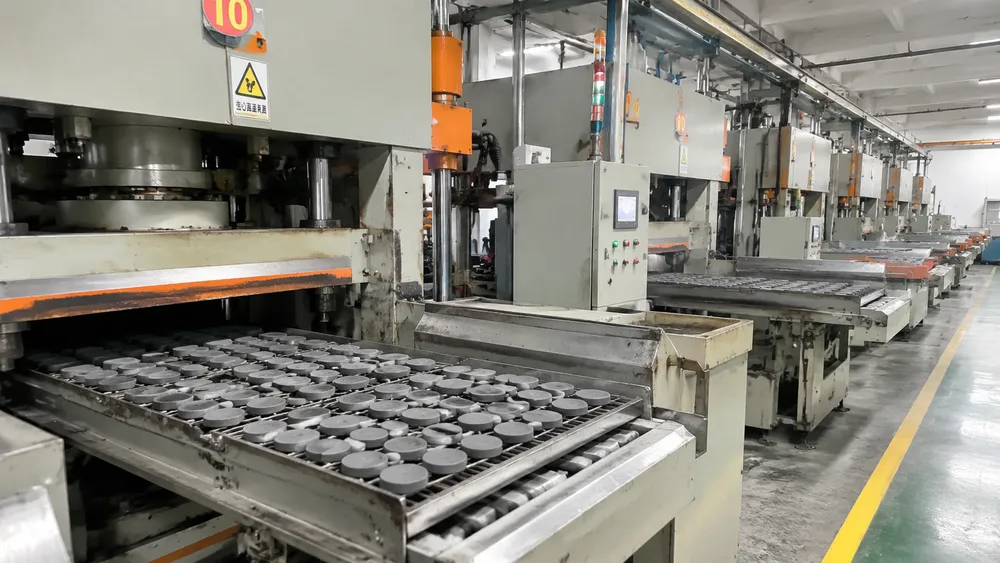
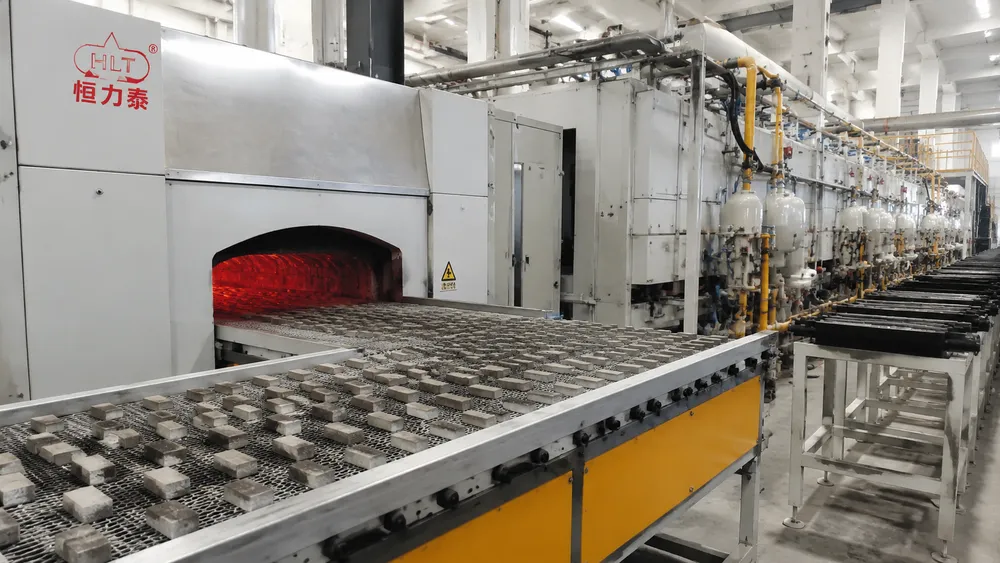
Automated sintering line producing diamond cutting disc segments inside a diamond tool factory

Factory-Direct Pricing vs Domestic Reseller Markup — Where Each One Wins

Look at what a blade costs by the time it reaches you through a domestic reseller. The stack runs: factory price → ocean freight and duty → importer margin → distributor margin → your cost. Each of those middle layers is a real business that has to make money, so each adds a percentage. By the time a wholesale diamond cutting disc reaches your dock through that chain, you may be paying two or three margins stacked on top of the price the factory originally charged. None of that is dishonest — it's just the cost of the convenience layers between you and the furnace.

That cost is worth paying in specific situations. Local supply wins when:

  • You need an urgent, low-volume order and speed beats unit cost.
  • You're covering an emergency replacement and the job can't wait for a container.
  • You're running a single project where carrying a full container's worth of stock makes no sense.

Factory-direct diamond cutting discs win when the math tilts the other way:

  • You're buying at repeat volume, where removing two margin layers compounds across every order.
  • You're bidding cost-sensitive work and need the lowest defensible landed cost to protect your bid.
  • You're running quality-critical projects where formula consistency across thousands of pieces matters more than same-week delivery.

The honest answer is that it's rarely "overseas is always cheaper." It's a decision driven by order size, urgency, and how much your projects depend on the blade behaving the same way every time. Once your volume is predictable and your specs are stable, the intermediary margin stops buying you much — and that's the moment factory-direct starts to pay.
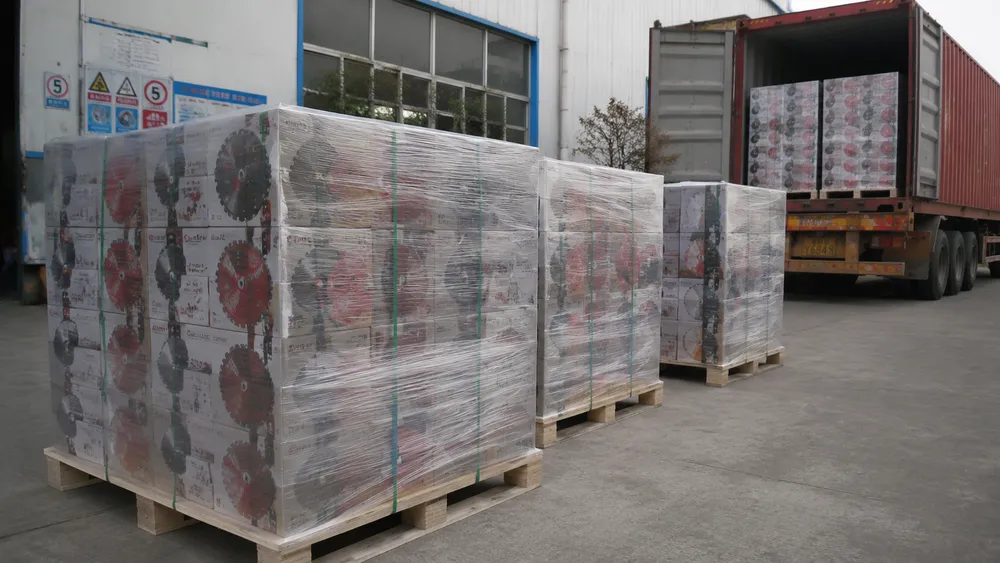
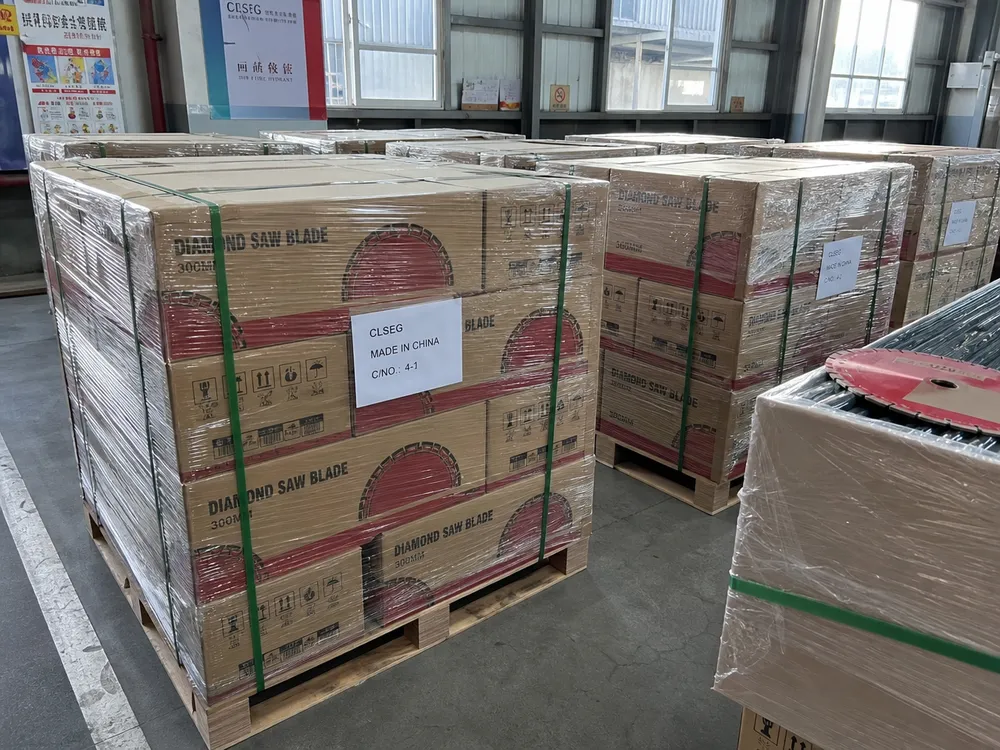
Palletized and shrink-wrapped diamond cutting discs staged for container export at a factory loading area

Matching the Bond Formula to Your Substrate — the Variable Most Lists Skip

Here's the part almost every supplier roundup leaves out, and it's the one that decides your real cost. A diamond cutting disc is a metal bond holding diamond grit, and that bond has to wear at the right rate for the material you're cutting. Cut hard, dense granite with a bond that's too hard and the diamonds glaze over — the blade stops cutting and starts rubbing. Cut soft, abrasive material with a bond that's too soft and the segment wears away far faster than it should. Either way, your cost per cut climbs.

This is why a distributor's one-size "general-purpose" blade quietly costs you money at volume. It's built to be acceptable on everything and optimized for nothing, so on your specific substrate — granite, marble, reinforced concrete, porcelain — it either cuts slower or wears faster than a matched blade would. Multiply that across a few thousand pieces and the gap between a matched formula and a catalog blade shows up as more blades bought, more downtime for changes, and more warranty returns from your own customers.

Only a supplier that controls its own formula and sintering can actually tune this for you — adjusting diamond concentration, grit size, and segment geometry to your material and your machine's RPM. That's the practical reason manufacturing depth sits at the top of the evaluation criteria. When you're buying bulk diamond cutting discs, the ability to say "these run hot on our granite, tighten the bond" and get a revised formula back is worth more than a small discount on a blade you can't change. It's the same question that should guide which Diamond Cutting Discs you shortlist: is this blade matched to my substrate, or just matched to a catalog?

Where a Factory-Direct Manufacturer Fits Your Supply Plan

Once you've read the local landscape, a factory-direct source belongs in the conversation as a strategic option — not as another name on the US list, but as the route that removes the intermediary layers entirely. This is where CLSEG fits.

We've been making diamond saw blades since 2003, and that's all we do — no sideline products, no trading-company layer between you and the furnace. Our facility runs 14,100 square meters and 8 production lines with a 3,000,000-piece annual capacity, so a container-volume order doesn't sit in a queue behind everyone else's. We hold independent export rights, so you're buying at the factory price without a trading intermediary stacked on top. The blades carry ISO 9001:2015, CE, SGS, and MPA certification, with reports available when you need them for your own compliance or customer assurance. And because we control the formula, the sintering parameters, and the high-frequency welding in-house — backed by an R&D center with 60+ patents — a request for a different diamond concentration, a modified segment geometry, or private-label packaging is a conversation with the people who actually run the process, not a chain of forwarded emails.

That formula control is the commercial point. When your granite runs harder than average or your concrete has heavy rebar, we adjust the bond to match, so your per-cut cost stays where it should. Our range covers 105 mm angle-grinder discs up to 3200 mm segments, which means one supplier relationship can cover most of what your projects or your catalog need.

On MOQ, the flexibility runs both directions. Container-volume distributors get the full pricing benefit of buying at scale, while a regional importer testing a new market can start with a smaller run to prove the product with their own customers before committing to volume — the private-label and low-MOQ path that a pure distributor usually can't offer.

Picking Your Route — A Sourcing Decision Guide

Match the route to the order in front of you:

  • Urgent, low-volume order → a local distributor or stocking brand. Pay for the speed; it's worth it.
  • Emergency replacement → local stock, every time. Don't wait on a container for a job that's already stalled.
  • Repeat-volume procurement → factory-direct. Removing the margin layers compounds across every reorder.
  • Cost-sensitive bidding → factory-direct, where the lowest defensible landed cost protects your bid.
  • Quality-critical or formula-specific work → a factory-direct manufacturer with real QC and material certs, so the blade performs the same across every piece.

When you're ready to price the factory-direct route, the fastest way to get a real number is to send the specs that actually drive the formula: your substrate type (granite, marble, concrete, porcelain), disc diameter, arbor size, and target annual volume. With those four, we can recommend the right bond and quote it against your current landed cost — start with a Request Quote and point us at the Diamond Cutting Discs closest to what you're sourcing today. That's enough to tell you, honestly, whether factory-direct beats what you're paying now — or whether your order profile is one where local supply is still the smarter buy.
Top 10 Diamond Cutting Disc Suppliers in Australia for Construction and Stone Importers

The Real Sourcing Problem Behind "Diamond Cutting Disc Suppliers Australia"

Search "diamond cutting disc suppliers australia" and you mostly get shopping carts. Product tiles, add-to-cart buttons, a filter for blade diameter. That's fine if you need two discs for a job on Thursday. It's the wrong tool entirely if you're buying to resell across a branch network, stock a store, or feed a stone-importing operation that cuts thousands of linear metres a month.

Here's the friction nobody on those pages talks about. Most diamond discs sold in Australia arrive through a distribution layer — an importer, then a national brand, then a retailer. Every layer prices in its margin, and by the time the disc reaches your invoice, you're paying for the chain, not just the steel and diamond. You also inherit whatever spec that chain decided to stock, which may or may not match the reinforced concrete or engineered stone your crews actually cut.

I run cutting disc applications and export QC at a factory that ships to contractors in more than 30 countries, and the pattern is the same everywhere: buyers overpay on landed cost and underthink spec, because the search results trained them to compare sticker prices instead of supply models. Per-cut cost tells the real story — not the number printed on the box.

So this isn't a popularity ranking. It's a sourcing framework. I'll group the 10 suppliers Australian construction buyers and stone importers actually compare into three supply models, show you how to evaluate any of them, then explain honestly where local buying wins and where a factory-direct route changes the math.

How Serious Buyers Vet a Diamond Blade Supplier

Before any list means anything, you need criteria. A diamond blade supplier australia buyers can trust at volume clears these checks, not just the price check:

  • Certifications relevant to Australian construction safety. ISO 9001 for process control, plus product and safety marks like CE, SGS test reports, and MPA (the abrasive-tool safety certification European distributors demand). On an Australian site, a disc that shatters is a liability event, not a return — so certification is downstream risk protection for you and whoever you sell to.
  • Bond-to-material fit. The metal bond holding the diamond has to match the stone. Get it wrong and you either burn segments in days or glaze the disc so it stops cutting. More on this below — it's the criterion most catalogs ignore entirely.
  • MOQ flexibility. Can the supplier ship a trial quantity to test a market, then scale you to container volume without renegotiating the whole relationship? A rigid MOQ locks out importers who are still proving demand.
  • Lead-time reliability and reorder consistency. The disc you test in month one has to perform identically in month six. Batch-to-batch drift is the silent killer of a resale line — your customer complains, you eat the return.
  • Landed-cost transparency. Unit price is not delivered cost. Freight, duty, intermediary markup, and MOQ waste all hide in the gap. A supplier who can quote you landed and factory-gate side by side is doing you a favour.
Criterion Why it matters commercially Question to ask the supplier
Certifications Site safety, downstream liability "Can you send current ISO / CE / MPA docs?"
Bond-to-material fit Per-cut cost, segment life "What bond do you run for reinforced concrete vs granite?"
MOQ flexibility Market-test vs scale "What's your trial MOQ, and your container MOQ?"
Lead time & reorder consistency Resale reputation, no returns "Is my month-six batch the same formula as month one?"
Landed-cost transparency True margin "Can you quote factory-gate and landed?"

Run every supplier below through this. The ones that answer confidently are the ones worth a concrete cutting disc supplier australia relationship.

Matching Disc Bond and Spec to Australian Materials

This is where I spend most of my day, so let me be specific. Australian sites throw three hard problems at a diamond disc, and each needs a different spec.

Reinforced concrete. Cured concrete is abrasive; the rebar inside it is hard steel. A disc bonded soft enough to expose diamond fast in the aggregate will lose segments the moment it hits rebar. We run a harder, tougher bond with a segment geometry that survives the steel interruption — you trade a little raw speed for segments that don't tear off. Spec this wrong and your per-cut cost triples on a job with heavy reo.

Granite. Granite is hard and dense, so the diamond dulls before it wears through the bond. Here you want a softer bond that erodes at the right rate to keep fresh diamond exposed. Push the feed rate too hard on the wrong bond and you glaze the surface — the disc stops cutting and starts rubbing. For stone importers cutting slab and kerb, this is the difference between a disc that lasts a full job and one you're binning by lunch.

Engineered and quartz stone. Benchtop material chips at the edge if the disc runs too aggressive. This is a finish problem as much as a cutting problem — a chipped edge is a rejected benchtop, and that's a warranty claim landing on your desk. We spec a finer, chip-controlled formula for this, closer to what you'd want for stone cutting disc importer australia work feeding the kitchen and bathroom trade.

The commercial point: a mismatched disc doesn't just cut slower. It converts into returns, warranty exposure, and a per-cut cost your competitor isn't paying. When you're screening suppliers, the ones who can talk bond in this much detail are the ones who actually make the product. If you want the full range of options mapped to material, our concrete cutting discs line is organised exactly this way.

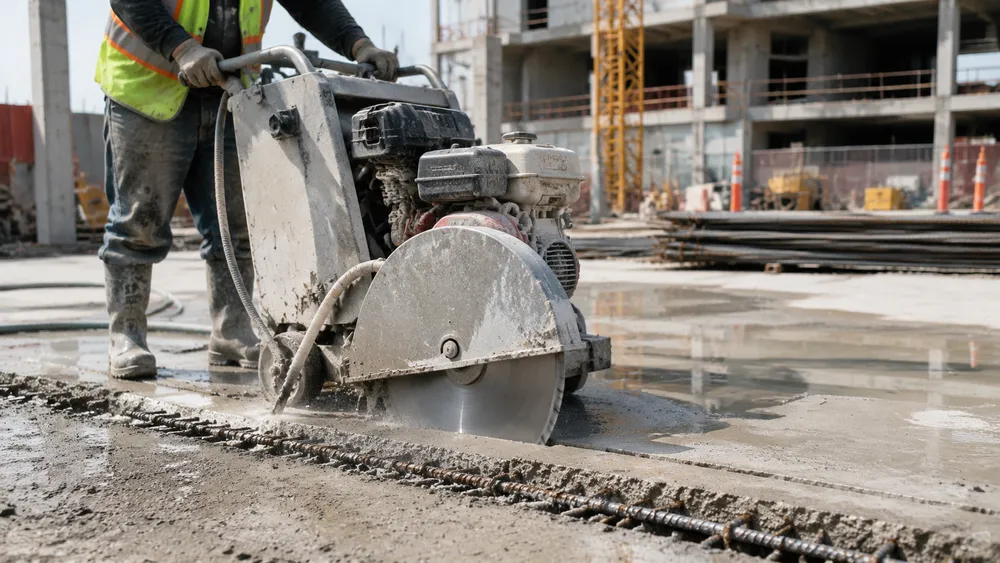
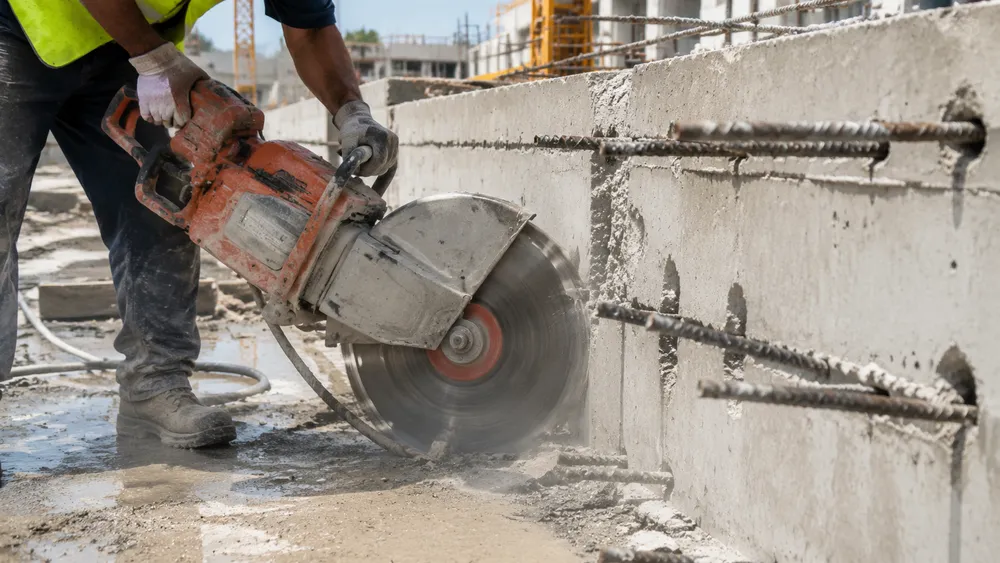
Diamond cutting disc slicing through reinforced concrete on an Australian construction site with visible rebar

The 10 Suppliers Australian Construction and Stone Importers Compare

There's no honest way to rank these 1 through 10 — they serve different jobs, and a "winner" would be theatre. So I've grouped them by supply model and evaluated each model against the criteria above. Read them as three routes to the same disc, priced and stocked differently.

Global manufacturers with Australian distribution. These carry brand depth, consistent spec, and trust, but you're buying through a distribution layer that prices in its own margin.

  1. Husqvarna Construction Products (husqvarnacp.com) — a major concrete-cutting blade and equipment brand with an established Australian construction presence. Strong for standardised concrete work and equipment-matched blades.
  2. Tyrolit (tyrolit.com) — a European bonded-abrasive and diamond-tool manufacturer with an Australian sales arm. Broad range, good technical documentation.
  3. Norton / Saint-Gobain Abrasives (nortonabrasives.com.au) — a long-standing abrasives and diamond-blade line sold widely across the Australian trade.
  4. Bosch Professional (bosch-professional.com.au) — diamond cutting discs distributed through the national Australian trade channel, matched to their power-tool ecosystem.
  5. Makita (makita.com.au) — diamond blade accessories through a national Australian dealer network, convenient where you already run their tools.

Specialist Australian brands and stone-trade distributors. Closer to the local trade, often with stone-industry focus, but still sourcing product rather than making it.

  1. DTA Australia (dta.com.au) — an Australian tiling and diamond-blade supplier to the trade, with a stock focus on tile and stone work.
  2. OX Tools (ox-group.com) — a construction-consumables brand carrying diamond blades, active in the Australian market.
  3. Diarex (diarex.com.au) — a supplier of diamond tooling to the Australian stone and benchtop trade, relevant if you're importing stone-cutting consumables specifically.

National trade retailers. Fast availability and the widest brand breadth, but retail pricing and no factory-direct route.

  1. Sydney Tools (sydneytools.com.au) — a large Australian trade retailer stocking multiple diamond-disc brands across many branches.
  2. Total Tools (totaltools.com.au) — a national trade retail network carrying diamond blades from several manufacturers.
Supply model Local stock Brand depth Pricing layer Fit for wholesale
Global mfr via AU distribution Good High Distributor margin Moderate
Specialist AU brand / distributor Good Medium Import + brand margin Moderate
National trade retailer Excellent Broad (multi-brand) Retail Low

Every one of these is a legitimate supplier. The question is which model fits your order profile — and for that, you need to see honestly where local supply earns its price. (Verify current details on each company's official site before you commit an order; distribution arrangements and ranges change.)

Where Buying Local Is the Right Call

Let me be straight, because a sourcing guide that pretends local supply is always the wrong answer isn't worth reading. A local diamond blade supplier australia wins outright in several situations, and if you're in one of them, buy local.

Speed is the big one. When a disc fails mid-shift and the pour won't wait, a branch that ships same-day or has stock on the shelf across town saves you more than any unit-price saving could. Emergency replacement, small top-up orders, and jobs where a day of downtime costs more than a box of discs — local wins every time. You also get warehousing you don't have to fund, familiar communication in your timezone, and someone to call when something's wrong. For urgent, low-volume, or unpredictable demand, that convenience is worth paying for. Nobody imports a single pallet to save a few dollars and waits six weeks for it.

Where Local Convenience Quietly Costs You Margin

The trade-off shows up when the orders get big and repeat. That's where diamond cutting disc wholesale australia buyers start leaving money on the table without noticing.

Every distribution layer prices in margin, and imported discs usually pass through two or three before they reach you. You're paying the importer, the brand, and the retailer for a disc that left a factory at a fraction of the shelf price. On a one-off order that's invisible. On 40,000 discs a year it's a line item bigger than most people's freight budget.

You also inherit spec lock-in. A distributor stocks what sells across everyone, not what's optimal for your reinforced concrete or your granite slab. So you buy a general-purpose disc and pay for the segments you burn on the wrong bond — the exact per-cut cost problem from earlier, now baked into your cost of goods.

Then there's reorder drift. A re-badged disc can quietly change factory or formula between batches, and the first you hear of it is a customer complaint. When you don't control the source, you don't control the consistency. None of this makes local supply bad — it makes it expensive at volume, which is a different problem with a different answer.

The Factory-Direct Route for Volume and Import Buyers

Once your demand is repeatable, bulk diamond cutting discs australia factory direct stops being exotic and starts being arithmetic. This is where a manufacturer like us fits — not as an 11th name on a local list, but as a different supply model.

We operate factory-direct with independent export rights, so there's no trading company between you and the people who control the formula. That removes an entire markup layer from your Australian landed cost, and it means when you need an adjustment — different diamond concentration for your granite, a modified segment for heavy reo, private-label packaging for your brand — the answer is a conversation, not a chain of forwarded emails.

Formula control is the part that matters most for a resale line. We develop and own our diamond bond formulas, backed by 60+ patents, and we run fully automatic sintering with consistent temperature and pressure curves across every cycle. So the disc you approve in your first trial performs the same in your sixth reorder — the batch-to-batch consistency that kills returns. Our range runs from 105 mm cutting discs to 3200 mm segments under one roof, so you consolidate a scattered supplier list into one relationship and one set of paperwork. We already hold ISO 9001:2015, CE, SGS, and MPA, so your compliance team isn't chasing documents when you sell into regulated construction work. And with 8 automated lines producing 3,000,000 pieces a year, your reorders don't queue behind someone else's — the lead-time surprise that wrecks a stock plan doesn't happen. If you're a stone cutting disc importer australia testing a formula, our OEM/ODM workflow and flexible MOQ let you start with a trial and scale to containers without restarting the relationship.

If you want to see the full spec range before you scope a trial, our Diamond Cutting Discs category lays out the options by application.

Automated sintering furnace line producing diamond cutting disc segments inside a factory
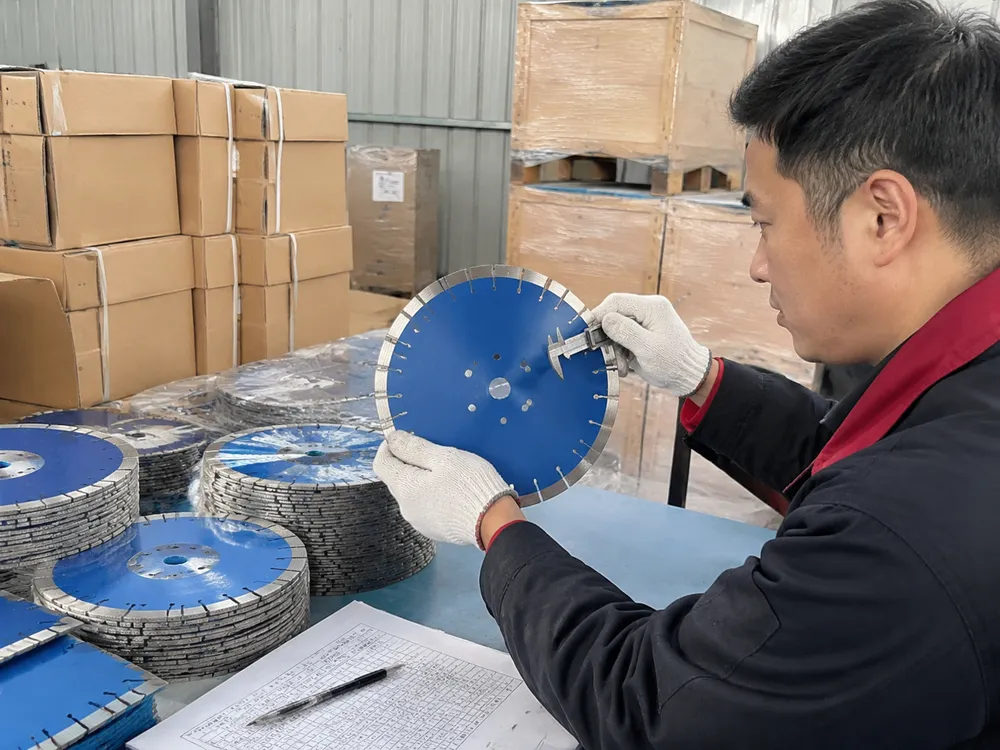
Technician performing final quality inspection and packaging of diamond cutting discs for export shipment

Choosing Your Sourcing Route by Order Profile

So how do you actually decide? It comes down to order size, urgency, and how much spec control you need. Here's how I'd map it if I were on your side of the invoice — which is really the answer to how to choose a diamond cutting disc supplier in australia:

  • Urgent, low-volume, or emergency replacement → buy local. A retailer or distributor with stock on the shelf beats any unit saving when downtime is the real cost.
  • Repeat-volume procurement → go factory-direct. Once you're reordering the same disc predictably, the removed markup layer and reorder consistency outweigh the convenience of local stock.
  • Cost-sensitive bidding → prioritise landed-cost transparency. Get factory-gate and landed quotes side by side so you're bidding on true cost, not shelf price.
  • Quality-critical or spec-sensitive projects → prioritise formula control and certification. When a wrong bond means returns or a safety failure, buy from whoever controls the formula and holds the documents.

Most serious operations end up running both: local for the urgent gaps, factory-direct for the volume base load. If your demand is predictable enough to plan around, it's worth putting real numbers against a factory-direct quote — send disc grade, diameter, target material, and annual volume, and the comparison makes itself. You can start that conversation through our Contact Us page whenever you're ready to price it properly.

Diamond Cutting Disc Sourcing — Questions Buyers Ask

What certifications should a diamond cutting disc supplier hold for Australian construction sites? Look for ISO 9001:2015 for process control, plus product-level evidence — CE marking, SGS test reports, and MPA safety certification for abrasive tools. MPA in particular tests that the disc won't fail catastrophically at operating RPM, which is the risk that turns into a liability event on site. Ask for current copies; a supplier who can send them same-day is one who actually holds them.

Is factory-direct cheaper than buying diamond discs from an Australian distributor? It depends on volume. On small or one-off orders, local distribution usually wins once you account for freight, duty, and MOQ waste. On repeat container-scale volume, removing the importer and brand markup layers typically lowers landed cost meaningfully — but the honest answer is to get both quotes and compare landed to landed, not shelf price to factory gate.

Which diamond disc bond is best for reinforced concrete versus granite? Reinforced concrete wants a harder, tougher bond that survives rebar without shedding segments. Granite wants a softer bond that erodes fast enough to keep fresh diamond exposed, since the diamond dulls before the bond does. Running one general-purpose disc across both is the most common way buyers inflate their per-cut cost.

What MOQ should an importer expect for factory-direct diamond discs? It varies by supplier, but a manufacturer set up for export should offer a trial MOQ that lets you test a formula in your market before you commit to container volume. If a supplier can only sell you a full container on the first order, they're not built for importers testing demand.

How do I keep disc performance consistent across reorders? Buy from whoever controls the formula and runs automated, repeatable production — automatic sintering with consistent temperature and pressure curves is what holds segment density steady batch to batch. Re-badged discs that change source between orders are where reorder drift creeps in, so ask directly whether your later batches come off the same line and formula as your first.

Top 10 Diamond Cutting Disc Suppliers in Canada for Concrete and Masonry Contractors

What You're Really Buying Against When You Source Discs in Canada

Cutting concrete in Canada is not one job. It's rebar-packed reinforced slab in one hour, cured 30-year-aged concrete over abrasive Prairie aggregate the next, then a masonry block wall, then a road-cutting run before the frost window closes. Each of those eats a diamond disc differently. Yet most "supplier lists" hand you a row of brand names and stop there — no way to tell whether you're looking at a factory, a national distributor, or a marketplace reseller stacking a markup on someone else's blade.

That gap costs you. When you buy diamond cutting discs, you're carrying the spread between what the disc cost to make and what you paid at the counter, plus whatever the disc's real life-per-dollar turns out to be on your material. Fast local pickup is worth money. So is a supplier who can adjust a bond for your aggregate. The trouble is that a plain roundup never tells you which one you're getting.

So this isn't a beauty contest. Below, the diamond cutting disc suppliers Canada contractors actually screen are grouped by how you'd source from them and scored on the criteria that move your landed cost — manufacturing control, certifications, MOQ, lead time, and cost-per-cut. Then we get honest about when buying local is the right call and when a factory-direct route protects more margin. Per-cut cost tells the real story, not the sticker price on the disc.

How to Actually Score a Diamond Cutting Disc Supplier

Before any name matters, agree on what you're measuring. A distributor with a great warehouse and a factory that owns its bond formula are both useful, but for different orders. Here's the framework this list is built on — the same one that separates serious diamond blade suppliers Canada buyers rely on from resellers coasting on brand recognition.

Criterion Why it moves your cost or risk What to ask for
Manufacturing control A factory can change diamond concentration and bond hardness; a reseller can only sell what's on the shelf. Ask who makes the disc — factory, distributor, or marketplace listing.
Certifications ISO 9001, CE, and MPA are audited frameworks, not logos. MPA matters if you resell into regulated channels. Request the actual certificate numbers and scope.
MOQ flexibility Low MOQ suits emergency top-ups; high-volume MOQ pricing suits repeat replenishment. Ask for the price break table by quantity.
Lead time & replenishment A blade that's cheap but out of stock in July stalls your crew. Ask for stock depth and reorder lead time in writing.
Cut-to-spec / bond customization Generic "all-purpose" discs compromise on every material. A matched bond lowers cost-per-cut. Ask whether they can spec a bond to your aggregate and rebar.
Cost-per-cut vs sticker price A $40 disc that survives twice the linear feet beats a $28 disc. Track linear feet per disc, not shelf price.

A note on how to read the list that follows: it's grouped by supplier model, not ranked one-through-ten by some invented confidence score. Faking a neat ranking would be dishonest — the real value is knowing what kind of supplier you're looking at and what each is good for. Verify current pricing, stock, and Canadian availability with each company directly before you commit an order; those details shift, and I'd rather you confirm than trust a number that aged out.

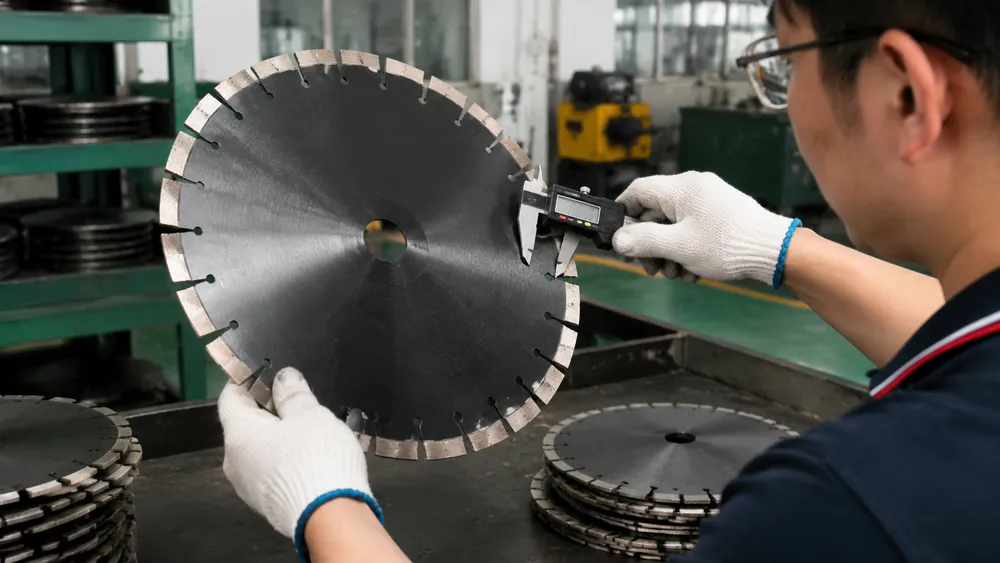
Technician measuring the segment height and rim of a diamond cutting disc during factory quality inspection

The 10 Suppliers, Grouped by How You'd Actually Source From Them

Three sourcing models cover the Diamond Cutting Discs landscape a Canadian contractor works with: global manufacturer brands that reach you through Canadian distribution, Canadian regional construction-supply distributors who stock and replenish close to your jobsite, and online or marketplace channels built for speed. Each profile below notes the genuine strength and the best-fit buyer. Confirm specifics with the company; supplier-specific details below stay deliberately conservative.

Global manufacturer brands with Canadian distribution

1. Norton | Saint-Gobain Abrasives (nortonabrasives.com) — A long-established abrasives manufacturer with a broad diamond blade range and deep Canadian dealer coverage. Best fit if you want a widely recognized brand available through existing distributor relationships and don't need bond customization.

2. Husqvarna Construction Products (husqvarnacp.com) — Strong on concrete and masonry cutting, paired with the saws and floor equipment many crews already run. Best fit if you want blade and machine from one ecosystem and value dealer support across provinces.

3. DITEQ Corporation (diteq.com) — A North American diamond tool and equipment supplier serving concrete cutting and coring. Best fit for contractors who want a specialist concrete-cutting catalog rather than a general abrasives line.

4. MK Diamond Products (mkdiamond.com) — An established diamond blade maker with a long track record in tile, stone, and concrete. Best fit if you run mixed material work and want a single brand across those categories.

5. Diamond Products (Core Bore) (diamondproducts.com) — Known for concrete cutting and coring consumables and equipment. Best fit for flat-sawing and coring crews sourcing blades alongside their rigs.

6. Pearl Abrasive Company (pearlabrasive.com) — A manufacturer with diamond blade lines distributed through North American resellers. Best fit for buyers filling out a broad consumables order through a stocking dealer.

Canadian regional construction-supply distributors

7. National Concrete Accessories (nca.ca) — A Canadian construction-supply distributor carrying concrete and masonry cutting accessories through regional branches. Best fit when local pickup and same-region replenishment matter more than unit price — a genuine strength for a concrete cutting disc supplier Canada crews can reach fast.

8. Brock White Canada (brockwhite.ca) — A multi-branch Canadian construction-materials distributor stocking cutting consumables alongside broader jobsite supply. Best fit if you're consolidating diamond discs into a larger materials order from one account.

9. King Canada (kingcanada.com) — A Canadian tool brand and distributor with cutting accessory lines. Best fit for smaller crews buying tools and discs together through familiar Canadian retail channels.

Online / marketplace channel

10. iQ Power Tools (iqpowertools.com) — A manufacturer known for dust-control saws, reaching buyers through direct and online channels. It stands in here for the broader online/marketplace route as a diamond cutting disc distributor Canada buyers use for quick access. Best fit for fast, low-volume needs where speed beats price negotiation — just know that marketplace listings rarely offer bond customization or volume price breaks.

Contractor using a walk-behind saw with a diamond cutting disc to cut a reinforced concrete slab on a construction site

Matching Disc Bond and Segment to What You're Actually Cutting

Here's where most orders leak money: buying one "all-purpose" disc and running it across everything. The bond — the metal matrix holding the diamonds — has to wear at a rate that keeps fresh diamond exposed for the material in front of it. Get that wrong and you either glaze over (the disc stops cutting because worn diamonds never release) or you burn through segments far too fast. The rule is simple and counterintuitive: harder, more abrasive material generally wants a softer bond, and softer material wants a harder bond.

Cutting condition What it does to a disc Bond / segment direction
Reinforced concrete + rebar Steel shocks the segment and rounds it off Tougher segment, harder bond to resist impact and rounding
Cured / aged concrete over hard aggregate Abrasive aggregate glazes a hard bond Softer bond so diamonds keep exposing
Green (fresh) concrete Abrasive slurry sandblasts the core and segment Harder bond with undercut protection
Masonry / block Soft, fast-cutting, low abrasion Harder bond, faster feed for long life
Abrasive Prairie aggregate Rapid wear on any hard bond Wear-resistant matrix tuned to the aggregate
High-throughput demolition / road cutting Heat and depth stress the core Taller segments for reorder life, stable tensioned core

Two execution details that decide cost-per-cut. First, segment height is reorder economics — a taller segment is more usable diamond per disc, so you're back to the counter less often. Second, wet versus dry changes the joint: dry cutting at high RPM raises thermal stress on the segment weld, which is why we laser-weld dry-cut blades rather than high-frequency weld them. If your supplier can't tell you which weld their concrete disc uses, that's a signal.

None of this requires a chemistry lecture — it requires a supplier who'll match a bond to your material instead of selling you a shelf blade. That's the whole argument for spec'ing concrete cutting discs to condition rather than buying generic and hoping.

The Cost of Convenience — Local Premium vs Landed Cost

Local supply earns its price in specific situations, and it's worth naming them honestly. When a crew is down mid-pour and needs a disc in an hour, a nearby distributor is the right answer — no import lead time competes with that. Same for emergency replacements, one-off small jobs, and any project where a day of downtime costs more than the disc premium. Familiar communication and a stocked regional branch are real advantages, and a masonry cutting disc wholesale Canada buyer running steady local volume through one account has a legitimately efficient setup.

The trade-off shows up at repeat volume. Every layer between the furnace and your counter — importer, national distributor, regional branch, marketplace — adds margin and usually removes your ability to customize the bond. On a one-off disc that's noise. On a recurring order of hundreds or thousands of discs a year, that stacked markup is the difference between winning a bid and shaving your own margin to win it. And "all-purpose" shelf stock rarely matches your exact aggregate, so your cost-per-cut runs higher than it needs to on top of the markup.

The lens that resolves it is cost-per-cut against sticker price. A disc that costs a little more but survives noticeably more linear feet — and was spec'd for your material — wins on repeat-volume and bid-sensitive work every time. That's the math that points a serious buyer past the local counter.

Factory-Direct — Formula Control Instead of Markup

Once you're buying at volume, the smarter route is dealing with the people who actually control the formula. That's where CLSEG fits — not as a Canadian local stockist, but as the factory-direct alternative to the resellers above.

We've made diamond saw blades since 2003, and that's all we do — no sideline products, no trading-company middleman inflating your landed cost. You deal directly with the people who set the sintering parameters and the weld, which is what makes a real diamond cutting disc suppliers Canada decision different from buying off a shelf. When your Prairie aggregate glazes a standard bond, we adjust diamond concentration and bond hardness at the source; that conversation happens in our R&D center, not through a chain of forwarded emails. Those 60+ patents came from solving exactly this kind of problem — faster feed in hard material without premature segment loss, longer life in abrasive concrete. Eight fully automated production lines run 3,000,000 pieces a year, so your reorders don't queue behind someone else's container. And ISO 9001:2015, CE, SGS, and MPA certifications are already in hand, so if you resell into regulated channels your compliance paperwork isn't a scramble.

For Canadian brands and distributors who'd rather stock their own line than resell someone else's, our OEM & ODM services are standard workflow, not a special favor. Private-label packaging, custom segment geometry, adjusted diameters and arbor sizes, brand color-coding on the core — we build it into the run. Flexible MOQ means you can trial a market with a modest quantity or replenish 40-foot containers monthly on the same account.

Stacked cartons of diamond cutting discs being prepared and labeled for container export shipment in a factory warehouse

Which Sourcing Route Fits Your Next Order

Match the route to the order in front of you, not to habit:

  • Urgent, low-volume, or emergency replacement — buy local. A nearby Canadian distributor beats any import lead time when downtime is the real cost.
  • Repeat-volume replenishment — go factory-direct. Cutting the markup layers compounds across every reorder.
  • Cost-sensitive bidding — factory-direct on cost-per-cut. A bond matched to your material lowers your true per-foot cost and protects the bid.
  • Quality-critical or spec-custom work — factory-direct with formula control, so the disc is built for your aggregate and rebar rather than compromised for the shelf.
  • Your own branded line — OEM/ODM, so you stock your label instead of reselling someone else's.

If your next order lands in the bottom four, the useful next step is a specific one: send disc diameter, bond grade or target material (reinforced concrete, cured slab, masonry, road cutting), and your approximate annual volume. With that, we spec the bond and send a factory-direct quote — and if a private-label program makes sense, we scope that in the same conversation. Send it through our Request Quote page and you'll get a matched recommendation, not a generic catalog.