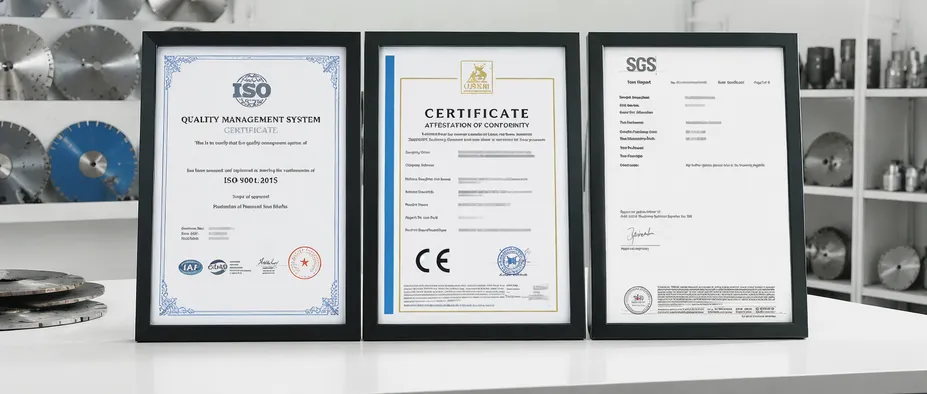
ISO 9001:2015 Certified · CE + MPA Safety Certified · SGS Audited · 4-Stage QC Process

Diamond Blade Certifications & Quality System

ISO 9001:2015 · CE · SGS · MPA — the full certification stack for regulated markets, backed by a production process we've been refining since 2003.

This page walks you through what each certification covers, how our internal QC process works across 3 million pieces per year, and what compliance documentation we can provide for your market.

What Each Certification Covers — and Why It Matters for Your Market

We hold four certifications. Each one covers a specific dimension of quality or market access. Here's what they actually mean for the blades going into your containers.

ISO 9001:2015

Third-party accredited registrar
Coverage Scope

Full quality management system — from raw material procurement through finished product shipment.

What It Means in Practice

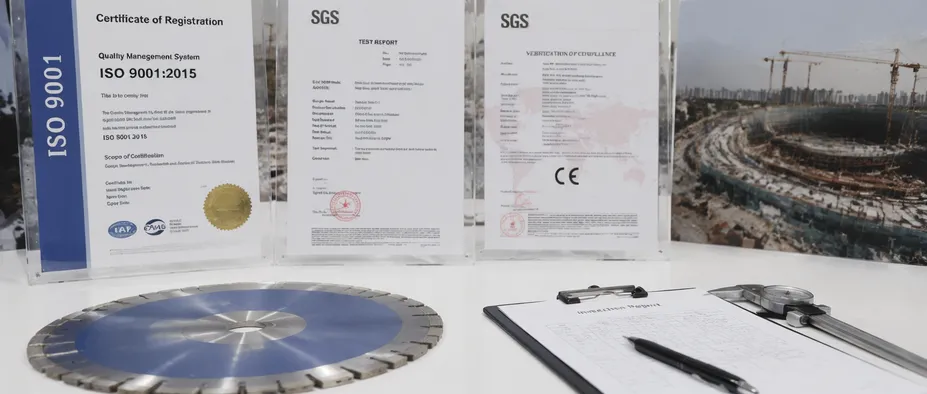
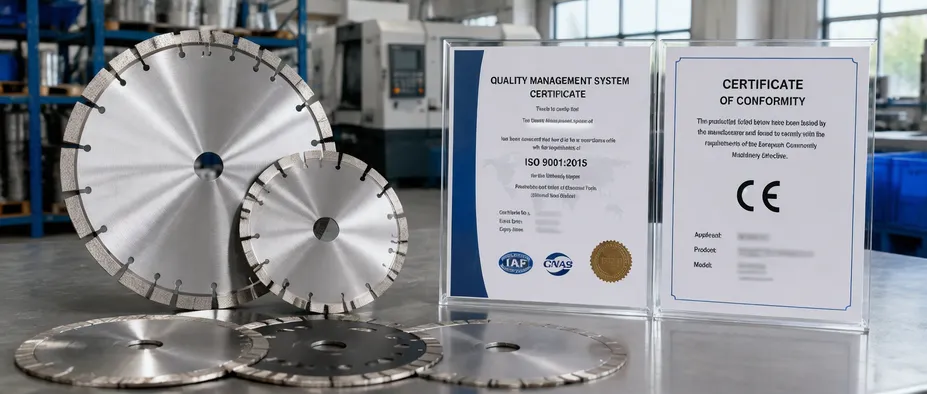
Annual audits verify our QC processes are documented, consistently applied, and reviewed for improvement. Your orders are processed under a certified quality framework, not a verbal procedure.

CE Marking

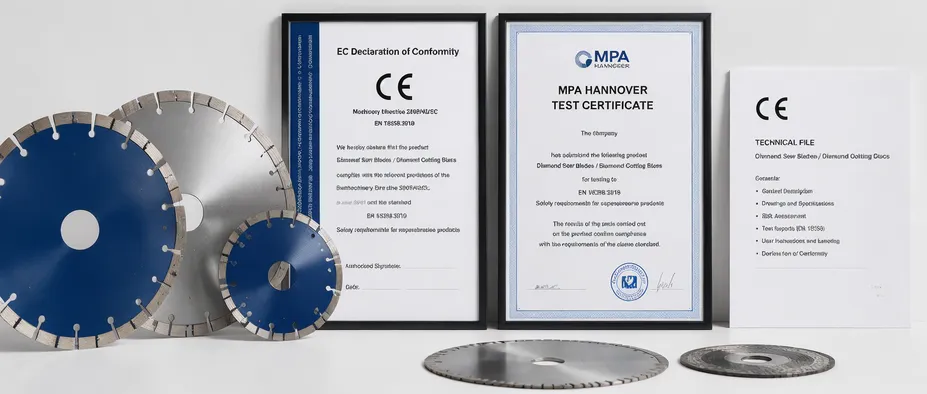
Self-declaration per EU Directives, supported by technical file
Coverage Scope

Diamond saw blades and cutting discs for the EU market.

What It Means in Practice

Confirms the product meets EU safety and performance requirements. Required for legal sale in European markets — our CE-marked blades arrive with the necessary technical documentation.

MPA

Materialprüfungsamt (German Materials Testing Institute)
Coverage Scope

Abrasive and cutting tool safety certification — applicable to diamond blades operating at rated RPM.

What It Means in Practice

MPA is the safety certification European distributors specifically look for on abrasive tools. It covers burst resistance, segment retention, and safe operating speed. If you're supplying the German or broader European professional tool market, your buyers will ask for this.

SGS

SGS Group
Coverage Scope

Product and factory audit.

What It Means in Practice

Third-party inspection confirming product conformity and manufacturing standards. Available for buyers who require an independent factory audit report before placing large orders.

A note on MPA: this is one of the certifications that distinguishes professional-grade diamond tools from commodity imports in the European market. Several of our long-term EU distributors used it as a qualifying filter before placing their first trial order.

How We Control Quality Across 3,000,000 Pieces Per Year

Certifications tell you the framework exists. What follows is how we actually execute it — the four inspection stages every batch passes through before it reaches your port.

CLSEG 4-stage quality control process for diamond blade manufacturing
01

Incoming Material Inspection

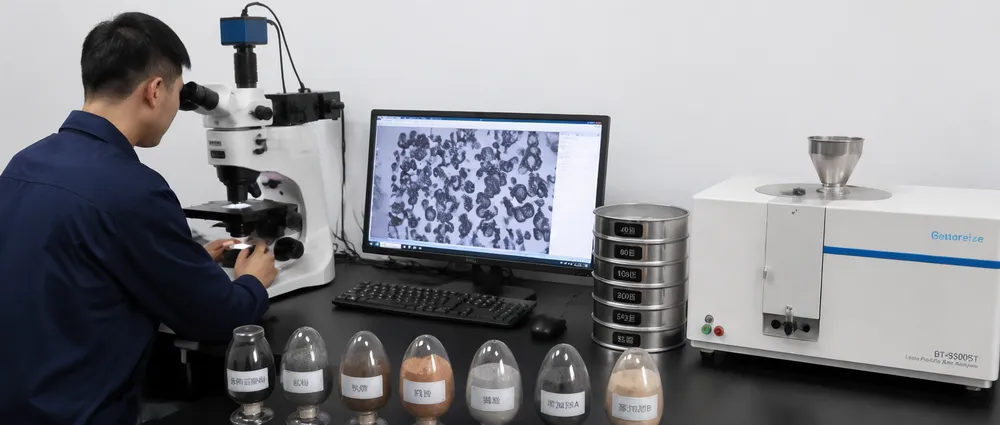
Diamond grit and metal bond powders are the two variables that determine blade performance above everything else. We test every incoming batch before it enters production.

Diamond grit inspection covers particle size distribution (using sieve analysis and laser diffraction), crystal morphology, and thermal stability. We've rejected supplier shipments that passed the supplier's own QC because our particle size tolerances are tighter than the standard — we traced performance variation in finished segments back to grit irregularity in 2017 and tightened incoming specs accordingly.

Metal bond powders (cobalt, iron, copper, tin, and proprietary additives) are verified against composition certificates and checked for contamination.

Steel cores are inspected for dimensional tolerances, material grade compliance, and surface condition before entering the welding line. A core that's out of spec at this stage will produce a blade with runout problems — catching it here costs minutes; catching it after welding costs a production run.

Sieve Analysis Laser Diffraction Crystal Morphology Thermal Stability Composition Certs Dimensional Tolerances
02

In-Process Inspection During Sintering and Welding

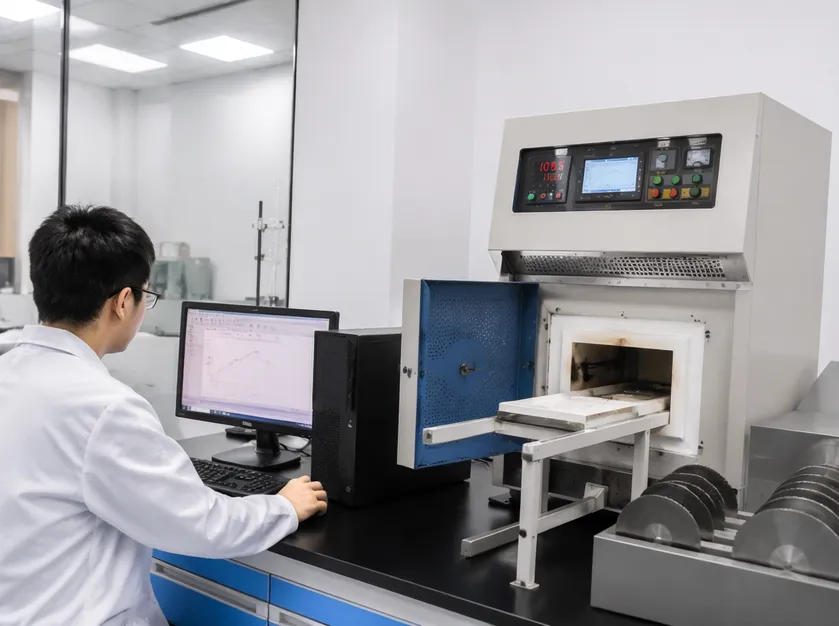
During sintering, we pull sample segments from each batch for density measurement and Rockwell hardness testing. If a furnace cycle drifts outside the programmed temperature-pressure profile — even a minor drift — that batch gets flagged and re-tested before the segments proceed to welding.

Consistent sintering is what gives you uniform segment life across a production run of 10,000 blades, not just the samples you tested initially.

After high-frequency or laser welding, we run pull tests on random samples from each welding batch — destructive tests that measure actual joint strength, not just visual inspection.

The weld joint is the highest-stress point on a diamond blade in operation; it's also the failure mode that creates the most downstream liability. Our weld strength standard is set above the minimum required by the relevant EN and ISO standards for abrasive tools.

Density Measurement Rockwell Hardness Temperature-Pressure Logging Destructive Pull Tests Weld Strength Verification
03

Finished Product Testing

Dimensional checks on every finished blade: outer diameter, bore size, segment height and width, blade thickness, and total runout. These are measured with calibrated instruments against the product specification sheet for that SKU.

Visual inspection covers segment alignment, weld appearance, surface finish, and printing/labeling accuracy. Blades with cosmetic defects that don't affect performance are separated and flagged — they don't ship under your brand unless you've explicitly approved a B-grade tier.

Dynamic balancing is performed on blades above 300mm diameter. An unbalanced blade at 4,500 RPM creates vibration that accelerates bearing wear on the saw and produces an uneven cut. We balance to ISO 1940 G6.3 or better.

Cutting performance sampling: from each production batch, sample blades are run on our test saws cutting the target material (concrete, granite, asphalt, etc.) to verify cutting speed, segment wear rate, and overall blade life fall within the specified range.

Dimensional Accuracy Total Runout Dynamic Balancing Cutting Performance Visual Inspection
04

Pre-Shipment Inspection and Packaging Audit

Final random sampling from packed cartons against AQL (Acceptable Quality Level) standards — typically AQL 1.0 for critical defects and AQL 2.5 for minor defects, though we adjust to your requirements.

Packaging integrity: we verify that blades are individually sleeved or carded, properly separated to prevent transit damage, and that carton labeling matches the packing list and purchase order. Mislabeled shipments cause customs delays — this step exists because we've seen what happens when it's skipped.

Documentation review: commercial invoice, packing list, certificate of conformity, and any market-specific documents (CE declaration, MPA certificate copies) are compiled and cross-checked before the shipment is released.

Third-party inspection access: if your procurement process requires an independent pre-shipment inspection (PSI), we accommodate SGS, Bureau Veritas, TÜV, or your nominated inspector with full access to the finished goods and production records.

AQL Sampling Packaging Integrity Documentation Review Third-Party PSI Access

What You Receive With Every Order

Quality control that doesn't produce documentation is just a process — it's not proof. Every shipment includes the records your procurement team, customs broker, and end customers need.

Certificate of Conformity

Issued per order, confirming the products meet the agreed specification and applicable standards. References the relevant ISO, EN, or buyer-specific requirements.

Test Reports

Batch-specific reports covering dimensional measurements, hardness values, weld pull-test results, and cutting performance data where applicable.

CE Declaration of Conformity

For EU-destined products. Formal declaration with reference to the applicable harmonized standards and the responsible manufacturer details.

MPA Certificate (where applicable)

Copy of the valid MPA safety certification for the product line, confirming burst resistance and safe operating speed compliance.

Production and Packing Photos

Photographic documentation of the finished goods, packaging condition, and container loading. Shared digitally before vessel departure on request.

Traceability Records

Batch codes link finished products back to raw material lots, sintering cycles, and welding records. If a quality issue surfaces in the field, we can trace the root cause within 24 hours.

Need additional documentation? If your market requires specific test protocols, material safety data sheets (MSDS), or country-specific compliance documents, let us know during the quotation stage. We've prepared documentation packages for markets with non-standard requirements including Australia, South Korea, and several Middle Eastern countries.

Regional Compliance

Compliance Standards by Export Market

Our product certifications already cover the main regulatory requirements across our export markets. Here's the breakdown by region so you can confirm your specific market's compliance needs are met.

European Union & United Kingdom

EU and UK diamond saw blade compliance standards including CE marking and MPA certification

The primary compliance requirements for diamond saw blades in the EU and UK:

  • CE Marking

    Under the Machinery Directive (for blades used in machinery) and the Personal Protective Equipment framework for related tools. Our CE technical files cover the full range of diamond saw blades and diamond cutting discs.

  • MPA Certification

    Satisfies the EN 13236 standard for superabrasive products — this is what European distributors reference when specifying tools for professional and industrial use.

  • EN 13236

    Safety requirements for superabrasive products — governs burst speed, segment retention, and labeling. Our blades are produced to conform to this standard, and the relevant test data is in our technical files.

For Germany, Netherlands, or Scandinavia: MPA is effectively a table-stakes requirement for professional channel distribution. Our CE + MPA combination means your products don't require separate safety qualification before they enter the distribution chain.

Middle East

Middle East and GCC region compliance for diamond blade imports

Saudi Arabia, UAE, and most GCC countries accept CE-marked products for import without additional product certification.

  • ISO 9001:2015 certificate and SGS audit report are typically sufficient for supplier qualification by local distributors and project procurement teams.
  • For government or infrastructure contracts that require specific third-party inspection, our SGS relationship supports buyer-specified inspection arrangements.

Infrastructure projects: Our SGS relationship supports buyer-specified inspection arrangements for contracts requiring third-party verification.

Southeast Asia

Southeast Asia diamond blade import compliance across Indonesia, Vietnam, Thailand, and Philippines

Regulatory requirements vary by country across Southeast Asia — Indonesia, Vietnam, Thailand, and the Philippines each have different import compliance frameworks.

  • ISO 9001:2015 and our CE documentation are accepted by distributors across the region as supplier qualification evidence.
  • For markets with SNI (Indonesia) or TCVN (Vietnam) product standards, we can work through your local distributor or agent to determine whether additional certification is required for your specific product categories.

Local support: We work through your local distributor or agent to navigate country-specific requirements like SNI or TCVN standards.

South America & Africa

South America and Africa diamond blade import compliance and supplier qualification

Most South American and African markets accept ISO 9001:2015 certification and CE marking as the primary supplier qualification criteria.

  • ISO 9001:2015 + CE marking serve as the primary supplier qualification criteria across these regions.
  • SGS audit reports support additional due diligence requirements from buyers whose procurement processes require third-party factory verification.
Independent Verification

Third-Party Audits and Independent Verification

SGS factory audits are part of our certification stack, not an optional add-on. We support independent third-party factory audits for buyers who need to verify manufacturing conditions as part of their supplier qualification process — common requirements for European importers, large distributor groups, and buyers with their own supply chain compliance programs.

What We Can Provide on Request

SGS audit report (most recent)
ISO 9001:2015 certificate (current validity)
CE technical documentation package
MPA certificate
Product-specific test reports for specific blade types or dimensions
Certificate of origin for customs and import compliance

Certificate Verification Policy

We don't publish specific certificate numbers or expiry dates here — buyers who need to verify certificate validity can request the originals directly, and we'll provide scanned copies or arrange for verification through the issuing body.

Why we handle it this way: We've had third parties misquote certificate details from websites. Direct document provision eliminates that ambiguity for your compliance team.

Beyond Certification

Formula and Process Quality — What Certifications Don't Measure

ISO and CE set the quality system floor. What they don't capture is the two decades of formula refinement that determines whether a blade performs at the top of its specified range or the bottom.

60+ Patents — Formula & Process, Not Product Design

Our R&D center holds 60+ patents — not product design patents, but formula and process patents that directly affect cut performance and blade lifespan.

Specific bond compositions for high-silica granite

Modified segment geometry for engineered quartz that reduces chipping at the kerf edge

Sintering profile patents that control diamond protrusion height for consistent cut initiation

These aren't theoretical. They're the result of running the same stones through different formula iterations until we found what actually works across varying material hardness, moisture content, and machine feed rates.

Stone-Matched Formulation vs. Generic Sourcing

When you source a granite saw blade from us, the bond hardness and diamond concentration are matched to the stone type you specified — not pulled from a generic formula that a trading company sourced from whoever was cheapest that month.

That's the quality dimension certifications can't audit: the accumulated knowledge of what formula works for which stone, built from 20+ years of production and failure analysis.

CLSEG R&D lab — sintering profile testing for diamond blade formula optimization
60+ Process Patents
20+ Years R&D Data

What This Means for You

  • Bond formula tuned per stone type
  • Consistent cut initiation across batches
  • Reduced kerf-edge chipping on engineered quartz
  • Performance validated across varied feed rates
FAQ

Common Questions on Certification and Quality Compliance

Answers to the certification, audit, and compliance questions we hear most from importers and distributors qualifying a new diamond tool supplier.

Which of your certifications covers blades for the EU professional market?

CE marking and MPA certification together cover the full compliance requirement for diamond saw blades and cutting discs in the EU professional tool market. CE satisfies the legal market access requirement; MPA satisfies the additional safety certification that professional-channel distributors in Germany and Northern Europe specify. Both apply to our diamond saw blades and diamond cutting discs.

Can you provide SGS or other third-party inspection reports for a new supplier qualification?

Yes. Our most recent SGS audit report is available on request. If your qualification process requires a fresh third-party inspection, we can coordinate an SGS or equivalent audit — typically with 2–3 weeks' scheduling lead time. Contact us with your inspection scope requirements.

Does ISO 9001:2015 certification apply to all product lines, or only specific categories?

The ISO 9001:2015 certification covers our full quality management system — it applies across all product lines manufactured at our Ezhou facility, including diamond saw blades, diamond cutting discs, diamond segments, and diamond grinding tools. The scope is the factory's quality system, not a product-specific certification.

What documentation comes with a standard order for EU import?

A standard EU-market order ships with:

  • CE declaration of conformity
  • Product test report (for the specific product type)
  • Packing list with RPM and safety labeling verification
  • Certificate of origin

Additional documentation (SGS inspection report, ISO certificate copy) is available on request and can be included in the shipment documentation package.

How do you handle a quality dispute or non-conformance claim after delivery?

We require photos and a description of the non-conformance within 30 days of delivery. Our QC team traces the issue back to the production batch records — sintering logs, welding batch data, outgoing inspection records — and provides a root cause analysis.

Resolution options depend on the finding: replacement, credit, or formula adjustment on the next order.

We've maintained production records going back to 2010 precisely to support this kind of traceability.

Talk to Us About Compliance Documentation

Send your stone type, blade specification, destination market, and any specific compliance requirements your buyers mandate. We'll confirm which certifications apply, what documentation we can provide, and whether any additional testing or inspection steps make sense for your order.

What to Include in Your Request

  • Stone type you're cutting (granite, marble, engineered quartz, concrete, etc.)
  • Blade specification — diameter, segment type, arbor size
  • Destination market (EU, North America, Middle East, etc.)
  • Any specific compliance requirements your buyers mandate

WhatsApp: +86 13177381650

If you're also evaluating our customization capabilities — private labeling, formula adjustment, modified dimensions — see our OEM/ODM services page for the full picture of what we support.