

Segmented Diamond Blades The Multi-Material Workhorse
Gullet geometry engineered for aggressive debris clearance across stone, concrete, and masonry. The default blade construction when your customers cut mixed materials and need one reliable tool that handles the variety.
Available from 300 mm to 3200 mm, with bond formulas matched to your market's dominant material.
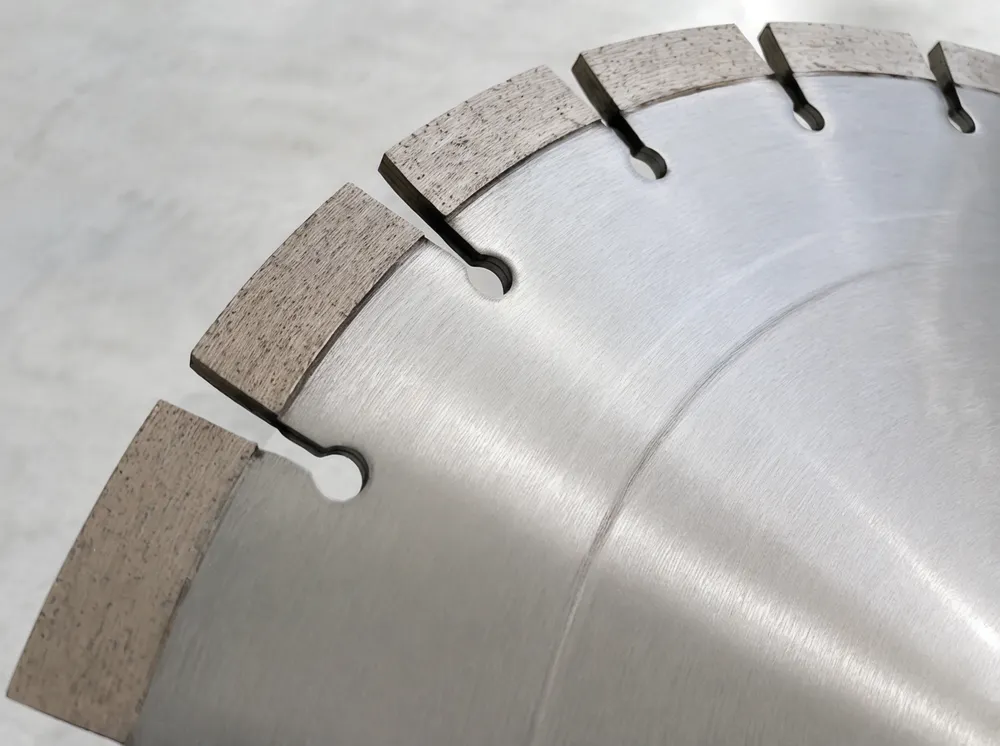
What a Segmented Rim Gives You That Other Constructions Don't
Debris Clearance
Open slots between segments channel cutting debris out of the kerf, preventing loading and maintaining cut speed throughout the operation.
Active Cooling
Gullets allow air or water to reach the cutting face directly, providing thermal management that extends segment life and prevents overheating.
Stress Relief
Gullet gaps create stress relief points that reduce the risk of core warping under thermal load, maintaining blade flatness during extended cuts.
The segmented diamond blade is defined by its gullets — the open slots between segments. Those gaps do three things simultaneously: they channel cutting debris out of the kerf, allow air or water to reach the cutting face for cooling, and create stress relief points that reduce the risk of core warping under thermal load. That combination makes the segmented rim saw blade the most versatile construction in diamond tooling — it handles granite, concrete, limestone, brick, block, and cured masonry without the narrowing compromises of continuous or turbo rim designs.
For your inventory strategy, this matters: a segmented diamond blade is the SKU that sells across the widest range of end-user applications. Your stone fabrication customers use them. Your concrete contractors use them. Your general construction supply accounts use them. While specialized blades (continuous rim for chip-free marble, Arix for high-speed granite) serve niche performance needs, the segmented rim is your volume mover and entry-point product for new accounts.
We've been manufacturing segmented diamond blades since 2003 across the full diameter range. The complete diamond saw blade lineup covers the bond chemistry that drives performance across all blade types. This page focuses specifically on the segmented rim construction — what makes ours perform, where they deploy best, and how we customize them for your market.
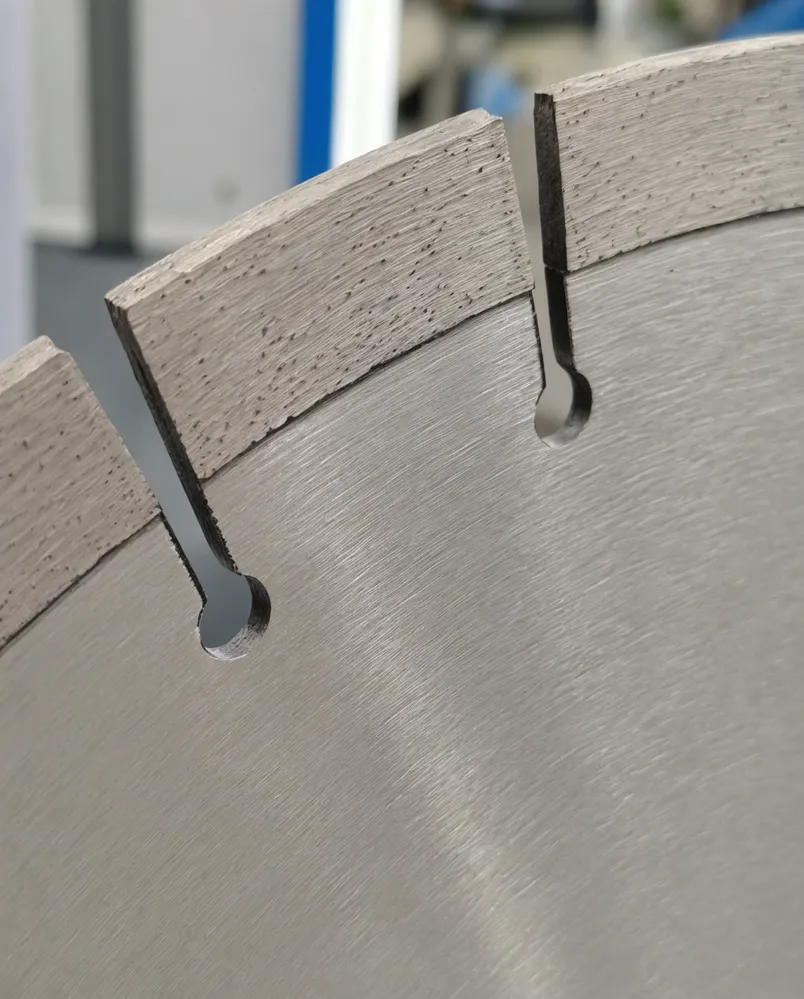
Gullet geometry provides simultaneous debris clearance, cooling access, and stress relief.
Inventory Insight
The segmented rim is your volume mover and entry-point product for new accounts. Specialized blades — continuous rim for chip-free marble, Arix for high-speed granite — serve niche performance needs. The segmented blade is the SKU that spans your entire customer base, from stone fabrication to concrete contractors to general construction supply.
Technical Specifications — Segmented Diamond Blade Range
Full specification coverage from 300 mm hand-held blades to 3200 mm quarry saws, with bond and grit matched to your market's dominant material.
| Parameter | Standard Range |
|---|---|
| Diameter | 300 mm – 3200 mm |
| Segment Height | 10 mm – 20 mm (standard); up to 25 mm for large-diameter |
| Segment Width | 2.8 mm – 7.0 mm |
| Segment Count | 18–120+ (varies with diameter) |
| Core Thickness | 2.2 mm – 5.0 mm |
| Arbor Bore | 25.4 mm, 50 mm, 60 mm (custom bore available) |
| Gullet Depth | 8 mm – 12 mm (standard); deeper for abrasive materials |
| Welding Method | High-frequency (standard); Laser for dry-cut/high-RPM |
| Diamond Grit | 30/35, 35/40, 40/50 mesh (matched to material hardness) |
| Bond Type | Cobalt-based, iron-based, proprietary composite bonds |
| Operating Speed | 25–55 m/s (varies by diameter) |
| Certifications | ISO 9001:2015, CE, SGS, MPA |
Specifications shown are industry-standard values for segmented diamond blades. Actual specifications may vary by application and order requirements. Contact us for detailed product data sheets.
Segment Height — Where Cutting Life Lives
The spec that most affects your selling proposition is segment height. A 10 mm segment on a 350 mm blade gives your customer roughly 800–1200 linear meters on medium-hard granite under standard bridge saw conditions.
Ourstandard 14" (350 mm) segmented blade ships with a 12 mm segment, delivering 1000–1500 linear meters — a 25–30% life advantage over the 10 mm segments common in price-driven imports. That difference is your margin story.
For large-diameter quarry blades (900 mm+), we offer 20–25 mm segments that keep blade changes to a minimum during continuous production runs — critical for operations where downtime costs more than the blade itself.
Bond Chemistry — Matching Wear to Material
Bond hardness determines how quickly new diamond crystals are exposed. Get it wrong and you either glaze (bond too hard for the material) or strip (bond too soft, segments wear before diamond is spent).
- Hard bond (cobalt-rich): For abrasive materials — sandstone, green concrete, asphalt. Resists rapid matrix wear.
- Medium bond (composite): General-purpose for granite, cured concrete, block. Balances life and speed.
- Soft bond (iron-based): For hard, dense materials — engineered quartz, hard granite, porcelain. Ensures continuous diamond exposure.
We formulate bond for your dominant market material. Tell us what your customers cut most, and we match the matrix — no generic one-size-fits-all compromise.
Applications by Diameter & Industry
Segmented diamond blades deploy across more applications than any other rim type. Here's how diameter maps to end-user industry — and what that means for your stocking decisions.
Hand-Held
100 mm – 230 mm
- Angle grinder cutting — concrete, brick, block
- Plumbing and electrical chase cutting
- Tuckpointing and mortar removal
- Dry-cut dominant — laser welding preferred
Highest volume SKU range for hardware and general construction supply.
Table & Masonry Saws
300 mm – 400 mm
- Brick and block wet saws
- Small bridge saws for granite countertops
- Concrete cut-off saws (hand-held power cutters)
- Wet or dry operation depending on equipment
Core range for stone fabrication and masonry contractor supply.
Floor & Road Saws
400 mm – 900 mm
- Flat slab and road joint cutting
- Reinforced concrete with rebar
- Demolition and renovation cutting
- Wet-cut with high water flow mandatory
Professional contractor segment — higher price point, longer replacement cycle.
Bridge Saws
350 mm – 625 mm
- Granite slab dimensioning
- Marble and limestone panel cutting
- Engineered stone fabrication
- Wet-cut with precision water delivery
Stone fabrication shops — repeat purchase customers with predictable consumption.
Block Cutters
900 mm – 3200 mm
- Quarry block squaring and slabbing
- Multi-blade gang saw frames
- Large-format stone processing
- High water volume with recirculation systems
Quarry and large processor segment — custom orders, highest per-unit value.
Wall Saws
600 mm – 1200 mm
- Structural opening creation — doors, windows, HVAC
- Reinforced concrete wall sectioning
- Controlled demolition with precision cuts
- Wet-cut with track-mounted systems
Specialist concrete cutting contractors — premium pricing, technical support valued.
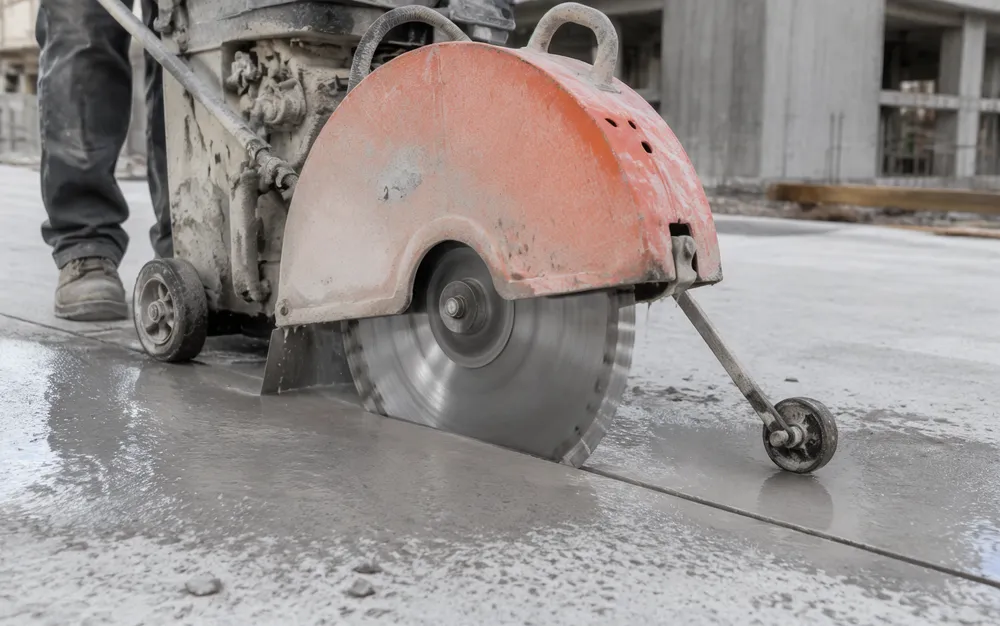
One Rim Type, Six Markets
The segmented rim construction spans more market segments than any other blade type. From a 4" angle grinder blade in a hardware store to a 3200 mm quarry saw blade on a custom order — the fundamental design is the same. Gullets, segments, core. What changes is the engineering within: bond chemistry, diamond quality, segment geometry, and welding method.
For distributors, this means your segmented blade program can scale from entry-level hardware store accounts to premium quarry supply relationships — all within the same product family. Your salespeople learn one technology story and adapt it across every customer conversation.
How We Manufacture Segmented Diamond Blades
From powder metallurgy to final tensioning — every step affects cut quality, segment life, and blade safety. Here's what happens between your order and your warehouse.
Powder Formulation
Diamond crystals blended with metal powder matrix — cobalt, iron, copper, tin in precise ratios matched to your target material. Concentration and grit size set here determine final cutting behavior.
Cold Pressing & Sintering
Powder mix pressed into segment molds under high tonnage, then sintered at 700–950°C in controlled atmosphere furnaces. This fuses the metal matrix around diamond crystals without degrading them.
Core Production & Welding
Steel cores laser-cut and heat-treated for flatness and tensile strength. Segments attached via high-frequency induction welding or laser welding depending on application and RPM requirements.
Tensioning & QC
Finished blades mechanically tensioned (hammered or rolled) for stable rotation at operating speed. Every blade tested for runout, flatness, and weld integrity before packaging.
Welding Methods: High-Frequency vs. Laser
High-Frequency Welding
- Standard for wet-cut applications
- Lower production cost — better for price-competitive SKUs
- Suitable for moderate RPM applications
- Not recommended for dry-cut or high-RPM hand-held tools
Laser Welding
- Required for dry-cut and high-RPM applications
- Superior bond strength — segment loss nearly eliminated
- Higher perceived quality — premium positioning
- Higher production cost — reflected in unit price
Distributor guidance: Laser-welded blades command a 15–25% price premium at retail. For your hand-held grinder blade line (100–230 mm), laser welding is effectively mandatory for safety compliance in most markets. For wet-cut bridge saw and floor saw blades, high-frequency welding delivers the same performance at lower cost — your margin opportunity.
Customization for Your Market
Every market has different dominant materials, equipment standards, and buyer expectations. We customize at the formula level — not just the label.
Bond Formula
Adjusted for your market's primary material. Granite-dominant markets get harder bond than concrete-dominant markets. We test and validate before production runs.
Segment Geometry
Height, width, and count optimized for cut depth requirements and equipment compatibility. Custom gullet patterns for specific debris clearance needs.
Diameter & Arbor
Full range 100 mm – 3200 mm. Any arbor bore to match your market's equipment standards — 25.4 mm, 22.23 mm, 50 mm, 60 mm, or custom.
Branding & Packaging
Your brand identity on every blade — laser-etched logos, custom color printing on cores, retail-ready packaging designed to your specs. White-label or co-brand options available.
Performance Tiers
Good / Better / Best product lines built on the same platform with different diamond quality and concentration levels. Structured margin architecture for your sales team.
Safety & Compliance
EN 13236 certified production. MPA tested. OSHA-compliant labeling for North American markets. We handle the certification paperwork — you get market-ready products.
Minimum Order Quantities
Custom formulations require MOQs that vary by blade diameter and complexity. Standard sizes (115–350 mm) start at 200 pieces per SKU. Large-diameter blades (400 mm+) start at 20 pieces per SKU. Contact us with your program requirements for exact MOQs and lead times.
Application Guide: Match the Blade to the Job
Segmented blades work across dozens of materials, but performance varies dramatically with specification choices. This guide helps you recommend the right blade for each end-use scenario.
| Material | Recommended Bond | Diamond Grit | Cut Method | Key Consideration |
|---|---|---|---|---|
| Concrete (green/cured) | Soft to medium bond | 40/50 – 50/60 | Wet or dry | Aggregate hardness drives bond selection |
| Reinforced Concrete | Medium bond | 40/50 | Wet preferred | Steel rebar causes segment side wear — wider segments recommended |
| Granite | Hard bond | 40/50 – 50/60 | Wet | High diamond quality critical — low-grade crystals fracture prematurely |
| Marble / Limestone | Very hard bond | 50/60 – 60/80 | Wet | Soft stone wears bond slowly — hard bond prevents premature diamond loss |
| Asphalt | Very soft bond | 30/40 – 40/50 | Wet or dry | Abrasive material — soft bond wears freely to expose fresh diamonds |
| Clay Brick / Block | Medium-hard bond | 40/50 | Dry (hand-held) | Laser welding mandatory for dry-cut safety |
Note for distributors: This table represents general guidance. Regional aggregate types, local equipment preferences, and end-user skill levels all influence optimal specification. We provide market-specific recommendation matrices as part of our distributor onboarding — ask your account manager for details.
Why Source Segmented Blades from Us
Manufacturing capability is table stakes. What matters for your business is consistency, flexibility, and a supplier who understands distributor economics.
In-House R&D Lab
Dedicated materials science team with SEM analysis, hardness testing, and field trial coordination. New formulations validated before they reach your warehouse.
Batch Consistency
Automated powder weighing, CNC-controlled pressing, and statistical process control on every production run. Your 50th order performs like your first.
Flexible Production Runs
Mixed-container orders across multiple SKUs. Ramp up volume on proven sellers without being locked into full-container minimums on new items.
Lead Time Reliability
Standard orders ship in 25–35 days. Dedicated production slots available for high-volume accounts. We hit delivery dates — because your customers are counting on you.
Distributor-First Model
We don't compete with you. No direct-to-contractor sales, no marketplace listings undercutting your pricing. Your market is your market.
Technical Documentation
Product data sheets, safety certifications, recommended usage guides, and marketing materials provided for every SKU. Arm your sales team with the right content.
Frequently Asked Questions
Common questions from distributors evaluating segmented diamond blade suppliers.
What's the difference between segmented and continuous rim blades?
Segmented blades have gullets (gaps) between cutting segments that provide air cooling and debris clearance, making them ideal for fast cutting in hard materials and dry-cut applications. Continuous rim blades have no gaps — they deliver smoother cuts with less chipping, preferred for finish work on tiles and decorative stone but require water cooling.
Can I order mixed containers with different blade sizes?
Yes. We regularly ship mixed containers with multiple diameters, specifications, and packaging configurations in a single shipment. This helps you maintain optimal inventory levels across your product range without overcommitting to any single SKU.
How long does it take to develop a custom formula?
Initial samples typically ready in 3–4 weeks. After field testing and any adjustments, production-ready formulations are confirmed within 6–8 weeks total. For straightforward applications where we have existing validated formulas, sample lead time can be as short as 2 weeks.
Do you provide safety certification for my market?
We manufacture to EN 13236 and can provide MPA test reports, CE documentation, and OSHA-compliant labeling. For markets with additional local requirements, we work with accredited test labs to obtain necessary certifications before your first shipment.
What diamond quality grades do you offer?
We source diamonds from multiple suppliers across quality tiers — from economy-grade for price-sensitive markets to premium monocrystalline for professional and industrial applications. Diamond selection is matched to your target price point and performance expectations during the specification process.
What happens if a blade underperforms in the field?
We investigate every performance complaint. Return the blade to us with usage details and we'll perform a full failure analysis — segment wear pattern, remaining diamond exposure, weld integrity. If it's a manufacturing issue, we replace the order. If it's a specification mismatch, we'll recommend a corrected formula at no re-engineering cost.
Ready to Build Your Segmented Blade Program?
Tell us about your market, your target materials, and your volume expectations. We'll come back with a specification proposal, sample plan, and pricing structure within 48 hours.
Where Segmented Diamond Blades Move Volume — Market Segments Worth Stocking
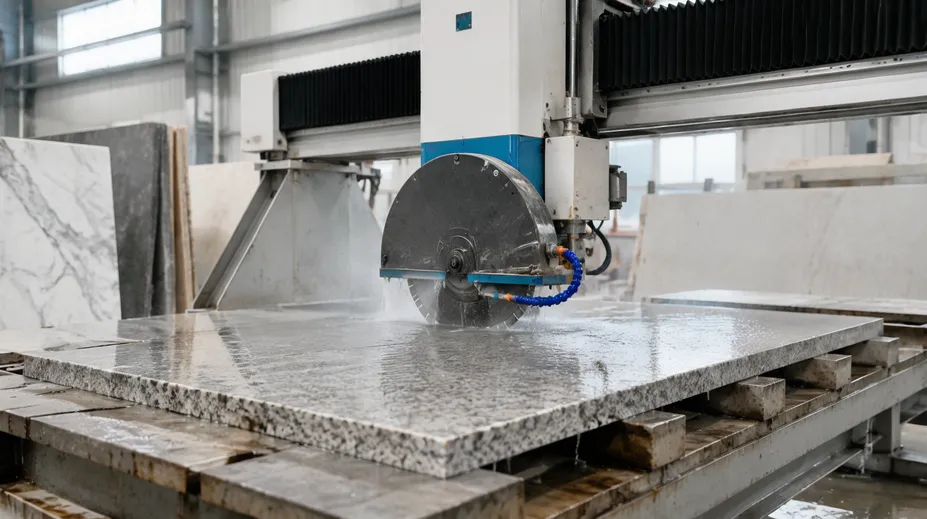
General Stone Fabrication (Countertop Shops, Tile Processing)
Fabrication shops running bridge saws and table saws consume segmented blades as their default choice for mixed-material work. A typical countertop shop cuts granite, engineered quartz, and natural marble in the same week — they keep segmented rims on hand because one blade type handles the variety acceptably.
Diameters: 350–500 mm · Reorder: 4–8 weeks · Rotation: 3–5 blades
Commercial Angle
This is recurring revenue with minimal sales effort after the first trial order. Once a shop validates your blade's performance on their specific machine and stone mix, they reorder on autopilot. The segmented rim is where you land the account — then upsell stone-specific blades (granite-optimized, marble chip-free) as you learn what each customer primarily cuts.
Concrete Cutting & Construction Supply
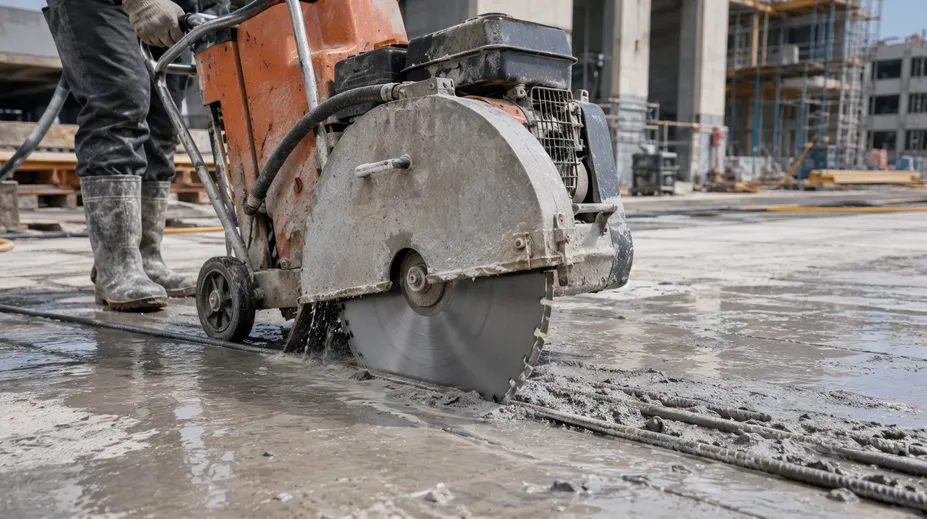
Road saws, floor saws, wall saws — segmented diamond blades are the standard construction for concrete cutting applications. The wide gullets clear the aggressive slurry that concrete produces, and the segment geometry tolerates the embedded rebar hits that destroy continuous rims.
Diameters: 300 mm (hand-held) to 900 mm+ (floor/wall saws)
Commercial Angle
Construction supply is project-driven: a single infrastructure project can consume 20–50 blades across various diameters. Municipal road maintenance programs generate recurring seasonal orders. Your value proposition here is availability — the contractor who can't get blades on Monday doesn't work on Tuesday. Keeping segmented blades in stock positions you as the reliable local source.
Masonry and Landscaping Supply
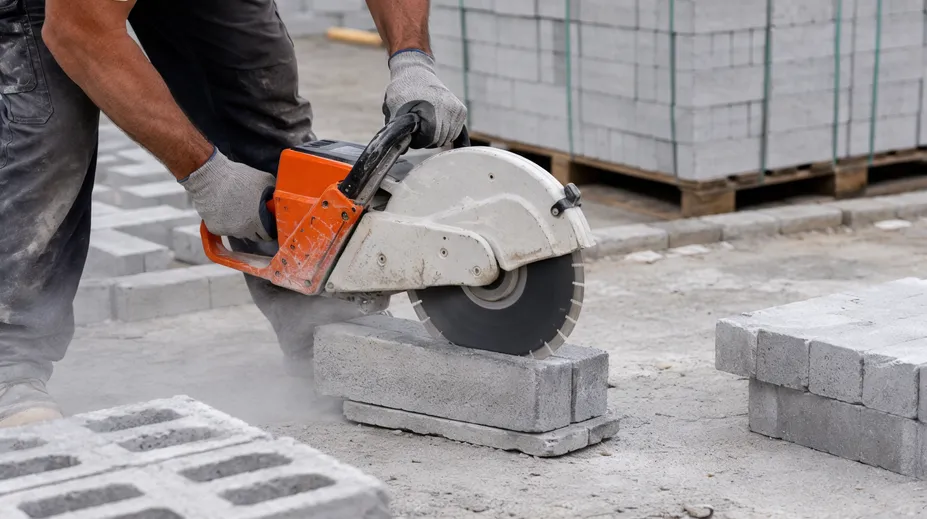
Block, brick, pavers, curbstone — segmented rims handle all the common masonry materials that landscaping contractors and block layers encounter. These are mid-range priced blades consumed in high volume by buyers who aren't precious about the tool. They want it sharp, they want it now, and they want a price that doesn't hurt when the blade hits a buried steel pin.
Commercial Angle
This segment is price-sensitive but high-volume and loyalty-driven. A masonry supply distributor who locks in reliable stock at competitive landed cost owns the account. We can formula-tune for this exact market: slightly harder bond for the abrasive masonry materials, standard diamond concentration to keep your per-blade cost in line with market expectations.
Quarry Secondary Processing
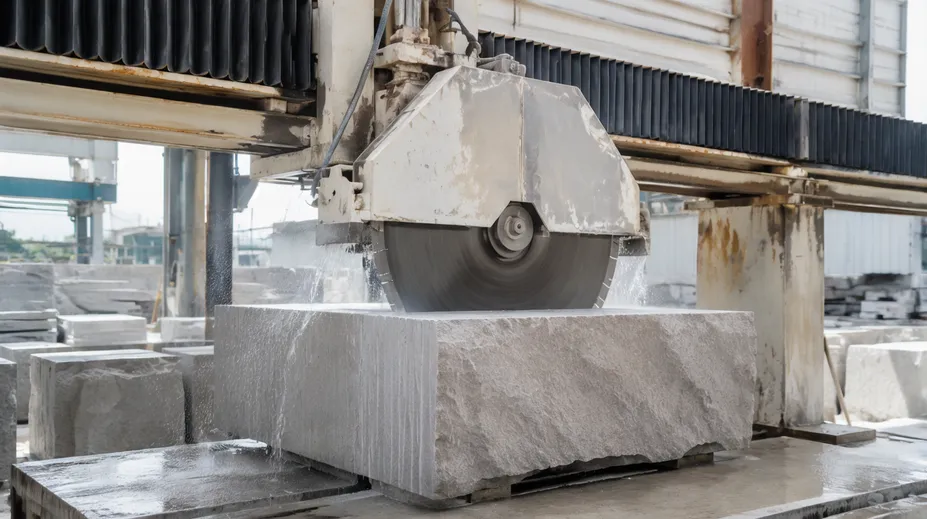
After the primary block extraction (where gang saws do the heavy lifting), quarries run secondary cutting on smaller bridge saws and cross-cut machines using 500–800 mm segmented blades. These cuts are less precision-demanding than fabrication work but higher volume per blade — each blade might do 200+ cuts per day in continuous operation.
Diameters: 500–800 mm · Duty: 200+ cuts/day continuous
Overlooked Opportunity
This segment is often overlooked by distributors focused on fabrication shops. Quarry accounts order larger quantities per specification and tend to be less price-sensitive because blade cost is trivial relative to block value and machine operating cost.
Know your target market segment?
Tell us your focus — we'll recommend a starter SKU mix and pricing tier matched to your buyers.
Get Segment-Specific RecommendationsGullet Geometry and Segment Design — How Manufacturing Choices Affect Your Margin
The segmented rim looks simple — segments separated by gullets. But the details of that geometry determine whether your customers call back to reorder or switch to another supplier.
Gullet Width & Depth
Debris Evacuation Control
For concrete and abrasive materials that generate heavy slurry, we widen the gullet 10–15% beyond stone-cutting standard. This prevents segment undercutting — where debris packs against the segment base and erodes the bond from the side rather than the cutting face.
We've seen distributor returns drop measurably after switching from their previous supplier's narrow-gullet design to our wider specification for concrete-market blades.
Segment Geometry
Straight Tracking in Deep Cuts
For larger diameters (600 mm+), we profile the segment with a slight roof or sandwich layer structure that promotes straight tracking in deep cuts. A flat segment on a 900 mm blade can drift when cutting depth exceeds 150 mm because the full segment width contacts the kerf wall and creates friction.
The profiled segment reduces kerf-wall drag, so your customers get cleaner, straighter cuts without manual correction.
Diamond Distribution Within the Segment
Automated Cold-Press Filling
We cold-press using automated filling systems that deposit diamond evenly through the bond matrix. Uniform distribution means your customers experience consistent cutting speed from the first cut to the last millimeter of segment life.
Failure mode you're avoiding:
- Clusters and voids in the diamond pattern create hot spots — where no diamonds are cutting, the bond overheats
- Weak spots — where too many diamonds concentrate, they pop out prematurely because each individual crystal lacks sufficient bond support
In-House Segment Sintering
Full Formula Control
We don't use pre-made segments sourced from third parties. Every segment is sintered in our own furnaces using formulas we developed and control.
When you report a field issue — "the blade glazes on this particular stone" — we adjust the formula directly rather than asking a segment supplier to reformulate (and waiting three months for them to prioritize your order).
Why This Matters to Your Bottom Line
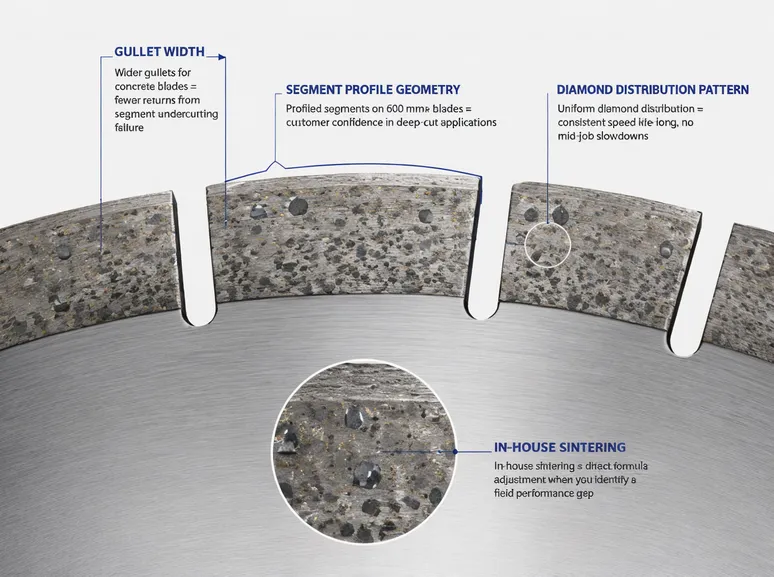
- Wider gullets for concrete blades = fewer returns from segment undercutting failure
- Profiled segments on 600 mm+ blades = customer confidence in deep-cut applications
- Uniform diamond distribution = consistent speed life-long, no mid-job slowdowns
- In-house sintering = direct formula adjustment when you identify a field performance gap
Customization That Builds Your Brand — Not Just a Logo Stamp
Segmented diamond blades are the most heavily customized product in our range because they serve such a broad market. Here's what we adjust for OEM partners.
Bond Formula by Target Material
The same 400 mm segmented blade ships with completely different internals depending on whether your market predominantly cuts concrete, granite, or mixed masonry.
We maintain separate formula libraries for each material class. When you onboard with us, we identify your primary end-use market and match the formula accordingly — not a compromise "general purpose" bond, but the optimal formulation for where most of your volume goes.
Segment Height Options
Build a good-better-best product line under your own brand with genuine performance differentiation at each tier, not just packaging changes:
- ● Standard — 10 mm segment height
- ● Professional — 12–15 mm segment height
- ● Premium — 15–20 mm segment height
Gullet Count and Profile
We specify gullet geometry based on your target application, not a one-size default:
- ▸ More segments (narrower gullets) — finish-quality cuts in stone fabrication
- ▸ Fewer segments (wider gullets) — aggressive debris clearing in concrete and demolition
Core Options
- Standard steel cores — for wet cutting applications
- Tensioned cores — for large diameters requiring flatness at high RPM
- Silent cores — sandwich steel with dampening slots for low-noise segmented rim blades
Visual Branding
- Color-coded cores (painted or anodized ring)
- Laser-etched brand marks
- Segment color coordination
- Custom packaging with your brand identity, SKU numbering, and barcode system
MOQ for Customization
- 100 pcs — Formula-customized blades per specification (standard diameters)
- 50 pcs — Private-label packaging minimum
- 5–10 pcs — Sample orders at production pricing for market testing
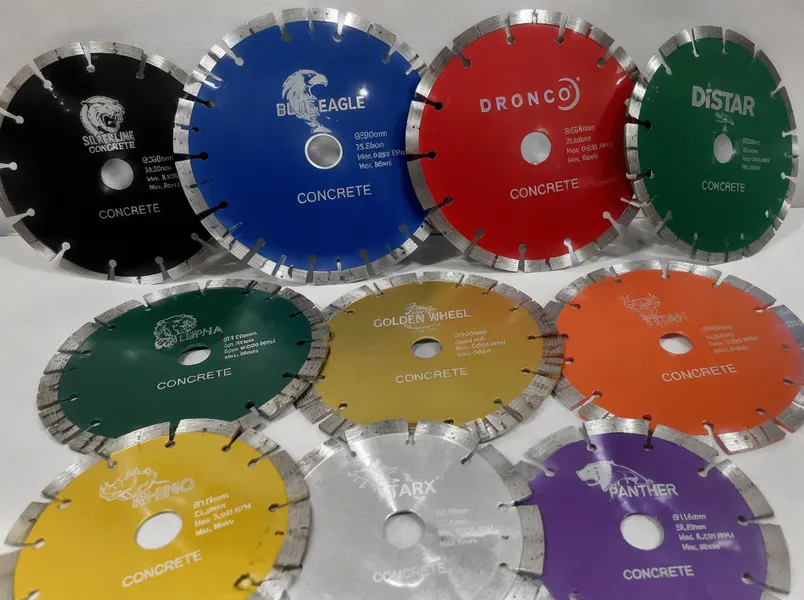
Customization capabilities may vary by diameter and specification. Contact us to confirm specific customization parameters for your order.
We'll quote your custom segmented blade specification
Segmented vs. Continuous vs. Turbo — Helping You Stock the Right Mix
You're likely evaluating how segmented diamond blades fit alongside other rim constructions in your product line. Here's how we think about it — and how we help distributors build a coherent lineup without redundant SKUs.
| Feature | Segmented Rim | Continuous Rim | Turbo Rim |
|---|---|---|---|
| Cutting Speed | Fast — aggressive debris clearance | Slowest — no gullets for evacuation | Medium-fast — serrated rim aids cooling |
| Edge Quality | Acceptable — slight chipping on brittle materials | Best — zero gullet impact marks | Good — smoother than segmented, faster than continuous |
| Material Versatility | Widest — stone, concrete, masonry, block | Narrow — brittle materials only (marble, porcelain, tile) | Medium — stone and masonry |
| Heat Management | Good — gullets channel cooling air/water | Poor — relies entirely on water cooling | Good — serrations create airflow |
| Dry Cutting Suitability | Good (with laser-welded joints) | Not recommended | Acceptable for light duty |
| Primary Market | General construction, mixed fabrication, concrete | Premium stone fabrication, ceramics | Renovation, light construction |
| Your Inventory Role | Volume base — covers 60–70% of applications | Premium upsell — specific accounts needing chip-free cuts | Mid-range complement — fills the gap |
Core Inventory
Build your core inventory around segmented blades. They cover the broadest demand across construction, fabrication, and masonry markets.
≈ 60–70% of customer applications
Premium Upsell
Add continuous rim for fabrication-focused accounts that need chip-free, precision cuts in marble, porcelain, and ceramics.
Targeted at premium stone accounts
Mid-Range Fill
Stock turbo rim as a middle option for renovation and light construction — fills the gap between segmented speed and continuous finish.
Complementary to core segmented range
Simplification Strategy
If you want to simplify further: segmented + continuous covers roughly 90% of the applications your customers will ask about. Turbo is a useful mid-range fill but not essential for market entry.
Need help choosing which constructions to stock for your specific market?
Talk to Our Product TeamPackaging, Loading, and Landed Cost Considerations
Segmented diamond blades ship efficiently because the standard diameters (350–500 mm) pack flat with minimal dead space. Here's what this looks like in practice.
Individual Packaging
Each blade is VCI-wrapped (vapor corrosion inhibitor for ocean transit protection), placed in a protective cardboard sleeve, then packed in branded or neutral outer boxes. Boxes stack flat on pallets — no custom crating needed below 600 mm diameter.

Container Loading — 20GP Estimates
Landed Cost Factors — Discuss With Us
For segmented blades specifically, the segment height and diamond concentration are the primary cost drivers — not the steel core. A 350 mm blade with 10 mm segments and standard diamond costs roughly 40% less than the same diameter with 15 mm segments and high diamond concentration.
Your margin lives in this specification conversation. Tell us your target selling price point, and we'll reverse-engineer the specification that gives you room.
Lead Time
- 25–35 days for standard formulas in production
- Repeat orders faster — we store your formula parameters and welding programs between orders
- +2–3 weeks for first orders with custom formula development (sampling and approval)
Ready to work through the landed cost math on your next container order? Our team reverse-engineers from your target price point.
Frequently Asked Questions
What determines segmented diamond blade life on concrete vs. granite?
Bond hardness and diamond concentration. Concrete is abrasive (silica aggregate grinds the matrix away), so we use a harder bond that resists erosion — this means diamonds stay anchored longer but self-sharpen less aggressively. Granite is hard but less abrasive, requiring a softer bond so spent diamonds shed and new ones expose continuously.
A blade optimized for concrete will glaze on granite; a blade optimized for granite will erode too fast on concrete.
If your customers cut both, we recommend stocking separate formulas rather than a compromise "universal" blade — the life difference is 30–50% between matched and mismatched formulations.
What is the minimum order quantity for custom segmented diamond blades?
100 pieces per specification for formula-customized blades in standard diameters (300–600 mm). Private-label packaging (your brand, your box) starts at 50 pieces. Market-testing sample orders: 5–10 pieces at production pricing.
Large-diameter blades (800 mm+) start at 20 pieces per spec due to higher per-unit production setup cost.
For mixed orders covering multiple diameters, the MOQ applies per specification — but we can combine specifications in a single shipment to optimize your container fill.
Segmented diamond blade vs. segmented diamond cutting disc — what's the difference?
Diameter and machine type. Segmented diamond cutting discs (in our Diamond Cutting Discs category) are 105–230 mm, designed for angle grinders and hand-held power tools. Segmented diamond blades start at 300 mm and run on bridge saws, table saws, floor saws, and other stationary or walk-behind equipment.
The construction principle — segments separated by gullets — is identical. The engineering is different:
- Larger diameters require thicker cores for rigidity
- Different tensioning for operational flatness
- Modified welding parameters for the larger joint area
Pricing, MOQ, and order patterns are completely different between the two — make sure you're quoting from the right category.
How do I prevent a segmented blade from wandering (cutting crooked)?
Three causes account for nearly all blade-wandering complaints:
Insufficient tensioning. The blade core lost flatness due to inadequate tensioning — specify tensioned cores for any diameter above 500 mm. On our production side, we CNC-tension every core above 400 mm and verify flatness post-welding.
Uneven segment wear. A bond-material mismatch creates one-sided erosion, pulling the blade off-line progressively as the segments wear asymmetrically.
Machine-side issues. Insufficient machine rigidity or worn spindle bearings transmit wobble to the blade. If your customers report wandering on a new blade from us, the issue is almost always machine-side. We can send a diagnostic checklist for your technical support to use with their customers.
Can segmented diamond blades run dry (without water)?
Yes, with conditions. We manufacture dry-rated segmented blades for construction markets where water supply isn't available. The requirements:
- Laser-welded joints only. Thermal cycling from dry operation will crack high-frequency welded joints over time.
- Lower diamond concentration than wet-cut specification — reduces heat generation at the cutting face.
- Intermittent cutting passes. Plunge in, back out, let the gullets clear debris and allow brief air cooling, then plunge again.
If your market demands dry capability, specify it during quoting — we'll match the bond formula and welding method accordingly. For dedicated dry-cutting blades, also check our Laser Welded Diamond Blades page.
What certifications do your segmented diamond blades carry?
All blades from our facility are manufactured under ISO 9001:2015 quality management. We hold:
CE Marking
European market compliance
SGS Test Reports
Third-party verified performance
MPA Safety Certification
The German abrasive tool safety standard required by many European distributors. MPA certification specifically validates segment retention under operating stress — directly relevant for segmented blades where the segment-to-core joint is the critical safety point.
Certificates are provided with shipment and available for your compliance files upon request. Learn about our full certification scope.
Your Next Step — Talk Specifications, Not Catalogs
The fastest path to a workable quote: tell us what your customers cut, what machines they use, and what price tier you're targeting in your market.
What We'll Come Back With
We'll respond with a specific segmented diamond blade recommendation within 48 hours — covering:
- Diameter and segment height matched to your application
- Bond formula tailored to your material and machine speed
- Welding method recommendation (laser, silver brazing, sintered)
- FOB pricing within 48 hours
If you're expanding into segmented blades as a new product line, we'll suggest a starter specification set based on what's working for our existing distributors in your region. Most new partners start with 2–3 diameter/formula combinations, validate with their customers, then scale up with confidence.
Reach Out Directly
Include material types, target diameters, approximate monthly or quarterly volume, and target price range if you have one. Specific requests get specific answers.