

Diamond Saw Blades Factory-Direct from CLSEG
Diamond saw blade manufacturer with 20+ years of formula development for stone, concrete, and engineered materials. 15 blade types. Diameters from 300 mm to 3200 mm. Every segment sintered and welded in our own 14,100 m² facility — no third-party segments, no trading-company markup.
- 20+ years manufacturing since 2003
- 3,000,000 pieces annual capacity
- ISO 9001, CE, SGS, MPA certified
- Exported to 30+ countries
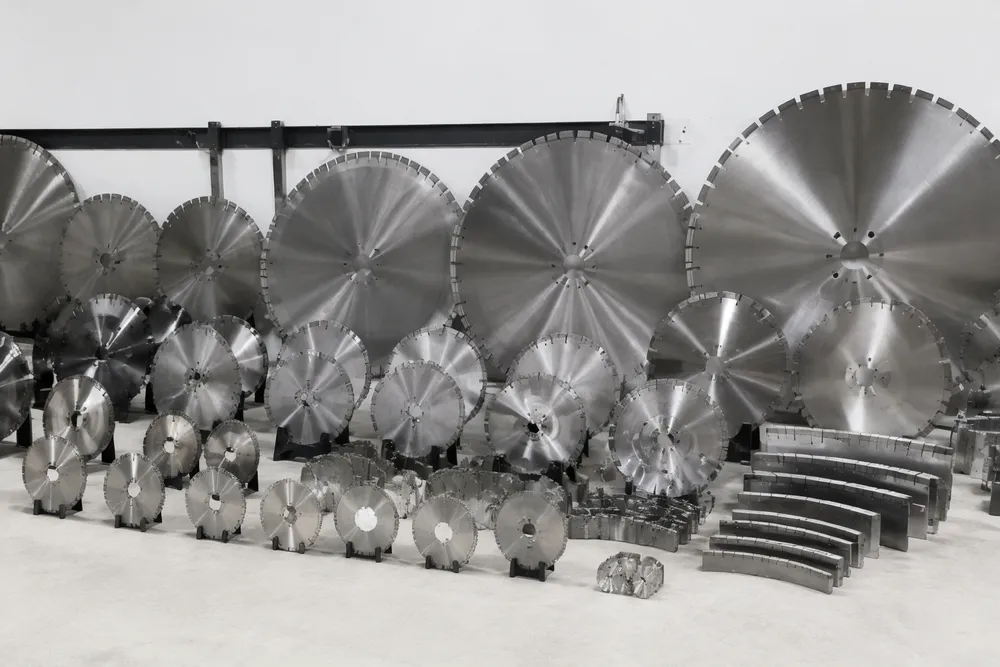
What You're Looking At — and Why It Matters for Your Business
We make diamond saw blades. Specifically: we design the metal bond formulas, cold-press and sinter the segments in our own furnaces, weld them to steel cores on automated lines, and ship container loads directly to distributors, fabrication shops, and quarry operators in over 30 countries. CLSEG has been doing this since 2003 — one product category, 20+ years of accumulated formula libraries, 60+ process patents.
This page covers our medium-to-large diamond saw blade range: 300 mm bridge saw blades up to 3200 mm gang saw segments. If you need small-diameter blades (105–230 mm for angle grinders and hand-held saws), those live in our Diamond Cutting Discs category.
Why this category is commercially relevant to you
These are the high-value blades. A single 3000 mm multi-blade gang saw frame uses dozens of blades simultaneously. A fabrication shop running bridge saws burns through blades monthly. The margins per unit are higher, the reorder cycles are predictable, and the performance demands are strict enough that your customers won't switch suppliers casually once they find a blade that works. That's the segment you're buying into.
Manufacturing Scope
-
In-house Formula Design Metal bond chemistry developed internally
-
Own Sintering Furnaces Cold-press and sinter segments on-site
-
Automated Welding Lines Segments welded to steel cores
-
Direct Container Shipping No intermediary trading company
Product Line by Application
We organize this range by what the blade cuts and what machine it runs on — because that's how your customers think when they reorder. Below is the full lineup. Each links to its dedicated product page with specifications, formula options, and application details.
Stone Fabrication Blades (Bridge Saws & Table Saws)
These are the workhorses of countertop shops, tile fabrication plants, and stone processing centers. Diameters typically 300–600 mm, designed for precision cuts with water cooling.
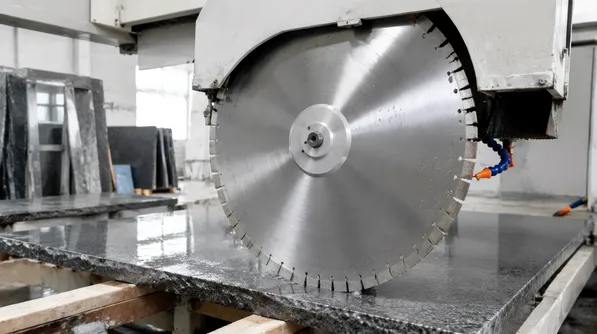
Granite Saw Blades
High diamond concentration, hard bond matrix for slow-wearing performance on abrasive natural granite. Available in standard and silent-core versions.
View Specifications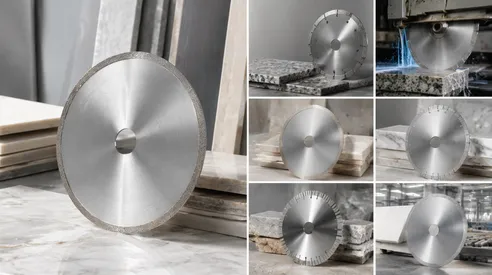
Ceramic Saw Blades
Ceramic saw blades for porcelain tile, ceramic slabs, and brittle panels where chip control matters more than feed speed.
View Specifications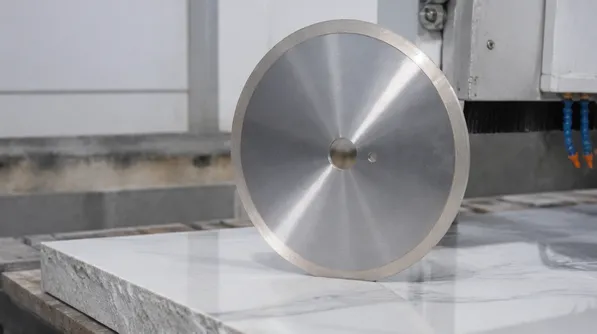
Marble Saw Blades
Softer stone, different problem: you need clean edges without micro-fracturing. Continuous or close-segmented rims, high feed rates without chatter.
View Specifications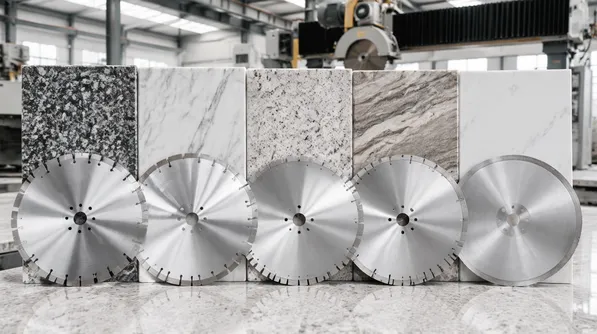
Bridge Saw Blades
General-purpose bridge saw blades covering multiple stone types. When your customers cut a mix of materials and need one reliable blade for 80% of jobs.
View Specifications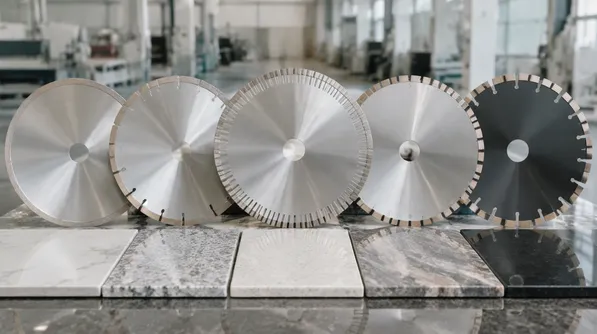
Sintered Stone Saw Blades
Sintered stone and large porcelain slab saw blades for brittle panels that need clean edges and low vibration.
View SpecificationsQuarry & Block Processing Blades (Gang Saws & Large Diameter)
Industrial-scale blades for quarry block cutting and slab production. Diameters range from 900 mm to 3200 mm. Orders are typically large-volume and recurring.
Gang Saw Blades
Frames hold 20–80 blades simultaneously to slice blocks into slabs. Segment uniformity across the entire set is critical — one underperforming blade creates uneven slab thickness across the whole frame.
Silent Core Diamond Blades
Sandwich steel cores with vibration-dampening slots, reducing noise 3–5 dB below standard blades. Required by many indoor fabrication facilities with occupational noise regulations.
Infrastructure & Construction Blades
Concrete, asphalt, reinforced structures — these blades face steel rebar, aggregate impact, and dry or semi-dry cutting conditions that destroy consumer-grade tools.
Blades by Construction Type
Sometimes your customers specify by blade construction rather than material. This grouping covers segment geometry and welding method:
ARIX Diamond Blades
Arranged diamond pattern for more aggressive cutting and longer segment life. Popular with fabricators who prioritize speed on hard granite.
Laser Welded Diamond Blades
Laser-welded segment joints withstand higher RPM and thermal stress than brazed or sintered joints. Required for dry-cutting and high-speed applications.
Segmented Diamond Blades
Standard gullet design for general-purpose cutting across multiple materials. The default choice for distributors building a broad inventory.
Continuous Rim Diamond Blades
No gullets, no chipping. For materials where edge quality matters more than cut speed — porcelain, marble, decorative stone.
Wet Cut Diamond Blades
Optimized for water-cooled cutting. Bond formulas designed for the cooling effect of water flow, allowing higher diamond concentration without thermal damage.
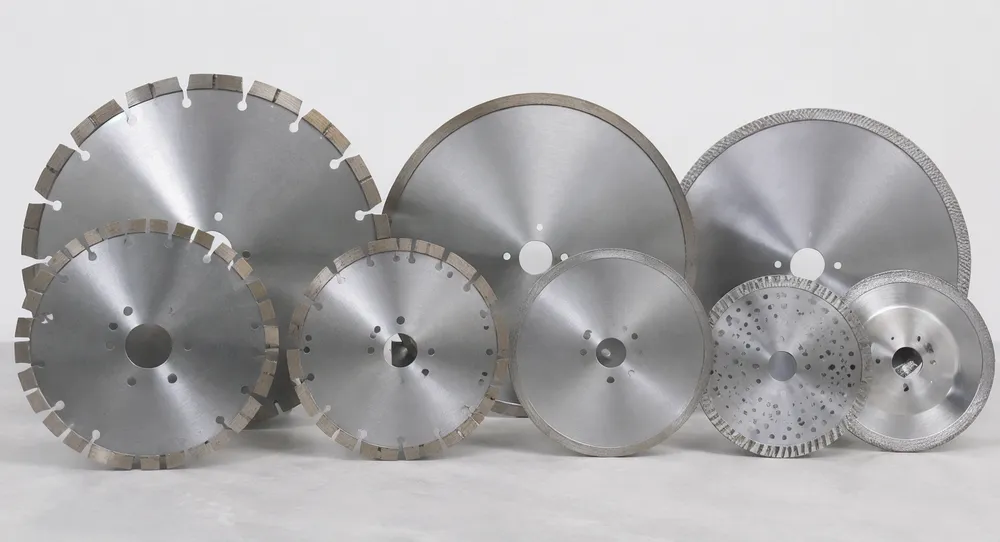
Turbo Diamond Saw Blades
Turbo rim diamond saw blades for faster cutting with improved cooling and debris clearance on stone, masonry, and concrete.
The Formula Is the Product — How Bond Chemistry Drives Your Margin
Two diamond saw blades that look identical — same diameter, same segment count, same core thickness — can deliver completely different cutting life and speed because the metal bond formula is different. The bond determines how fast diamonds expose, how long they stay anchored, and whether the segment wears evenly or undercuts.
We Develop and Own Our Formulas
60+ patents, an in-house R&D center, and university research partnerships generating material science advances we translate into commercial products. When you tell us the stone type your end users cut, we match the bond:
Softer bond — diamonds need to self-sharpen aggressively to maintain cutting speed.
Harder bond — the matrix needs to resist erosion and hold diamonds longer under abrasive wear.
Falls between natural stone categories — we use a specific bond composition that balances diamond retention against the resin and silica aggregate.
Regional optimization matters: Brazilian granite is significantly more abrasive than Indian granite — a single formula doesn't optimize for both. We've done formula adjustments hundreds of times for OEM partners serving regional markets with local stone varieties.

Why This Matters Commercially
Your customers judge a blade by its performance-to-price ratio. A blade that costs 10% more but lasts 40% longer in their specific stone type wins the reorder. When you buy from a factory that controls the formula, you can request adjustments:
Your competitive moat as a distributor: Your competitors buying from trading companies get whatever generic formula the trader sources. You get a blade tuned to your market.
Technical Specifications — Category-Wide Ranges
Individual product pages carry the exact specifications for each blade type, including recommended RPM ranges and machine compatibility. Below are the category-wide ranges across our full diamond saw blade line.
| Parameter | Range |
|---|---|
| Diameter | 300 mm – 3200 mm |
| Segment height | 8 mm – 25 mm (varies by blade type) |
| Segment width | 2.5 mm – 7.2 mm |
| Core thickness | 2.0 mm – 5.5 mm |
| Arbor bore | 25.4 mm, 50 mm, 60 mm (custom bore available) |
| Welding method | High-frequency welding, laser welding |
| Diamond grit | 30/35, 35/40, 40/50, 50/60 mesh (matched to application) |
| Bond type | Cobalt-based, iron-based, and proprietary composite bonds |
| Operating speed | 25–55 m/s (varies by diameter and application) |
| Certifications | ISO 9001:2015 CE SGS MPA |
Comparing Quotes? Check These Columns First
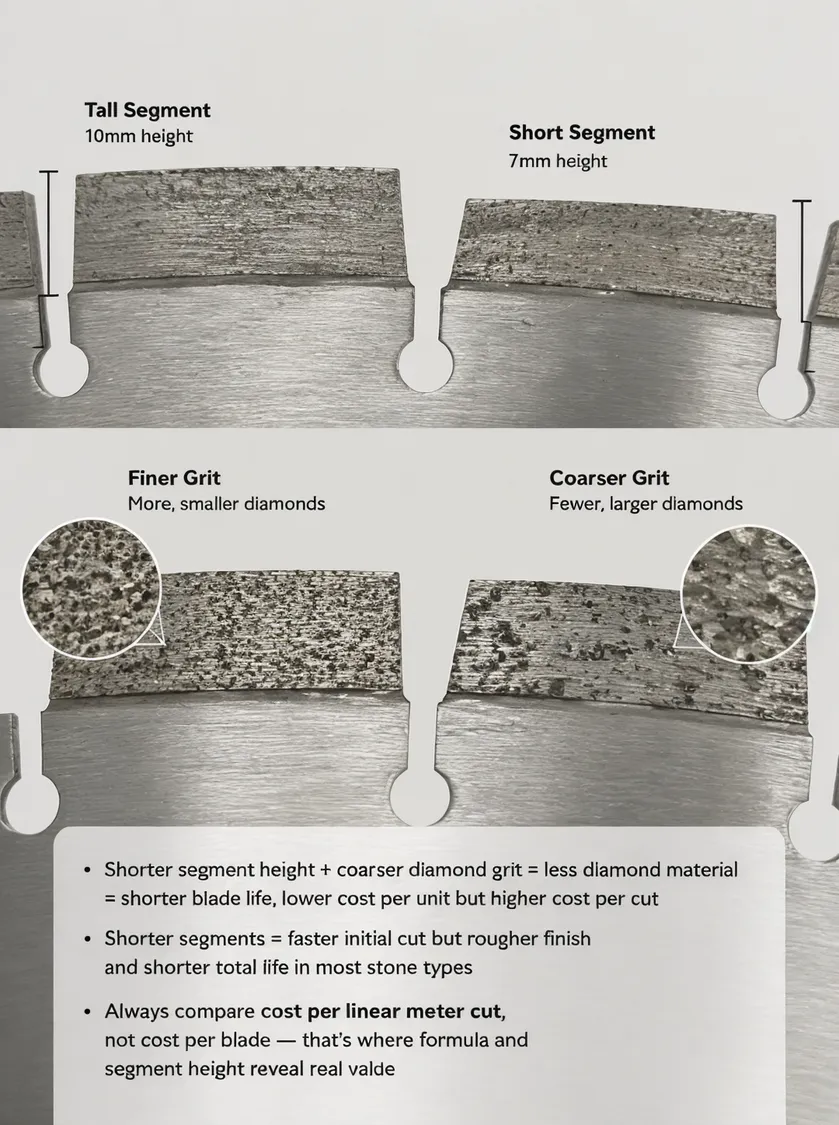
The segment height and diamond grit columns are where most of the performance tuning happens. If you're comparing our quote against another manufacturer's, check that these match — many quotes look cheap because they're specifying shorter segments or coarser grit.
- Shorter segments = less diamond material = shorter blade life, lower cost per unit but higher cost per cut
- Coarser grit = faster initial cut but rougher finish and shorter total life in most stone types
- Always compare cost per linear meter cut, not cost per blade — that's where formula and segment height reveal real value
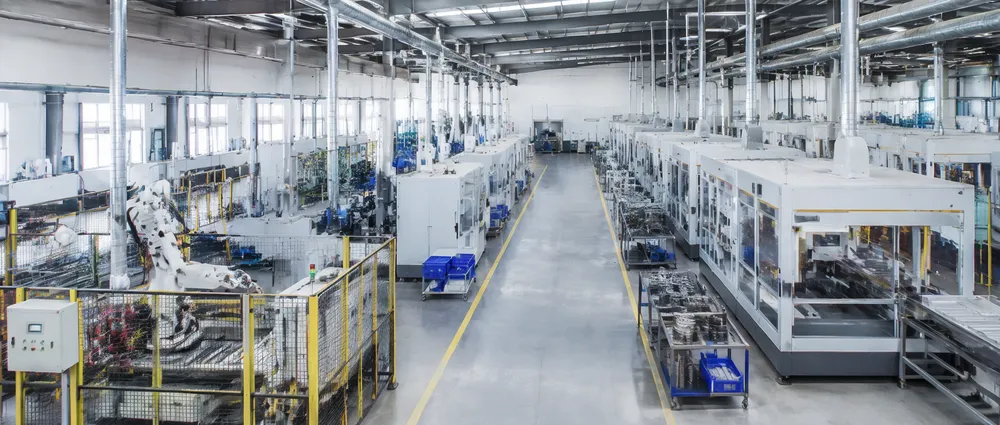
Segment-to-Steel: How We Build 3 Million Blades a Year
Our 14,100 m² facility in Ezhou City runs 8 automated production lines. Here's the sequence your blades move through:
Powder Formulation
Diamond grit (synthetic, industrial grade) gets blended with metal bond powders in our formula library. Each stone type has a corresponding formula.
We mix in climate-controlled rooms because humidity affects powder flow behavior in the cold press.
Cold Pressing
Automated presses form segment blanks at controlled density. Press tonnage and die geometry vary by segment profile.
A gang saw segment blank requires different compaction than a thin bridge saw segment.
Sintering
Programmable furnaces run fully automatic temperature and pressure profiles. We pull sample segments each batch for density measurement and hardness testing.
The automation eliminates operator-dependent variation, so your repeat orders perform identically to your first trial.
Welding
Automated high-frequency welding for standard applications; laser welding for dry-cut blades and high-RPM applications where thermal stress on the joint is higher.
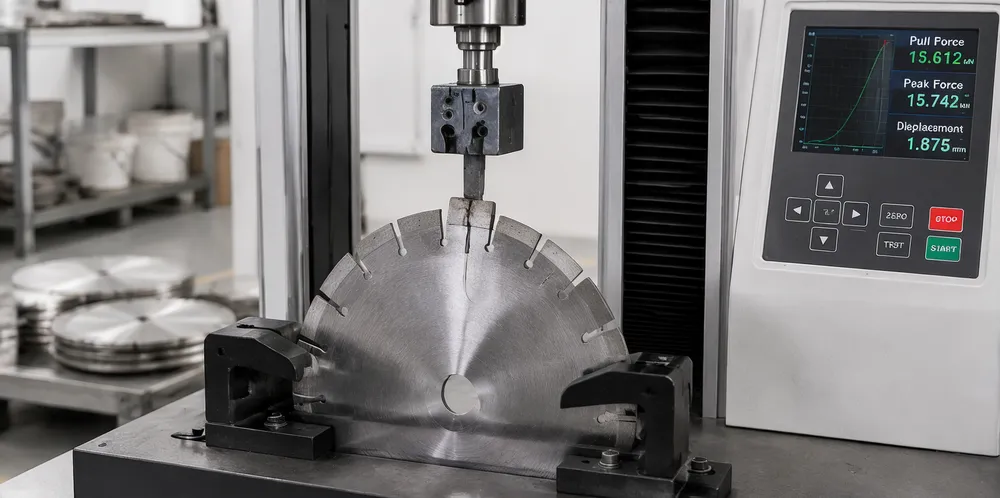
Every weld joint undergoes random destructive pull testing to verify bond strength.
Tensioning & Finishing
CNC tensioning machines stress-relieve steel cores for flatness under operational RPM. Final truing confirms concentricity.
Large-diameter blades get dynamic balance testing.
Annual Capacity
8 lines running in parallel. Your 10,000-blade order doesn't queue behind other buyers — multiple lines can run your specs simultaneously, so lead times stay predictable even during peak seasons.
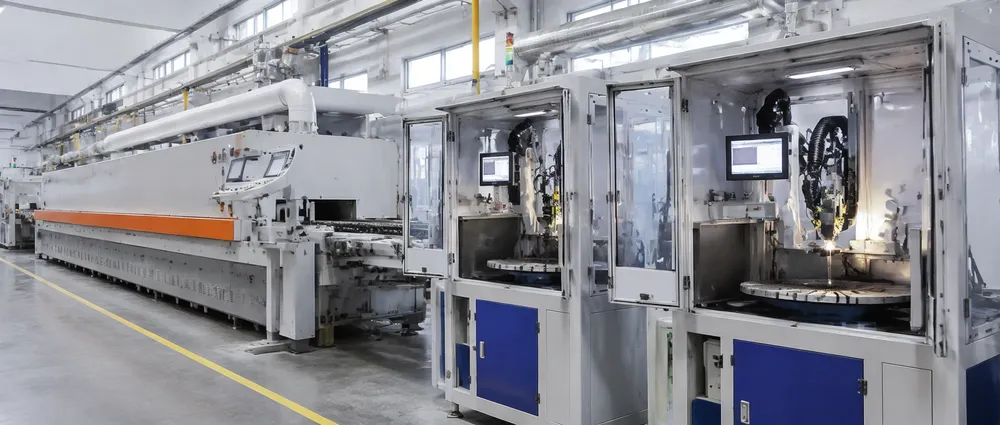
Market Segments Where Diamond Saw Blades Move Volume
Understanding where these blades are consumed helps you stock the right mix and approach the right buyers in your market.
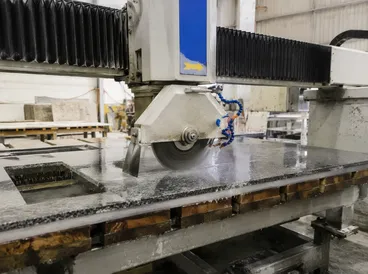
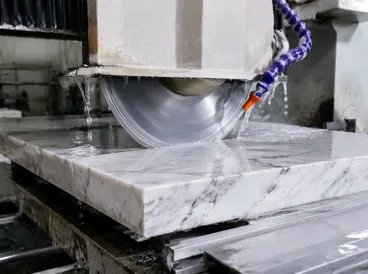
Stone Fabrication
Countertops · Flooring · Cladding
The highest reorder frequency in this category. Fabrication shops run bridge saws 8–12 hours daily and consume blades as a recurring operational cost. Granite and bridge saw blades are the volume leaders.
Key selling point: Consistent performance across batches — fabricators set their machine feed rates once and don't want to readjust for blade variation.
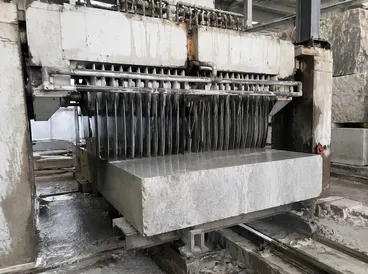
Quarry & Block Processing
Lower Frequency · Higher Unit Value
Quarries running multi-blade gang saws need sets of 20–80 matched blades simultaneously. A single gang saw frame replacement represents a significant order value.
Key selling point: Segment uniformity — one weak blade in a set creates uneven slab output and forces premature frame-wide replacement.

Road & Infrastructure Construction
Project-Driven · Large Volumes
Concrete and asphalt blades for road saws, floor saws, and wall saws. Demand is project-driven rather than continuous, but project volumes are large and often government-funded (stable payment).
Recurring demand: Municipal road maintenance creates recurring seasonal demand in temperate climates.
Monument & Decorative Stone
Smaller Volume · Premium Pricing
Precision cuts on expensive materials (premium marble, onyx, exotic granite) where edge quality determines the value of the finished piece. Continuous rim and silent-core blades dominate here.
Margin driver: Premium materials mean buyers prioritize cut quality over blade cost — higher ASP per unit.
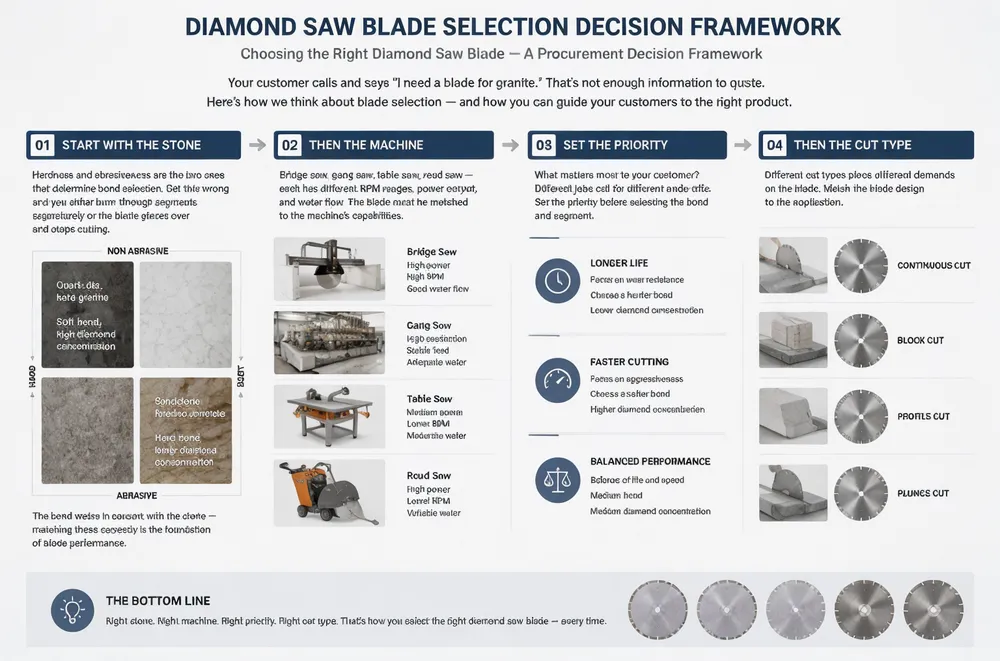
Choosing the Right Diamond Saw Blade — A Procurement Decision Framework
Your customer calls and says "I need a blade for granite." That's not enough information to quote. Here's how we think about blade selection — and how you can guide your customers to the right product.
Start with the Stone
Hardness and abrasiveness are the two axes that determine bond selection. Get this wrong and you either burn through segments prematurely or the blade glazes over and stops cutting.
Hard + Non-Abrasive
Quartzite, hard granite
Soft bond, high diamond concentration
Soft + Abrasive
Sandstone, abrasive concrete
Hard bond, lower diamond concentration
The bond wears in concert with the stone — matching these correctly is the foundation of blade performance.
Then the Machine
Bridge saw, gang saw, table saw, road saw — each has different RPM ranges, power output, and water flow characteristics. A blade designed for a 15 HP bridge saw won't perform correctly on a 50 HP block cutter.
We specify recommended machine parameters for every blade in our range.
Then the Priority
Is your customer optimizing for speed or life? The answer depends on their operation scale and cost structure.
Optimizing for Speed
Higher diamond concentration, aggressive segment geometry like Arix. Best for high-production fabricators running automated lines — labor cost per cut matters more than blade cost.
Optimizing for Life
Conservative diamond spec, standard segment. For smaller operations where blade life dominates the purchasing decision.
Then the Cut Type
Wet or dry? The cut environment changes the entire blade engineering approach.
Wet Cutting
Allows higher diamond concentrations and faster speeds because water handles thermal management. More bonding options available.
Dry Cutting
Requires laser-welded joints — thermal cycling would crack brazed or HF-welded bonds. Specific bond formulas that tolerate heat without losing diamond retention.
Need help matching blades to your market?
Tell us the stone types and machine types your customers use — we'll recommend a starter SKU list that covers 80% of their needs.
OEM, Private Label, and Formula Customization
We operate as an OEM/ODM manufacturer — this isn't a sideline service, it's how most of our international business works. Here's what customization looks like at the category level.
Formula Adjustment
Different diamond concentration, bond hardness modification, segment geometry changes. If you've tested our standard granite blade but your market's local granite is significantly harder or softer than our reference stone, we adjust the formula and send new samples.
- Diamond concentration adjustment for local stone hardness
- Bond hardness modification
- Segment geometry changes
Turnaround for formula iteration: typically 2–3 weeks including test cutting
Dimensional Customization
Non-standard diameters, modified arbor bores, custom segment heights. If your market uses machines with proprietary arbor sizes, we produce to match.
- Non-standard diameters
- Modified arbor bores
- Custom segment heights
South American block cutters, for instance, often use non-standard bore sizes that European machines don't
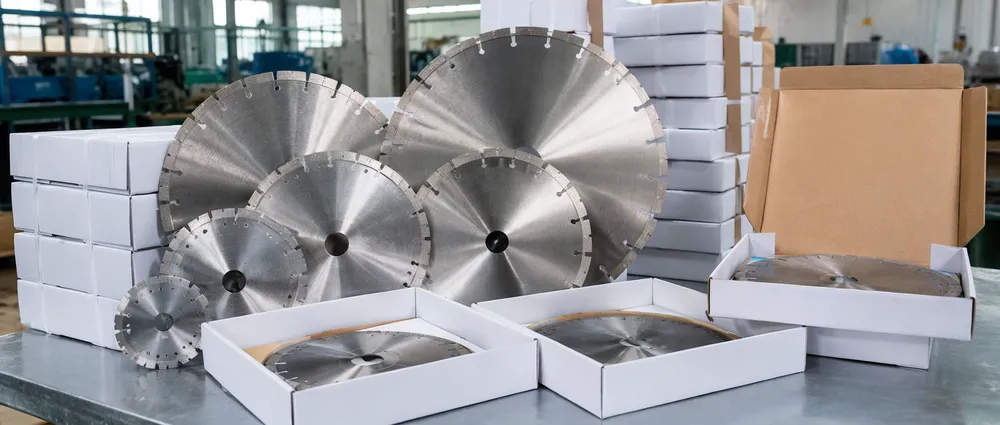
Private Label Packaging
Your brand on the blade, your logo on the box, your color coding on the steel core. MOQ for private-label runs starts lower than most buyers expect — we're set up for it, not treating it as a special request.
- Your brand on the blade body
- Your logo on packaging
- Custom color coding on steel core
- Low MOQ — production-ready, not a special request
Application-Specific Development
If a blade for your specific application doesn't exist in our current range, our R&D team develops it from scratch. We've done this for engineered stone types that didn't exist five years ago.
- Ultra-compact sintered surfaces
- Large-format porcelain slabs
- Regional stone varieties unique to specific quarries
Full ground-up R&D for applications not yet in our catalog
The Result
Your product line carries your brand identity and performs specifically for your market, sourced at factory-direct pricing with your own formula on file for seamless reorders.
Your Brand Identity
Market-Specific Performance
Factory-Direct Pricing
Seamless Reorders
What Goes Wrong with Diamond Saw Blades — and How Manufacturing Prevents It
You've heard the complaints from your customers. Here are the three failure modes that actually drive returns and lost accounts, and what we engineer against them.
Premature Segment Loss
Segments Detaching from Core
A segment flying off at 3000+ RPM is a safety hazard and an immediate customer loss.
Root Cause
Weak weld joints — either from inadequate welding parameters or poor surface preparation on the core.
How We Prevent It
- Automated welding lines run programmed energy profiles — eliminates operator variation
- Every core seating surface ground and cleaned before welding
- Random destructive pull tests on finished blades — verifying actual joint strength, not just visual appearance
- MPA safety certification specifically audits for segment retention under stress
Uneven Segment Wear
One Side Wears Faster
Causes blade wobble, wider-than-specified kerf, and rough cut surfaces.
Root Cause
Inconsistent diamond distribution within the segment — traces back to powder mixing quality and cold-press uniformity.
How We Prevent It
- Climate-controlled mixing room ensures consistent powder behavior
- Automated pressing delivers homogeneous diamond distribution across the segment cross-section
- Segment density variation checked within each batch — if standard deviation exceeds internal threshold, that batch doesn't ship
Glazing
Blade Stops Cutting, Diamonds Won't Expose
The blade looks fine but refuses to cut. This is a formula mismatch problem, not a manufacturing defect.
Root Cause
Bond too hard for the stone being cut — the metal matrix doesn't erode, so spent diamonds can't shed and fresh diamonds can't expose.
How We Prevent It
- Solved at the specification stage: when you tell us what your customers are cutting, we match bond hardness to stone abrasiveness
- Formula consultation prevents wrong-application sales
Common distributor mistake: ordering a concrete blade formula and selling it for granite. The customer complains the blade "doesn't work." It works fine — it's just the wrong formula for that stone.
Export Logistics — Container Loading and Lead Times
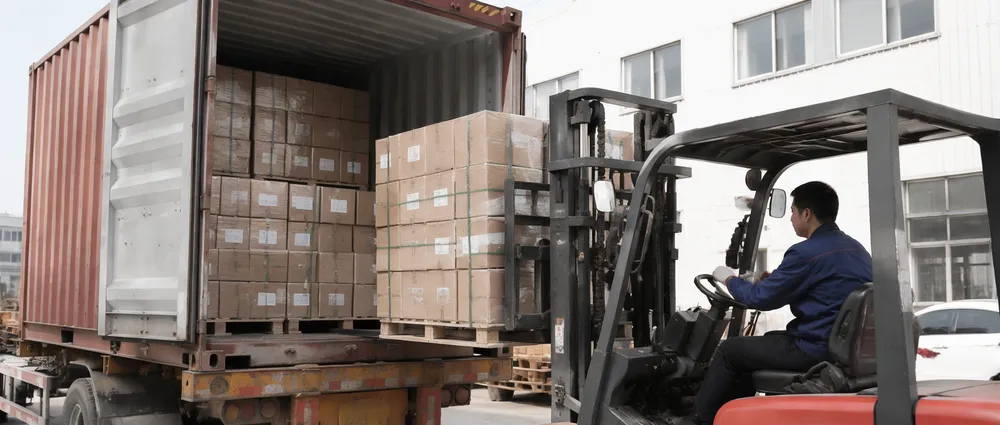
We ship diamond saw blades year-round to Southeast Asia, the Middle East, Europe, South America, and Africa. We hold independent export rights — no trading company in the chain.
Packaging
- Blades individually wrapped in VCI (vapor corrosion inhibitor) film
- Reinforced cartons with foam separators
- Large-diameter blades (600 mm+) get wooden crate packaging with moisture barriers for ocean freight
- Edge protection inserts prevent segment damage — diamond segments are hard but tips are vulnerable to lateral impact during transit
Container Loading
- Loading density depends on blade diameter
- A 20GP container holds approximately 8,000–12,000 pieces of 350–500 mm blades (volume-to-weight ratio is the limiting factor, not weight)
- Large-diameter gang saw blades: wooden crate dimensions determine loading patterns
- We optimize crate sizing to maximize container fill rate and can provide loading diagrams with your quote
Lead Time
We maintain formula records and production parameters from prior runs — repeat orders ship faster. Custom formula adds 2–3 weeks for sampling and approval before production begins.
Documentation
We coordinate with your freight forwarder or arrange FOB/CIF through our logistics partners.
Active Export Markets
Frequently Asked Questions
What is the minimum order quantity for diamond saw blades?
MOQ varies by blade type. Standard-diameter blades (300–600 mm) start at 50 pieces per specification for stock formulas. Large-diameter gang saw blades start at 20 pieces per spec due to higher per-unit value.
Private-label orders with custom packaging have a slightly higher MOQ to cover setup costs — typically 100+ pieces. For market-testing quantities, we offer sample orders of 5–10 pieces at production pricing.
How do I select the right diamond bond formula for my stone type?
Match bond hardness inversely to stone abrasiveness. Hard, non-abrasive stones (quartzite, dense granite) need soft bonds so the matrix erodes and exposes fresh diamonds continuously. Soft, abrasive stones (sandstone, abrasive limestone, green concrete) need hard bonds that resist premature matrix erosion.
If you're unsure, send us a stone sample or tell us the quarry name and region — we've formulated for hundreds of stone varieties across 30+ countries and likely have a matching formula in our library already.
Laser-welded vs. high-frequency welded: which should I stock?
For wet-cutting applications on standard bridge saws and table saws, high-frequency welded blades perform identically to laser-welded at a lower cost — stock these as your bread-and-butter.
Laser welding becomes necessary for:
- Dry cutting (thermal cycling cracks HF joints)
- High-RPM applications (above 4500 RPM on smaller diameters)
- Hand-held saw blades where the operator may accidentally run dry
If your market mixes both, stock HF-welded for fabrication customers and laser-welded for construction customers who cut dry.
What causes diamond segments to detach during operation?
Three root causes:
- 1 Insufficient welding energy — joint never reached full bond strength
- 2 Contaminated core surface — oil or oxidation prevents metallurgical bond
- 3 Exceeding blade RPM limits — centrifugal force overcomes joint strength
Properly manufactured blades with adequate welding parameters and clean surface preparation don't shed segments within rated operating conditions. Our random destructive pull testing on production batches catches sub-spec joints before they ship.
If you've experienced segment loss from another supplier, ask for their pull-test records — many factories don't perform them.
Can one diamond saw blade cut multiple stone types effectively?
Technically yes, but with trade-offs. A "general purpose" blade (mid-range bond hardness, standard diamond concentration) handles a variety of stones at acceptable-but-not-optimal performance.
For distributors serving small fabricators who cut mixed materials, general-purpose blades reduce SKU count. But any customer running high volumes of one stone type will get 30–50% better life and speed from a formula matched to that specific material.
We recommend general-purpose blades as your entry SKU, with stone-specific formulas as the upsell once you know what each customer primarily cuts.
How do Arix-pattern segments compare to standard segments?
Arix segments arrange diamonds in a controlled geometric pattern rather than random distribution. The result: more consistent cutting speed throughout segment life (standard segments slow down as randomly-distributed diamonds cluster or gap) and typically 20–30% longer total life.
The trade-off is higher manufacturing cost, which translates to a 15–25% price premium at your selling point.
For hard granite and engineered quartz — where cut speed directly impacts fabrication throughput — the premium is easy to justify. For softer stone or occasional-use customers, standard segments are cost-effective enough.
Start with Your Stone Type, Not Our Catalog
The fastest path to a quote: tell us what your market cuts. Send us the stone types (or photos — we can usually identify the material), the machines your customers use, and your approximate volume per month or per quarter.
We'll come back with a recommended blade list, formula specifications, and FOB pricing within 48 hours.
Building a new product line from scratch?
We can suggest a starter SKU mix based on what's selling for our existing distributors in your region. Most new partners start with 3–5 core specifications, test with their customers, then expand the range based on demand data.
Reach Us Directly
Include in Your Inquiry
The more specific your request, the faster we turn around an actionable quote.
- Stone types your customers cut
- Machine types (bridge saw, table saw, gang saw, etc.)
- Approximate quantities per month/quarter
- Target pricing (if you have benchmarks)
- Private label / packaging requirements
Typical response: actionable quote within 48 hours