

Vacuum Brazed Diamond Blades
Single-layer brazing holds each diamond crystal at 70–80% exposure height. The fastest-cutting configuration in the small blade category.
Your end users get aggressive cut speed in demolition, rescue, and soft stone work. You get a differentiated SKU that commands premium pricing.
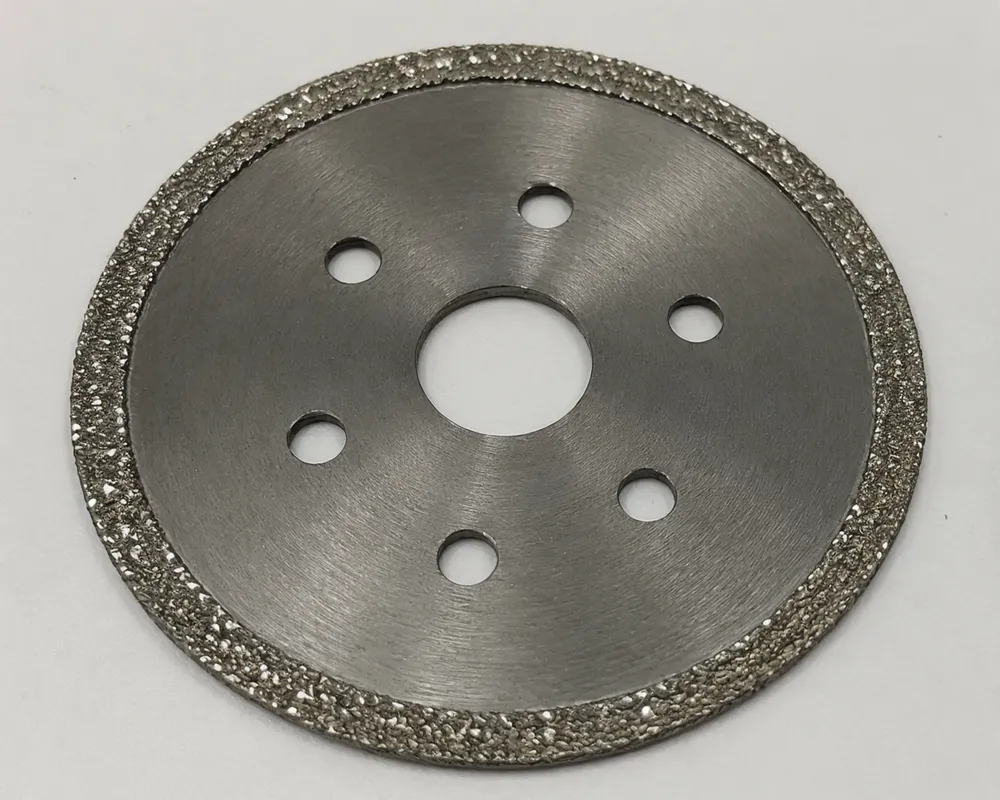
What Makes a Vacuum Brazed Diamond Blade Different From Everything Else in Your Line
A vacuum brazed diamond blade is a single-layer tool. One layer of diamond crystals bonded directly to the steel core through a high-temperature vacuum brazing process. No multi-layer sintered segment, no electroplating bath — just diamonds locked into a thin braze alloy under vacuum conditions that eliminate oxidation and create a metallurgical bond between crystal, braze filler, and substrate.
The commercial consequence: every diamond crystal protrudes 70–80% above the braze matrix. On a sintered blade, only the surface-layer diamonds do work at any given moment — the rest are buried in the bond, waiting their turn. On a brazed blade, every crystal is already working from the first cut. That translates to dramatically higher initial cut speed, lower cutting force, and less heat generation per unit of material removed.
The trade-off is lifespan. Once that single layer of diamonds wears down or fractures, the blade is finished — there's no second layer waiting underneath. This is a high-speed, limited-life tool by design. For your product line, that means faster reorder cycles. For your end users, it means a blade they reach for when speed matters more than longevity: demolition tearout, rescue cutting, aggressive rough work on soft-to-medium stone, and rapid shaping tasks.
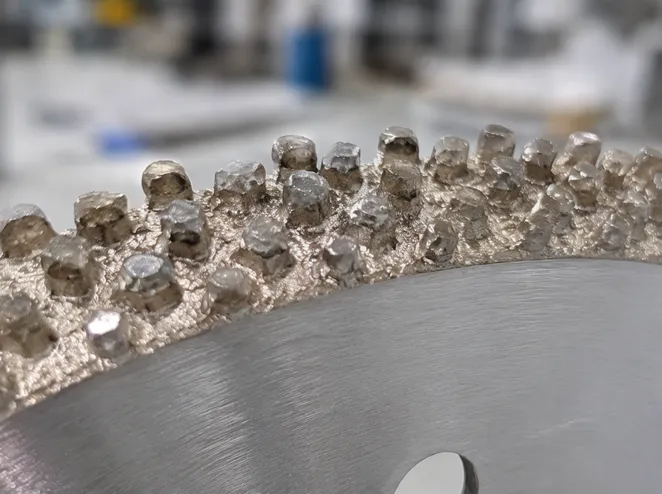
Distributor Positioning Note
We position brazed blades honestly with our distributors: don't sell them as replacements for sintered blades. Sell them as the "fast tool" in a two-blade system — brazed for speed work, sintered for production runs. That framing prevents customer complaints about lifespan and actually increases your average order value.
Dramatically Higher Cut Speed
Every crystal works from the first cut. No waiting for bond erosion to expose fresh diamonds.
Lower Cutting Force & Heat
More exposed diamond height means more material removal per revolution with less resistance and less thermal buildup.
Faster Reorder Cycles
Single-layer design means defined lifespan. High-speed, limited-life by design — predictable consumable revenue for distributors.
The Vacuum Brazing Process — How We Build a Blade That Holds Diamonds at 800°C Without Losing Them Mid-Cut
The word "brazed" covers a range of methods. Vacuum brazing is specific, and the difference matters for the blade you ship to your customers.
We load steel cores pre-set with diamond crystals and braze alloy paste into a vacuum furnace. The chamber pulls down to approximately 10⁻³ Pa before heating begins. At brazing temperature — typically 800–950°C depending on the alloy composition — the filler metal melts, wets both the diamond surface and the steel substrate, and forms a chemical bond as it solidifies during controlled cooling.
The vacuum environment eliminates the oxide layer that would otherwise prevent proper wetting. No flux needed, no residue to clean, no contamination embedded in the joint.
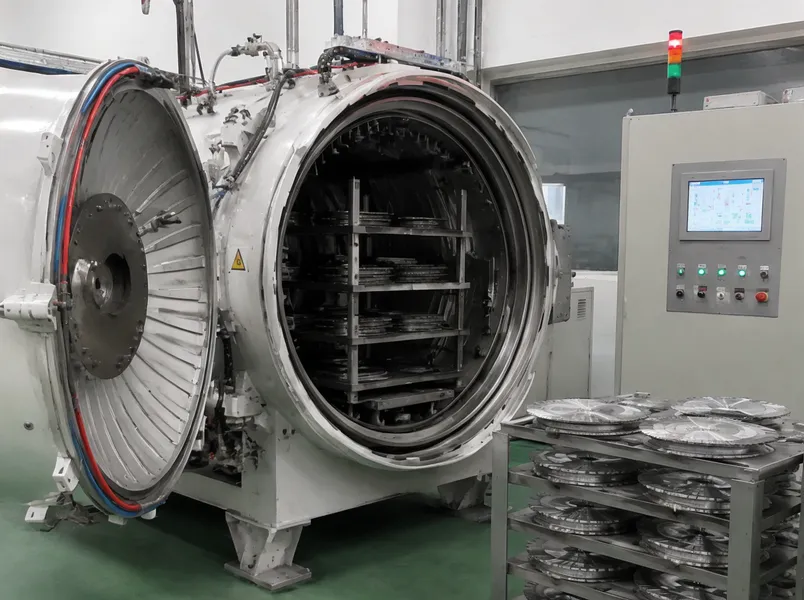
What Vacuum Brazing Gives You Compared to Other Attachment Methods
Bond Strength
The braze alloy chemically bonds to the diamond crystal face, not just mechanically grips it. Typical retention force exceeds 35 N per crystal — well above what mechanical retention in sintered segments achieves.
Crystal Exposure
Because the braze only needs to wet the lower 20–30% of the crystal, the remaining 70–80% stands proud. More diamond height means more material removal per revolution — brazed blades cut 2–3× faster than sintered equivalents of the same diameter.
Heat Tolerance
Vacuum-brazed joints maintain structural integrity up to working temperatures of 600–650°C. Above that, you risk diamond graphitization regardless of the bond method. Below that threshold, the metallurgical bond won't release diamonds under thermal cycling — unlike electroplated bonds, which can delaminate when overheated.
Furnace Control Parameters
We control the critical variables in our vacuum furnaces: ramp rate, hold temperature (±5°C tolerance), vacuum level, and cooling curve. These parameters are locked per product spec so your repeat orders perform identically to your samples. Batch-to-batch consistency in brazed blades depends on furnace control more than any other single factor.
Dedicated Vacuum Brazing Line
We run our vacuum furnaces on a dedicated line separate from our sintering furnaces. Different equipment, different operators, different QC checkpoints. Vacuum brazing isn't something we do on the side — it's a distinct production capability.
Vacuum Brazed Blade Configurations We Manufacture
We produce vacuum brazed blades across a range of diameters, profiles, and application targets. Below are the standard configurations — custom specs are routine for orders above 100 pieces.
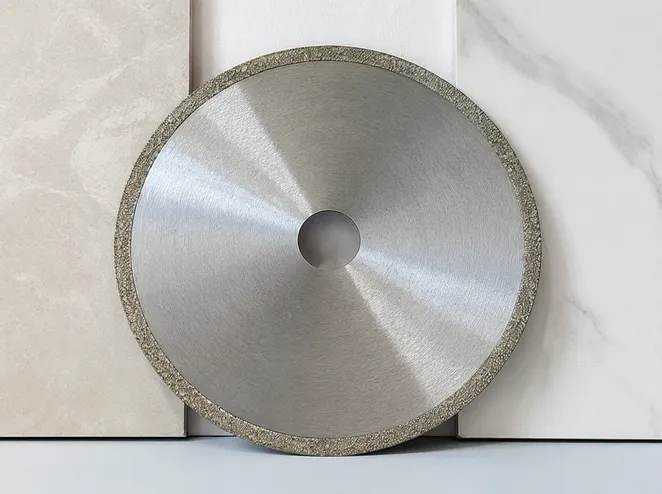
Continuous Rim
Smooth, chip-free cuts in porcelain, ceramic tile, marble, and decorative stone. The uninterrupted diamond edge delivers the cleanest finish of any brazed profile.
- Diameters: 105mm – 230mm
- Applications: Tile, marble, porcelain
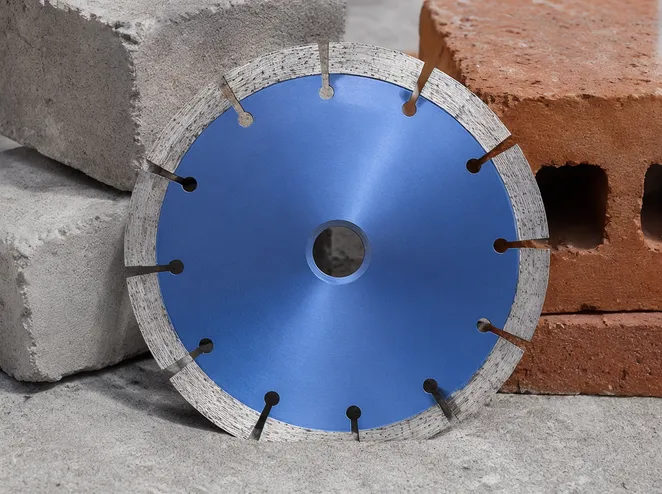
Segmented / Turbo
Gullet slots between segments allow debris clearance and cooling airflow. Best suited for dry cutting in concrete, brick, and general masonry where speed matters more than edge finish.
- Diameters: 115mm – 350mm
- Applications: Concrete, masonry, block
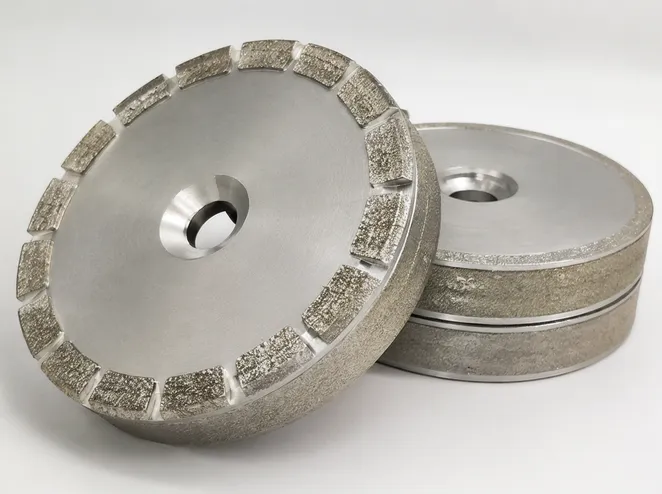
Side-Coated & Shaping Discs
Diamonds brazed to both faces and the periphery. Designed for profiling, enlarging holes, shaping edges, and applications where the blade contacts material on multiple planes.
- Diameters: 50mm – 180mm
- Applications: Profiling, grinding, shaping
Specialty & Custom Configurations
Rescue & Demolition Blades
Aggressive diamond grit patterns designed to cut through mixed materials — rebar in concrete, steel pipe, fiberglass, cast iron. Maximum aggression, single-job lifespan acceptable.
Precision Lab & Wafer Blades
Fine-grit diamonds (mesh 200+) for precision sectioning of ceramics, composites, geological samples, and electronic substrates. Thin kerf, minimal material waste.
Brazed Core Bits & Hole Saws
Same vacuum brazing process applied to cylindrical cores. Drill through granite, engineered stone, glass, and reinforced concrete with high penetration rates.
Custom OEM Specifications
Your diameter, your arbor, your diamond mesh, your color coding. We produce to your drawing with your branding. MOQ from 100 pieces for standard sizes, 200+ for non-standard geometries.
| Parameter | Standard Range | Custom Available |
|---|---|---|
| Diameter | 50mm – 350mm | Up to 500mm on request |
| Arbor Bore | 22.23mm, 25.4mm, M14 | Any standard or proprietary bore |
| Diamond Grit | 30/40 – 80/100 mesh | Up to 200+ for precision apps |
| Core Thickness | 1.2mm – 3.2mm | Thinner kerf on request |
| Diamond Concentration | Optimized per application | Adjustable density patterns |
Vacuum Brazed vs Sintered vs Electroplated — Honest Comparison for Distributors
Each bonding method has a place. The question for distributors isn't which is "best" — it's which matches the job your customers actually do. Here's the honest breakdown.
| Attribute | Vacuum Brazed | Sintered | Electroplated |
|---|---|---|---|
| Cut Speed | ★★★★★ Fastest | ★★★ Moderate | ★★★★ Fast initially |
| Lifespan | ★★ Short (single layer) | ★★★★★ Longest | ★★ Short (single layer) |
| Diamond Retention | Chemical bond — strongest | Mechanical grip — reliable | Mechanical encapsulation — weakest |
| Heat Resistance | Good (up to 650°C) | Best (limited by diamond) | Poor (nickel delaminates) |
| Chip Clearance | Excellent — open structure | Moderate — segment design | Good — open structure |
| Cost per Blade | Medium | Medium–High | Low–Medium |
| Cost per Cut | Higher (fewer total cuts) | Lowest (most total cuts) | Medium |
| Best For | Speed jobs, mixed materials, shaping | Production runs, high volume | Low-cost, light-duty, disposable |
Sell Brazed When:
- Customer values speed over blade lifespan
- Cutting mixed or abrasive materials
- Shaping, profiling, or grinding tasks
- Dry cutting without water supply
- Rescue, demolition, or one-off jobs
Sell Sintered When:
- Customer runs high-volume production
- Cost-per-cut is the primary concern
- Consistent material (same stone all day)
- Water-cooled equipment available
- Maximum blade lifespan required
Sell Electroplated When:
- Budget is the top constraint
- Light-duty DIY or hobbyist use
- Complex shapes (flexibility in plating)
- Low heat / low pressure applications
- Disposable-tool mindset acceptable
The Two-Blade Strategy That Grows Your Average Order
Our most successful distributors stock both brazed and sintered blades and sell them as a system. "Use the brazed blade when you need speed — demo cuts, mixed materials, shaping. Use the sintered blade for your production runs." That framing sells two blades instead of one, sets correct expectations for each, and eliminates lifespan complaints on the brazed product.
Quality Control for Vacuum Brazed Blades — What We Check Before Shipping
A brazed blade either holds its diamonds or it doesn't. There's no graceful degradation like sintered segments — if a batch has weak brazing, diamonds pop out in use. That's why QC on brazed blades is pass/fail on specific measurable criteria.
Visual Inspection
100% of blades inspected under magnification. Checking braze coverage uniformity, diamond seating depth, void detection, and surface contamination.
Diamond Retention Test
Mechanical push-off test on sample crystals per batch. Individual diamonds must exceed minimum retention force threshold before batch passes.
Runout & Flatness
Dial indicator measurement of lateral and radial runout. Maximum permissible runout varies by diameter — typically ≤0.15mm for blades under 230mm.
Cut Performance Test
Random sample blades from each furnace batch tested on reference material. Measuring cut rate, diamond loss per meter of cut, and surface temperature.
Standards & Documentation
What Ships With Every Order
- Batch-level inspection report with pass/fail criteria
- Diamond concentration and mesh size certificate
- Furnace cycle record (temperature profile, vacuum level)
- Runout measurement data per blade size
Applicable Standards
- EN 13236 — Safety requirements for superabrasive products
- ANSI B7.1 — Safety requirements for abrasive wheels
- ISO 6106 — Diamond grain classification
- oSa certified where required by market
Rejection policy: Any batch failing diamond retention testing is scrapped entirely — we do not sort and ship partial batches. This costs us yield but guarantees consistency in every box your customer opens.
OEM & Private Label Programs
Most of our volume ships under our customers' brands. We're built for private label from day one — not as an afterthought bolted onto a retail operation.
Custom Branding
Laser etching, screen printing, or pad printing of your logo and part numbers directly on the blade. Full-color packaging with your brand identity.
Custom Color Coating
Color-coded blade bodies to match your product line tiers. Protective coatings double as brand differentiation on the shelf.
Custom Packaging
Retail blister packs, bulk boxes, or master cartons designed to your specifications. Barcode and UPC labeling included at no extra charge.
Custom Specifications
Modify diamond grit, concentration, bond formula, segment height, or core thickness. Build a product that doesn't exist on anyone else's shelf.
Drop Shipping
Ship directly to your customers under your brand. Blind shipping with your packing slips and return address. No mention of our facility.
Inventory Programs
Consignment and VMI (vendor-managed inventory) options for high-volume accounts. We hold stock, you call off as needed.
Typical MOQs & Lead Times
| Service Level | Minimum Order | Lead Time | Notes |
|---|---|---|---|
| Stock blades, your label | 50 pieces | 7–10 business days | Fastest path to market |
| Custom packaging | 200 pieces | 15–20 business days | Includes packaging design support |
| Custom specification | 500 pieces | 25–35 business days | Prototype samples first |
| Full OEM development | 1,000 pieces | 45–60 business days | Tooling costs may apply |
Lead times are from artwork/specification approval. First orders include a pre-production sample approval step at no extra cost.
Application Guide — What Vacuum Brazed Blades Cut Best
Vacuum brazed diamond blades excel in applications where aggressive cutting speed, versatility across materials, and dry-cutting capability matter more than maximum blade life.
Stone & Masonry
- Granite countertop sink cutouts
- Marble edge profiling and shaping
- Limestone and sandstone cutting
- Brick and block fast cutting
- Natural stone sculpture and carving
Concrete & Construction
- Reinforced concrete (rebar doesn't matter)
- Concrete pipe and manhole cutting
- Roof tile and paver cutting
- Demolition and rescue cutting
- Tuckpointing and mortar removal
Tile & Ceramics
- Porcelain tile cutting and drilling
- Ceramic floor tile installation cuts
- Glass tile and mosaic trimming
- Engineered quartz cutting
- Fiberglass and composite panels
Metal & Mixed Materials
- Cast iron pipe cutting
- Ductile iron and steel pipe
- Multi-material stacks (concrete + rebar)
- Hardened steel and stainless
- Rescue and emergency services
Grinding & Surface Work
- Concrete floor grinding and leveling
- Coating and paint removal
- Stone edge profiling (bullnose, ogee)
- Weld grinding and blending
- Surface preparation for coatings
Specialty Applications
- Asphalt overlay removal
- FRP (fiberglass reinforced plastic)
- Carbon fiber and Kevlar composites
- PCB and electronic substrate cutting
- Sapphire and technical ceramics
Selling Tip: Lead With the Application, Not the Product
Your customers don't search for "vacuum brazed diamond blade." They search for "best blade for cutting granite" or "how to cut cast iron pipe." Build your product pages and marketing around the application and material — then explain why brazed technology is the right choice for that job.
Frequently Asked Questions
Common questions from distributors evaluating vacuum brazed diamond blades for their product lines.
Can vacuum brazed blades be used wet?
Yes. While brazed blades are designed to perform well dry (a key advantage over sintered blades), they can absolutely be used with water cooling. Adding water extends blade life by reducing thermal stress on the braze alloy and flushing debris. However, the performance gap between wet and dry is smaller for brazed blades than for sintered blades — which is exactly why they're preferred for applications where water isn't available.
Why do brazed blades cost more per blade but sometimes less per project?
Brazed blades cut 2–5× faster than sintered blades in most materials. On time-sensitive jobs — demolition, rescue, renovation with deadlines — labor cost per hour far exceeds blade cost. A brazed blade that costs 40% more but finishes the job in half the time saves money on the project. The key is matching the blade to the value metric: if your customer values time, sell brazed. If they value blade longevity and run all day on one material, sell sintered.
What's your minimum order for a first trial?
For stock products with your label, we can start at 50 pieces per SKU. We recommend starting with 2–3 SKUs that cover your top-selling sizes, testing them with your customers for 60–90 days, then expanding the range based on real feedback. We'll send free samples of any blade before you commit to a production order.
How do you handle warranty claims on private label products?
We support you behind the scenes. If a customer reports a blade failure, send it back to us with a brief description of the application and equipment used. We'll analyze the blade (wear pattern, braze integrity, diamond condition) and provide a written report within 5 business days. If it's a manufacturing defect, we replace at no cost. If it's misuse, we'll help you educate the end user on proper application so they get better results next time.
Can you match a competitor's blade we're currently sourcing?
Yes. Send us a sample or detailed specs (diameter, arbor, segment height, diamond grit size, intended material) and we'll engineer a match or improvement. We reverse-engineer competitor blades regularly and can often identify areas where the original spec is over- or under-built for the stated application. Turnaround for a matched sample is typically 2–3 weeks.
What certifications do your products carry?
All blades are manufactured in facilities certified to ISO 9001:2015. Products meet or exceed EN 13236 safety standards for superabrasive products. We also carry MPA certification for high-speed applications. For specific market requirements (OSHA compliance documentation, CE marking, specific RPM ratings), we provide all necessary paperwork and can print compliance marks directly on your private label blades.
Ready to Add Brazed Diamond Blades to Your Line?
Whether you're exploring vacuum brazed technology for the first time or looking to upgrade your current supplier, we'll help you build a product line that wins in your market.
Free samples available for qualified distributors. No minimum commitment to start the conversation.
Technical Specifications
| Parameter | Standard Values |
|---|---|
| Diameter | 105, 115, 125, 150, 180, 200, 230 mm |
| Arbor Bore | 16, 20, 22.23, 25.4 mm (others on request) |
| Diamond Layer | Single layer, vacuum brazed |
| Diamond Grit Size | 30/40, 40/50, or 50/60 mesh (application dependent) |
| Typical Crystal Exposure | 70–80% above braze matrix |
| Blade Body Thickness | 1.4–2.5 mm (diameter dependent) |
| Diamond Coverage | Continuous rim or segmented pattern |
| Maximum RPM | 10,000–14,000 RPM (diameter dependent) |
| Cutting Method | Dry or wet (dry with intermittent cooling recommended for extended cuts) |
| Compatible Tools | Angle grinders (4"–9"), cut-off machines, rescue saws, tile saws |
| Typical Blade Life | 15–40 m² cutting area (varies by material hardness and operator technique) |
Rim Pattern Options
We produce vacuum brazed blades in both continuous-rim and segmented configurations. Continuous rim for cleaner cuts; segmented pattern with cooling slots for more aggressive dry cutting with better heat management.
The segmented brazed configuration is particularly popular for demolition and rescue applications where the blade runs dry at full RPM.
Specifications shown are industry-standard values for this product type. Actual specifications may vary based on your custom requirements.
Request Product Data SheetsWhere Vacuum Brazed Blades Sell — Market Segments Worth Stocking
Demolition and Renovation Contractors
High Reorder Rate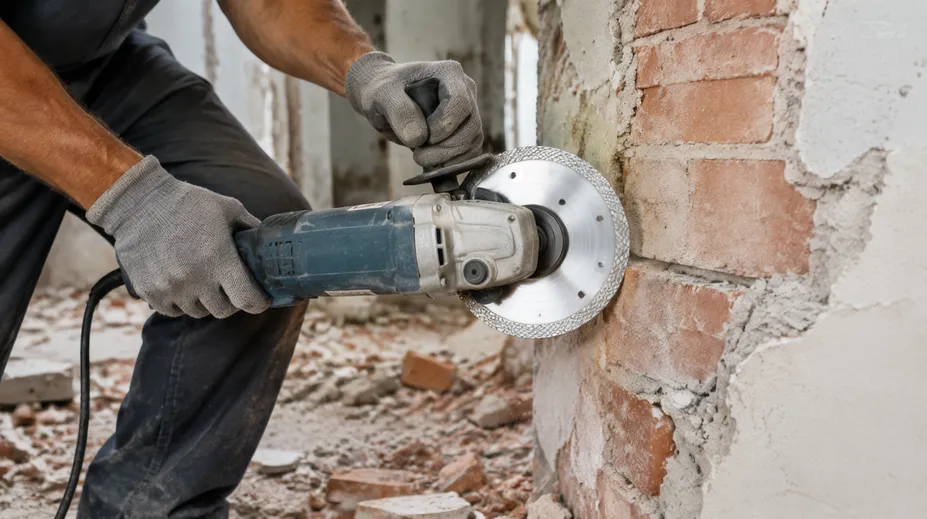
Speed is the primary cost driver in demolition — labor is expensive by the hour, and every minute a tool spends "not cutting" is money lost. Brazed blades cut 2–3x faster than sintered equivalents in materials like brick, mortar, tile, soft stone, and dryite products.
Demolition crews burn through blades anyway (dust, rebar encounters, impact), so the limited lifespan of brazed blades isn't a penalty — it's irrelevant. This segment values aggressive cut speed above all else and reorders frequently.
Distributors serving demo contractors report strong repeat purchase patterns on 115–125 mm vacuum brazed blades.
Fire and Rescue Services
Contract Procurement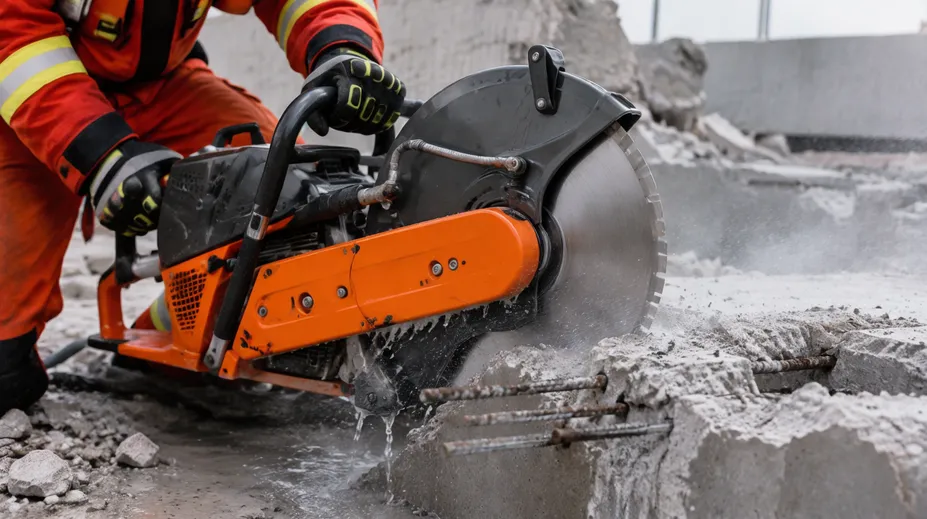
Rescue saws (K12-type cut-off machines) equipped with vacuum brazed diamond blades cut through concrete, rebar, sheet metal, tempered glass, and composite materials in emergency scenarios. The high crystal exposure delivers immediate bite without warm-up or break-in.
This is a specification-driven procurement channel — fire departments buy to published equipment standards. If your distribution serves government or emergency services, vacuum brazed blades for rescue saws are a recurring contract item with less price sensitivity than commercial channels.
Stone Fabrication — Rough Shaping and Profiling
Consistent Year-Round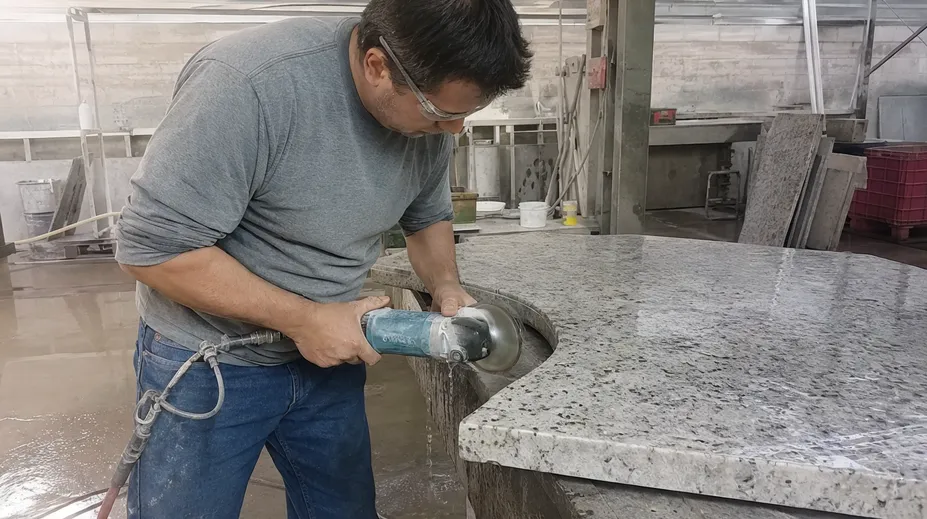
Countertop fabricators and monument workshops use brazed blades on angle grinders for rapid rough shaping — cutting curves, notches, and sink cutouts in granite and marble slabs. The blade's thin kerf and high exposure allow freehand curved cuts that sintered segmented blades can't navigate.
These buyers purchase smaller diameters (105–125 mm) and replace frequently. Lower volume per buyer than demo contractors, but consistent and year-round.
Plumbing and HVAC — Pipe Cutting and Cast Iron
Channel Expansion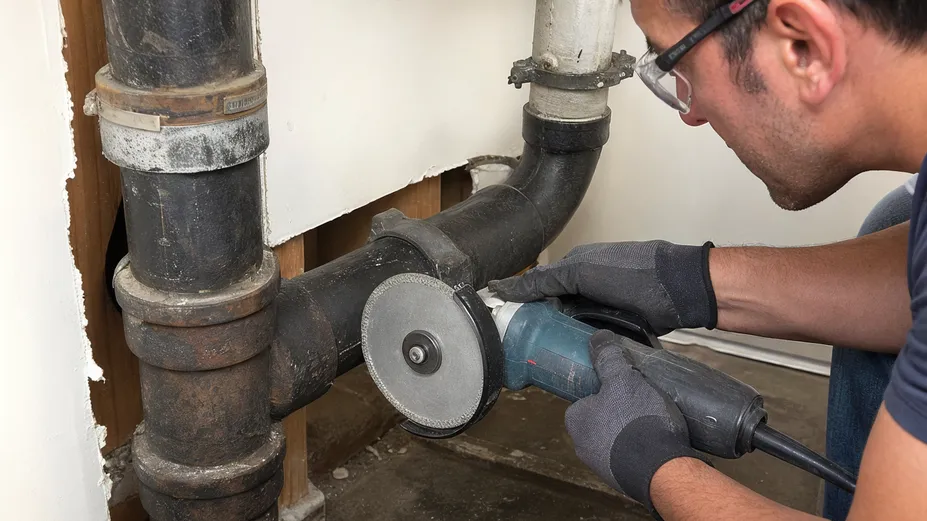
Cast iron drain pipes, ceramic sewer lines, concrete duct penetrations — brazed blades handle the mixed-material reality of retrofit plumbing work. Plumbers value a single blade that cuts multiple materials aggressively in tight spaces.
This segment typically buys through plumbing supply distributors rather than general hardware. If you serve that channel, brazed blades expand your diamond tool offering beyond standard masonry discs.
The rescue/fire segment has grown substantially in our export orders over the past three years. Government procurement cycles are longer, but contract values are large and price competition is lower. Worth investigating if you have access to that channel.
Request Pricing for Your Target SegmentVacuum Brazed vs. Electroplated vs. Sintered — Helping You Position Each SKU
Your customers ask this question, and your sales team needs the answer. Here's the commercial positioning for each technology:
| Attribute | Vacuum Brazed | Electroplated | Sintered (Welded) |
|---|---|---|---|
| Cut Speed | Fastest Highest diamond exposure |
Fast High exposure, thinner layer |
Moderate Only surface diamonds active |
| Blade Life | Short Single layer, robust |
Shortest Single layer, thin bond |
Longest Multi-layer segments |
| Cutting Force | Lowest | Low | Higher |
| Heat Tolerance | Good Metallurgical bond |
Poor Nickel delamination risk |
Good Bulk segment mass |
| Best For | Demolition, rescue, aggressive rough cutting | Precision cuts on fragile/thin materials | Production cutting, long runs, daily use |
| Reorder Cycle | Frequent | Very Frequent | Infrequent |
| Price Point | Premium | Mid-Premium | Standard |
Vacuum Brazed
- Cut Speed
- Fastest
- Life
- Short (single layer, robust)
- Cutting Force
- Lowest
- Heat Tolerance
- Good (metallurgical bond)
- Best For
- Demolition, rescue, aggressive rough cutting
- Reorder Cycle
- Frequent
- Price Point
- Premium
Electroplated
- Cut Speed
- Fast
- Life
- Shortest (single layer, thin bond)
- Cutting Force
- Low
- Heat Tolerance
- Poor (nickel delamination risk)
- Best For
- Precision cuts on fragile/thin materials
- Reorder Cycle
- Very Frequent
- Price Point
- Mid-Premium
Sintered (Welded)
- Cut Speed
- Moderate
- Life
- Longest (multi-layer segments)
- Cutting Force
- Higher
- Heat Tolerance
- Good (bulk segment mass)
- Best For
- Production cutting, long runs, daily use
- Reorder Cycle
- Infrequent
- Price Point
- Standard
The Commercial Logic
Brazed and electroplated blades generate faster reorder revenue per customer than sintered blades. A contractor buying one sintered blade per month might buy three brazed blades in the same period. Your revenue per customer increases even though individual unit price may be similar.
Add a Speed Tier
If you already stock our sintered segmented cutting discs, adding vacuum brazed blades gives your line a "speed tier" without cannibalizing existing sales. Different tools for different jobs.
Fill the Precision Niche
If your buyers need the ultra-precision, low-force profile, our electroplated diamond blades fill that niche perfectly.
Customization for Vacuum Brazed Blades — What We Adjust, What We Can't
Diamond Grit Selection
- 30/40 Coarser grit for maximum aggression in demolition and soft materials
- 40/50 Medium grit for balanced speed and surface finish on general stone
- 50/60 Finer grit for harder materials where crystal fracture under load is a concern
We recommend grit size based on your primary target material — tell us what your customers cut and we'll spec accordingly.
Rim Configuration
Core Material & Thickness
Core thickness affects rigidity and maximum RPM — we match core spec to your intended tool type.
Branding & Packaging
Full OEM — your logo laser-etched or printed on the core, your brand on the packaging.
Custom safety markings and multilingual labels available.
What We Can't Do on Brazed Blades
MOQ
- Standard Configurations
- 300 pcsper SKU
- Standard diameters, existing braze alloy, standard grit
- Fully Custom
- 1,000+ pcs
- New tooling or non-standard cores required
Lead Time
- Standard Configurations
- 25–35 days
- From order confirmation
- Custom Specifications
- 35–45 days
- Requires sample approval
Quality Control Specific to Brazed Blades
Vacuum brazed blades have a unique failure mode that we test for aggressively: diamond pull-out. If the braze alloy doesn't properly wet the crystal face, diamonds release under cutting load. This is the single biggest quality concern with brazed products and the primary reason cheap brazed blades fail in the field.
Pre-Brazing Inspection
Stage 1 — Incoming MaterialEvery batch of diamond grit is checked for crystal morphology and titanium coating integrity. We use Ti-coated diamonds for brazed products because the coating promotes chemical wetting by the braze alloy. Crystals with damaged coatings get screened out — they won't bond reliably.
Furnace Cycle Validation
Stage 2 — Process LoggingVacuum level, temperature curve, and hold time are logged electronically for every batch. If vacuum drops below threshold during the brazing cycle, that batch gets flagged for enhanced inspection regardless of visual appearance.
Post-Brazing Diamond Retention Test
Stage 3 — Destructive TestingWe pull random samples from each batch and test individual crystal retention under shear force. We also examine cross-sections under microscope to verify braze alloy penetration around the crystal base — looking for full wetting contact, not partial adhesion.
Batches averaging below 40 N get scrapped or reclassified for light-duty applications only.
Dynamic Balance & Runout
Stage 4 — Safety VerificationSame standard as our sintered blade line. Brazed blades spin at the same speeds as sintered; the segment attachment method is different but the safety standard isn't.
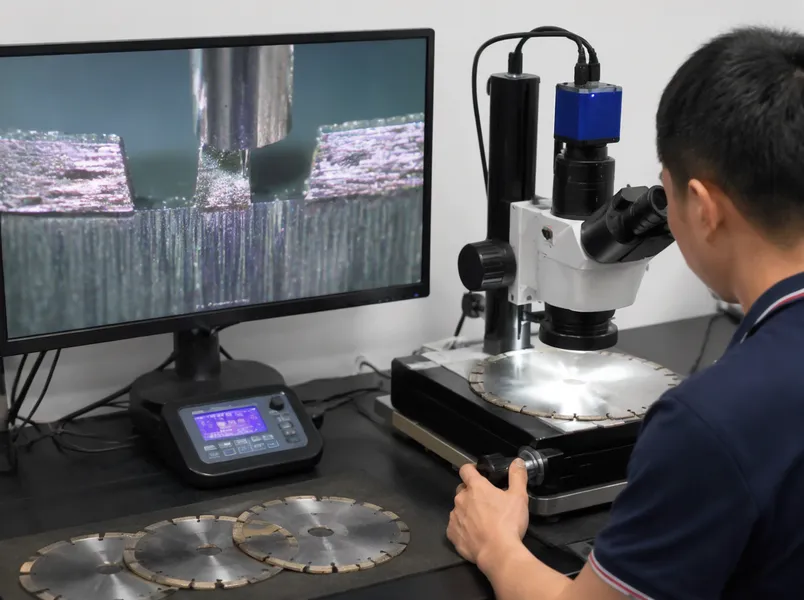
Why Our Rejection Rate Runs Higher
This testing intensity is why our rejection rate on brazed blades runs higher than on sintered products — the process has less margin for error, and we'd rather scrap a batch than ship blades that shed diamonds on your customer's job site.
A diamond pull-out during cutting is both a safety hazard and an instant warranty claim for you. Our QC exists to prevent that scenario entirely.
Packaging and Freight Considerations
Vacuum brazed blades require more careful packaging than sintered blades because the exposed diamond crystals are vulnerable to point-contact damage in transit. A crystal that chips before the blade is even used means degraded performance from the first cut.
Our Brazed Blade Packaging Standard
- Individual blade wrapped in foam sleeve (not just paper — the crystal tips need cushioning)
- PE protective cap on diamond rim for blades shipped in blister packs
- Foam dividers between stacked blades in inner boxes (maximum 10–25 pcs per inner box depending on diameter)
- Corrugated outer cartons with corner reinforcement
- Palletized with shrink wrap and edge protection for container loading
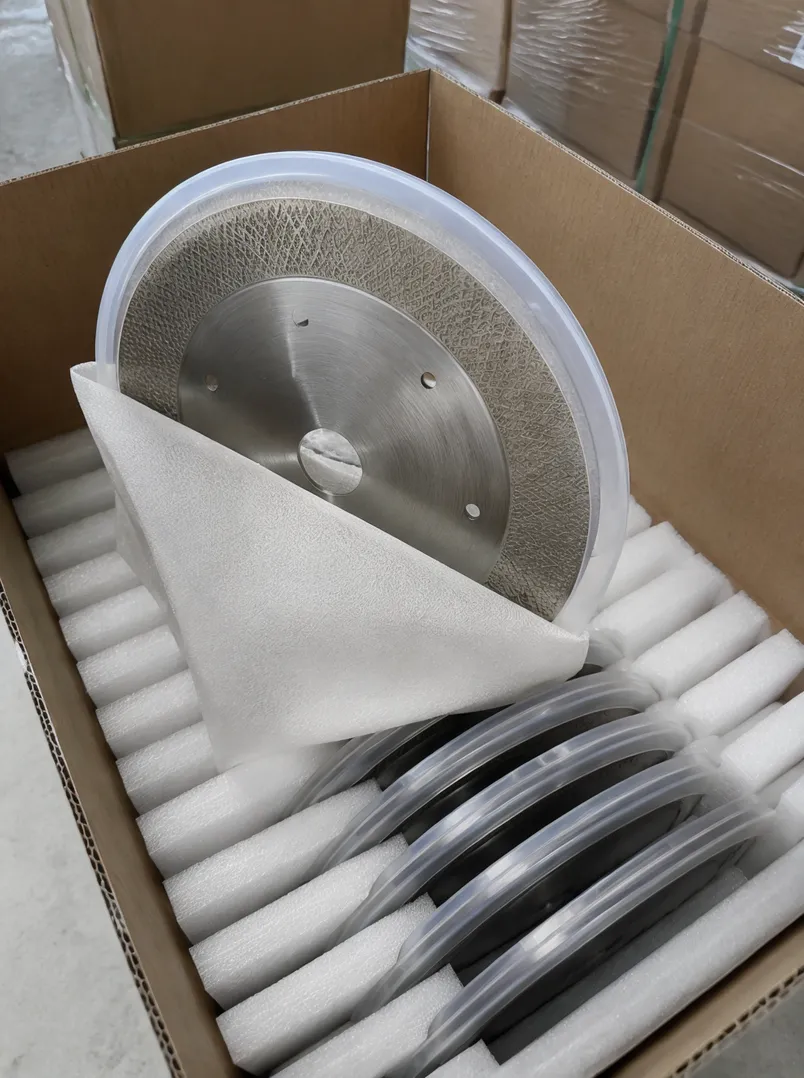
Container Loading Estimates
Loading capacity is lower per container than sintered blades of equivalent diameter because the foam packaging takes more volume.
| Diameter | Approx. pcs per 20GP | Approx. pcs per 40HQ |
|---|---|---|
| 115 mm | ~50,000 | ~100,000 |
| 125 mm | ~40,000 | ~80,000 |
| 230 mm | ~15,000 | ~30,000 |
Transparent Freight Costing
We provide exact loading calculations with your quotation so your freight cost-per-piece is transparent before you commit.
Mixed Container Loading
Some distributors mix vacuum brazed blades with sintered blades in the same container to consolidate freight and offer a broader range. We coordinate mixed loading and ensure the packaging hierarchy protects the more vulnerable brazed products.
Frequently Asked Questions
How long does a vacuum brazed diamond blade last compared to a sintered blade?
A brazed blade typically delivers 15–40 m² of cutting area depending on the material being cut. A sintered blade of the same diameter in comparable conditions might deliver 80–200 m². The ratio is roughly 1:4 to 1:5 on lifespan, but reversed on cut speed — brazed cuts 2–3× faster per minute of operation.
For your inventory planning, this means brazed blades move faster as a consumable: same customer, more frequent purchases.
Margin note: The unit margin structure usually compensates for the lower life because brazed blades command a 30–50% price premium over sintered equivalents.
Can vacuum brazed blades cut metal?
Brief metal contact (rebar in concrete, metal lath in plaster) is acceptable. Sustained metal cutting is not recommended — steel generates extreme heat at the cut interface, and above 650°C the diamond crystals begin graphitizing.
For mixed-material demolition that includes metal, we recommend intermittent cutting with cooling pauses.
Recommendation: If your end users primarily cut metal, dedicated abrasive cut-off wheels are a better recommendation than any diamond blade.
What is the difference between vacuum brazed and silver-brazed diamond blades?
Vacuum brazing occurs under high vacuum at 800–950°C using alloys designed for diamond wetting — typically nickel-chromium or copper-tin-titanium systems. Silver brazing (also called furnace brazing in air or induction brazing) uses lower-temperature silver alloys and typically requires flux, which leaves residue and doesn't achieve the same metallurgical bond quality.
Vacuum-brazed joints are stronger, cleaner, and more thermally stable.
Vacuum Brazed
Premium offering. Chemical bond, no flux residue, high thermal stability. This is what we manufacture exclusively.
Silver Brazed
Budget tier. Lower bond strength, flux residue, less thermal stability. The performance gap is too significant to justify stocking both.
What diamond coating is used for vacuum brazed blades, and why does it matter?
We use titanium-coated (Ti-coated) synthetic diamond crystals for all our brazed products. The titanium layer creates a carbide interface between the diamond and the braze alloy, enabling chemical bonding rather than purely mechanical retention.
Without this coating, the braze alloy beads up on the diamond surface instead of wetting it — leading to weak bonds and crystal pull-out under load.
Buyer alert: If a supplier offers "brazed" blades at abnormally low prices, ask whether their diamonds are coated. Uncoated crystals brazed in non-vacuum conditions is the most common source of field failures in this product category.
What is the minimum order for private-label vacuum brazed diamond blades?
Standard configurations — 300 pieces per SKU. Covers standard diameters with our existing braze alloy system and standard grit sizes. Includes custom laser etching on the core and branded packaging.
Fully custom configurations — 1,000 pieces per SKU. Non-standard diameter, special core material, or new packaging tooling.
Trial orders — 100–200 pieces in neutral packaging are available for performance testing before committing to branded production.
Your Next Step — Get a Specific Recommendation
Tell us three things and we'll come back with a tailored recommendation and pricing within 24 hours.
1. Materials
What materials do your end users cut most often? (demolition mix, granite, concrete, tile, rescue applications)
2. Sizes
What diameters and arbor sizes are standard in your market?
3. Volume
Estimated annual volume or trial order quantity?
If you already stock sintered blades and want to add a vacuum brazed tier, send us your current sintered blade specs — we'll suggest the brazed equivalent that complements your existing range without overlap.