

Segmented Diamond Cutting Discs The Construction Workhorse
Open gullet design for fast, cool cutting in concrete, masonry, and general construction materials.
The highest-velocity SKU in most distributors' diamond blade inventory. We manufacture them with configurable segment geometry so your blades match your market, not a generic formula.
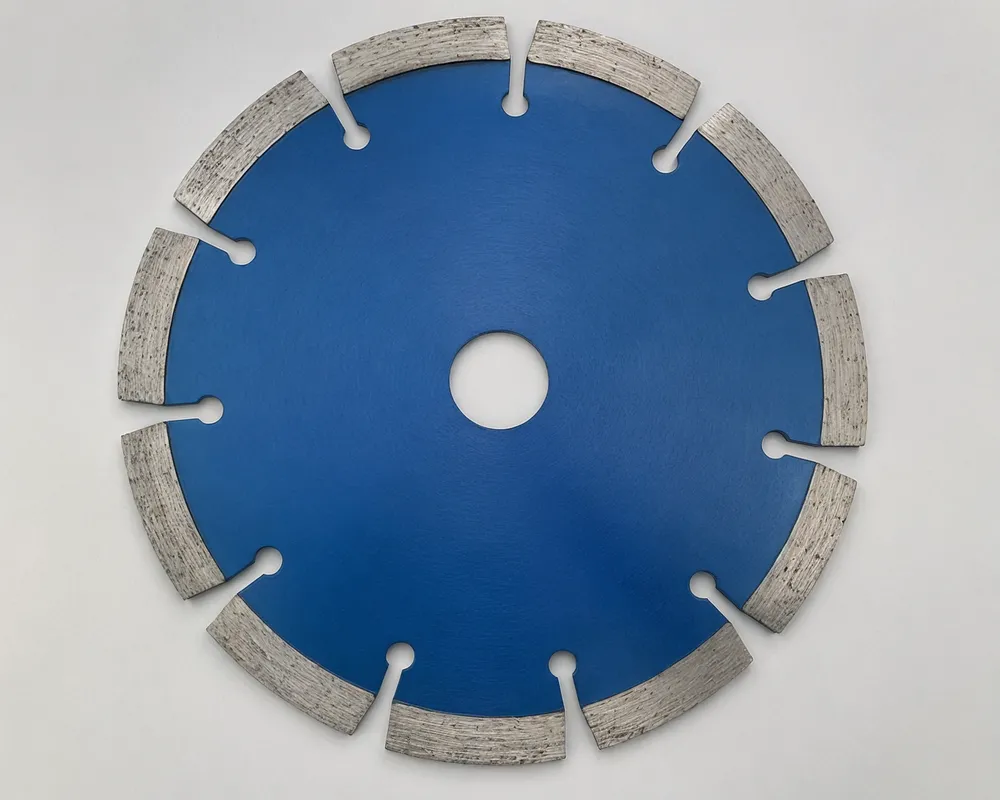
What a Segmented Rim Actually Does for Your Buyer's Tool Belt
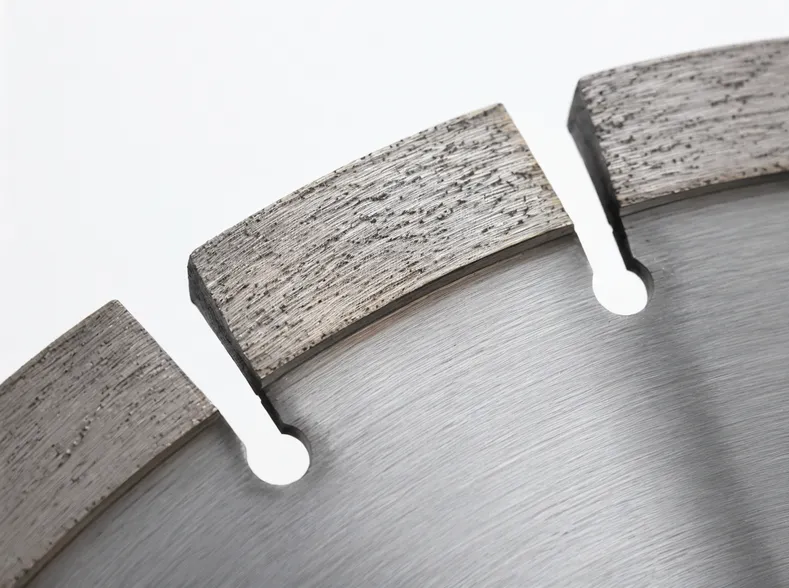
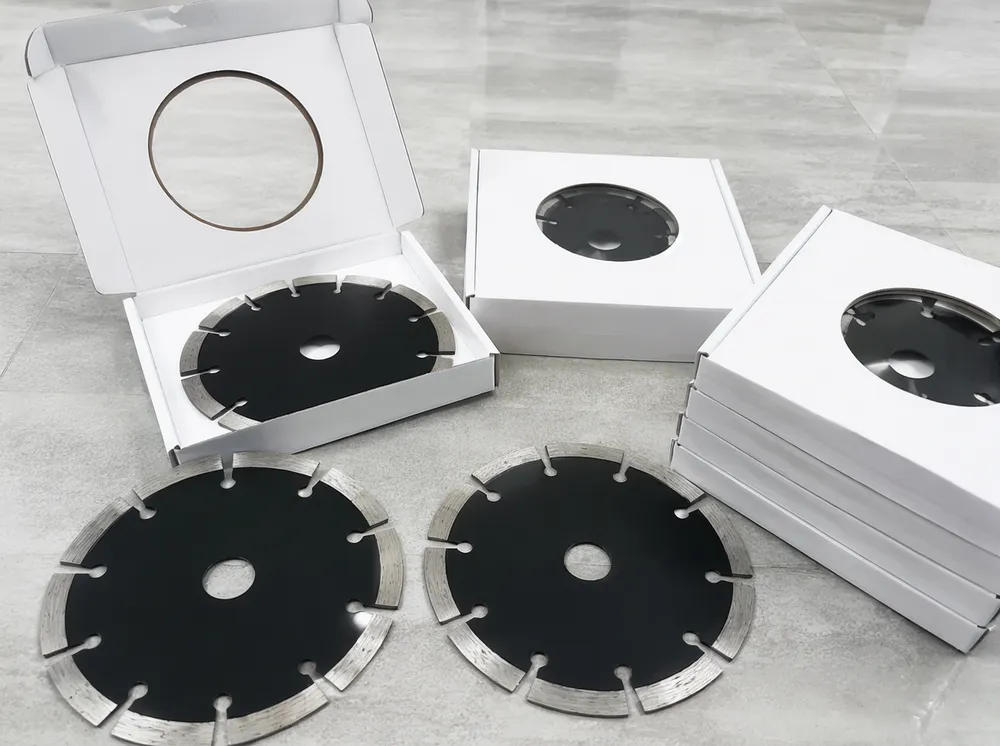
A segmented diamond cutting disc separates its diamond-bearing segments with open gullets — the gaps between segments that most people overlook until a blade overheats mid-cut. Those gullets do two things simultaneously: they channel debris out of the cut path before it re-grinds against the material (wasting energy and generating heat), and they draw ambient air across the segment face for passive cooling. The result is a blade that cuts aggressively through hard, abrasive materials without the thermal buildup that warps cores and destroys welds.
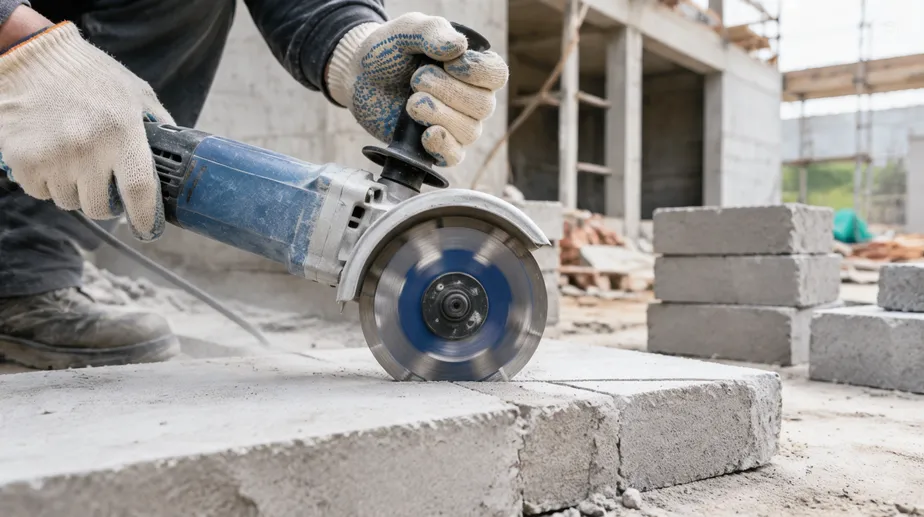
This is the general purpose diamond cutting disc configuration. When your customers reach for an angle grinder on a construction site and don't have time to set up a wet saw, a segmented rim cutting disc is what goes on the spindle. Concrete, concrete block, brick, mortar joints, masonry pavers, cured reinforced concrete — segmented blades handle the full range of construction materials your end users encounter daily. That versatility is what makes them the volume leader in most blade inventories: one SKU covers more job-site situations than any other rim type.
For your business, this translates to reorder frequency. Segmented discs are consumed faster than turbo or continuous-rim blades because they're used in aggressive, high-feed applications where material removal rates are high and blade life is measured in cuts per shift, not cuts per year. Your customers don't stockpile them — they burn through them and come back.
Passive Air Cooling
Gullets draw ambient air across segment faces — no water supply needed on site
High Feed Rate
Aggressive cutting through hard, abrasive materials without thermal warp
Reorder Velocity
Consumed faster than turbo or continuous-rim — blade life measured in cuts per shift
Technical Specifications for This Product
Standard values for segmented diamond cutting discs. Actual specifications may vary by configuration.
| Parameter | Standard Values |
|---|---|
| Diameter range | 105 mm, 110 mm, 115 mm, 125 mm, 150 mm, 180 mm, 200 mm, 230 mm |
| Arbor bore | 16 mm, 20 mm, 22.23 mm, 25.4 mm (non-standard on request) |
| Segment height | 7 mm, 8 mm, 10 mm, 12 mm (determines blade life) |
| Segment thickness | 1.8–3.2 mm (varies by diameter) |
| Blade body thickness | 1.4–2.6 mm |
| Number of segments | 6–24 (diameter-dependent, adjustable) |
| Segment attachment | High-frequency welded (standard), laser welded (dry-cut/high-RPM option) |
| Maximum RPM | 13,300 RPM (105 mm) down to 6,650 RPM (230 mm) |
| Cutting method | Dry cutting (primary design), wet cutting compatible |
| Compatible tools | 4"–9" angle grinders, handheld cut-off saws, masonry saws |
Segment Count & Gullet Width
These are the two parameters that most affect performance character:
More segments + narrower gullets
Smoother cut but slower feed rate and less cooling. Better for finishing passes or softer materials.
Fewer segments + wider gullets
Faster, more aggressive cutting with better debris clearance but rougher finish. Ideal for hard concrete and heavy-duty site work.
We default to the configuration that matches the material class you specify, but this is fully adjustable.
Best-Selling Configuration
If you're testing the market and want a safe starting SKU:
This configuration accounts for roughly 60% of our export orders in this product line.
Specifications shown are standard values for this product type. Actual specifications may vary by configuration.
Contact us for detailed product data sheetsHow We Manufacture Segmented Blades Differently
The segmented rim cutting disc looks simple — segments on a core with gaps between them. Every diamond blade factory makes them. The difference is in the three decisions that determine whether your customers reorder or switch suppliers: bond formula, segment attachment integrity, and dimensional consistency.
Bond Formula by Material Class
We don't run one formula across all segmented blades. Each application tier gets its own formula card, selected or developed based on what you tell us your end users actually cut.
- Cured concrete (abrasive aggregate, potential rebar contact) — hard bond matrix with high cobalt content and thermally stable diamond.
- Green concrete / masonry block — medium bond with faster-wearing matrix so diamonds expose quickly against less abrasive material.
- General-purpose (mixed job-site use) — balanced formula tuned over 15+ years of feedback from contractors across Southeast Asia, the Middle East, and South America.
Separate formula cards maintained for each application tier.
Weld Integrity for Dry Cutting
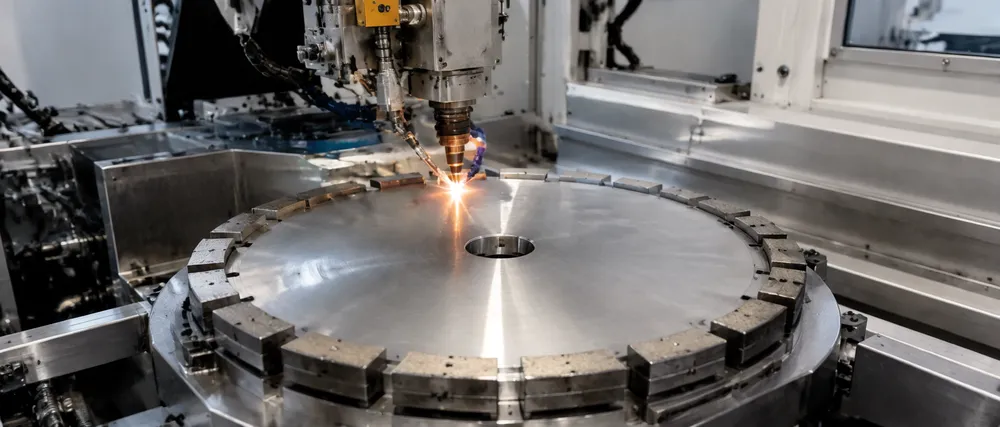
Segmented blades are overwhelmingly used dry. Dry cutting means thermal cycling on the segment-to-core joint with every pass — heat builds, blade cools momentarily, heat builds again.
We pull destructive test samples from every batch — minimum shear force verified before any blades ship. A segment separation incident on a job site isn't just a warranty claim; it's a safety liability that damages your brand permanently.
Core Flatness & Runout Control
We source steel cores from mills that certify hardness and flatness to 65Mn spring steel specifications. After welding, every core goes through CNC tensioning and truing.
That precision means less vibration during cutting, which translates to straighter cuts and longer bearing life on your customers' angle grinders — details that reduce their complaints and your after-sales burden.
Why we switched core steel suppliers in 2019
We saw a pattern of warping on 230 mm blades shipped to Middle Eastern markets — the ambient heat during transport was enough to reveal stress in lower-grade steel. The current supplier's material costs us about 8% more per core, but warranty claims on core warp dropped to near zero.
Decision trade-off: +8% material cost → ~0% warp warranty claims
Market Segments Where Segmented Discs Generate Volume
Each segment below is a revenue channel for your distribution or contracting business. Segmented diamond cutting discs are the shared consumable across all of them.
General Construction & Demolition
Every concrete pour, every masonry wall, every paver installation on every job site uses cutting tools. Segmented discs in 115 mm and 125 mm are the default blade for angle grinders in this segment — contractors carry 3-5 spares per job day because blade life in concrete is measured in linear meters, not months.
For you as a distributor, this segment means weekly or biweekly reorders from active accounts, especially during construction season. Volume per account is moderate (50-200 pcs/month) but the account base is enormous.
Infrastructure & Road Work
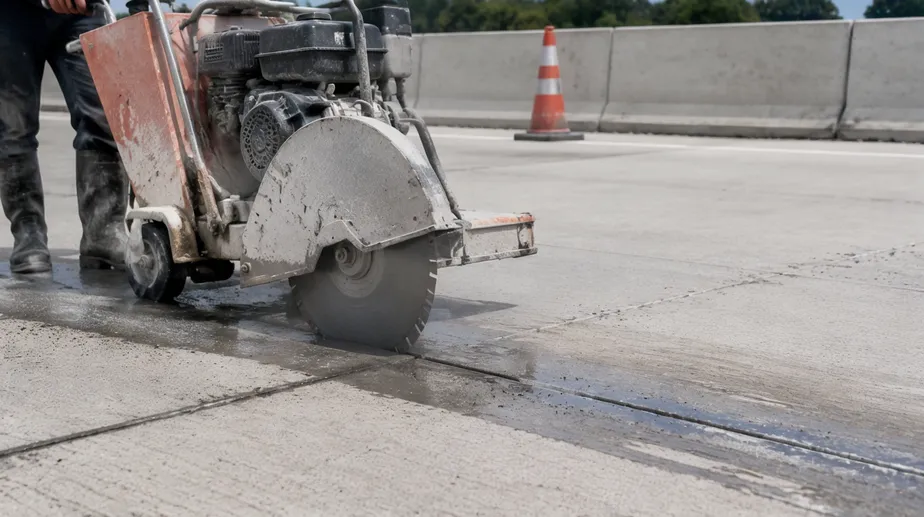
Municipal and highway contractors cut expansion joints, saw control joints in fresh concrete, and cut access openings in cured concrete structures. They use larger-diameter segmented discs (180-230 mm) in handheld cut-off saws and walk-behind floor saws.
Order sizes run larger — a single highway project can consume 500-1,000 blades over its duration — and these buyers purchase through industrial supply distributors, not retail hardware stores. Higher-margin channel because the buyer values reliability over absolute lowest price.
Landscaping & Masonry
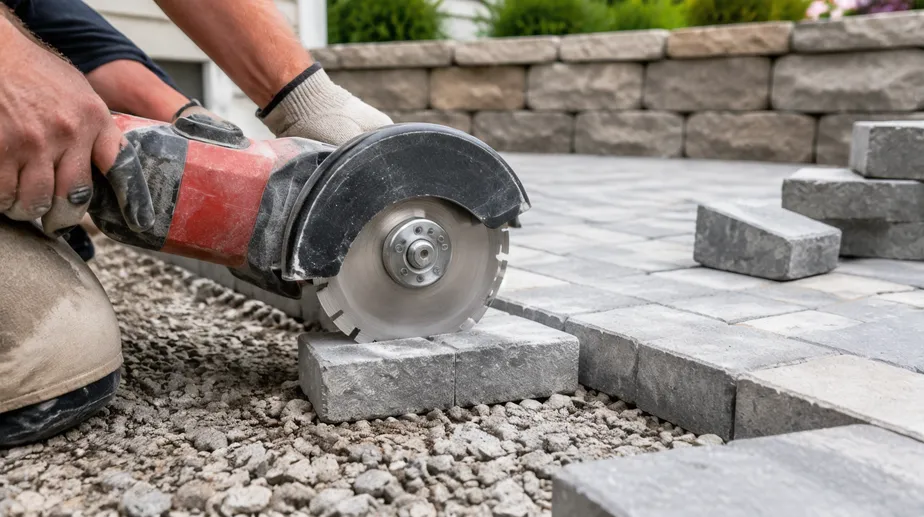
Hardscape installers cut pavers, retaining wall blocks, natural stone veneers, and cap stones. A segmented disc is their general-purpose tool for cuts that don't require a polished edge. This segment is seasonal in temperate climates but year-round in warmer markets.
Your value proposition here: stock the 105-125 mm range in both standard and long-life (12 mm segment) configurations so you cover both price-sensitive and performance-driven landscapers.
Plumbing & Electrical Contractors
Cutting openings in concrete floors and walls for pipe runs and conduit access. Not the highest volume per account, but extremely consistent: every new construction and renovation project requires access cuts.
These buyers typically purchase through the same distributor as their other consumables, so carrying segmented blades keeps you as the consolidated supplier for their entire consumable mix.

Ready to quote for your target segment?
Tell us which market you serve and we'll provide volume pricing matched to your application tier.
Segmented vs. Turbo vs. Continuous Rim — Helping You Position Your SKU Mix
Your customers don't always know which rim type they need. Here's the selection logic, which also explains why you should stock all three rather than defaulting to segmented-only:
| Factor | Segmented Rim | Turbo Rim | Continuous Rim |
|---|---|---|---|
| Best materials | Concrete, masonry, brick, block, abrasive stone | Mixed materials, general stone, sandstone | Tile, porcelain, marble, brittle materials |
| Cut speed | Fastest | Moderate-fast | Slowest |
| Edge finish | Roughest (acceptable for construction) | Moderate (minor chipping) | Smoothest (chip-free) |
| Cooling | Best (wide gullets, air flow) | Good (serrated rim) | Least (no gullets) |
| Dry cutting | Designed for it | Compatible | Risky (overheats without water) |
| Typical buyer | Contractor, demolition crew | General installer, fabricator | Tile setter, finish work |
| Reorder frequency | Highest (aggressive use, fast consumption) | Moderate | Lowest (precision use, careful operation) |
Segmented Rim
- Best materials
- Concrete, masonry, brick
- Cut speed
- Fastest
- Edge finish
- Roughest
- Cooling
- Best (wide gullets)
- Dry cutting
- Designed for it
- Typical buyer
- Contractor, demolition
- Reorder frequency
- Highest
Turbo Rim
- Best materials
- Mixed materials, sandstone
- Cut speed
- Moderate-fast
- Edge finish
- Moderate (minor chipping)
- Cooling
- Good (serrated rim)
- Dry cutting
- Compatible
- Typical buyer
- Installer, fabricator
- Reorder frequency
- Moderate
Continuous Rim
- Best materials
- Tile, porcelain, marble
- Cut speed
- Slowest
- Edge finish
- Smoothest (chip-free)
- Cooling
- Least (no gullets)
- Dry cutting
- Risky (overheats)
- Typical buyer
- Tile setter, finish work
- Reorder frequency
- Lowest
SKU Volume Positioning
The segmented diamond cutting disc covers the highest-volume, fastest-turnover applications. Turbo covers the middle ground. Continuous rim serves the precision end. If your channel serves contractors heavily, segmented blades will represent 50–70% of your blade volume. If you serve tile and stone fabrication, that ratio inverts.
Customization: What You Can Specify on a Segmented Blade Order
We don't sell a fixed SKU catalog where your only choice is diameter. Every parameter below is adjustable within our manufacturing capability:
Segment Geometry
- Segment count (affects cut speed vs. finish)
- Segment height (7–12 mm — determines blade life, affects unit cost proportionally)
- Segment width/thickness (wider = more stability, narrower = less material waste)
- Gullet depth and shape (deep U-gullets for maximum debris clearance, shallow slots for smoother operation)
- Protective segments or cooling slots (laser-cut relief patterns in the core for additional heat dissipation)
Bond Formula
- Diamond concentration (standard, medium, high — higher concentration = longer life, higher cost)
- Diamond grit size (30/40 mesh for aggressive cutting, 40/50 for standard, 50/60 for smoother operation)
- Bond hardness (soft/medium/hard — matched to target material abrasiveness)
- Specialty additives (cobalt-free bond available for markets with cobalt restrictions)
Core & Finishing
- Steel grade (standard 65Mn, or upgraded for high-RPM applications)
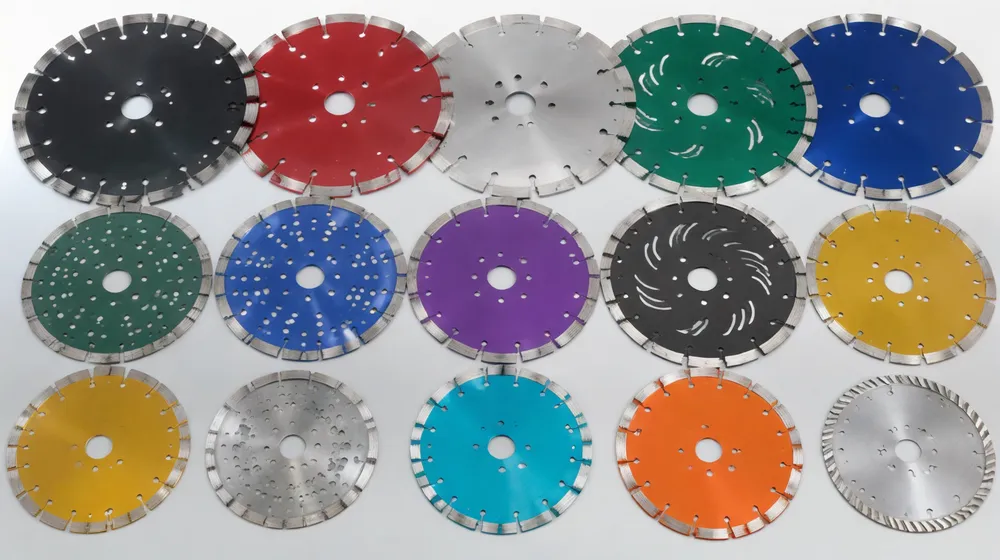
- Core color (painted in any custom color for brand differentiation on the shelf)
- Laser etching (your brand logo, safety markings, size/spec info, barcodes)
- Arbor bore (any standard or non-standard dimension)
Packaging
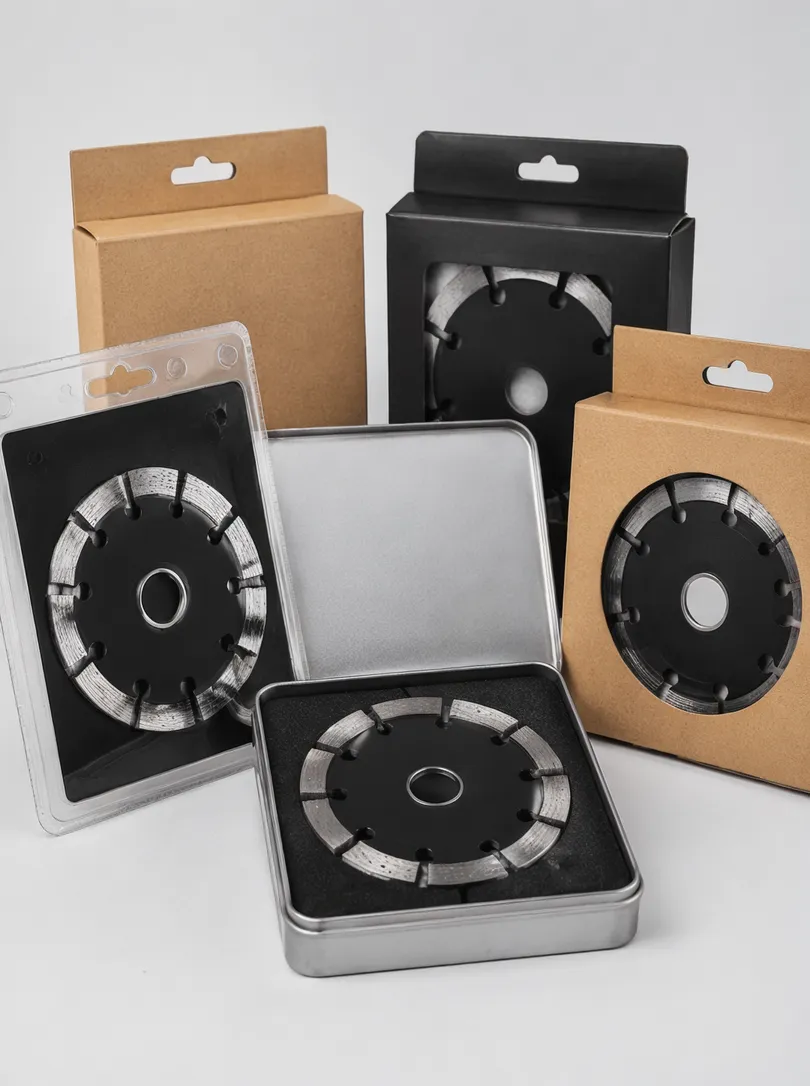
- Individual blister pack (retail-ready)
- Paper card sleeve
- Tin box (premium positioning)
- Bulk box (10, 25, 50 pcs per box — distributor-to-contractor format)
- Custom printed packaging with your brand, regulatory markings, and product info
MOQ & Lead Time Reality
Minimum Order Quantities
- 500 pcs Standard formula, standard packaging, custom label
- 1,000 pcs Custom formula or segment geometry (formula trial run + sample approval adds 7–10 days)
- 2,000–3,000 pcs Fully custom packaging with new tooling
Production Lead Times
- 20–25 days Standard specification orders
- 30–40 days Full custom, first order
- 15–20 days Repeat orders on established specs
Product Line Architecture
Most of our segmented blade OEM partners run 3–5 SKU variants under their own brand — typically differentiated by segment height/life tier and labeled "Standard," "Pro," and "Premium" or equivalent. We can help you structure a product line with good/better/best pricing architecture if you're building a brand.
What Segmented Blades Cut — And What They Don't
Segmented diamond blades are the workhorse geometry for hard, abrasive construction materials. Their aggressive cutting action and superior cooling make them the right choice for most dry-cutting and general wet-cutting applications.
Ideal Applications
Concrete (Cured & Green)
General construction cuts, slab work, foundations. Segmented geometry clears slurry from the kerf efficiently.
Reinforced Concrete
Steel rebar + concrete. Requires harder bond and often multi-purpose diamond formulation to handle both materials.
Brick & Block
Clay brick, concrete block, CMU. Softer bond recommended for these highly abrasive materials to maintain free-cutting action.
Natural Stone (Hard)
Granite, basalt, hard limestone. Medium-to-hard bond with higher diamond concentration for acceptable life.
Pavers & Roofing Tile
Concrete and clay pavers, roof tiles. Fast aggressive cuts where edge finish is secondary to speed.
Asphalt
Road repair, patching, utility cuts. Soft bond essential — asphalt's bitumen fills gullets; deep segments and wide slots help.
Refractory & Abrasive Materials
Fire brick, silicon carbide blocks, abrasive ceramics. Very soft bond to ensure constant diamond exposure.
Masonry & Mortar
Tuckpointing, mortar joint removal, chimney work. Narrow-kerf segmented blades available for precision joint work.
Ductile Iron & Cast Iron Pipe
Utility and plumbing applications. Specialized metal-cutting segment formulations available for these demanding cuts.
Where Segmented Blades Are Not the Best Choice
Porcelain & Ceramic Tile
The segmented gaps cause chipping on brittle glazed surfaces. Use continuous rim blades instead.
→ Continuous rim recommendedMarble & Soft Natural Stone
Segments leave visible chatter marks. Use continuous or turbo rim for a cleaner finish.
→ Continuous or turbo rim recommendedGlass & Engineered Stone
High fracture risk from segment impact. Continuous rim with fine grit is required.
→ Continuous rim recommendedPrecision Decorative Cuts
Any application requiring chip-free edges or mirror finish. Turbo rim or continuous rim provides smoother cuts.
→ Turbo or continuous rim recommendedEquipment Compatibility
Our segmented blades are manufactured for use on all standard construction cutting equipment:
Standard arbor sizes: 20mm, 22.23mm (7/8"), 25.4mm (1"), 1"–20mm reducer. Other bore sizes available on request.
How We Ensure Consistency Across Production Runs
A diamond blade that performs well on one batch but fails on the next is worse than a blade that's merely average. Consistency is what separates a reliable supplier from a gamble.
Raw Material Inspection
Every batch of diamond grit is tested for mesh size distribution, shape consistency (blocky vs. irregular), and toughness index. Steel cores are checked for flatness, runout, and hardness.
Powder Mixing & Weighing
Metal powder and diamond are weighed to ±0.1g tolerance per segment. Mixing time and sequence are controlled to ensure uniform diamond distribution throughout the segment volume.
Sintering Control
Hot-press sintering at controlled temperature (680–750°C) and pressure profiles. Each furnace run is logged with time-temperature-pressure curves for traceability.
Dimensional Verification
Post-welding diameter, runout, segment height, and thickness measured on every blade. Statistical process control charts flag drift before it becomes a defect.
Speed & Safety Testing
Blades are over-speed tested at 1.5× rated RPM to verify weld integrity and core strength. Destructive testing on samples per batch confirms segment bond shear strength.
Cut Performance Testing
Sample blades from each production batch tested on standardized material slabs. We measure cut speed (cm²/min), segment wear rate, and power draw to verify formula performance matches the approved sample.
Certifications & Standards Compliance
From Inquiry to Delivery — How It Works
We've built a straightforward process that gets you from initial inquiry to production samples as fast as possible, with clear communication at every stage.
Inquiry & Requirements
Tell us what you're cutting, your equipment type, preferred diameter range, target price point, and approximate volume. We'll recommend a formula and specification.
Day 1Quotation & Spec Confirmation
We provide a detailed quotation within 24–48 hours including unit pricing at your volume, spec sheet, and lead time estimate. Iterate until specs are locked.
Day 2–3Sample Production
For new formulas, we produce 3–5 sample blades for your testing. Samples ship within 7–10 days of deposit confirmation. You test on your materials, on your saws.
Day 10–15Sample Approval & Adjustments
You provide feedback. If needed, we adjust formula (harder/softer bond, different diamond concentration) and send revised samples. Most orders are approved within 1–2 rounds.
Day 15–25Bulk Production
Upon order confirmation and deposit, full production begins. You receive progress photos at key stages: segments sintered, blades welded, finished blades before packing.
Day 25–50QC, Packing & Shipping
Final QC inspection, your approved packaging applied, and shipment arranged. We handle export documentation and can ship FOB, CIF, or DDP depending on your preference.
Day 50–55Frequently Asked Questions
Laser welding bonds segments to the core using a focused laserbeam, creating a metallurgical joint that withstands high temperatures and impact. It's the standard for professional hand-held saws and high-RPM applications. Sintered (or brazed) blades use a silver-based alloy to bond segments at lower temperatures — suitable for stationary saws operating at lower RPM where thermal stress is reduced. We recommend laser-welded for any application above 80 m/s peripheral speed.
For standard specifications, our MOQ is typically 50–100 pieces per SKU depending on blade diameter. For fully custom formulas requiring new molds or unique segment geometry, MOQ may be higher (200–300 pieces) to justify tooling costs. We're flexible — talk to us about your volumes and we'll find a workable solution.
Yes. Send us a sample blade or detailed specifications (diameter, bore, segment dimensions, number of segments, intended material) and we'll reverse-engineer a matching or improved formula. We can also analyze competitor segments in our lab to determine diamond quality, concentration, and bond hardness, then produce an equivalent or upgraded version.
Absolutely. We offer full OEM/ODM services including laser etching your brand on the core, custom color printing on blades, branded packaging boxes, and custom labels with your specifications and safety markings. We can work from your design files or create packaging designs for you at no extra cost on orders above our standard MOQ.
For first orders: 30% deposit via T/T (bank transfer) with 70% balance before shipment. For established customers with order history, we offer flexible terms including 30/70, L/C at sight, or net-30 on approved credit. We also accept payment via Alibaba Trade Assurance for added buyer protection.
Every formula is digitally recorded with exact powder weights, sintering profiles, and diamond specifications. Each batch undergoes the same QC process: hardness testing, dimensional checks, and cut-performance testing on reference slabs. We retain a sample from every production run so we can compare future batches against your approved reference. Batch traceability is maintained from raw material receipt through final shipment.
We ship worldwide via sea freight (FCL or LCL), air freight for urgent orders, and express courier (DHL/FedEx/UPS) for samples and small quantities. Standard lead time for sea freight to Europe is 25–30 days, to North America 30–35 days, and to the Middle East/Africa 15–25 days. We handle all export documentation and can arrange delivery on FOB, CIF, or DDP terms.
Yes, we welcome factory visits and encourage them for customers placing large or ongoing orders. We can arrange airport pickup, hotel recommendations, and a full factory tour including our R&D lab, sintering workshop, laser welding line, and QC department. If an in-person visit isn't feasible, we offer live video factory tours via WeChat or WhatsApp.
Ready to Source Your Diamond Blades?
Whether you need 100 blades or 10,000, a standard formula or a fully custom solution — we're ready to talk. Get a response within 24 hours.
Send Us Your Requirements
Packaging and Container Loading for Segmented Blades
Segmented discs ship dense and heavy relative to their size. Your freight cost per piece depends on how efficiently we pack the container.
| Diameter | Pcs / Inner Box | Inner Boxes / Carton | ≈ Pcs per 20GP | ≈ Pcs per 40HQ |
|---|---|---|---|---|
| 105 mm | 10 | 10 (100 pcs/carton) | ~80,000 | ~160,000 |
| 115 mm | 10 | 8 (80 pcs/carton) | ~65,000 | ~130,000 |
| 125 mm | 10 | 6 (60 pcs/carton) | ~50,000 | ~100,000 |
| 230 mm | 5 | 4 (20 pcs/carton) | ~20,000 | ~40,000 |
Standard Export Packaging
- 1 VCI anti-rust paper wrap per blade
- 2 Corrugated inner box with foam separators
- 3 Reinforced outer carton
- 4 Palletized and stretch-wrapped
Tropical destinations: Moisture barrier bags added as standard for Southeast Asian and African shipments.
Loading Plans & Mixed Diameters
We provide exact loading plans with your order confirmation so your freight forwarder can book correctly.
Mixed-diameter loading within a single container is routine — many distributors ship 60% small blades (105–125 mm) and 40% larger diameters to optimize per-unit freight cost across their product range.
Retail packaging? If you're packing for retail shelf display (blister packs, header cards), per-piece volume increases but we adjust the carton layout to maintain container efficiency. Send us your packaging dimensions and we'll run the loading calculation before you commit.

Certifications That Clear Your Import Paperwork
Our segmented diamond cutting disc range ships with full compliance documentation.
ISO 9001:2015
Quality management system, externally audited.
CE
European conformity for power tool accessories.
MPA
German safety certification for rotating abrasive tools — segment retention, structural integrity, RPM rating verified. Required by most EU distributors — your blades arrive pre-qualified.
SGS
Third-party inspection reports available per shipment batch.
Documentation We Prepare In-House
- Certificates of origin
- Batch-matched test reports
- ISPM-15 fumigation certificates for wooden pallets
All documentation prepared through our own export license — no third-party trading company in the paper trail.
Regional Import Certifications
If you distribute into markets with specific import certification requirements beyond CE/MPA, tell us during quoting — we've cleared most of these before and can advise on documentation.
Frequently Asked Questions
Answers to the technical and commercial questions we hear most from distributors evaluating segmented diamond cutting discs.
How many segments should I specify for a 115 mm segmented diamond cutting disc?
Standard is 8–10 segments for 115 mm blades.
8 segments with wider gullets give maximum cutting speed and cooling for deep cuts in hard concrete — your demolition contractor accounts prefer this.
10 segments provide smoother operation with slightly longer life, better suited for general masonry and light concrete work.
We default to 10 segments unless you specify otherwise, because it covers the broadest end-user base for distributors. If you serve primarily heavy construction, ask us about the 8-segment aggressive-cut version.
What is the difference between high-frequency welded and laser-welded segmented blades?
High-frequency (HF) welding fuses the segment to the core using heat and pressure at the joint interface. It's our standard — strong, reliable, and cost-effective for wet cutting and moderate dry cutting.
Laser welding creates a deeper, metallurgically bonded joint that withstands more severe thermal cycling. If your end users run segmented blades dry at full depth and high feed pressure (road cutting, deep concrete sawing), laser-welded joints eliminate the segment-loss risk under thermal stress.
The cost premium for laser welding runs roughly 15–20% per blade — justified for professional/premium product tiers.
Can I use a segmented diamond cutting disc on tile or porcelain?
You can, but the result won't satisfy a professional tile installer. The open gullet design that makes segmented blades fast in concrete also causes micro-chipping on brittle materials like ceramic tile and porcelain.
For tile, you want a continuous rim or fine-grit turbo rim blade.
However — for rough cuts on tile where edge quality doesn't matter (cuts hidden by trim or grout), a segmented blade works in a pinch. Don't position segmented blades as tile-cutting tools in your product line; it creates returns.
What segment height gives the best blade life for general construction use?
For standard construction applications (concrete, masonry, mixed materials), 10 mm segment height is the sweet spot between blade life and unit cost.
7–8 mm segments are budget-tier — lower price per blade, less diamond material, shorter life. Fine for price-sensitive contractor accounts who replace frequently.
12 mm segments are the professional/long-life tier — more diamond, longer cutting life, higher price point.
Most of our distributors stock the 10 mm as their core SKU and offer the 12 mm as a premium upsell.
What is the minimum order quantity for private-label segmented cutting discs?
500 pieces per SKU for standard formula with your label printed or etched on existing blade/packaging. This gets you into the market quickly using proven formula and standard packaging.
For custom blister tooling or unique packaging formats, MOQ rises to 2,000–3,000 per SKU to cover setup costs.
First-time buyers: we can ship 200–500 pieces in neutral packaging for field testing before you commit to branded production runs.
Why do some segmented blades lose segments during use?
Segment loss is a safety failure — it means the weld joint failed. Three common manufacturing causes:
- Contamination on the core weld surface (grease, rust, oxidation) preventing proper bonding
- Insufficient weld penetration depth
- Thermal fatigue from dry cutting exceeding the joint's tolerance
We prevent it through:
- Automated pre-weld surface preparation (shot blast + chemical clean)
- Programmed welding parameters with minimum penetration depth enforced
- Destructive pull testing on batch samples
If your current supplier has segment-loss incidents, it's a process control issue worth switching over.
Start With a Sample Order or Jump Straight to Volume
Most new buyers in segmented blades start with 200–500 pieces across 2–3 configurations — different diameters, or same diameter with different segment heights for good/better/best tiering. You test with your customers, confirm the cutting performance and blade life match your market expectations, then we move into branded production.
Tell us:
- What materials your end users cut (concrete, masonry, mixed, specific stone types)
- Which diameters and arbor sizes are standard in your market
- Whether you need retail packaging or bulk distributor packs
- Your target volume and desired price positioning (budget / standard / premium)
We'll respond with a formula recommendation, sample pricing, and production timeline — typically within 24 hours.
200+
Min. Test Order
24h
Quote Response
500
MOQ Branded
Explore More Diamond Cutting Discs
Turbo Diamond Cutting Discs
Faster feed rate with smoother cuts than segmented rim.
Concrete Diamond Cutting Discs
Optimized bond and diamond grit for reinforced and plain concrete.
Dry Cut Diamond Blades
Engineered for handheld grinders without water supply.
Granite Diamond Cutting Discs
Hard bond matrix for abrasive natural stone applications.