

Custom Diamond Segments Formula Development & OEM Supply
When the standard catalog doesn't fit your market, we develop the formula from scratch — and lock it to your account.
From unusual stone types and non-standard blade diameters to Arix layered profiles and private-label packaging, our custom diamond segment program is built around buyers who need something the catalog doesn't cover.
What "Custom" Actually Means Here — and What It Doesn't
Let's be clear about what custom diamond segment development looks like in practice, because the word gets used loosely in this industry.
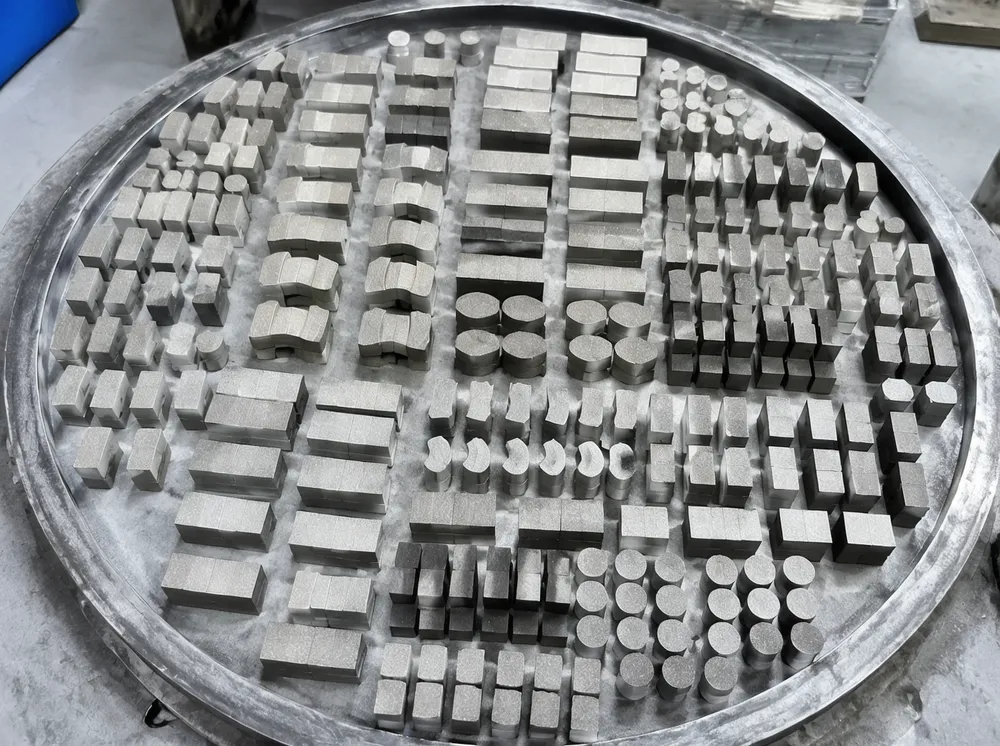
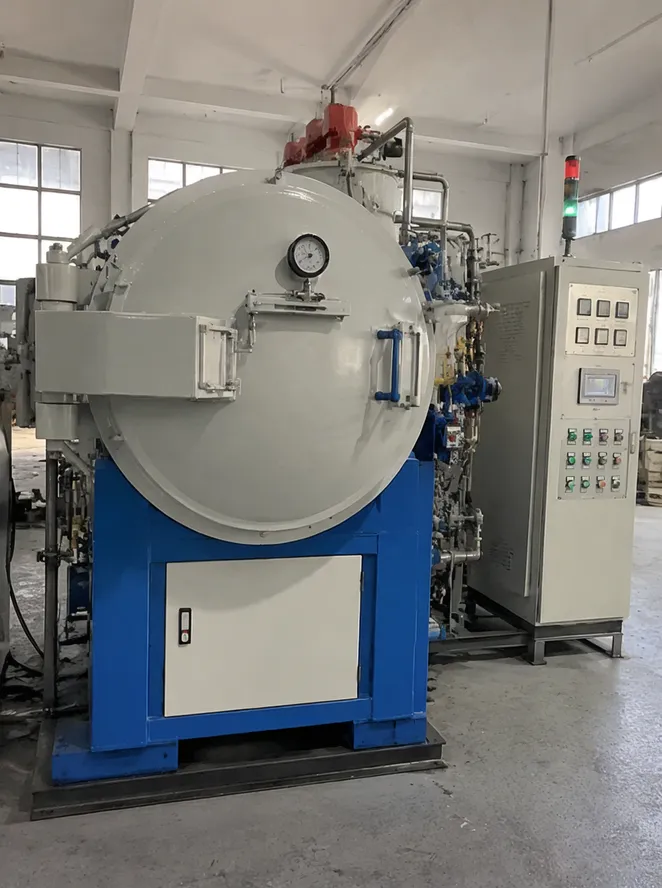
When you come to us with a custom segment requirement, you're not filling in a web form that routes to a sales rep who pastes dimensions into an existing mold. You're starting a technical conversation with an engineering team that controls its own formula library, operates its own sintering furnaces, and has 60+ active patents on bond compositions and segment geometries. The customization happens at the formula level — bond hardness, diamond concentration, grit size distribution, and the ratio of cobalt, iron, copper, tin, and proprietary additives in the metal matrix. That's where cutting performance actually lives.
What we can't do — and won't pretend otherwise — is develop a custom formula in three days or guarantee performance without field testing. Real custom segments require a 2–4 week development and sample cycle before the first production order ships. If a supplier is quoting "custom" segments off-the-shelf with a two-day turnaround, they're adjusting a standard segment and calling it custom. The bond hasn't changed; only the dimensions have. That's a different product, and it may well suit your needs — but if your market demands specific cutting performance in a specific stone type, the formula is where the work happens.
Here's what we can customize, specifically:
Bond Formula
Hardness (HRC range), diamond concentration (15%–40%), grit size (30/35 mesh to 60/80 mesh), bond composition ratios
Segment Geometry
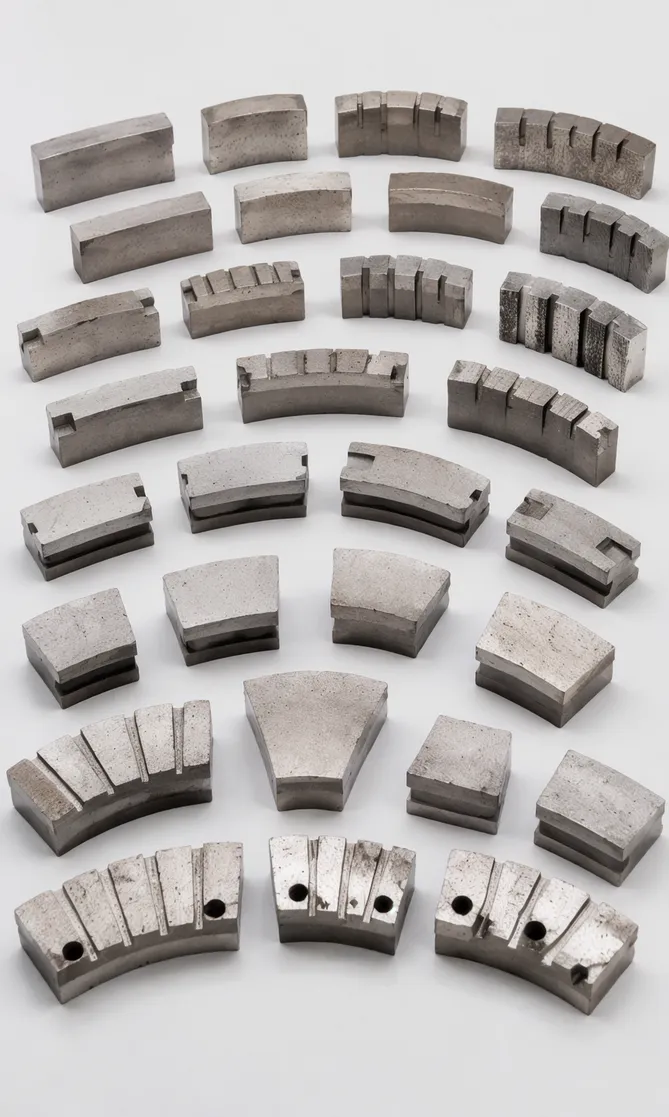
Flat-top standard, Arix layered pattern, turbo-slot profile, sandwich construction (alternating layers), fan-shaped, trapezoidal, stepped-face — or match a sample you send us
Dimensions
Segment length (20–180 mm), height (8–25 mm), width/kerf (2.5–7.2 mm), tolerance to your spec
Compatible Blade Diameter
105 mm through 3,500 mm
Welding Spec
High-frequency welding, laser welding, or silver brazing — we confirm compatibility with your steel core
Packaging & Labeling
Your brand name, your part numbers, your QC stickers — no CLSEG branding unless you want it
The Custom Segment Development Process — From Spec to Shipment
Most buyers who come to us for custom diamond segments have one of three situations: they're cutting a stone type that standard catalog segments underperform on, they're welding segments onto their own steel cores and need dimensional compatibility, or they're building a private-label blade program and need formula exclusivity for their market. The process is the same regardless of starting point:
Specification Discussion
1–3 daysTell us the stone type (or send us a sample if the variety is obscure), the blade diameter and segment count, the welding method at your facility, and the cutting performance target — whether that's maximizing blade life, cutting speed, or surface finish quality. If you have an existing segment sample that's close to what you want, send it and we'll analyze it.
Formula Selection or Development
3–7 daysWe search our library of 50+ active formulas first. If a match exists — same stone hardness profile, comparable abrasiveness — we select it and move to sample sintering. If your application falls outside existing formulas, our R&D team develops a new composition.
We have dedicated test-cutting rigs in-house; new formulas get validated against target stone before samples ship. We keep test stone varieties on hand for common cutting applications. For unusual regional stone, we'll ask you to ship a few blocks — it's worth it to get the formula right before you commit to production volume.
Sample Sintering & Shipment
7–14 daysWe sinter a sample batch — typically 20–50 segments — using the selected or newly developed formula.
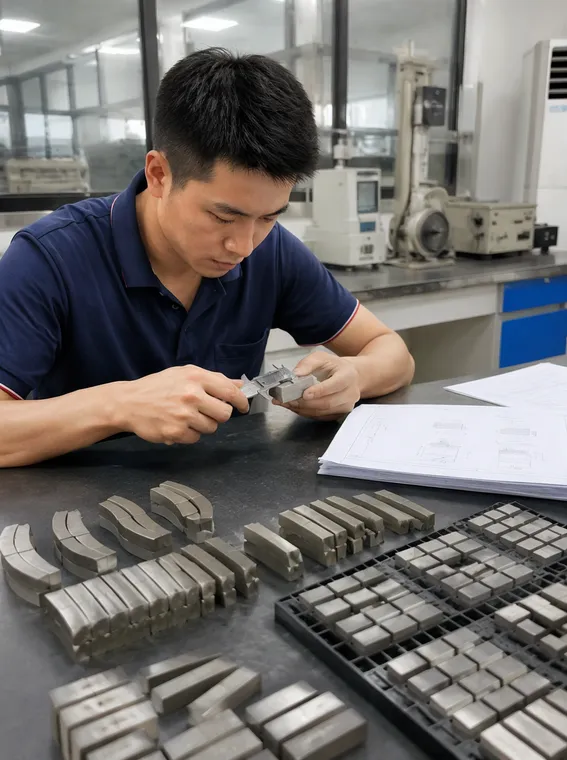
Batch QC: density measurement (±0.1 g/cm³ tolerance), Rockwell hardness testing, dimensional inspection. Samples ship with a technical data sheet showing sintering parameters and batch test results.
Field Testing & Feedback
Customer-dependentYou weld the samples to your cores and test-cut on your actual stone under your actual operating conditions. We provide a simple feedback form: cutting speed achieved (m²/hr or linear cm/min), segment wear rate, any chipping or undercutting observed, surface finish quality.
If the sample performs well — proceed to production order. If adjustments are needed, we iterate: harder bond, different diamond concentration, modified grit distribution. Most custom projects reach final approval within 1–2 sample rounds.
Production & Delivery
15–25 daysOnce approved, your formula is locked and assigned a unique code in our system. Every reorder references that code — same powder blend, same sintering profile, same QC parameters. No drift between batches.
Production MOQ starts at 200 segments for standard geometries, 500 for complex Arix or sandwich patterns. Delivery by sea (25–35 days) or air freight (5–7 days) depending on urgency.
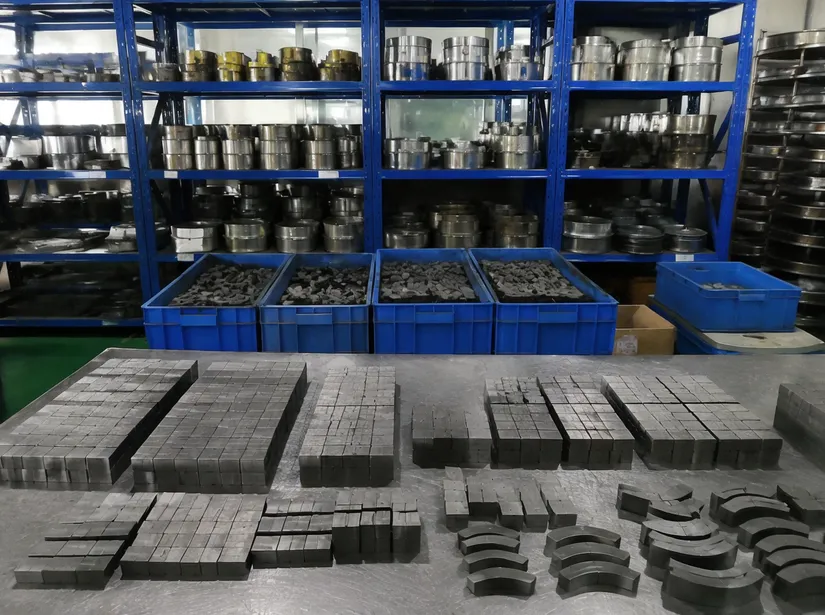
From powder formulation through sintering to finished segments — every step controlled in-house
Who Uses Custom Diamond Segments?
Custom segments aren't just for large factories. We work with operations of all sizes when the application demands something catalog products can't deliver.
Blade Manufacturers
Companies that weld segments onto their own steel cores and sell finished blades under their brand. They need consistent formula supply, dimensional accuracy for automated welding lines, and formula exclusivity in their market.
Stone Processing Plants
Quarries and slab factories that cut specific local stone varieties — sometimes unusual granites, hard sandstones, or abrasive volcanic rock that generic segments wear through too quickly or cut too slowly.
Tool Distributors & Resellers
Distributors building private-label product lines who need segments matched to specific blade SKUs, with their branding and packaging from the factory.
Concrete Cutting Specialists
Companies cutting reinforced concrete, asphalt, or green concrete who need segments optimized for steel-rebar contact, aggregate hardness, or wet-cut performance at specific RPM ranges.
R&D and Engineering Firms
Teams developing new cutting equipment or testing new applications who need small-batch prototype segments with specific diamond distributions or experimental bond compositions.
Regional Market Leaders
Established players in specific geographies (Middle East sandstone, Brazilian granite, Indian marble) who need formulas tuned to their local stone profiles rather than generic "hard stone" or "soft stone" categories.
Quality Control in Custom Production
Custom doesn't mean inconsistent. Every custom batch runs through the same QC system as our standard production — with additional checks specific to your locked formula.
Powder Weighing Verification
Every metal powder and diamond component is weighed on calibrated scales with ±0.5g accuracy. Batch records are photographed and stored against your formula code.
Sintering Parameter Logging
Temperature curve, pressure profile, and hold time are digitally logged for every furnace cycle. If any parameter drifts outside your formula's defined window, the batch is flagged for review.
Hardness Testing (Every Batch)
Random samples from each sintering cycle are Rockwell-tested. Results must fall within the HRC range specified in your formula card — no exceptions, no "close enough."
Dimensional Inspection
Length, height, and width measured with digital calipers on sampling basis. For automated welding customers, we tighten tolerances to ±0.1mm on critical dimensions.
Density Measurement
Archimedes method density check confirms proper sintering consolidation. Low density indicates incomplete sintering; high density may indicate over-pressing. Both are rejected.
Batch Traceability
Every shipment includes batch number, sintering date, QC test results, and your formula code. If you ever have a field issue, we can trace back to the exact production run and furnace cycle.
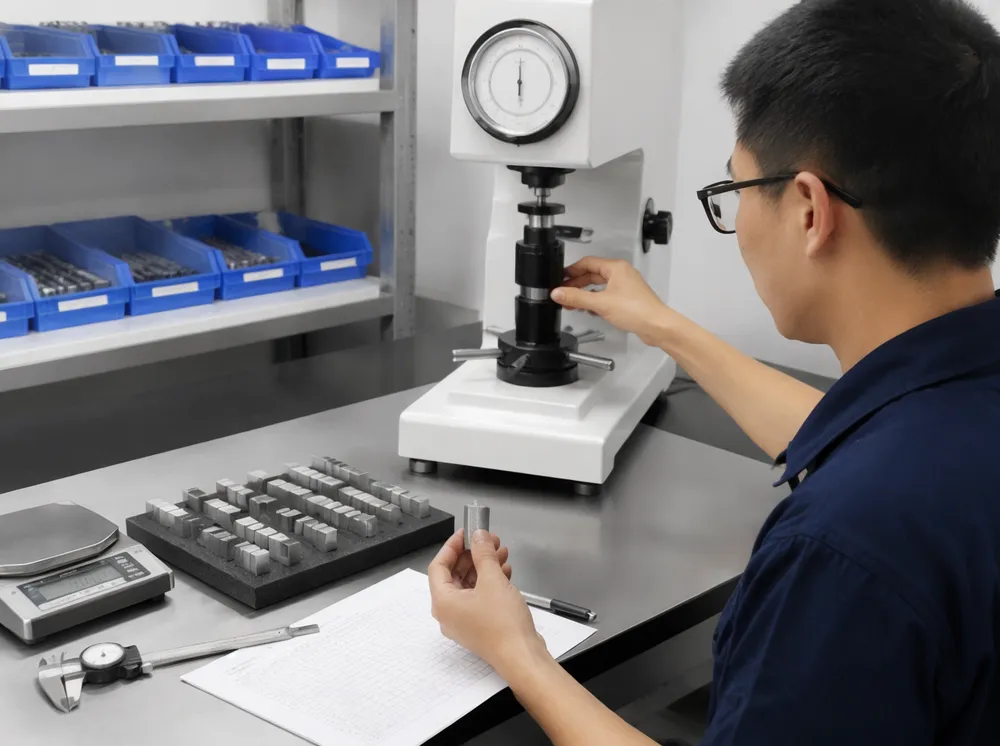
Hardness testing and dimensional inspection on every production batch
Custom Segment Technical Specifications
| Parameter | Custom Range |
|---|---|
| Segment length | 20 mm – 180 mm |
| Segment height | 8 mm – 25 mm |
| Segment width (kerf) | 2.5 mm – 7.2 mm |
| Compatible blade diameter | 105 mm – 3,500 mm |
| Diamond grit size | 30/35 mesh – 60/80 mesh |
| Diamond concentration | 15% – 40% |
| Bond hardness | HRC 15 – HRC 35 |
| Segment geometry | Flat-top, Arix, turbo-slot, sandwich, fan, trapezoidal, stepped |
| Welding compatibility | High-frequency welding, laser welding, silver brazing |
| Application materials | Granite, marble, limestone, sandstone, concrete, engineered quartz, ceramic, mixed-material |
| Packaging | Custom brand, custom part numbers, unbranded, or CLSEG standard |
Specifications shown are production ranges. Your custom configuration will be defined during the specification discussion and confirmed before sample sintering. Contact us for exact parameters and tolerances.
For category-wide specification context across standard granite, marble, and gang saw segments, see Diamond Segments.
Why Formula Exclusivity Protects Your Market Position
How It Works
Every custom formula gets a unique internal ID. Production orders referencing that ID can only be placed by the account that commissioned the development.
We don't require exclusivity contracts with minimum volume commitments to make this work — it's simply how we manage customer relationships.
This is the commercial case that matters most for distributors and blade manufacturers building a private-label program: once we develop a custom formula for your account, we don't supply that formula to other buyers in your market.
We run this as standard operating procedure. When a distributor in Southeast Asia comes to us with a formula tuned for Malaysian Yellow granite, that formula is their formula — we don't offer it to competing distributors in Malaysia. When a European blade manufacturer develops a custom Arix segment for their hard quartzite product line, that geometry and bond combination is tied to their account.
Why does this matter for your business?
Because your downstream customers are buying blade performance, not your brand name alone. If the same formula is available to your three nearest competitors with your brand sanded off, you can't hold margin on blade life and cutting speed — you're selling a commodity. A formula your competitors can't replicate is defensible margin.
Consecutive Years, Same Formula
We've had buyers in the Middle East run the same custom formula for eight consecutive years. Their repeat order rate with us is essentially 100%, because their customers associate that blade performance with their brand — and neither party wants to change what's working.
Applications Where Custom Segments Make Commercial Sense
Standard catalog segments cover the majority of global stone market volume — if your buyers are cutting common commercial granites and marbles with standard blade sizes, our granite and marble segment lines will serve them well. Custom segments earn their development cost when the application falls outside that range.
Unusual or Regional Stone Varieties
Certain regional stones have cutting characteristics that standard formulas handle poorly — extremely fine-grained granites that glaze over soft-bond segments, tropical sandstones that eat through hard-bond segments in minutes, engineered quartzite slabs with silica content that fractures diamond grit prematurely.
If your market is concentrated on a specific stone variety that doesn't match the standard formula library, a custom bond saves your customers from chronic blade complaints and saves you from chronic returns.
Proven Custom Formulas Developed For:
- Saudi Bianco marble — unusually dense for marble
- Indian Tan Brown granite — high feldspar, moderate abrasion
- Brazilian Blue quartzite — extremely hard, non-abrasive, diamond-destructive if the bond is too soft
Blade Manufacturers Welding Their Own Cores
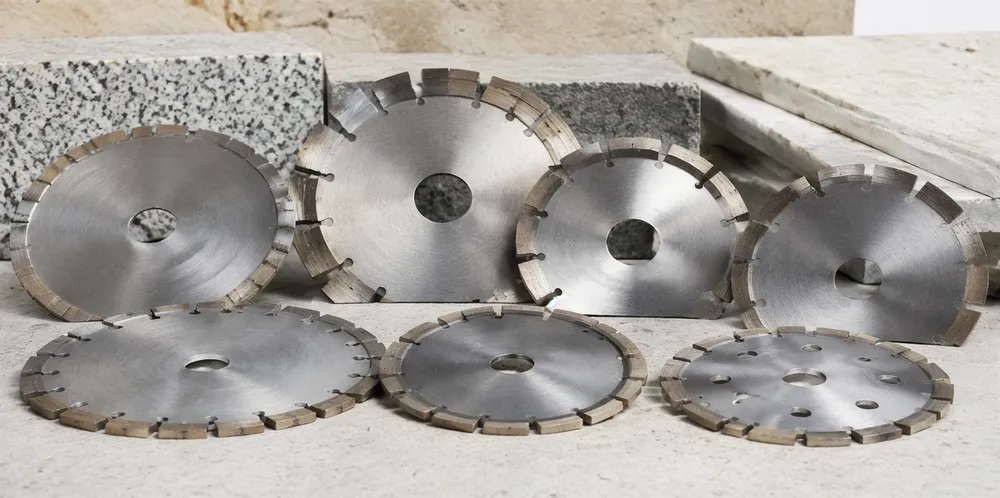
If you produce steel cores and source segments separately, your dimensional requirements are precise. Your segment height determines blade reach below the arbor; your kerf width determines cut loss and the accuracy of your blade's stated diameter. Off-the-shelf segments rarely match these tolerances closely enough for precision stonework.
Machined to Your Specified Tolerances:
±0.1 mm
Width tolerance
±0.2 mm
Height tolerance
So your welded blades run true.
OEM Blade Programs at Scale
Stone equipment OEMs — bridge saw manufacturers, CNC machining center producers, gang saw frame producers — often specify proprietary blade configurations that need to be sourced consistently over multi-year production runs.
We handle OEM supply with formula locks, stable lead times, and batch-to-batch consistency documentation.
Batch Consistency Guarantees:
±0.5 HRC
Hardness variance
±0.1 g/cm³
Density variance
Certifications already in file — your quality team doesn't need to run a certification audit from scratch.
Non-Standard Blade Diameters
The market for very large-diameter cutting systems — quarry gang saws, bridge saws for large-format slab work above 1,200 mm — uses segment geometries that most catalog manufacturers don't stock.
Production Range:
105 mm – 3,500 mm
Including configurations for gang saw frames with 50–80 blades per frame.
The challenge at large diameters is uniformity across a full production batch: when 60 segments are mounted on the same gang saw frame, they must wear at identical rates or the frame will pull unevenly and damage expensive stone blocks. We test segment hardness variance within ±0.5 HRC across each batch specifically for this reason.
OEM Packaging and Private-Label Workflow
If you're running a private-label blade program, here's exactly what the packaging workflow looks like on our end.
Your Branded Packaging
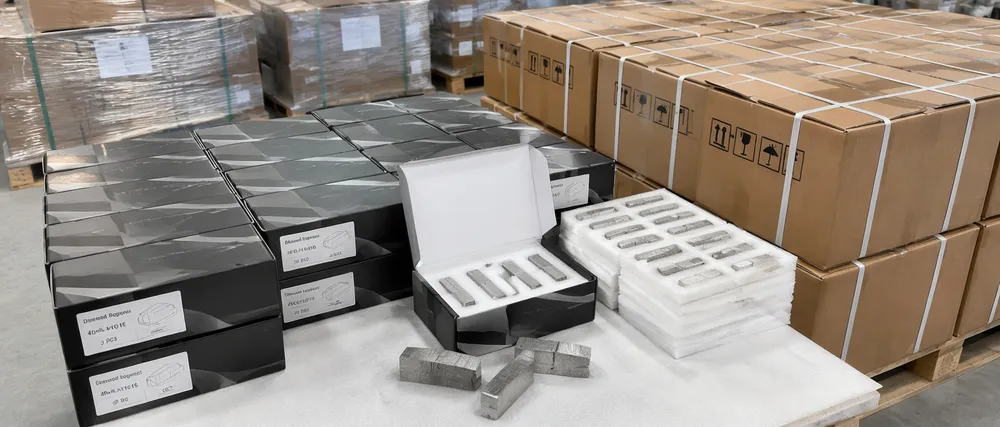
Your branded packaging can be designed however your market requires — box construction, label artwork, barcode placement, multi-language text, QR codes pointing to your product pages. We don't impose a packaging format.
You send us the print-ready files and specify quantities; we coordinate with our packaging supplier and include branded boxes in your production run.
For distributors who stock multiple blade brands, we've also supplied segments in plain unmarked packaging for buyers who apply their own labels at the warehouse.
Part Number Tracking
Part number tracking works the same way. If your catalog uses part numbers like "GS-35-S-001" to designate a specific segment, that number appears on the box, on the batch documentation, and in our production records linked to your formula ID.
When your purchasing team reorders, they reference that number and we pull the same formula, same sintering parameters, same segment geometry — no re-specification required.
Carton Quantities & Export Packing
10–50
Segments per inner box
200–500
Segments per export carton
Ocean-rated
Moisture-resistant board + foam trays
Carton quantities are confirmed during the specification discussion. Standard packing depends on segment size and weight. We pack for ocean freight — inner packaging prevents segment-to-segment contact that chips the diamond-bearing faces; outer cartons are rated for container stacking.
Damage-Proofed Packaging
We've had blades arrive in port with packaging damage from cartons not designed for maritime handling. We've since moved all export packs to moisture-resistant board with foam inner trays. If you've had damage claims on prior shipments from other suppliers, ask us about our packing spec — it's worth comparing.
How Custom Diamond Segments Compare to Our Standard Segment Lines
Custom segments are the right choice for specific situations. Standard segments cover the majority of applications at lower cost and shorter lead time. Here's how to think about the decision:
| Granite Segments | Marble Segments | Gang Saw Segments | Custom Segments | |
|---|---|---|---|---|
| Best for | Commercial granites, broad market stocking | Marble block cutting, slab work, fabrication | Gang saw frames, quarry slab production | Unusual stone, non-standard dimensions, OEM exclusivity |
| Formula | Catalog formula, field-proven | Catalog formula, cobalt-dominant | Catalog formula, uniformity-optimized | Developed or selected per your application |
| MOQ | 500 segments | 500 segments | 500 segments | 1,000 (first order), 500 (reorders) |
| Lead time | 15–25 days | 15–25 days | 15–25 days | 2–4 weeks sample + 15–25 days production |
| Formula exclusivity | Not applicable | Not applicable | Not applicable | Locked to your account |
| Private labeling | Available | Available | Available | Available |
Granite Segments
- Best for:
- Commercial granites, broad market stocking
- Formula:
- Catalog formula, field-proven
- MOQ:
- 500 segments
- Lead time:
- 15–25 days
- Exclusivity:
- Not applicable
- Labeling:
- Available
Marble Segments
- Best for:
- Marble block cutting, slab work, fabrication
- Formula:
- Catalog formula, cobalt-dominant
- MOQ:
- 500 segments
- Lead time:
- 15–25 days
- Exclusivity:
- Not applicable
- Labeling:
- Available
Gang Saw Segments
- Best for:
- Gang saw frames, quarry slab production
- Formula:
- Catalog formula, uniformity-optimized
- MOQ:
- 500 segments
- Lead time:
- 15–25 days
- Exclusivity:
- Not applicable
- Labeling:
- Available
Custom Segments
- Best for:
- Unusual stone, non-standard dimensions, OEM exclusivity
- Formula:
- Developed or selected per your application
- MOQ:
- 1,000 (first order), 500 (reorders)
- Lead time:
- 2–4 weeks sample + 15–25 days production
- Exclusivity:
- Locked to your account
- Labeling:
- Available
When to choose which
If your buyers are cutting standard commercial stone with standard blade diameters, start with our granite or marble segment lines — the performance is proven and the lead time is shorter. If you're running into consistent performance complaints or your application has specific geometry requirements, that's when custom development earns its cost.
Frequently Asked Questions
Answers to the questions we hear most from distributors and OEM buyers evaluating custom segment programs.
1 What is the minimum order quantity for custom diamond segments?
First orders on a new custom formula: 1,000 segments minimum. This covers the formula development, test sintering, and in-house cutting validation before shipment.
Reorders on an established formula: 500 segments minimum.
For standard catalog formulas with custom dimensions only (no formula change), the minimum is also 500 segments from the first order.
Sample quantities of 20–50 segments are available before committing to production volume — we strongly recommend this for new applications.
2 How long does it take to develop a custom diamond segment formula from scratch?
The sample cycle runs 2–4 weeks from the initial specification discussion to sample shipment. This includes:
- Formula selection or development (3–7 days)
- Test sintering and QC (3–7 days)
- Shipping to your facility
If your stone type falls within our existing formula library, we can accelerate to the short end of that range. Novel stone types requiring new formula development land at the longer end.
Production orders after sample sign-off ship in 15–25 days.
3 Can you match a segment sample we send you from our current supplier?
Yes. Send the physical sample and tell us the stone type it's used on. We'll measure dimensions precisely, analyze bond composition where possible, and — most importantly — run the sample on our cutting rig against target stone to understand its performance characteristics.
We then develop an equivalent or improved match.
If you're making this switch because the current supplier has consistency problems, we'll specifically design the replacement formula with tighter sintering tolerances so the batch-to-batch issue doesn't follow you over.
4 What stone types are your custom formulas most commonly developed for?
The most frequent custom requests we see are for:
- Hard, non-abrasive exotics — Indian tropical granites, Nordic granites with very high quartz content
- Engineered stone variants — ultra-compact sintered surfaces, thick-format quartz panels
- Specific concrete compositions — high-rebar-density reinforced concrete, fiber-reinforced concrete
- Unusual regional stone — where importers can't easily classify the material against standard granite/marble profiles
If you're unsure which category your stone falls into, send us the name and region of origin — we'll assess it against our formula database.
5 Do you supply custom segments compatible with non-CLSEG steel cores?
Routinely. We supply standalone segments to:
- Buyers who weld their own blades
- Blade manufacturers sourcing from multiple segment suppliers
- Companies replacing worn segments on existing steel cores
Provide the following for compatibility verification:
- Segment dimensions
- Blade diameter and segment count
- Welding method at your facility
- Target stone type
If you can send a sample of your steel core or an existing segment that fits it, we confirm dimensional compatibility before sintering.
6 How do you ensure formula consistency across multiple production orders placed over years?
Every custom formula has a unique internal production ID with a locked sintering recipe: exact temperature ramp, hold time, pressure profile, and controlled cooling rate. These parameters sit in our programmable sintering controllers — not in an operator's memory.
Each production run pulls sample segments for:
- Density measurement (±0.1 g/cm³)
- Rockwell hardness testing (±0.5 HRC)
Batch records are retained indefinitely and traceable to your specific order. When you reorder two years later, we pull the same recipe, run the same QC checks, and the segments that arrive perform identically to the ones you field-tested.
Send Us Your Specification — We'll Send Back a Formula and Price
The Fastest Path to a Custom Segment Quote
Send us a short spec brief with the following details and we'll return a formula recommendation and pricing:
- Stone type
- Blade diameter
- Segment count per blade
- Welding method
- The performance issue you're trying to solve (if there is one)
If you don't have all of that, start with what you know — stone type and blade size are enough to begin the conversation.
How to Tell Who Actually Manufactures
If you're evaluating us alongside other custom diamond segment manufacturers, ask them one question:
"Can you show me the sintering parameters for the formula you're proposing?"
If they can't answer that, they're sourcing the segments, not making them. We make them. The recipe is ours, the furnace is ours, the QC data is ours — and it ships with every order.