

Diamond Cutting Discs Manufacturer Direct, 105–230 mm
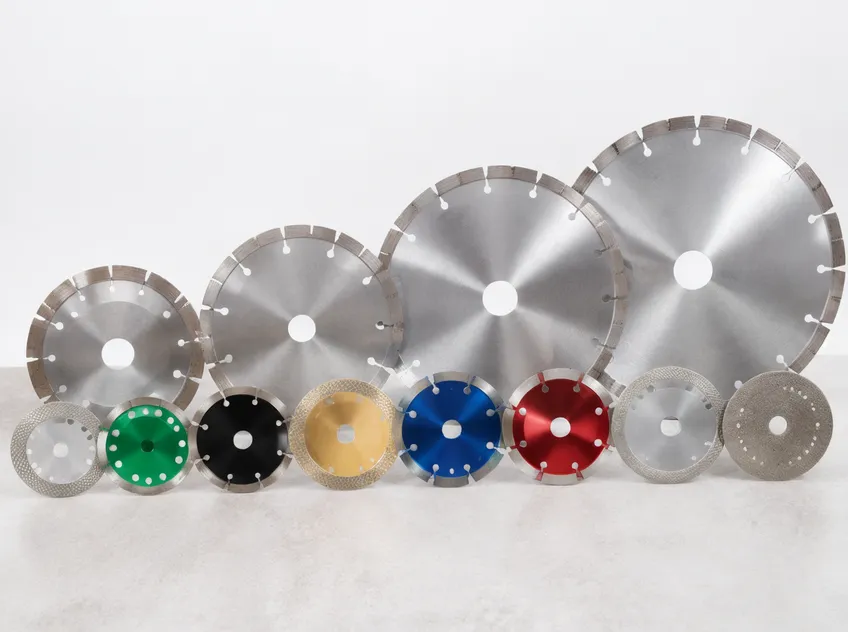
12 product lines covering dry cutting, wet cutting, sintered, brazed, and electroplated configurations. Every blade sized for angle grinders, tile saws, and handheld cutters in your market.
- 20+ years manufacturing diamond blades
- 3,000,000+ annual piece capacity
- Exported to 30+ countries
- ISO 9001, CE, SGS, MPA certified
What We Make in This Category — and Why It Matters for Your Inventory
This is where the volume lives. Diamond cutting discs — 105 mm through 230 mm — are the consumable blades that move through distribution channels fastest. Contractors burn through them on job sites. Fabrication shops stock them by the case. Hardware retailers reorder them monthly. If you're a distributor or importer in the stone, construction, or renovation tools space, diamond cutting discs are your bread-and-butter SKU: high turnover, steady reorder cycles, consistent margin.
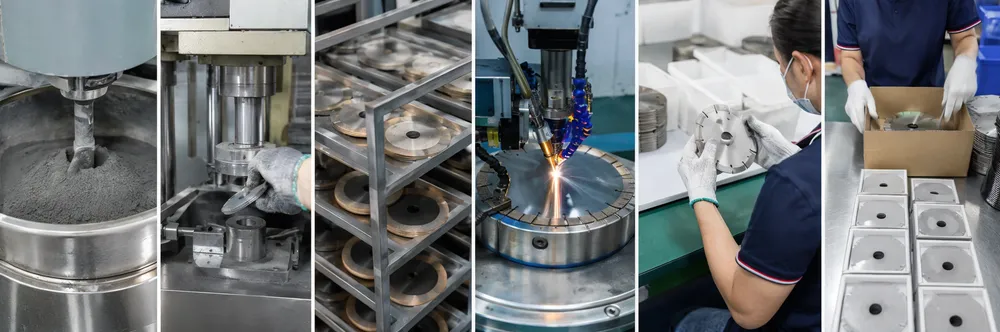
We manufacture the full range in-house at our 14,100 m² facility in Ezhou, Hubei Province. That means you're sourcing from the factory that mixes the diamond-metal bond powder, cold-presses and sinters the segments, welds them to steel cores, and packages finished blades for export — all under one roof. No outsourced segments, no third-party welding shops. When you ask for a formula adjustment or a segment geometry tweak for your specific market, you're talking to the people who actually operate the sintering furnaces.
We carry 12 distinct product lines within this category, organized by cutting application, material target, and segment attachment method. Whether your customers cut granite countertop remnants, slice ceramic tiles, chase wall grooves for electrical conduit, or saw through reinforced concrete — there's a dedicated blade configuration here, not a one-size-fits-all disc with a marketing label change.
Small blades are where most of our OEM relationships start. A distributor tests two or three SKUs, confirms the performance holds across a 5,000-piece order, then expands into larger diameters. It's a low-risk entry point for both sides.

Fully Vertical Manufacturing
- Diamond-metal bond powder mixing
- Cold-pressing & sintering in-house
- Segment welding to steel cores
- QC, packaging & export logistics
Product Line by Application
We organize our diamond cutting disc range by what they're designed to cut and how they attach diamonds to the core — because those two factors determine which blade your customer actually needs. Here's the complete lineup:
01 By Material Target
Granite Cutting Discs
105–230 mm
Hard natural stone — granite, engineered quartz, quartzite
View detailsStone Cutting Discs
105–230 mm
General natural stone — marble, sandstone, limestone, slate
View detailsCeramic Tile Cutting Discs
105–200 mm
Porcelain tile, ceramic tile, vitrified tile — chip-free edges
View detailsConcrete Cutting Discs
105–230 mm
Cured concrete, reinforced concrete, concrete block, pavers
View details02 By Application Type
Dry Cut Diamond Blades
105–230 mm
Jobsite cutting without water supply — designed for heat dissipation
View detailsWall Chaser Diamond Blades
110–150 mm
Chasing slots in brick & concrete walls for electrical conduit
View detailsAngle Grinder Diamond Cutting Discs
105–230 mm
Universal 4–9 inch angle grinder discs for stone, concrete, tile, and masonry cutting
View detailsThin Diamond Cutting Discs
105–180 mm
Thin-kerf discs for clean, low-waste cuts in tile, porcelain, and expensive stone
View details03 By Rim & Bond Type
Segmented Diamond Cutting Discs
105–230 mm
Segmented rim discs with gullets for debris clearance, cooling, and aggressive cutting
View detailsElectroplated Diamond Blades
105–200 mm
Nickel-bonded diamond layer for thin, low-force cutting on fragile materials
View detailsTurbo Diamond Cutting Discs
105–230 mm
Turbo rim profile for faster cutting with smoother edges than segmented discs
View detailsVacuum Brazed Diamond Blades
105–180 mm
Exposed diamond crystals for fast cutting in demolition, rescue, stone, and mixed materials
View detailsSegment Types & Rim Configurations
The segment is the working part of the blade — it's where the diamond grit sits in a metal bond matrix and does the actual cutting. Different rim styles exist because different materials break differently under abrasion.
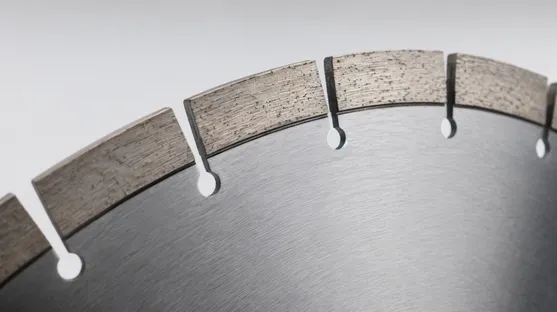
Segmented Rim
Separate segments with gullets (slots) between them. The gullets serve as cooling channels and help clear cutting debris. Best for aggressive, fast cutting where chip-free finish isn't critical.
Best for: Concrete, brick, block, asphalt, general masonry
Cutting mode: Dry or wet
Trade-off: Faster cut, rougher edge
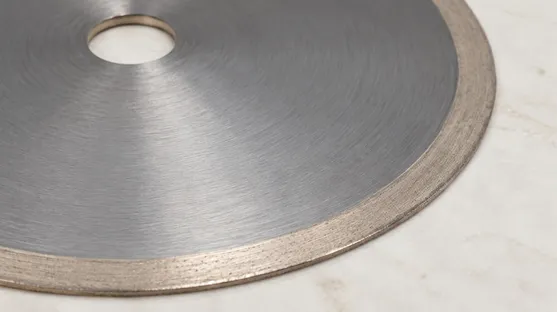
Continuous Rim
Uninterrupted diamond edge with no gullets. Produces the cleanest, chip-free cuts but generates more heat because there's no slot to expel debris. Usually requires water cooling.
Best for: Porcelain tile, ceramic, marble, glass
Cutting mode: Wet (preferred) or light dry passes
Trade-off: Cleanest edge, slower speed
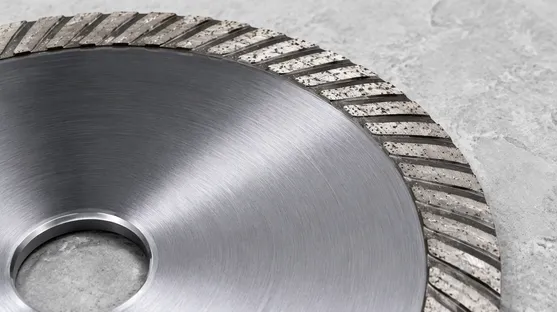
Turbo Rim
Continuous rim with serrated (wave-pattern) edges on both sides. The serrations create turbulence that pulls air across the rim for cooling, making it viable for dry cutting while maintaining a relatively clean cut.
Best for: Granite, concrete, stone — dry jobsite work
Cutting mode: Dry or wet
Trade-off: Middle ground — speed + finish
Standard Segment Dimensions (Small Blades)
| Blade Diameter | Segment Height | Segment Width | Segment Length | No. of Segments |
|---|---|---|---|---|
| 105 mm (4") | 7–10 mm | 1.8–2.2 mm | 32–40 mm | 8–12 |
| 115 mm (4.5") | 7–10 mm | 1.8–2.4 mm | 34–40 mm | 8–14 |
| 125 mm (5") | 8–10 mm | 2.0–2.4 mm | 36–42 mm | 10–14 |
| 180 mm (7") | 10–12 mm | 2.2–2.6 mm | 38–44 mm | 12–16 |
| 230 mm (9") | 10–15 mm | 2.4–3.0 mm | 40–50 mm | 14–18 |
* Dimensions are customizable. These represent our standard range — we adjust segment height, width, bond hardness, and diamond concentration to match your market requirements.
Specification & Customization Options
Every parameter below is adjustable within our production range. We work with your engineers or product managers to lock down the exact spec — then we produce samples for testing before committing to a bulk run.
Blade Specifications
Diamond & Bond Customization
OEM & Branding Options
Laser Etching
Your logo, brand name, specs on blade face
Color Printing
Full-color blade label with custom artwork
Custom Packaging
Blister packs, paper boxes, tin cases
Private Labeling
Full white-label production under your brand
Performance & Quality Assurance
Talk is cheap in this industry — everyone claims "high quality." Here's what we actually do to make sure blades perform when your customers put them on a grinder.
Raw Material Inspection
Every batch of steel cores, diamond powder, and bond metal is tested for hardness, purity, and consistency before entering production.
Segment Sintering Control
Temperature, pressure, and hold-time are monitored in real time during hot-press sintering. Each segment batch is weighed and measured for dimensional accuracy.
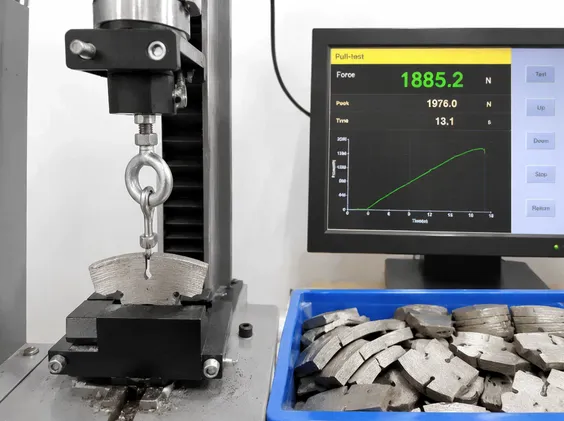
Weld Strength Testing
Laser-welded segments undergo tensile pull tests to verify bond strength exceeds EN 13236 safety requirements. Failed batches are scrapped, not reworked.
Dynamic Balance Check
Finished blades are balanced on precision equipment. Vibration at operating RPM must stay below threshold to ensure smooth cutting and operator safety.
Cutting Performance Test
Sample blades from every production run are tested on granite, concrete, and ceramic tile. We measure cut speed, segment wear rate, and surface finish quality.
Final Inspection & Packaging
Visual inspection for cosmetic defects, dimensional spot-checks, and proper labeling verification before blades are packed to your packaging specification.
Certifications & Standards
ISO 9001:2015
Quality Management
EN 13236
Safety Requirements
MPA Certified
German Safety Testing
OSA Compliant
Organization for Safety
Applications & Use Cases
Our segmented diamond blades are engineered for dry and wet cutting across construction, renovation, and fabrication. Here's where they perform best.
Granite & Natural Stone
Countertop fabrication, stone slab cutting, and monument work. Hard bond formulations with high-quality diamonds maintain sharpness through abrasive materials.
Recommended: High concentration, medium-hard bond
Concrete & Reinforced Concrete
General construction cutting, expansion joints, and demolition. Soft bond matrices expose fresh diamonds quickly in abrasive concrete aggregate.
Recommended: Medium concentration, soft bond
Ceramic & Porcelain Tile
Precision tile cutting for flooring and wall installations. Fine grit and narrow kerf reduce chipping on glazed surfaces and vitrified porcelain.
Recommended: Fine grit (50/60), thin kerf
Brick, Block & Pavers
Masonry cutting for landscaping and construction. General-purpose bond works well across varying brick hardness and clay compositions.
Recommended: Medium concentration, medium bond
Marble & Limestone
Soft stone cutting requiring clean edges and minimal micro-cracking. Harder bond retains diamonds longer in less-abrasive materials.
Recommended: Low-medium concentration, hard bond
Asphalt & Green Concrete
Road repair, fresh concrete joint cutting, and utility trenching. High-performance segments resist glazing in highly abrasive, soft materials.
Recommended: High concentration, very soft bond
Specifications Across the Small Blade Range
Every diamond cutting disc we manufacture falls within these general parameter ranges. Exact specs per product are on individual product pages — this is your quick reference to confirm our range covers your requirements.
Diameter
105 mm, 110 mm, 115 mm, 125 mm, 150 mm, 180 mm, 200 mm, 230 mm
Arbor Bore
16 mm, 20 mm, 22.23 mm, 25.4 mm
(other sizes on request)
Segment Height
7–12 mm
Varies by product line and intended life
Segment Thickness
1.6–3.2 mm
Blade Body Thickness
1.2–2.8 mm
Maximum RPM
10,000–14,000 RPM
Diameter dependent
| Parameter | Range |
|---|---|
| Diameter | 105 mm, 110 mm, 115 mm, 125 mm, 150 mm, 180 mm, 200 mm, 230 mm |
| Arbor bore | 16 mm, 20 mm, 22.23 mm, 25.4 mm (other sizes on request) |
| Segment height | 7–12 mm (varies by product line and intended life) |
| Segment thickness | 1.6–3.2 mm |
| Blade body thickness | 1.2–2.8 mm |
| Segment attachment | Sintered (hot-press), high-frequency welded, laser welded, vacuum brazed, electroplated |
| Maximum RPM | 10,000–14,000 RPM (diameter dependent) |
| Cutting method | Dry, wet, or dry/wet dual-use (product-line dependent) |
| Compatible tools | Angle grinders (4"–9"), tile saws, masonry saws, wall chasers, handheld cut-off machines |
Most Commonly Ordered Configuration
The most commonly ordered configuration globally: 115 mm diameter, 22.23 mm arbor, segmented rim, for angle grinders.
That said, the fastest-growing sizes in our export orders are 125 mm (standard in Europe and South America) and 105 mm (standard in Southeast Asia and China). We stock standard arbor tooling for all three and can retool for non-standard bores on custom runs.
Not Sure Which Arbor?
If you're not sure which arbor is standard in your target market, ask us — we ship to all of them and can advise based on what's moving in your region.
115mm
Global standard
125mm
Europe / S. America
105mm
SE Asia / China
How We Make Small Diamond Blades — From Powder Room to Packing Line
Understanding our manufacturing process isn't academic — it tells you why the blades perform consistently across a 20,000-piece order and what we can adjust when you need a formula tailored to your market's stone types.
Diamond-Metal Bond Mixing
We blend synthetic diamond grit (40/50 mesh through 60/80 mesh for small blades, depending on cut speed versus life requirements) with metal bond powders — primarily iron-based matrix with cobalt, copper, and tin additives. Each product line runs its own formula set.
A blade for cutting Indian black granite uses a different bond composition than one designed for Brazilian yellow granite, because the abrasiveness and hardness profiles demand different wear rates.
Cold Pressing & Sintering
Segment blanks are formed in automatic cold-press machines, then sintered under controlled temperature and pressure profiles in programmable furnaces.
Automatic sintering eliminates the operator-variable problem — every segment in a 10,000-piece run sees identical thermal and pressure curves, so diamond distribution and bond density stay uniform.
For your repeat orders, this consistency means the blade you tested six months ago performs identically to the blade delivered today.
Segment Attachment
Three methods depending on product type:
- High-frequency welding — standard for most sintered blades. Strong, proven, economical.
- Laser welding — for dry-cutting blades and high-RPM applications where thermal stress on the joint is extreme.
- Brazing — for single-layer brazed blades.
Our automated welding lines run programmed parameters for each blade diameter and segment count, so weld penetration depth is consistent piece to piece.
Finishing & QC
Blades are tensioned on CNC machines for flatness, trued for concentricity, then pass through dimensional inspection (diameter, thickness, runout, arbor tolerance) and visual inspection before packaging.
We pull samples from every production batch for cutting performance testing on our in-house test bench — instrumented stone blocks measuring cut depth, speed, and vibration.
CNC Tensioning
Flatness control
Batch Sampling
Performance tested
Formula Flexibility — Matching Bond to Your Market's Stone
This is where we diverge from factories that sell one formula under twelve different labels. Diamond cutting discs cut everything from porcelain tile (Mohs 7–8, non-abrasive, brittle) to reinforced concrete (aggregate + rebar, highly abrasive). A single bond formula cannot optimally serve that spectrum. We develop and maintain dedicated formulas for distinct material classes.
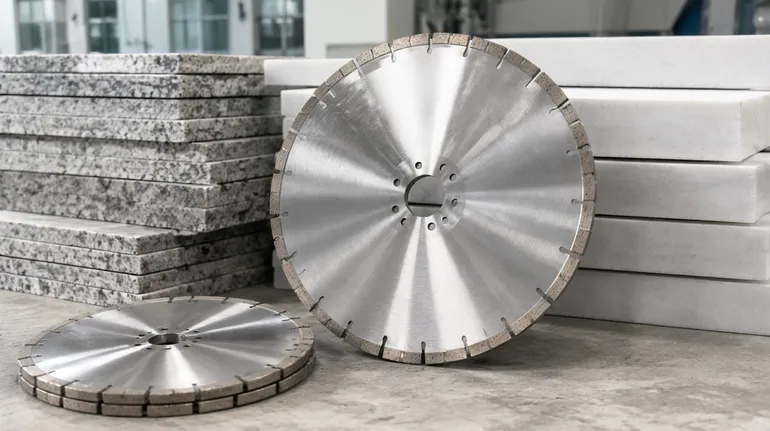
Hard, Non-Abrasive Stone
Granite · Engineered QuartzBond type: Soft-medium bond matrix
Diamond concentration: Higher
Why: The bond wears quickly enough to keep exposing fresh diamond crystals. Otherwise the surface glazes over and cutting stalls.
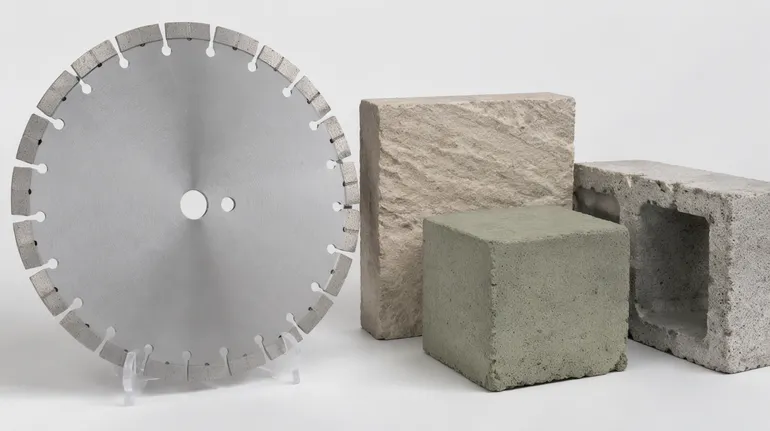
Soft, Abrasive Materials
Sandstone · Green Concrete · MasonryBond type: Hard bond matrix
Diamond concentration: Moderate
Why: The bond resists the abrasive wear that would otherwise strip segments prematurely.
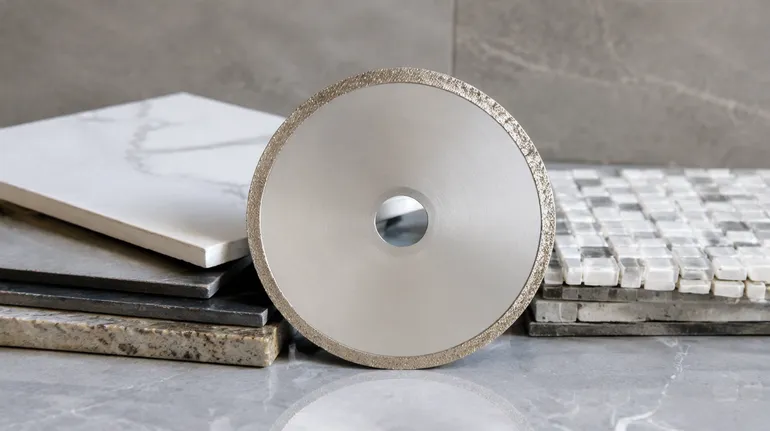
Brittle Materials
Ceramic Tile · Porcelain · Glass MosaicBond type: Fine diamond grit, continuous or turbo rim geometry, narrow kerf
Diamond concentration: Optimized for chip-free edge
Why: Minimizes micro-chipping on finished edges.
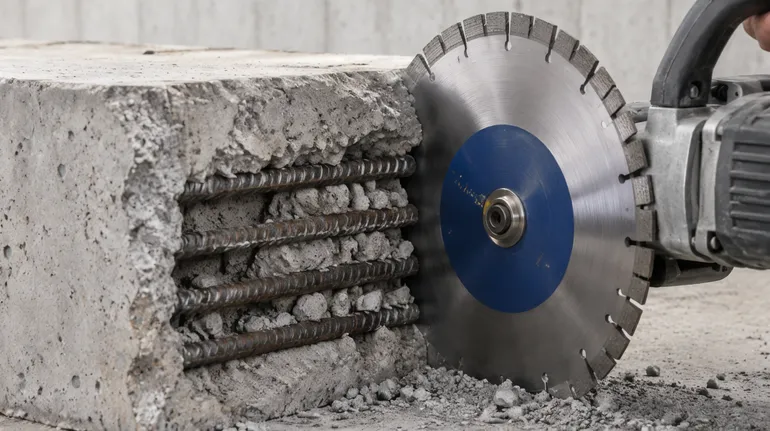
Mixed / Reinforced Materials
Reinforced Concrete · Concrete with RebarBond type: Tough bond with high thermal stability
Diamond concentration: Balanced for dual-material encounter
Why: The blade encounters both aggregate and steel, so the bond must resist impact and heat cycling simultaneously.
Market-Specific Formula Selection
When you tell us the dominant stone types in your market — Southeast Asian granite versus Middle Eastern limestone versus European porcelain tile — we select or develop the bond formula that delivers the best performance for your end users. That performance translates directly to your repeat order rate: if the blades last and cut well, your customers come back.
- Southeast Asian markets: granite-optimized soft bond formulas
- Middle Eastern markets: limestone and sandstone hard bond formulas
- European markets: porcelain tile fine-grit continuous rim formulas

This is the honest advantage of buying from a manufacturer with its own R&D center versus a trading company selling whoever's blades are cheapest this month. The formula is invisible — two blades look identical on the shelf — but it determines whether your customer comes back to reorder or switches to a competitor.
Segment Geometry and Rim Design — Your SKU Differentiation Strategy
Beyond the bond formula, segment geometry drives cutting behavior. Different rim designs serve different use cases, and they also give you SKU variety to build a product line your competitors can't match with one or two generic discs.
Segmented Rim
The Construction Workhorse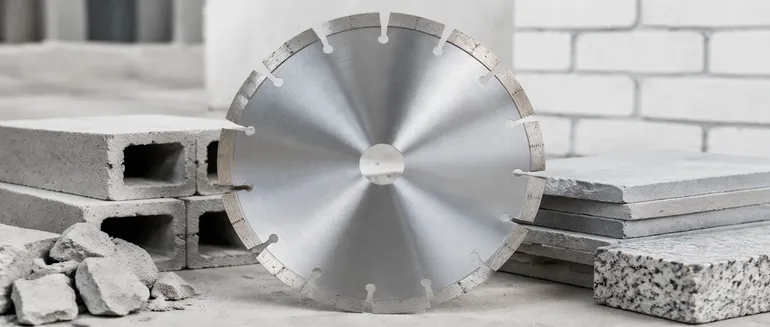
Gullets between segments clear debris and draw cooling air across the cut face. Fast, aggressive cutting in concrete, masonry, and general construction materials. The workhorse configuration for hardware store shelf stock.
Adjustable Parameters
- Segment count
- Gullet width
- Segment height (speed vs. life trade-off)
Continuous Rim
Chip-Free Precision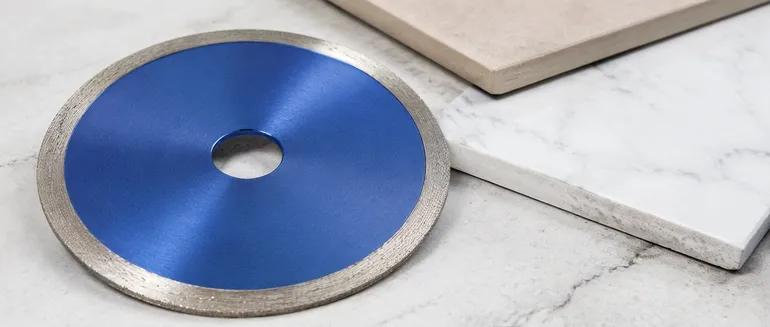
Uninterrupted diamond edge produces chip-free cuts in tile, porcelain, marble, and other brittle materials. Slower cutting speed but superior edge quality. Your tile contractor customers choose this when edge finish matters more than cut speed.
Best For
Turbo Rim
The Multi-Material All-Rounder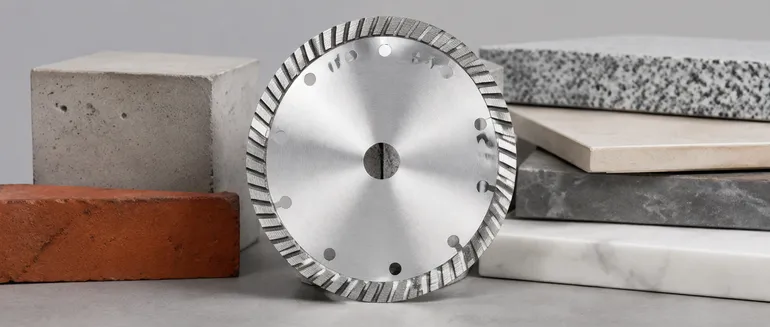
Serrated continuous rim combining debris clearance with relatively smooth cuts. The all-rounder that covers multiple materials adequately. Popular for distributors who want fewer SKUs with broader applicability.
Distributor Advantage
Fewer SKUs with broader material coverage — reduces inventory complexity while maintaining shelf presence.
Turbo Wave
Reduced Vibration · Faster Clearance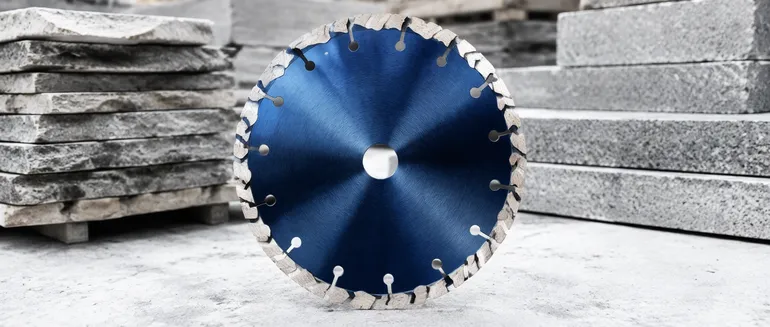
Undulating rim geometry that further improves material clearance and reduces vibration. Cuts slightly faster than standard turbo with less operator fatigue. Strong adoption in the Middle Eastern and African markets for general stone and concrete work.
Market Traction
Build Your Product Line Strategy
Each geometry configuration is available across our standard diameter range (105–230mm) and arbor options. You can structure your catalog two ways:
Breadth Strategy
4–6 SKUs covering different rim types at the same diameter. Gives your customers a complete selection for one machine size.
Depth Strategy
One rim type across all diameters. Position as a specialist in that application — tile, concrete, or general purpose.
Whatever fits your market positioning — we supply the full matrix so you can differentiate against competitors running one or two generic discs.
Market Segments Where Small Diamond Blades Move Volume
Your buyers operate in specific segments. Here's where our small blade range generates the highest reorder rates — and the commercial logic behind each one.
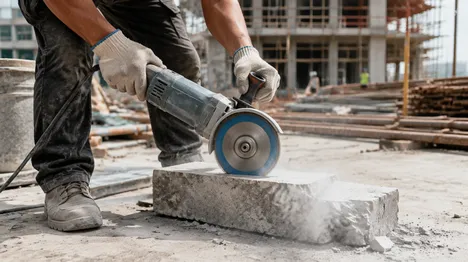
Construction & Renovation Contractors
The largest volume segment globally. Angle grinder plus diamond disc is the universal cutting setup on every job site. These buyers consume blades as expendables and purchase through distributors or hardware retailers. High turnover, price-sensitive but quality-aware — a blade that stalls mid-cut costs the contractor time and money.
Core SKUs
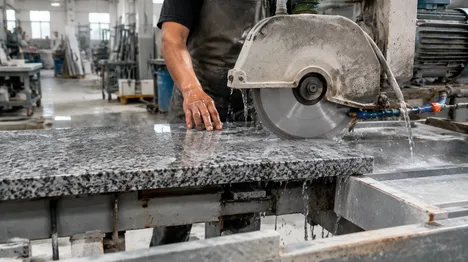
Stone Fabrication Workshops
Countertop fabricators, monument makers, and small stone processors who cut and shape natural and engineered stone daily. They run through blades at a predictable weekly rate and value consistent performance over absolute lowest price.
Staple Products
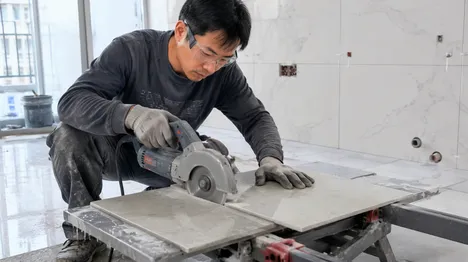
Tile & Flooring Installers
Porcelain and ceramic tile work requires chip-free cuts. Continuous rim and thin-kerf blades in smaller diameters (105–125 mm) serve this segment. Premium pricing is possible because edge quality directly affects installation appearance.
Key Products
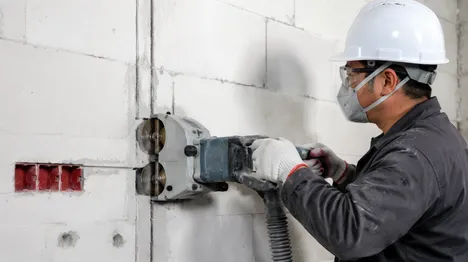
Electrical & Plumbing Contractors
Wall chasers with dual diamond blades cut conduit channels in concrete and masonry walls. A niche but consistent segment with less price competition than general-purpose blades.
Dedicated Line
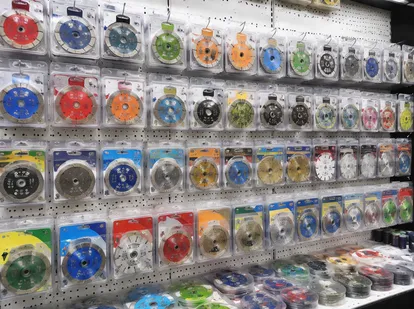
Hardware Retail & Wholesale Distribution
Retailers stock blades on peg hooks; distributors supply those retailers. They need packaged retail units (blister packs, printed cards, color-coded by application) and value product line breadth — one supplier for the entire diamond blade section rather than sourcing from five factories.
Fastest-Growing Export Segment
Southeast Asian hardware distribution chains stocking the 105–115 mm range. Our fastest-growing export segment over the past three years. Worth exploring if you have channel access in that region.
OEM, Private Label, and Custom Configuration
We don't treat OEM as a premium service with extra lead time and surcharges. It's how the majority of our export volume ships — under your brand, your packaging, your specifications.
What's Customizable at the Category Level
Bond Formula Adjustment
Modify diamond concentration, grit size, or bond hardness for your target material. You tell us what your market cuts; we spec the formula.
Segment Geometry
Segment count, height, width, and gullet configuration.
Blade Diameter & Arbor
Any standard or non-standard combination within our tooling capability.
Surface Finish
Painted cores (custom colors), laser-etched branding, decorative coatings.
Packaging
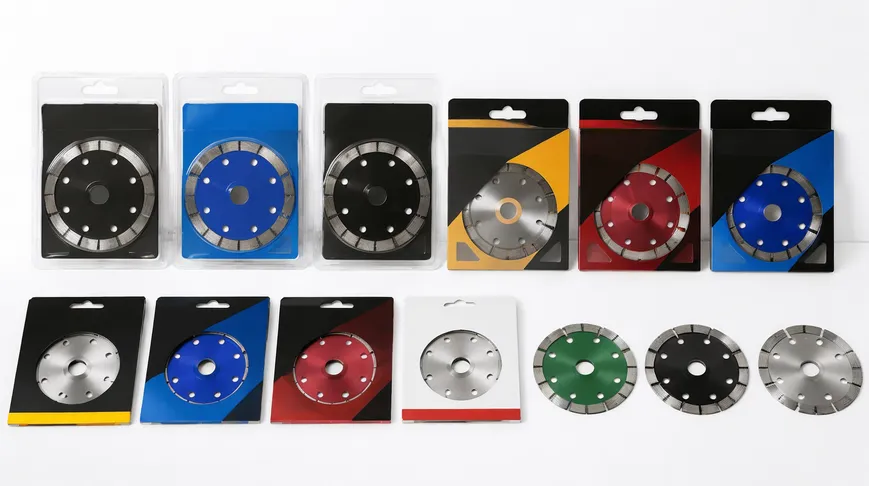
Blister pack, paper card, tin box, custom printed sleeve, bulk box — your design files, our production.
Labeling
Private label with your brand, legal text, safety markings, and barcode/QR codes.
MOQ Reality
Standard specs + formula changes: MOQ starts at 500 pieces per SKU
Fully custom packaging + new tooling: 2,000–3,000 pieces per SKU to amortize setup cost
We work with both 40-foot container distributors and regional importers running smaller trial orders
Production Timeline
Stock Formula + Standard Packaging
20–25 days
From order confirmation
Custom Formula + Custom Packaging
30–40 days
Including sample approval
Repeat Orders (Established Specs)
15–20 days
Formula and tooling already set
What Goes Wrong with Cheap Small Blades — and the Manufacturing Decisions That Prevent It
If you've sourced diamond cutting discs before, you've probably seen these failure modes show up as customer complaints or returns. Each one traces back to a specific manufacturing shortcut.
Segment Loss During Cutting
Safety Hazard · Instant Warranty ClaimRoot Cause
Insufficient weld penetration or weld contamination (grease, oxidation on the core surface before welding).
Our Prevention
- Automated pre-welding surface preparation (shot blasting + chemical cleaning of the weld zone)
- Programmed welding parameters that guarantee minimum penetration depth
- Every batch gets destructive pull-test sampling — actual shear force measured in Newtons, not just visual inspection
Premature Glazing — Blade Stops Cutting
Performance Failure · Formula MismatchRoot Cause
The bond matrix is too hard for the stone being cut, so diamonds never expose. Rampant among factories that use one generic formula across all applications.
Our Prevention
- Material-matched bond formulas — no one-size-fits-all approach
- When we spec a blade for your market, we confirm what stone types it will encounter
Rapid Segment Wear — Life Far Below Expectation
Cost Impact · Hidden Material CutsRoot Cause
The bond is too soft, or diamond concentration too low, and segments erode before they should. Often caused by factories cutting diamond concentration to reduce cost without telling you.
Our Prevention
- Diamond concentration specified per formula and verified during incoming inspection of raw materials
- Powder batches weighed and audited against the formula spec — any deviation flags the batch
Core Warping and Wobble
Cut Quality · Equipment DamageRoot Cause
The steel core distorts, causing vibration and uneven wear. Caused by poor-quality steel or insufficient tensioning after welding.
Our Prevention
- Steel cores sourced from mills that certify flatness and hardness
- Post-weld tension on CNC machines with verified runout before packaging
- Runout tolerance on finished blades: ≤0.3 mm for blades up to 230 mm diameter
Supplier Evaluation Advice
These aren't hypothetical — they're the actual warranty issues that degrade your brand reputation and erode your margin. When you evaluate a diamond cutting disc supplier, ask how they prevent each one. If the answer is vague, the blades will be too.
Packing for Ocean Freight — Container Loading and Damage Prevention
Small diamond blades are dense and relatively fragile at the edges (exposed diamond segments cannot tolerate impact). Packing right is the difference between your container arriving with zero claims versus dealing with chipped segments and inventory loss.
Our Standard Export Packaging
Individual blades wrapped in anti-rust VCI paper
Stacked in corrugated inner boxes (10–50 pcs per box depending on diameter)
Inner boxes placed in reinforced outer cartons with foam dividers between layers
Outer cartons palletized and stretch-wrapped for container loading
Moisture barrier bags for shipments to tropical/humid climates (standard for Southeast Asian and African destinations)
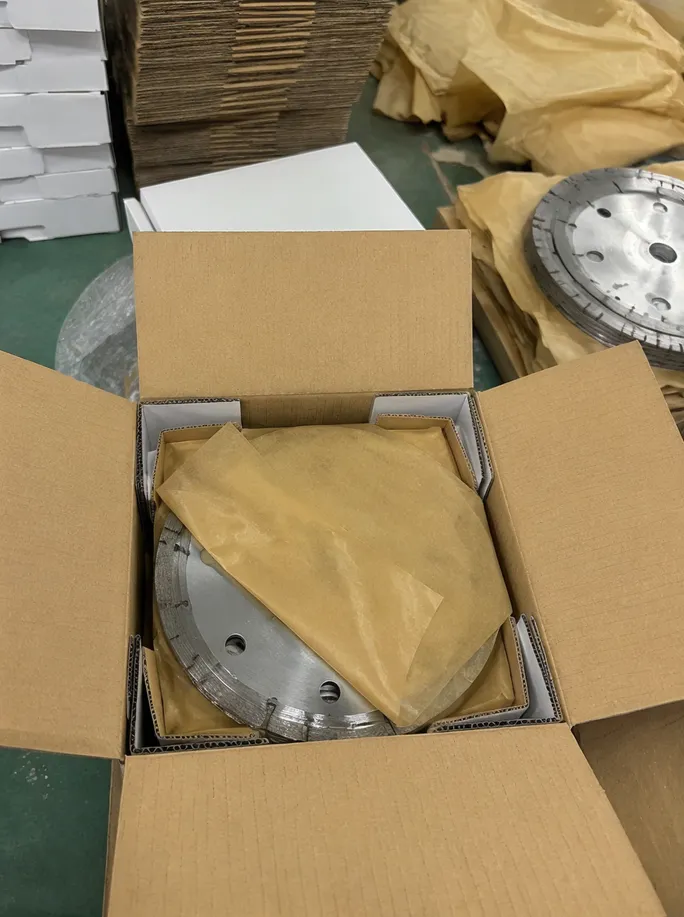
Custom retail packaging (blister packs, display stands) increases volume per piece but we compensate with adjusted carton layouts. Send us your packaging dimensions and we'll calculate the loading plan before you commit to the order.
Loading Data for Your Freight Calculation
Approximate figures — actual loading depends on packaging configuration and whether you mix diameters in one container.
| Diameter | Pieces per 20GP | Pieces per 40HQ | Approx. Weight per 20GP |
|---|---|---|---|
| 105 mm | ~80,000 pcs | ~160,000 pcs | ~16 tons |
| 115 mm | ~65,000 pcs | ~130,000 pcs | ~17 tons |
| 125 mm | ~50,000 pcs | ~100,000 pcs | ~18 tons |
| 230 mm | ~20,000 pcs | ~40,000 pcs | ~19 tons |
Mixed Container Loading
Many of our distributors mix sizes in a single container — say, 60% small blades and 40% larger bridge saw blades — to optimize freight cost per unit across their product range. We can coordinate mixed loading without issue.
Exact Loading Plans
We provide exact loading plans with your order confirmation so your freight forwarder can book the right container. If you're building retail-ready inventory, send us your packaging dimensions and we'll calculate the loading plan before you commit.
Certifications and Market Compliance
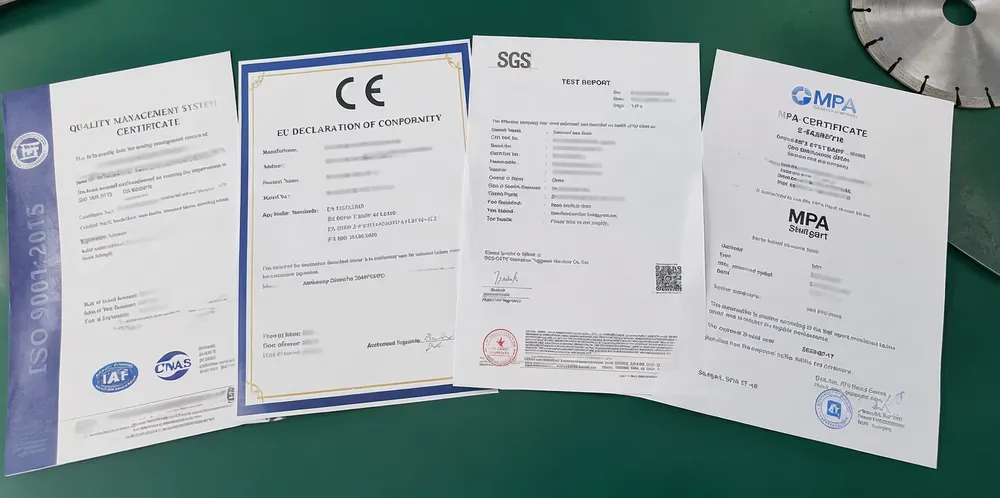
Your compliance team needs to know their import paperwork is clean. Our diamond cutting disc range is manufactured under internationally recognized standards.
ISO 9001:2015
Quality management system, externally audited annually. Covers the full manufacturing chain from raw material intake through final inspection.
CE
European conformity marking for safety, applicable to power tool accessories. Required for legal sale across EU member states.
SGS
Third-party testing and inspection reports available per shipment. Independent verification of material composition and performance claims.
MPA
German safety certification for rotating abrasive tools, required by many EU distributors. Confirms RPM rating, segment retention, and structural integrity under operational stress.
MPA for European Distribution
If you distribute in Europe, the MPA certification is particularly relevant — it confirms the blade meets safety requirements for RPM rating, segment retention, and structural integrity under operational stress. You can pass this certification directly to your customers without additional testing.
For other markets (Middle East, Africa, South America), CE and SGS documentation typically satisfies import requirements.
Documentation We Provide
- Certificates of origin per shipment
- Fumigation certificates for wooden pallets (ISPM-15 compliant)
- Test reports matched to your specific order batch
- All documentation prepared in-house — independent export rights
- Customs paperwork handled directly by our export team
Frequently Asked Questions
Formula-level answers to the sourcing and application questions our distributor partners ask most.
What diamond grit size is best for cutting granite versus cutting ceramic tile?
For granite (hard, non-abrasive, crystalline structure), we use 40/50 or 50/60 mesh diamond — coarser grit for aggressive material removal against hard stone.
For ceramic tile and porcelain (brittle, prone to micro-chipping), we use 60/80 or 80/100 mesh — finer grit for smoother cuts with less impact force per crystal.
This is a formula-level decision we make during segment development. If your market cuts both, you need separate SKUs — a single blade cannot optimally serve both extremes.
How do I choose between laser-welded and sintered (high-frequency welded) diamond cutting discs?
Laser-welded blades are designed for dry cutting at high RPM — the weld joint is stronger under thermal stress and mechanical shock. They cost more per piece but eliminate the segment-loss risk during aggressive dry cutting.
High-frequency welded blades perform well for wet cutting and moderate dry cutting at lower feed pressure. For most general construction applications, high-frequency welded is the cost-effective standard.
Reserve laser-welded for your premium dry-cutting SKUs or for markets where safety liability concerns justify the upfront cost.
What is the minimum order quantity for OEM/private-label diamond cutting discs?
500 pcs
Per SKU — standard formula with custom labeling or packaging
2,000–3,000 pcs
Per SKU — custom blister pack tooling or new packaging formats
200–500 pcs
Market-entry trial — neutral packaging for performance testing
For market-entry trial orders, we can supply 200–500 pieces in neutral packaging for your performance testing before committing to branded production.
Why do some diamond blades stop cutting after a few minutes of use?
This is the glazing problem — the bond matrix is too hard relative to the material being cut. Diamonds are trapped below the surface and never expose.
The quick fix: the user can make a few cuts in abrasive material (concrete block, sandstone) to re-expose the diamonds.
At the sourcing level, the real solution is ensuring the blade formula matches the intended application. We specify bond hardness per target material, which is why we ask what your end users cut before recommending a formula. Softer bond formulation matched to the stone hardness prevents glazing from the start.
Can diamond cutting discs cut both stone and metal (rebar)?
Sintered diamond blades are optimized for non-metallic materials — stone, concrete, ceramic, masonry. When cutting reinforced concrete, they encounter rebar incidentally and can handle brief metal contact.
Critical: Prolonged metal cutting overheats diamond crystals (diamond graphitizes above 700°C) and destroys the segment. Don't let your customers use a granite blade on steel plate.
If your market needs dedicated metal-and-concrete blades, we offer reinforced formulations with high thermal stability bonds and protective segment geometries — but these are a distinct product line from standard stone blades.
What makes a diamond blade suitable for dry cutting versus wet cutting only?
Dry-Cutting Design
- Segment geometry with cooling slots or gullets
- Larger segment spacing for airflow
- Thermally stable bond matrices
- Often laser-welded joints (stronger under heat cycling)
Wet-Only Design
- Continuous rims permitted
- Softer bonds (water handles cooling)
- Tighter segment spacing acceptable
- High-frequency welding sufficient
Safety note: The difference isn't just marketing — a wet-only blade used dry will overheat, warp the core, and potentially shed segments. We clearly mark cutting method suitability on every blade and in our product documentation.
Start Sourcing — What We Need From You
Tell us your market, your target materials, and your volume expectations. Here's what makes the first conversation productive:
Key Details to Share
Stone Types & Materials
Which stone types or materials do your end users cut most frequently?
Diameters & Arbor Sizes
What diameters and arbor sizes are standard in your market?
Volume Expectations
Approximate annual volume (or trial order quantity for initial testing)?
Packaging Preference
Do you need OEM packaging, or will you start with neutral/CLSEG-branded stock?
Reach Us Directly
We'll respond with a formula recommendation, pricing structure, and sample arrangement — typically within 24 hours on business days.
Typical First Order
Most new partnerships start with a 200–500 piece sample order across 2–3 SKUs. You test with your customers, confirm the performance, and then we scale into branded production.
No pressure, no minimum commitment on the first round.