

Diamond Cutting Disc for Angle Grinder Every Configuration, One Source
The complete angle grinder diamond disc range — segmented, turbo, continuous, and thin-kerf — manufactured to match whatever your market cuts.
105 mm to 230 mm, all standard arbors, with bond formulas tuned per material target. Your customers get blades that perform; you get consistent reorder cycles.
3M+
Annual Capacity
500 pcs
Min OEM per SKU
What This Product Line Covers — and Who It's For
A diamond cutting disc for angle grinder is the single highest-volume consumable in the power tool accessories market. Every contractor, every fabrication shop, every hardware store shelf — the angle grinder is the common denominator. Unlike our material-specific lines (granite discs, concrete discs, ceramic discs), this product line is defined by the tool it fits: 4-inch through 9-inch angle grinders with standard spindle bores.
That distinction matters for your business because it determines how you organize your catalog. Material-specific blades serve specialists. Angle grinder diamond discs serve everyone who owns the most popular power tool in construction. Your retail and wholesale customers think in terms of "I need a blade for my grinder" before they think about material — so you need a product line organized around that entry point.
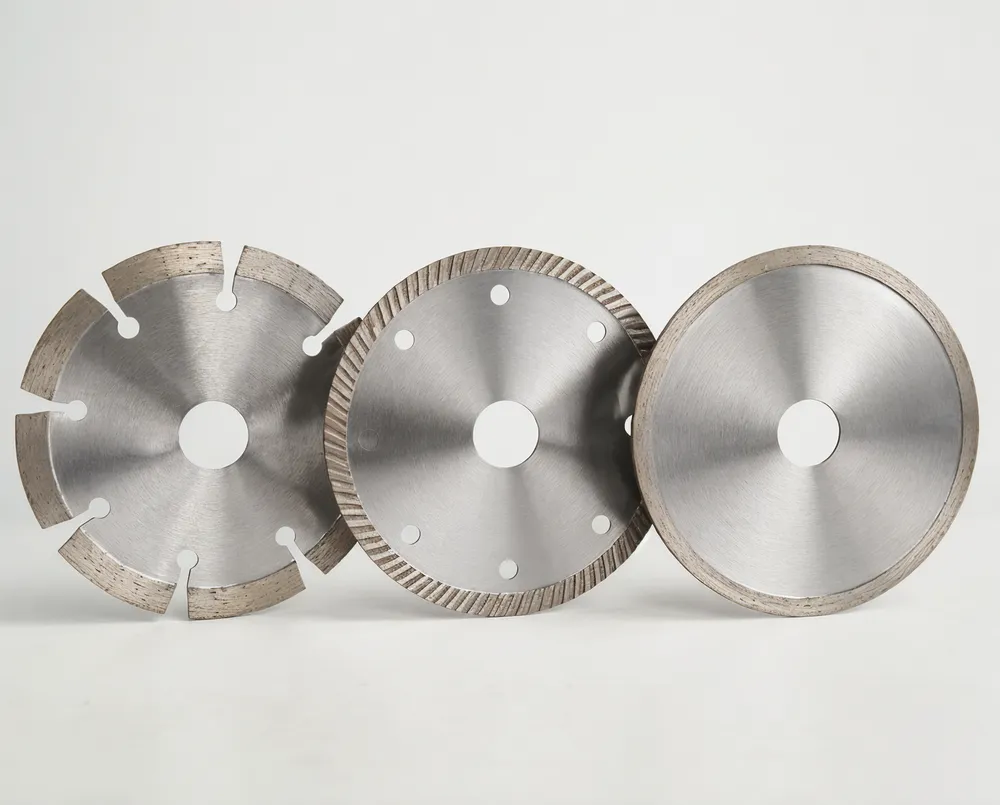
We manufacture every rim configuration in this range: segmented for aggressive general-purpose cutting, turbo for multi-material versatility, continuous rim for chip-free tile and marble work, and thin-kerf for precision with minimal material waste. All from the same factory, same quality system, same logistics relationship. You consolidate your angle grinder blade sourcing under one supplier instead of juggling three or four.
Volume indicator: This is our highest-volume export product category. More than 60% of our international shipments include angle grinder discs — the consumption rate makes them natural first orders for new partnerships.
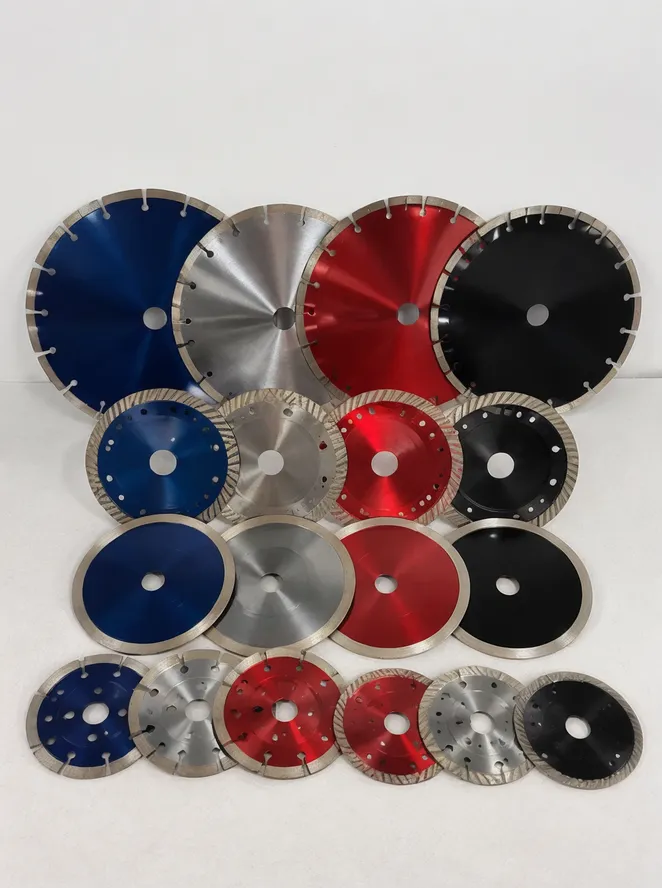
Rim Configurations Available
- Segmented — aggressive general-purpose
- Turbo — multi-material versatility
- Continuous rim — chip-free tile & marble
- Thin-kerf — precision, minimal waste
Technical Specifications for the Angle Grinder Diamond Disc Range
Every disc in this line fits standard angle grinder spindles. Here are the exact parameters you can order against:
| Parameter | Available Options |
|---|---|
| Diameter | 105 mm, 110 mm, 115 mm, 125 mm, 150 mm, 180 mm, 230 mm |
| Arbor bore | 16 mm, 20 mm, 22.23 mm, 25.4 mm |
| Segment height | 7 mm, 8 mm, 10 mm, 12 mm |
| Segment thickness | 1.8–3.2 mm (varies by rim type) |
| Blade body thickness | 1.2–2.4 mm |
| Rim type | Segmented, turbo, continuous, turbo-wave, thin-kerf |
| Segment attachment | High-frequency welded, laser welded, sintered (hot-press bonded) |
| Max RPM | 12,000 RPM (105–125 mm), 8,500 RPM (180 mm), 6,600 RPM (230 mm) |
| Cutting method | Dry, wet, dry/wet dual-use |
| Target materials | Granite, marble, concrete, masonry, ceramic tile, porcelain, sandstone, engineered stone |
Europe & South America
Trend toward 125 mm diameter with 22.23 mm bore as the regional standard.
Southeast Asia & China
Run 105 mm predominantly. Compact grinders dominate residential and light commercial work.
Global Standard
115 mm with 22.23 mm bore. We stock tooling for all three and maintain ready-to-ship inventory in the most common configurations.
Specifications shown are standard values across this product line. Exact parameters are confirmed during order specification. Contact us for detailed product data sheets per configuration.
Request SpecificationsRim Configuration as a Sourcing Decision
The rim type you stock determines which end-user segments you serve profitably. Here's how each configuration maps to market opportunity:
Segmented Rim
The Volume Driver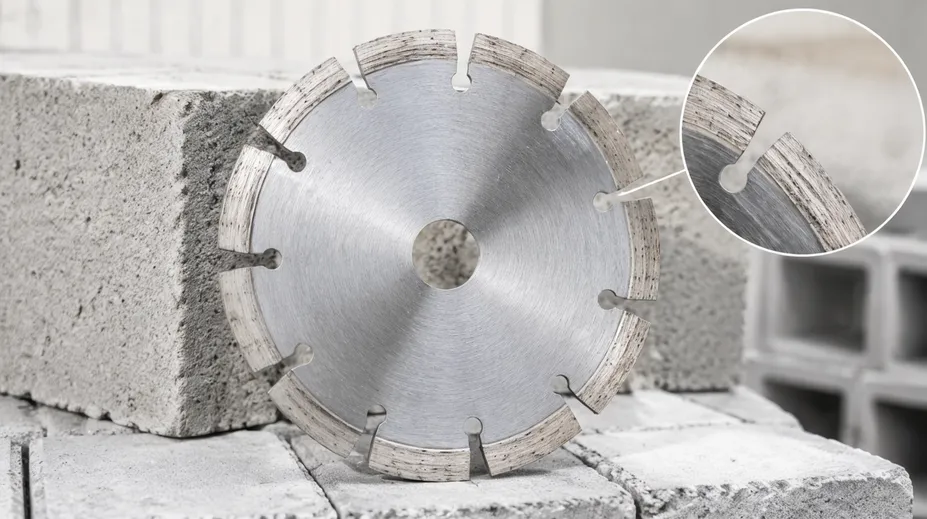
Gullets between segments clear debris and manage heat without water. This is the construction workhorse — your highest-turnover SKU in any general hardware or contractor supply channel.
Applications:
- Concrete, masonry block, pavers, general stone
- Contractors burn through them and reorder predictably
Configuration logic: Segment count and gullet width vary by diameter. A 115 mm disc runs 8 segments for residential work; a 230 mm disc can run 15 segments for deeper cuts in concrete slab. Adjusting segment count gives you a "standard" and "professional" tier at the same diameter — two price points from one tooling setup.
Turbo Rim
The All-Rounder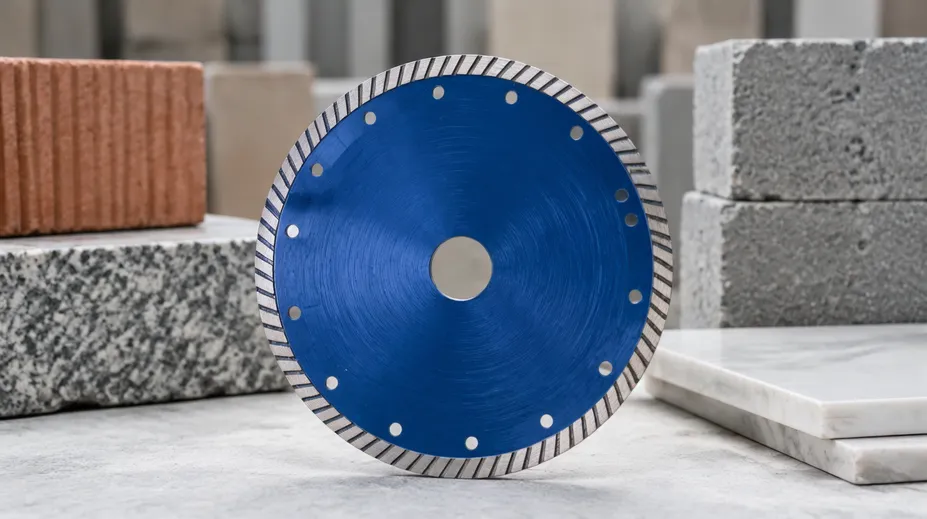
Serrated continuous rim that handles stone, concrete, and tile with acceptable results across all three. For distributors serving mixed-trade customers who don't want five different blades on the truck, turbo is the one-SKU answer.
Trade-offs:
- Slightly lower cutting speed on hard granite than a dedicated segmented disc
- Slightly more chipping on tile than a continuous rim
- Workable across the board — simplifies your product line
Best fit: Our most popular configuration for markets where end users are generalists rather than specialists: Africa, the Middle East, parts of South America. If your customer base isn't sorting by material, turbo simplifies your product line.
Continuous Rim
The Premium Tier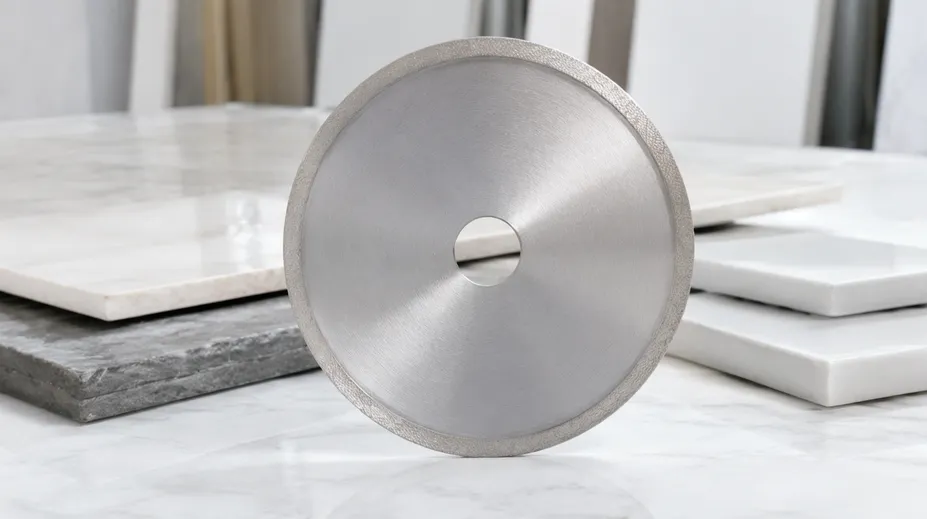
Uninterrupted diamond edge for chip-free cuts in ceramic tile, porcelain, marble, and finished stone. Slower cutting speed but clean edges that don't require post-processing.
Why premium pricing is justified:
- The alternative is chipped material that gets rejected
- Customers pay more for a blade that saves them from ruining expensive tiles
- Tile installers and stone fabricators choose this when edge quality is non-negotiable
Margin note: Continuous rim discs in 105–125 mm support higher margins than equivalent segmented discs at the same diameter.
Thin-Kerf
Specialist Margin Builder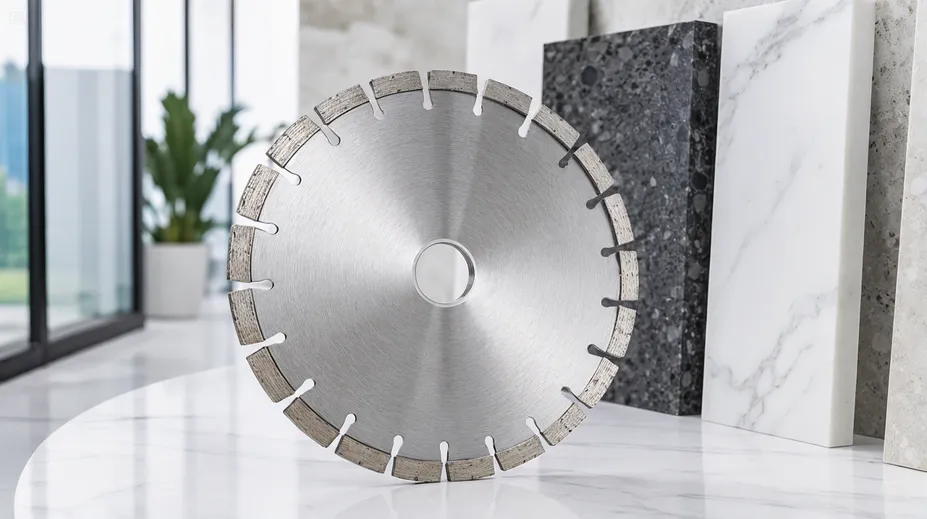
1.2–1.6 mm blade thickness with narrow segments for precision cutting and minimal material waste. Used on expensive natural stone, engineered quartz, and porcelain panel where every millimetre of material matters.
Commercial profile:
- Lower volume than segmented or turbo
- Higher per-unit margin
- Less price competition from generic imports
Catalog upgrade path: Once your customers know your segmented blades, introducing thin-kerf gives you a higher-margin upsell without sourcing from a different factory.
Tell us your market and we'll recommend the rim mix that balances volume, margin, and inventory simplicity.
Get Rim RecommendationBond Formula Matching — Why Identical-Looking Blades Perform Differently
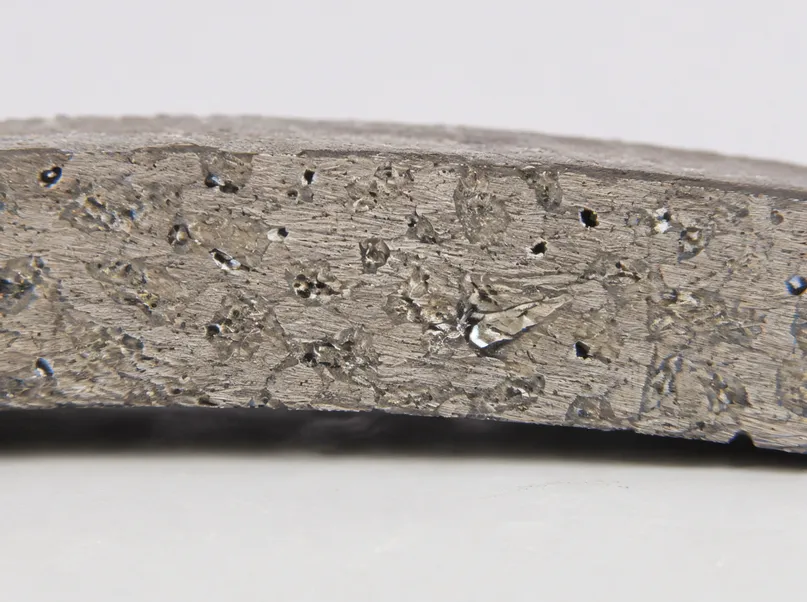
Two angle grinder diamond discs can share the same diameter, rim type, and segment count and deliver completely different cutting results. The difference is invisible: it's in the diamond-metal bond formula inside the segment.
How Bond Formulas Work
We maintain dedicated formulas for distinct material hardness classes. When you tell us your end users primarily cut Indian black granite (Mohs 6–7, low abrasiveness, extremely hard), we select a softer bond matrix with higher diamond concentration — the bond wears away fast enough to keep exposing fresh diamond cutting points.
Send the same blade to a market that cuts concrete block (highly abrasive, medium hardness), and the segments erode in half the expected time because the abrasive material strips the soft bond too quickly.
Where Generic Factories Fail Your Customers
Factories that apply one formula across all applications produce blades that "work" but underperform — slower cut speed, shorter life, or both. Your customers don't complain formally; they just switch brands on the next reorder.
We eliminate that risk by specifying the bond to your application at the factory level.
What We Need From You
- 1 Primary materials your end users cut (stone type, concrete grade, tile type)
- 2 Typical use pattern (continuous cutting vs. intermittent, wet vs. dry)
- 3 Performance priority (cut speed vs. blade life — rarely can you maximize both)
Our Bond Matching Process
Consult
You share material and use details
Recommend
We specify the optimal formula
Sample
Produce samples, confirm performance
Lock & Repeat
Repeat orders run the established formula automatically
This conversation happens once per SKU — no repeated negotiations on formula for each order.
Market Segments Where Angle Grinder Discs Move Volume
General Construction Supply
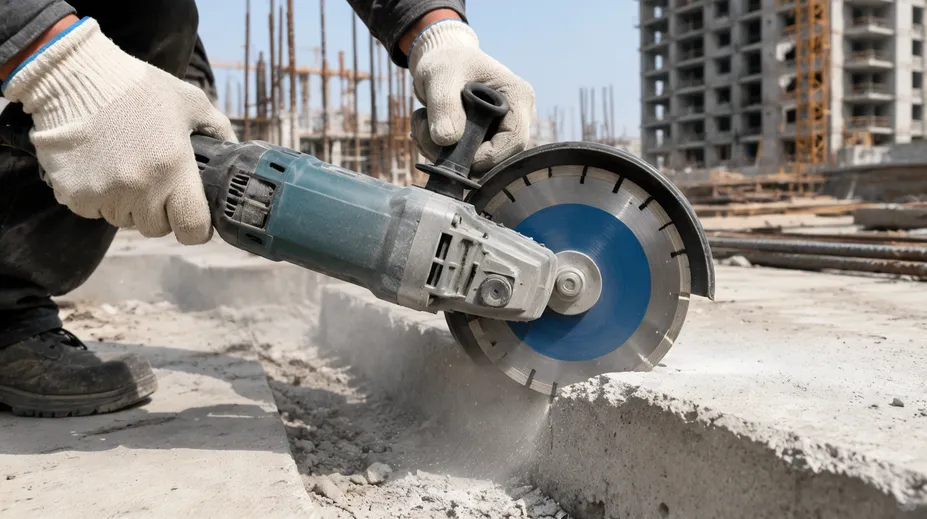
Angle grinder plus diamond disc is standard equipment on every construction site globally. These blades are consumables purchased by the case. Distributors supplying contractors see steady monthly reorders — the consumption rate is predictable because it's tied to job activity, not one-time purchases.
SKU Focus
Segmented 115 mm and 125 mm, high-frequency welded, standard formula for concrete and masonry. This is your volume base. Price competitive, consistent performance, reliable supply. We ship tens of thousands monthly to distributors in this segment.
Stone Fabrication and Countertop Shops
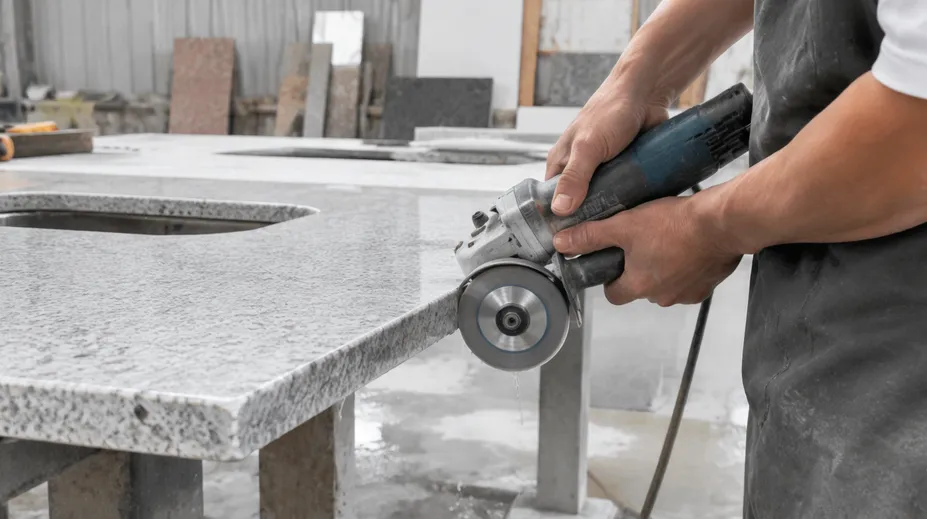
Small workshops cutting granite, marble, and engineered stone use angle grinder discs for trimming, edge work, and template cutting — tasks too small for the bridge saw. They run through discs weekly and value consistent cut quality because uneven performance means wasted stone.
SKU Focus
Turbo and segmented in 115-125 mm with granite-optimized formula. Higher diamond concentration than the construction-grade equivalent, so per-unit price (and your margin) is higher. These buyers pay for performance because material waste costs more than the blade.
Tile and Porcelain Installation
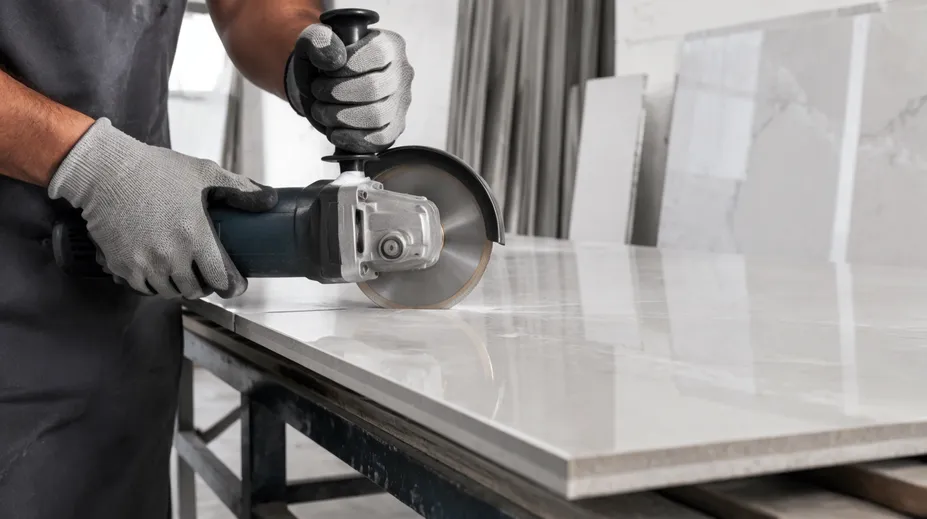
The porcelain tile market drives demand for continuous-rim and thin-kerf discs in small diameters. Modern large-format porcelain panels (600×1200 mm and larger) require chip-free cutting — a single visible chip means a rejected tile worth more than ten blades.
SKU Focus
Continuous rim 105-115 mm, fine-grit formula, thin body. Premium positioning — these blades command 2-3x the price of general-purpose segmented discs and your customers accept it because the cost of failure (ruined tile) dwarfs the blade cost.
Hardware Retail (Peg-Hook Display)
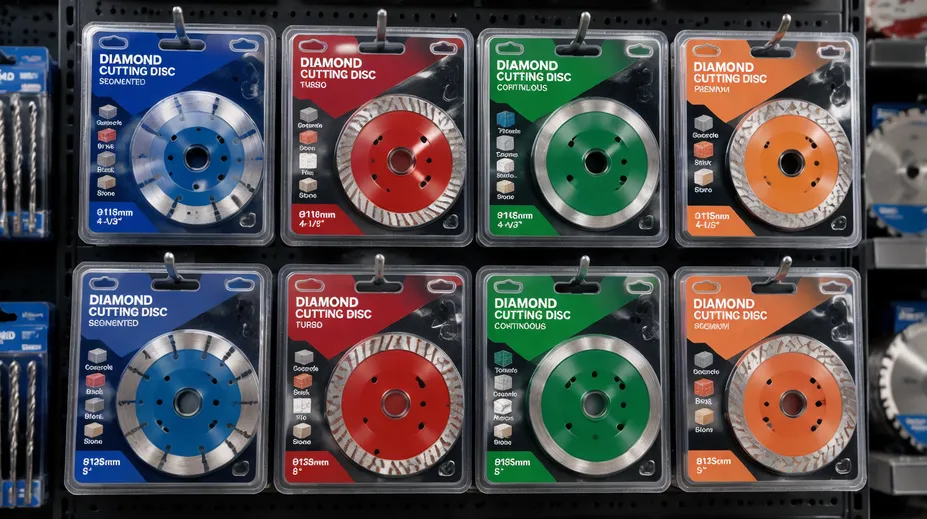
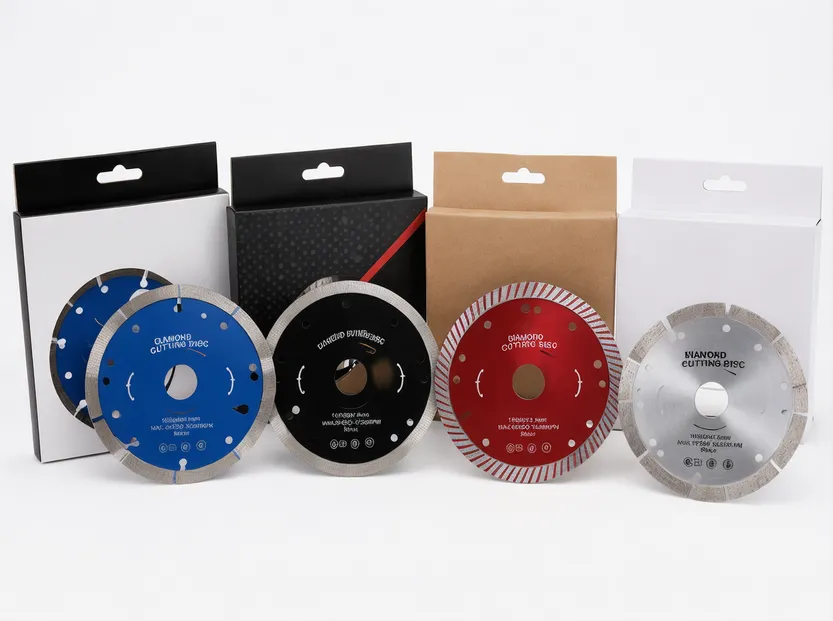
Retail channels need packaged units — blister packs with printed cards, color-coded by application, with clear use-case labels. The product is the same blade with retail-ready packaging and smaller case quantities per SKU. Margins are strongest here because retail pricing includes the display convenience premium.
SKU Focus
3-5 SKU assortments covering segmented, turbo, and continuous in the dominant diameter for your market. We produce retail packaging to your design specifications, including barcodes, multilingual safety text, and display-ready formats.
Building a retail brand?
Start with the three-SKU approach: one segmented "concrete/masonry," one turbo "universal," one continuous "tile/marble." It covers 90% of the retail buyer's decision tree and keeps shelf space manageable.
How We Manufacture Angle Grinder Discs Differently
The parent category page covers our general manufacturing process — view the full production chain here. What's specific to angle grinder discs:
Steel Core Selection for Small Diameters
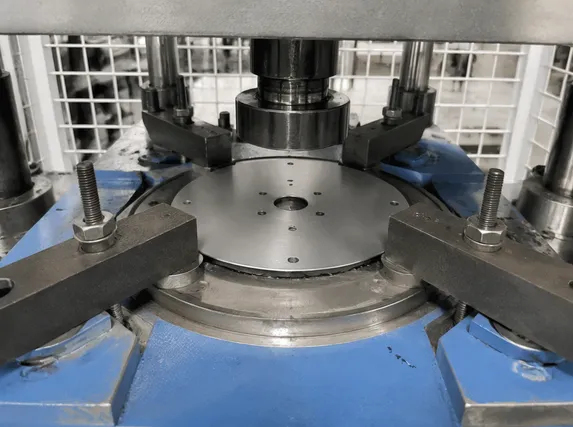
Small-diameter blades spin at 10,000-12,000+ RPM. At these rotational speeds, core flatness and stress distribution matter more than on large slow-speed blades.
We source 65Mn spring steel cores for our angle grinder range — higher elasticity and fatigue resistance than standard carbon steel.
Every core is pre-tensioned before segment attachment and verified for runout after welding.
Segment Sizing for Handheld Operation
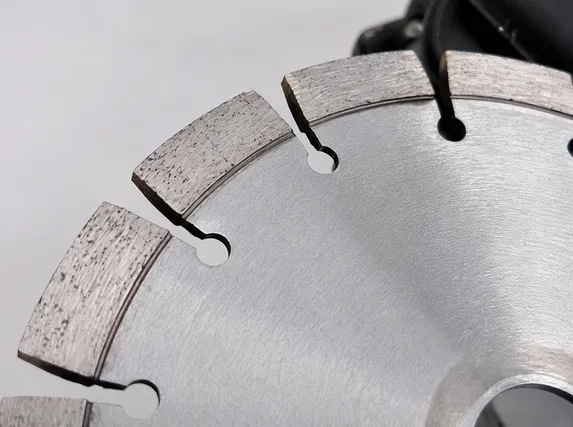
Angle grinders are handheld tools — operators apply inconsistent feed pressure, and the blade experiences lateral stress that fixed-machine blades don't face.
Our segments for this range use slightly wider profiles (typically 0.2-0.4 mm wider than the body) to provide adequate clearance in the cut and reduce binding.
We also run the welds on the taller side of our penetration spec because a handheld tool is more likely to catch and jolt the blade than a fixed saw.
Balancing for Vibration Control

Unbalanced small blades at high RPM transfer vibration directly to the operator's hands and cause uneven wear. After welding, every angle grinder disc passes through dynamic balancing — automated measurement and correction of mass distribution.
This isn't universal in the industry; many factories skip it on small-diameter blades because the absolute mass imbalance is small. But at 12,000 RPM, even 0.5g of imbalance creates noticeable vibration and accelerated bearing wear on the grinder itself.
Your customers feel the difference even if they can't articulate why.
Why we added dynamic balancing (2017)
We added dynamic balancing to the small-blade line after feedback from European distributors whose end users were reporting premature grinder bearing failures. The root cause wasn't the grinder — it was unbalanced blades from their previous supplier.
OEM and Private Label for Angle Grinder Diamond Discs
Angle grinder blades are the most commonly OEM'd product in our catalog — high-volume consumables with strong brand loyalty at the retail level. Your brand on the blade matters. End users develop tool preferences and repurchase the same brand.
What's Customizable Per SKU
| Dimension | Options | MOQ Impact |
|---|---|---|
| Bond formula | Material-specific adjustment (your target stone/concrete type) | No MOQ increase — standard process |
| Segment geometry | Height, width, count, gullet shape | No increase at standard options; custom tooling adds 1,000 pcs MOQ |
| Diameter + arbor | Any combination within standard tooling | None |
| Core finish | Painted (any RAL color), chrome plated, bare steel | Painted: 500 pcs; Chrome: 1,000 pcs |
| Branding | Laser etching, pad printing, or UV printing on core | 500 pcs minimum |
| Packaging | Blister pack, paper card, tin box, bulk box | New blister mold: 2,000 pcs; Stock blister: 500 pcs |
| Labeling | Your brand, safety markings, barcodes, multilingual text | 500 pcs |
MOQ Baseline
500 pieces per SKU for standard configurations.
Below that, we can supply 200 pieces in neutral packaging for market testing — but per-unit cost reflects the short run.
Realistic Timelines
Stock formula, standard packaging, your label only
Custom formula + custom packaging (new artwork, existing blister format)
Fully custom — new formula + new blister mold + new display carton, including sample approval
Same Lines. Same Inspection. Same QC Sign-Off.
We currently produce angle grinder blades under 40+ private labels for distributors across Southeast Asia, the Middle East, Europe, and Africa. Your brand gets the same formula development and QC rigor as our house brand. We don't differentiate quality between OEM and CLSEG-branded production.
Packaging That Protects Your Margin
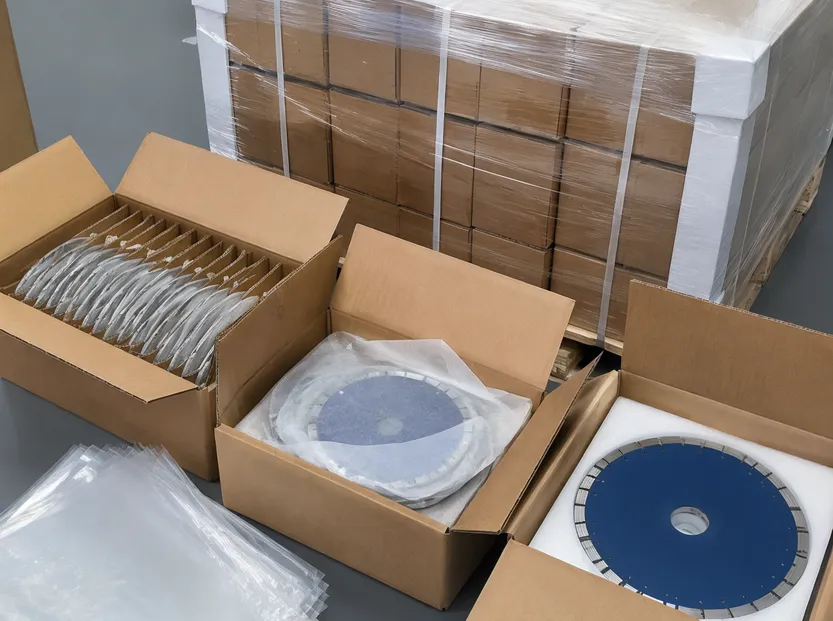
Diamond segments are the most vulnerable part of the blade during shipping — impact or lateral pressure chips the exposed diamond edge, and a chipped blade is a warranty claim before it ever reaches the job site.
Export Packaging Engineered Against Segment Damage
Individual VCI Paper Wrap
Anti-corrosion protection for ocean freight humidity — each blade wrapped individually.
Rigid Corrugated Dividers
Between each blade — zero blade-to-blade contact during transit.
Inner Boxes (10–25 pcs)
Depending on diameter, foam-cushioned for shock absorption.
Double-Walled Outer Cartons
Palletized with stretch wrap and corner protectors for structural integrity.
Moisture Barrier Bags
Standard for tropical/humid destinations — SE Asia, Africa, and Gulf markets.
Container Loading Estimates for Freight Planning
| Diameter | Pieces per 20GP | Pieces per 40HQ |
|---|---|---|
| 105 mm | ~80,000 | ~160,000 |
| 115 mm | ~65,000 | ~130,000 |
| 125 mm | ~50,000 | ~100,000 |
| 180 mm | ~30,000 | ~60,000 |
| 230 mm | ~20,000 | ~40,000 |
Mixed-Diameter Loading
Standard practice — most distributors combine multiple SKUs in one container. We provide exact loading plans with your order confirmation so your logistics team can calculate accurate landed costs before committing.
Retail Blister Packs
Piece counts per container decrease 15–25% due to blister volume — we factor this into loading plans. Discuss packaging dimensions during the quoting stage so we can optimize box layout for your container utilization and cost-per-unit targets.
Certifications Relevant to Your Import Requirements
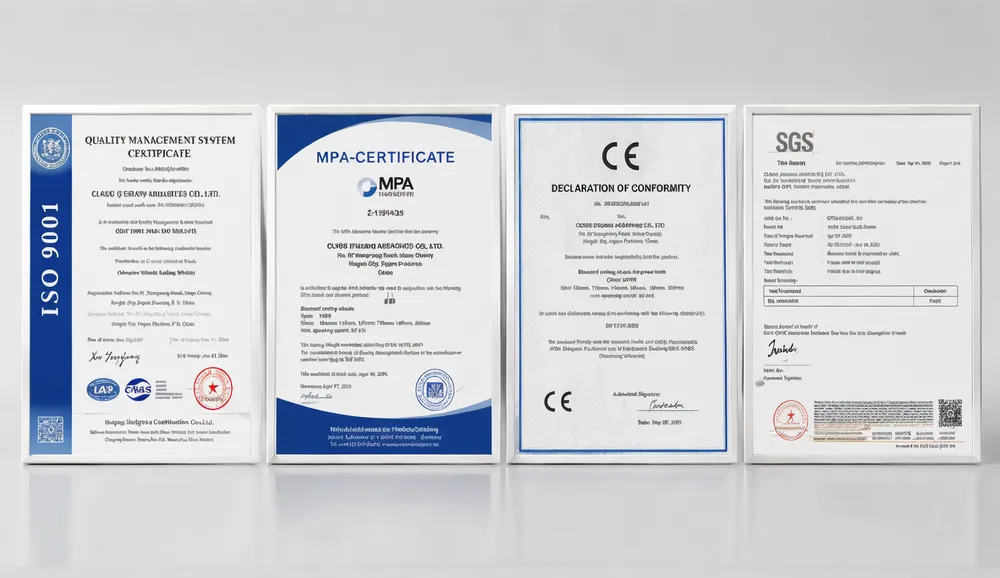
Our angle grinder diamond disc range ships under the same certification framework as all our products — built around the standards your import markets actually require.
ISO 9001:2015
Quality management across the entire production process — from raw material intake through final inspection and packaging.
CE Marking
European safety conformity for power tool accessories. Required entry-level standard for any EU market distribution.
MPA (Germany)
Safety certification for rotating abrasive tools. Validates RPM ratings, segment retention, and burst strength. Required by most EU distributors.
SGS Inspection
Third-party inspection reports available per shipment batch. Independent verification your customers and import authorities trust.
EU Import Compliance
If you're importing into the EU, MPA is the certification that matters most for diamond discs — it specifically tests segment retention under operational stress, which is the primary safety concern for high-RPM small blades.
Your customers and their liability insurers accept MPA-certified blades without additional testing. This eliminates re-certification cost and time-to-shelf delays.
Middle East, Africa & South America
CE plus SGS inspection reports typically satisfy import compliance for these markets. No additional regional certification required in most cases.
We issue certificates of origin, fumigation certificates (ISPM-15 pallets), and batch-matched test documentation as standard export paperwork — included with every shipment, not as add-on services.
Frequently Asked Questions
Practical answers to the specification and sourcing questions our B2B buyers ask most.
What arbor size should I stock for my market?
22.23 mm is the global default — it fits the M14 spindle on most angle grinders worldwide. Europe and South America standardize on 22.23 mm almost exclusively.
Southeast Asian and Chinese markets also use 16 mm and 20 mm on smaller grinders (4-inch models). If you're unsure, start with 22.23 mm; add 20 mm if you serve Asian markets.
We can produce dual-arbor blades with reducer rings included, but a clean single-bore disc is preferred for professional end users.
How do I decide between high-frequency welded and laser welded for angle grinder discs?
High-frequency welded is the cost-effective standard for wet cutting and moderate dry cutting — the joint is strong, proven, and economical. Laser welding costs 10–15% more per blade but survives the thermal cycling of aggressive dry cutting at full RPM without joint fatigue.
If your market is predominantly dry-cut (construction sites without water supply), laser welded justifies the price premium through zero segment-loss claims. If your market uses water or light duty, high-frequency welded delivers the performance at lower cost.
Most of our distributors stock both and position laser-welded as the "professional" tier.
What is the typical blade life for an angle grinder diamond disc?
Life depends heavily on material hardness, feed pressure, and whether the formula matches the application. Industry-typical ranges:
- 50–100 linear meters in hard granite (115 mm segmented)
- 150–300 linear meters in concrete block (same disc)
- Soft materials like sandstone or masonry extend life further
We don't publish a single "life" number because it would be misleading — we can tell you expected performance once we know your target material. Sample testing is the reliable way to confirm life expectations before committing to volume.
Can I mix multiple SKUs in one order?
Yes — most export orders combine 3–8 SKUs in a single container. You can mix diameters, rim types, and even different formula specifications in one shipment.
MOQ applies per SKU (500 pcs each), not per order total. Mixed orders share a single shipping arrangement, so your logistics cost is the same as ordering a single SKU.
Why do some cheap diamond discs wobble during cutting?
The wobble is runout — caused by either low-quality steel cores that aren't flat enough, or post-weld distortion that wasn't corrected. At 10,000+ RPM, even 0.5 mm of runout amplifies into visible blade wobble, uneven segment wear, and wider-than-expected cut width.
We hold runout tolerance to ≤0.3 mm on finished blades and verify it post-tensioning. If your current supplier's blades wobble, the fix isn't a better operator — it's a better core material and proper tensioning after welding.
What happens after I send an inquiry?
Within 24 hours on business days, you'll receive:
- A formula recommendation based on your target materials
- A specification confirmation for diameter/arbor/rim type
- Pricing per SKU at your stated volume
- Sample arrangement details
If you approve the specification, we produce samples (7–10 days), ship them for your testing, and move to bulk production only after you confirm performance. No commitment until you've tested.
Start With a Conversation About Your Market
You already know what your customers cut and which grinder sizes dominate your region. Share that with us and we'll do the rest.
Tell Us About Your Market
- Materials: What do your end users cut most? Granite, concrete, tile, mixed?
- Diameters: Which sizes sell in your market? 105, 115, 125, or a mix?
- Volume: Approximate order volume per SKU?
- Branding: OEM branded or CLSEG stock to start?
Typical Starting Point
Most new buyers in this category start with a 500-piece sample run across 2–3 SKUs — enough to test performance with real customers and confirm reorder potential before scaling to full container volumes.
We'll include our formula recommendation, sample pricing, and timeline in the first reply.