

Electroplated Diamond Blades Precision Cutting Without the Force
Where sintered blades overpower and fracture the workpiece, electroplated blades slice through with exposed diamond crystals and zero side load. Your customers cut glass, composites, thin stone veneer, and engineered ceramics cleanly — and you carry a margin-rich product with no direct competition from commodity segmented discs.
- ISO 9001 Certified
- CE · SGS · MPA
- OEM/Private-Label
- Factory-Direct · 20+ Years
What an Electroplated Diamond Blade Is — and What It Is Not
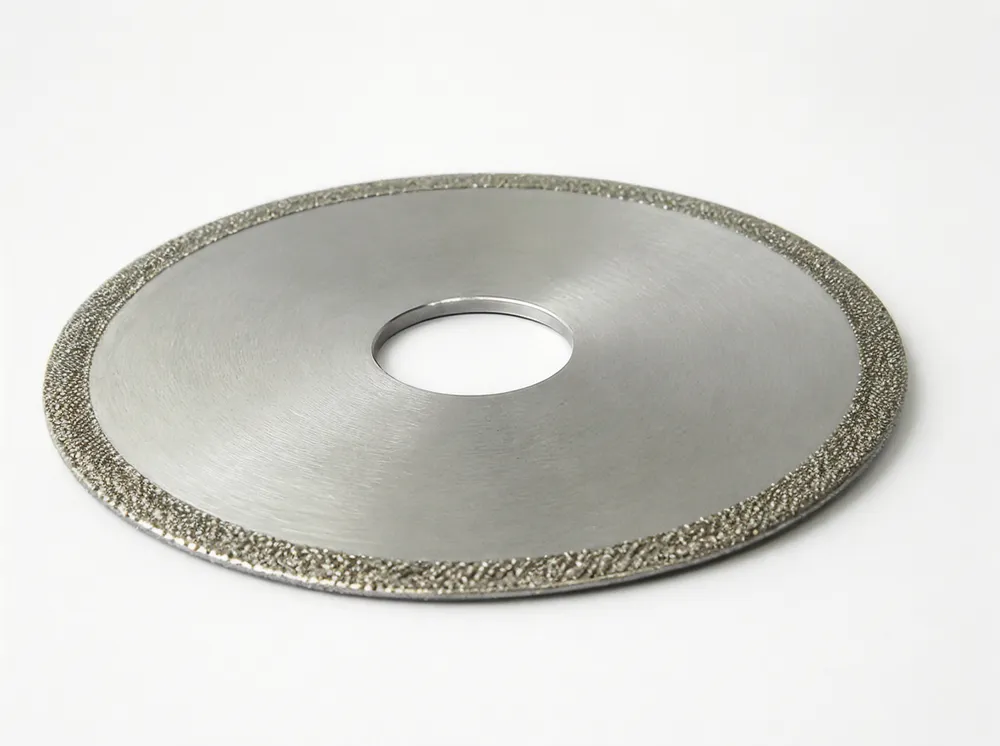
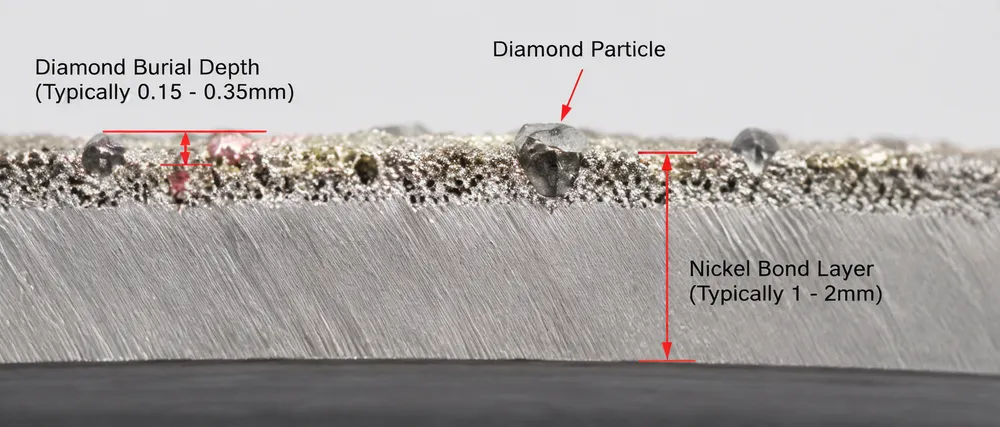
An electroplated diamond blade is a single-layer diamond tool. We bond one layer of diamond crystals directly to a thin steel core through nickel electrodeposition. Every crystal sits proud on the surface, fully exposed from the first cut — no break-in period, no glazing, no waiting for bond matrix to erode before diamonds engage. The blade cuts at maximum sharpness from minute one.
This makes electroplated blades fundamentally different from sintered blades. A sintered blade locks diamonds inside a multi-layer metal bond matrix and gradually releases them over hundreds of cuts. That multi-layer design gives long life in aggressive, high-volume cutting. An electroplated blade trades that life span for something else entirely: extreme thinness, surgical precision, and minimal cutting force. Once the single diamond layer wears through, the blade is spent. That's the trade-off — and it's the right one for applications where material integrity matters more than blade longevity.
We make both types. When customers ask "which one should I stock?" the answer is always "different markets, different shelf position." Electroplated blades don't compete with sintered blades — they serve work that sintered blades literally cannot do without destroying the workpiece.
If you need high-volume concrete or granite cutting, our sintered segmented discs or turbo diamond cutting discs are the right product. Electroplated blades earn their place in your catalog where precision and material preservation are non-negotiable.
Electroplated vs. Sintered
Key structural differences
The Electroplating Process — Why Manufacturing Method Determines Your Return Rate
Most factories that sell electroplated diamond blades don't make them — they buy finished blades from plating subcontractors and relabel. We run our own electroplating line, which matters because the process parameters directly control blade quality, and quality directly controls your return rate.
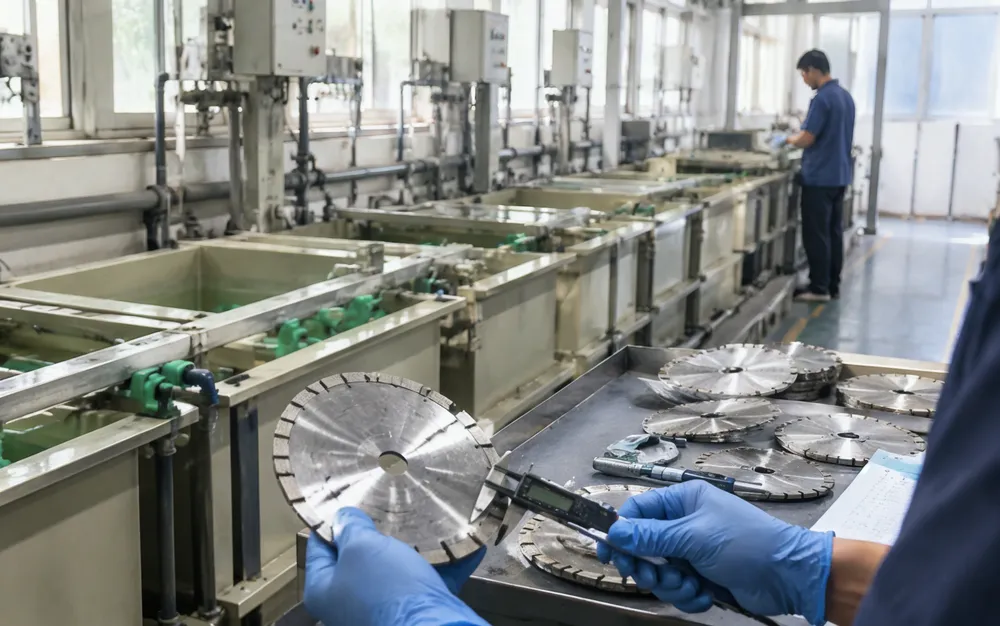
What we manage in-house:
Here's what distinguishes factory-controlled electroplating from relabeled subcontract blades — and why it matters for your shelf returns.
Diamond Distribution
We use controlled-particle-density electroplating where diamond concentration is set by the bath chemistry and current parameters, not by hand-sprinkling crystals and hoping for even coverage.
Uniform distribution means consistent cutting performance across the entire blade face. Bare spots — where nickel deposited but no diamonds landed — cause uneven wear and workpiece damage.
We inspect plated blades under magnification for distribution uniformity before they leave the plating line.
Nickel Bond Thickness
The nickel layer must hold each diamond crystal at approximately 50–60% burial depth — enough to anchor the crystal against lateral cutting forces, but with enough protrusion for effective cutting.
Too shallow and crystals pull out under load. Too deep and the blade behaves like a smooth disc with no bite.
Controlled through plating time and current density, verified with cross-section measurements on sample blades from each bath cycle.
Core Precision
The steel core determines runout — wobble during rotation. We use precision-stamped or laser-cut cores with post-plating runout verification on every batch.
A blade with poor concentricity vibrates, produces rough cuts, and wears unevenly. End users blame the blade. Your return rate goes up.
Runout tolerance held to ≤0.05 mm on blades up to 200 mm diameter. Checked with dial indicator on rotating mandrel.
Factory-Controlled vs. Subcontract Relabel
What you actually get when you source electroplated blades
| Parameter | Factory-Controlled (Us) | Relabel Supplier |
|---|---|---|
| Diamond source traceability | Full — mesh size, grade, supplier lot tracked | Unknown — whatever subcontractor uses |
| Plating bath chemistry | Monitored and adjusted per cycle | No visibility or control |
| Burial depth verification | Cross-section measurement per batch | Visual inspection at best |
| Core runout check | Dial indicator, every batch | Rarely performed post-plating |
| Defect tracing | Traceable to specific plating run & parameters | No root-cause path available |
| Spec adjustment for your market | Yes — grit, bond, core modified to order | Take what's in stock |
Product Range — Electroplated Diamond Blades by Application
We manufacture electroplated diamond blades across the full diameter and profile range. Below are the primary categories — each is configurable by grit size, core thickness, arbor bore, and diamond concentration to match your target material and end-user segment.
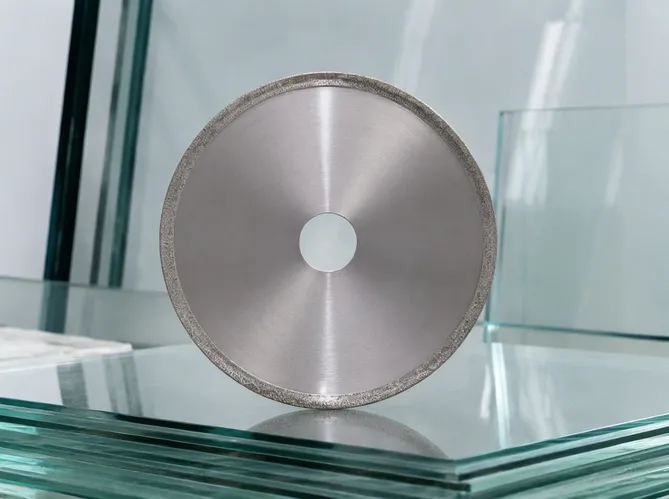
Glass Cutting Blades
Ultra-thin kerf continuous rim blades for float glass, tempered glass, laminated glass, and glass tile. Minimal chipping on entry and exit edges.
- Diameters: 80 mm – 350 mm
- Kerf: 0.3 mm – 1.0 mm
- Grit: 80# – 400# mesh
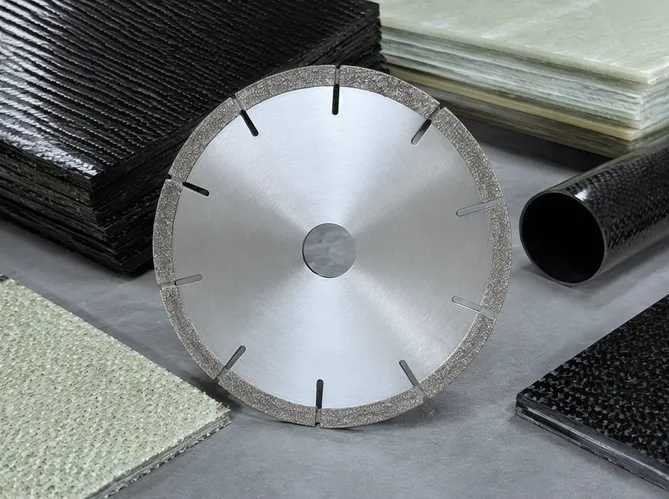
Composite & FRP Blades
Designed for carbon fiber, fiberglass, Kevlar laminates, and reinforced polymers. Aggressive grit patterns that cut fiber without delamination.
- Diameters: 100 mm – 300 mm
- Core: hardened steel, anti-vibration slots
- Grit: 40# – 120# mesh
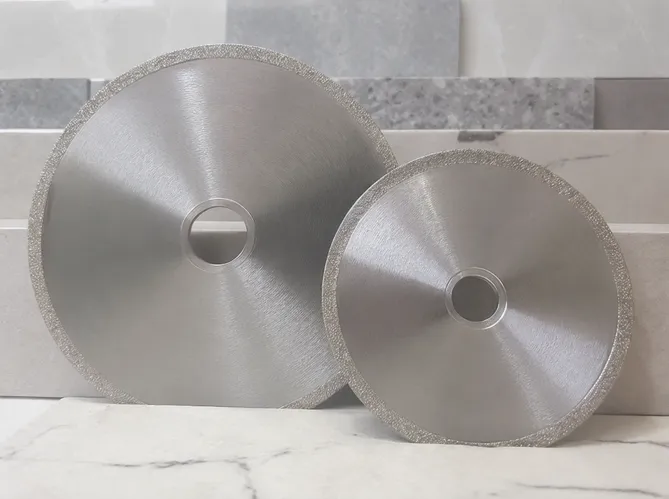
Ceramic & Porcelain Blades
For engineered ceramics, porcelain tile, and technical ceramics where edge chipping is unacceptable. Clean cuts without glazing damage.
- Diameters: 115 mm – 300 mm
- Rim: continuous or turbo profile
- Grit: 60# – 200# mesh
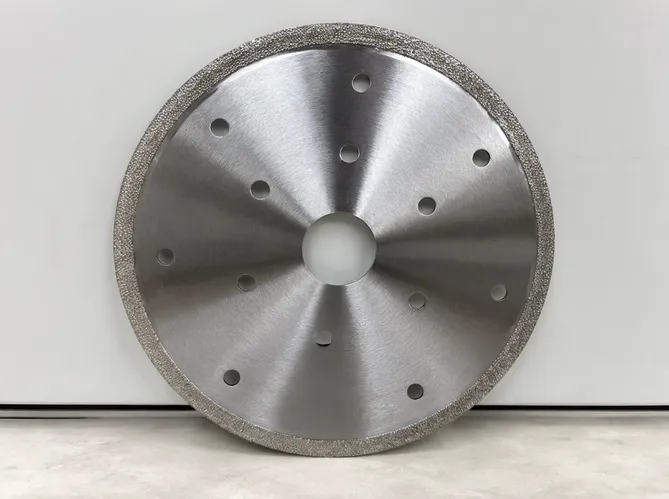
Thin Stone & Marble Blades
For stone veneer, thin marble slabs, and decorative stone where crack propagation from aggressive blades would destroy the workpiece.
- Diameters: 100 mm – 400 mm
- Low vibration core design
- Wet cutting recommended
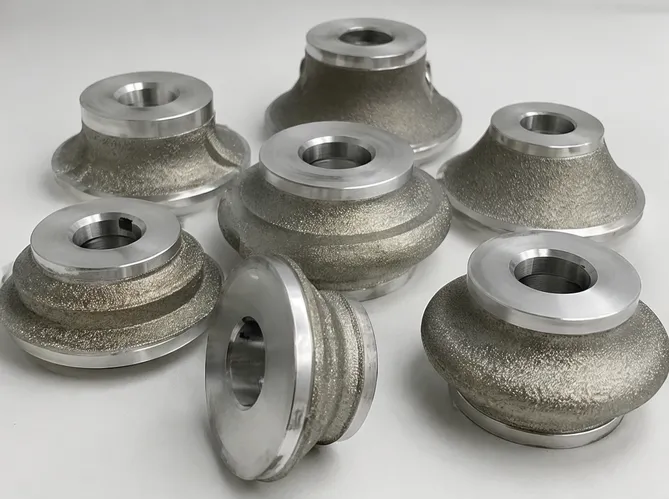
Profile & Contour Wheels
Shaped electroplated tools for edge profiling, radius cuts, and contour shaping on stone, glass, and composite countertops.
- Profiles: bullnose, ogee, bevel, full radius
- Custom profiles available
- Grit: 60# – 400# mesh
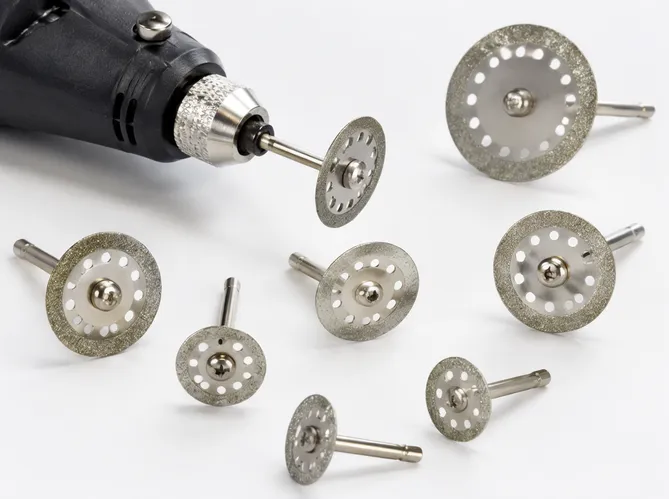
Mini & Rotary Tool Blades
Small-diameter blades for Dremel-type rotary tools, dental lab equipment, jewelry making, and precision hobby cutting applications.
- Diameters: 20 mm – 75 mm
- Mandrel-mounted options
- High RPM rated
Full Customization Available
Every blade above can be modified: arbor bore size, core thickness, diamond grit mesh, concentration level, rim profile, and packaging. If you're matching a competitor SKU or developing a blade for a specific end-user application, we configure from our standard tooling and adjust plating parameters. MOQs start at 100 pieces for standard modifications, 500 for custom core shapes.
Technical Specifications
Diameter
Arbor Bore
Diamond Grit Size
| Parameter | Standard Range |
|---|---|
| Diameter | 40, 50, 80, 100, 105, 115, 125, 150, 180, 200, 230 mm |
| Arbor Bore | 10, 16, 20, 22.23, 25.4 mm |
| Body Thickness | 0.3–1.5 mm (varies by diameter and application) |
| Diamond Layer | Single layer, nickel electroplated |
| Nickel Bond Thickness | Controlled to 50–60% diamond burial depth |
| Maximum RPM | 8,000–15,000 RPM (diameter-dependent) |
| Cutting Method | Wet recommended; dry permissible on intermittent, low-duty cycles |
| Rim Configuration | Continuous (full-coverage plating), slotted (with cooling slots), notched |
| Compatible Tools | Die grinders, rotary tools, mini angle grinders, tile saws, CNC stone machines, oscillating multi-tools |
Note on Blade Life
Electroplated blades are single-layer tools. Typical cutting life ranges from 20–80 linear meters depending on material hardness and feed rate. This is by design — the value proposition is precision and cutting quality, not endurance.
Spec these as consumables with a higher per-cut quality threshold, not as long-life workhorses. For distributors, this means higher reorder frequency from satisfied end-users who prioritize finish quality over blade longevity.
Specifications shown are industry-standard values for electroplated diamond blades. Actual specifications may vary by configuration and custom requirements.
Request Product Data SheetsWhere Electroplated Diamond Blades Generate Revenue — Your Market Segments
These aren't generic application scenarios. Each segment carries distinct commercial characteristics — order volume patterns, reorder frequency, and margin logic that determine whether this product earns shelf space in your catalog.
Precision Stone Fabrication
Thin Veneer, Edge Profiling, and Inlays
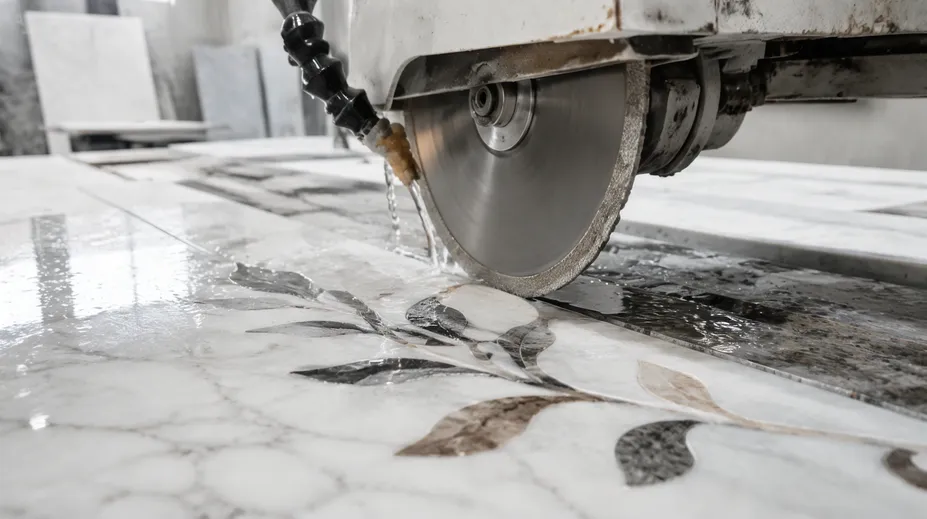
Stone fabricators working with thin natural stone veneer (2–6 mm thickness), stone inlay patterns, or delicate edge profiles need blades that won't fracture the workpiece. Sintered blades apply too much lateral force on thin stock and crack it. An electroplated diamond cutting blade removes material with minimal side load, so your fabricator customers can cut intricate shapes in expensive stone without scrap loss.
Commercial Logic
- Fabricators doing custom work — hotel lobbies, luxury residential, monument lettering — buy electroplated blades as a premium consumable
- Reorder cycle: every 2–4 weeks during active project periods
- Unit prices are 3–5× a standard sintered disc, but the material saved from breakage justifies it instantly
- You're selling risk reduction on high-value workpieces, not commodity abrasives
Glass and Glass-Ceramic Cutting
Sheet Glass, Mosaics, and Fused Art Glass
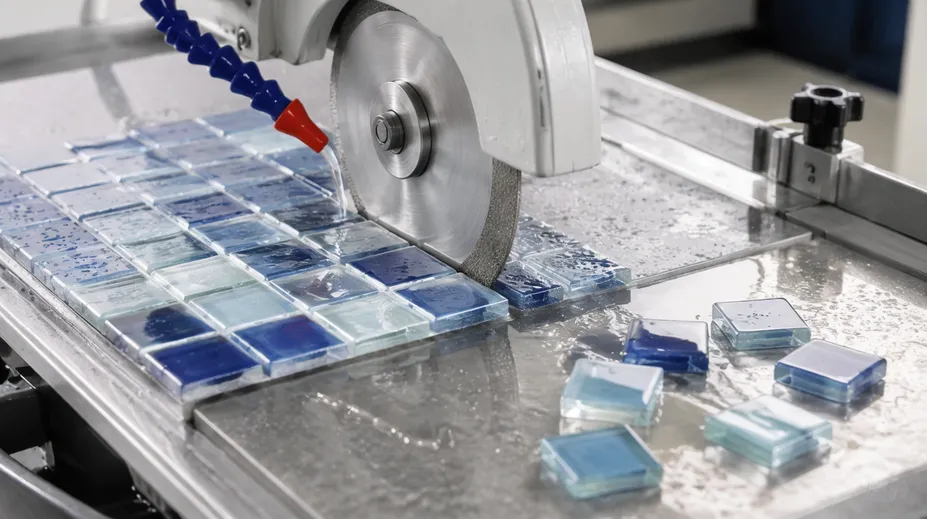
Stained glass workshops, architectural glass processors, and glass mosaic fabricators all need diamond blades that cut without shattering. Electroplated blades — particularly in finer grit (80/100 mesh and above) — deliver clean edges on sheet glass, glass mosaic tiles, glass block, and fused glass art pieces. The thin kerf minimizes material loss on expensive colored glass.
Commercial Logic
- Niche but sticky segment — buyers can't substitute a cheaper sintered blade without catastrophic breakage
- Once they find a reliable electroplated saw blade source, switching costs are high
- Margins hold well — no downward price pressure from commodity alternatives
- Typical orders: 50–200 pieces at premium pricing with strong reorder consistency
Composites and Advanced Materials
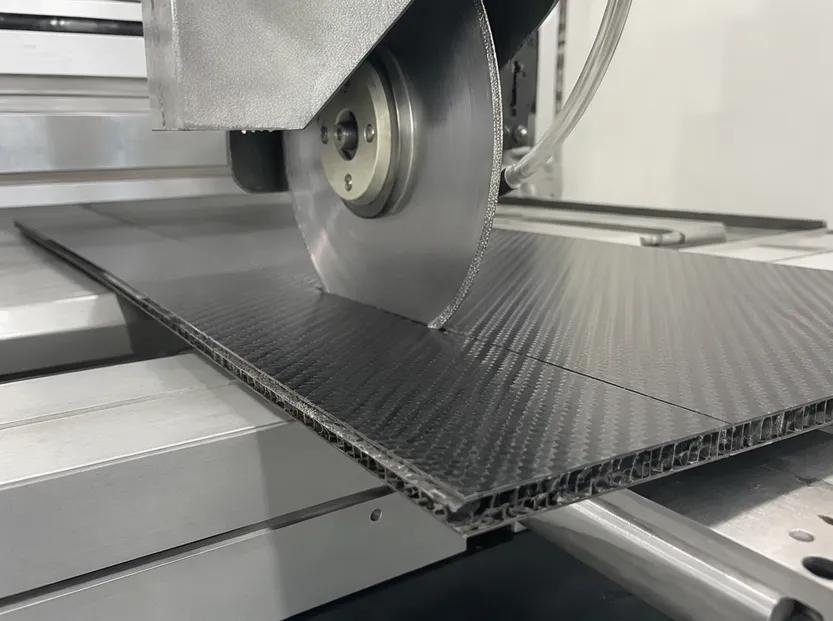
Carbon fiber reinforced polymer (CFRP), fiberglass, Kevlar laminates, honeycomb panels — these materials delaminate or fray under aggressive cutting. Electroplated diamond blades provide the clean shear action needed without delamination. Aerospace maintenance shops, boat builders, and automotive aftermarket fabricators consume these blades for trimming and shaping composite parts.
The composites market is growing globally as more industries shift from metal to composite construction. Buyers in this segment are often aerospace or automotive supply chain vendors who value quality documentation and traceability. Higher-end customer profile, less price sensitivity, and a segment where being the "diamond blade supplier who understands composites" differentiates you from general-purpose tool distributors.
Ceramic and Porcelain Precision Cutting
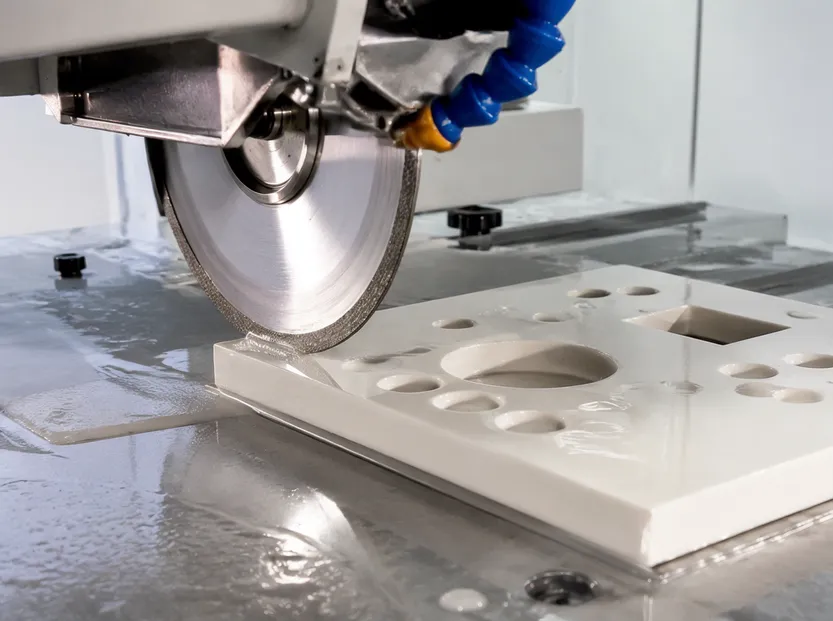
While our ceramic tile cutting discs handle standard tile installation, electroplated blades serve a different ceramic niche: precision cuts on technical ceramics, porcelain art pieces, dental ceramics, and laboratory ceramic components where chip-free edges are mandatory. These materials are expensive and irreplaceable once cracked.
Overlaps with the glass segment in buyer profile — specialist workshops and labs ordering modest quantities at premium prices. A good add-on SKU when you're already selling into precision fabrication channels.
Lapidary and Gemstone Processing
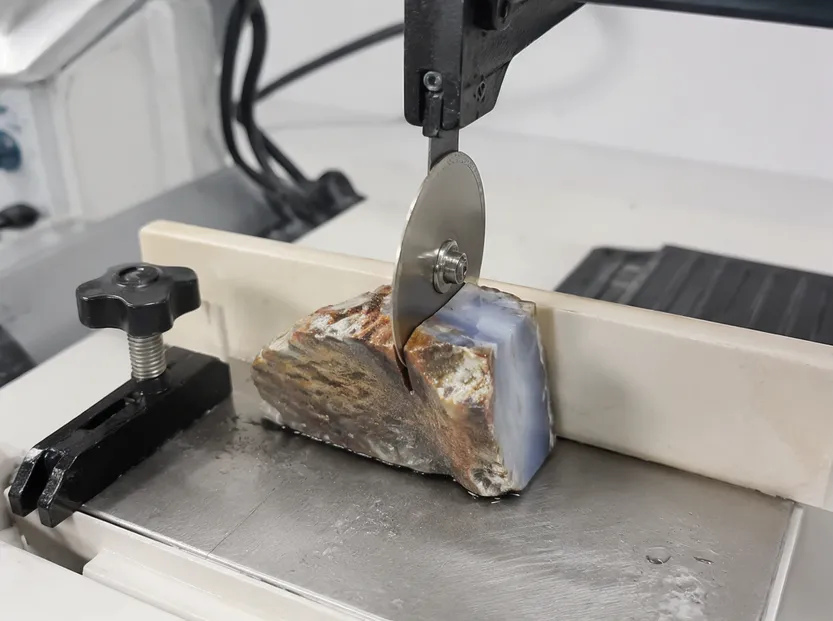
Gem cutters and lapidary hobbyists use thin electroplated diamond blades (typically 40–100 mm diameter) on trim saws and slab saws to section rough gemstone material. The thin kerf preserves expensive rough material — every millimeter of kerf waste is money lost on a $500 piece of rough opal or tourmaline.
The lapidary market is fragmented — individual hobbyists, small gem dealers, and vocational training programs. Distribution typically goes through specialized tool suppliers, rock shop retailers, and online marketplaces. High unit margins, frequent reorders (blades wear quickly on hard gemstones), and minimal competition from mainstream diamond blade distributors who don't stock small-diameter electroplated products.
Tell us which segment you serve
We'll recommend the right grit and diameter configuration for your market.
Get a Segment-Specific RecommendationElectroplated vs. Vacuum Brazed — Helping You Position Both in Your Catalog
If you stock our vacuum brazed diamond blades alongside electroplated, here's the positioning logic — because your sales team needs to explain the difference to customers:
| Dimension | Electroplated Diamond Blade | Vacuum Brazed Diamond Blade |
|---|---|---|
| Diamond attachment | Nickel electrodeposition — uniform, controlled layer | High-temp brazing alloy — exposed crystal tips, aggressive |
| Blade thickness | Ultra-thin (0.3–1.5 mm body) | Thin to medium (0.8–3.0 mm body) |
| Cutting force | Very low — gentle on fragile materials | Moderate — faster material removal |
| Cutting speed | Moderate — precision-oriented | High — speed-oriented |
| Best for | Fragile, expensive, or thin materials; precision shapes | Soft stone, demolition, fast rough cutting |
| Blade life | Shortest — single diamond layer, 20–80 linear meters | Short to medium — single layer, but thicker bond holds crystals longer |
| Price position | Premium per blade, justified by material savings | Mid-range, positioned between sintered and electroplated |
| Failure mode | Gradual diamond loss → cutting slows → blade is finished (safe) | Same pattern — gradual performance decline |
Electroplated
The precision instrument. Ultra-thin kerf, minimal material waste, gentle cutting force for fragile substrates.
Position → Maximum Precision
Vacuum Brazed
The speed tool. Aggressive exposed diamonds, fast material removal, ideal for soft stone and demolition work.
Position → Maximum Speed
Sintered
The endurance workhorse. Multi-layer diamond segments for maximum lifespan on volume cutting jobs.
Position → Maximum Life
Both electroplated and vacuum brazed are single-layer tools. The difference is in how diamonds attach and how aggressively they cut. Stock both and you cover the full spectrum between "maximum precision" and "maximum speed" — with sintered blades handling the "maximum life" position.
New distributor recommendation: Start with sintered for volume, add vacuum brazed for speed applications, then electroplated for precision niches. Each serves a distinct buyer and they don't cannibalize each other.
Customization — What We Can Adjust for Your Market
Electroplated blade customization works differently from sintered blades. There's no bond formula to reformulate. Instead, customization happens across these dimensions:
Diameter & Arbor Bore
Any diameter from 20 mm up to 300 mm is producible.
Arbor bore matches your target tool:
- 10mm Rotary tools
- 16mm Mini grinders
- 22.23mm Standard angle grinders
- Custom Non-standard bores for specialized machinery
Diamond Grit Selection
This is where performance tuning happens. We help you spec the right grit for your end-user application — tell us what they're cutting.
40/50, 60/80 mesh — Coarse
Faster cutting in softer materials
100/120, 120/140 mesh — Fine
Smoother edges in glass, ceramics, and gemstones
Rim Configuration
- Full continuous plating — maximum cut quality
- Slotted rims — improved chip clearance and cooling on thicker materials
- Notched rims — intermittent engagement that reduces heat buildup during dry cutting
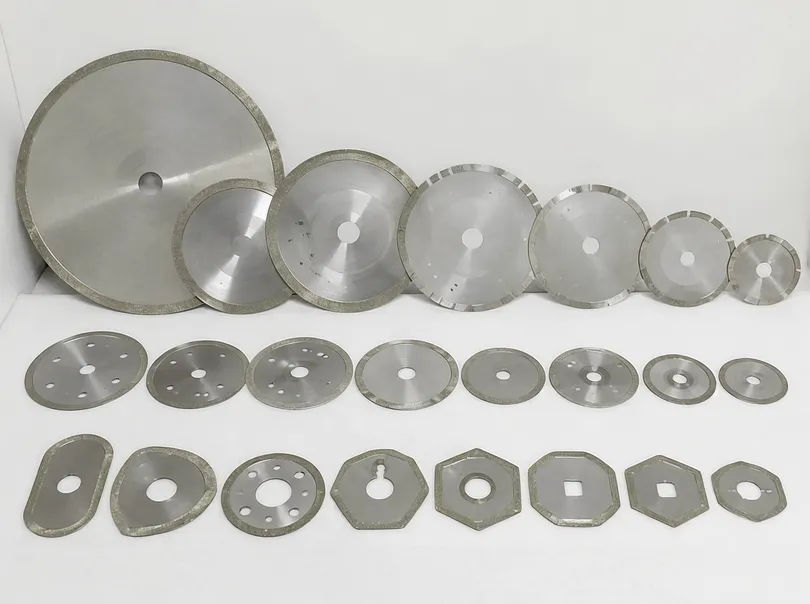
Core Shape
- Flat disc — standard configuration
- Dish-shaped — CNC profiling applications
- Specialty cores — hole saws, core drills, profile wheels — all electroplated
Branding & Packaging
- Private-label with your brand identity
- Laser-etched or printed markings on the core
- Individual retail-ready or bulk workshop packaging
MOQ & Lead Time
Minimum Order
200 pcs per SKU — standard configurations
500 pcs per SKU — non-standard diameters or specialty cores (new tooling)
Lead Time
20–25 days — standard configurations
30–40 days — custom cores with new stamping dies (incl. sample approval)
Lower entry cost for niche testing: One advantage of electroplating over sintering for customization — we can produce smaller batches economically because there's no segment pressing and welding involved.
If you're testing a new market niche with a specialty electroplated blade, the entry cost is lower than commissioning a custom sintered product.
Ready to Specify?
Send your specifications — diameter, grit, arbor, and target material — and we'll return a custom quote with pricing tiers and sample options.
Send Specifications for Custom QuoteQuality Assurance on Every Plating Batch
Our general QC framework — ISO 9001:2015 process controls, 4-stage inspection, and destructive sampling — is standard across all products. For electroplated blades specifically, we add these product-specific checks:
Diamond Distribution Uniformity
Visual and microscopic inspection confirming even crystal spacing across the plated surface. Bare patches or clustering fails the blade.
Nickel Adhesion Testing
Tape-pull and cross-hatch tests on sample blades from each batch to verify the nickel layer bonds securely to the steel core. Delamination under these tests means the bath chemistry drifted.
Crystal Retention Under Load
Sample blades are test-cut on material to verify diamonds stay anchored during actual use, not just during visual inspection. We monitor crystal loss rate against established baselines for each grit/diameter combination.
Dimensional Accuracy
Diameter tolerance ±0.1 mm, arbor bore tolerance ±0.05 mm, runout ≤0.15 mm for blades under 150 mm diameter. Tighter than our sintered blade tolerances because electroplated blades run on precision tools where wobble is unacceptable.
Electroplated Blade Tolerance Summary
| Parameter | Tolerance | Condition |
|---|---|---|
| Diameter | ±0.1 mm | All diameters |
| Arbor Bore | ±0.05 mm | All configurations |
| Runout | ≤0.15 mm | Blades under 150 mm diameter |
Frequently Asked Questions
What materials can electroplated diamond blades cut that sintered blades cannot?
The question isn't what they can cut — it's what they can cut without destroying. Thin stone veneer under 5 mm thickness, sheet glass, glass mosaic, carbon fiber composite panels, and technical ceramics are all materials where a sintered blade's cutting force would cause fracture, delamination, or excessive chipping. An electroplated diamond cutting blade removes material with lower feed force and thinner kerf, preserving workpiece integrity. If the material costs $50+ per piece and can't tolerate cracking, electroplated is the right spec.
How long does an electroplated diamond blade last compared to a sintered blade?
Significantly shorter in absolute terms — typically 20–80 linear meters versus 200–2000+ linear meters for a comparable sintered blade. But comparing them directly is misleading. They serve different purposes.
Price per linear meter is higher for electroplated, but scrap cost from using the wrong blade (a sintered blade cracking a $200 piece of stone veneer) makes the electroplated blade the more economical choice in fragile-material applications. Sell them on workpiece protection, not blade longevity.
Can electroplated diamond blades be used dry?
Wet cutting is recommended for best performance and blade life. Dry use is permissible for intermittent, light-duty cuts — quick scoring passes or occasional trimming where water isn't practical. Sustained dry cutting at high feed rates overheats the nickel bond and accelerates diamond loss.
If your customers need dedicated dry-cutting capability for standard construction materials, direct them to our dry cut diamond blades instead.
What grit size should I stock for general-purpose precision cutting?
80/100 mesh covers the widest range of precision applications — stone veneer, ceramic, glass, and thin composites. It balances cutting speed with edge quality. If you're entering this market with a single SKU to test demand, 80/100 mesh in 105 mm or 115 mm diameter is the most versatile starting point.
Expand into finer grits (120/140) for glass and gemstone specialists, and coarser grits (60/80) for composite fabricators, once you've established the segment.
What is the minimum order for private-label electroplated diamond blades?
200 pieces per SKU for standard configurations (existing diameter, standard grit, common arbor). For market-entry testing, we can supply 100 pieces in neutral packaging so you can evaluate demand before committing to branded production.
Custom core shapes or non-standard diameters that require new tooling start at 500 pieces per SKU to justify the setup investment.
Start With a Sample Order
Most buyers new to electroplated diamond blades in their product line start with 100–200 pieces across 2–3 configurations — enough to test with their customers and confirm which grit/diameter combination moves in their market. We'll recommend a starter assortment based on your target segment.
Send Us These Details
- The material your end users cut (stone veneer, glass, composite, ceramic, gemstone — or a mix)
- Target diameters and arbor sizes for your market
- Whether you need retail packaging or bulk workshop supply
What You'll Receive
- A specific recommendation tailored to your target segment
- Sample pricing for your selected configurations
- Lead time and logistics details
- Response within 24 hours
No minimum commitment on trial orders — prove the product, then scale.