

Thin Diamond Cutting Discs Narrow Kerf for Maximum Yield
When the stone costs more than the blade, kerf width becomes a margin decision. Our thin diamond blades deliver tight, clean cuts that keep more material on the slab — and more profit in your supply chain.
- ISO 9001 + CE + MPA certified
- OEM / private label available
- Typical lead time 20–30 days
- Factory-direct pricing
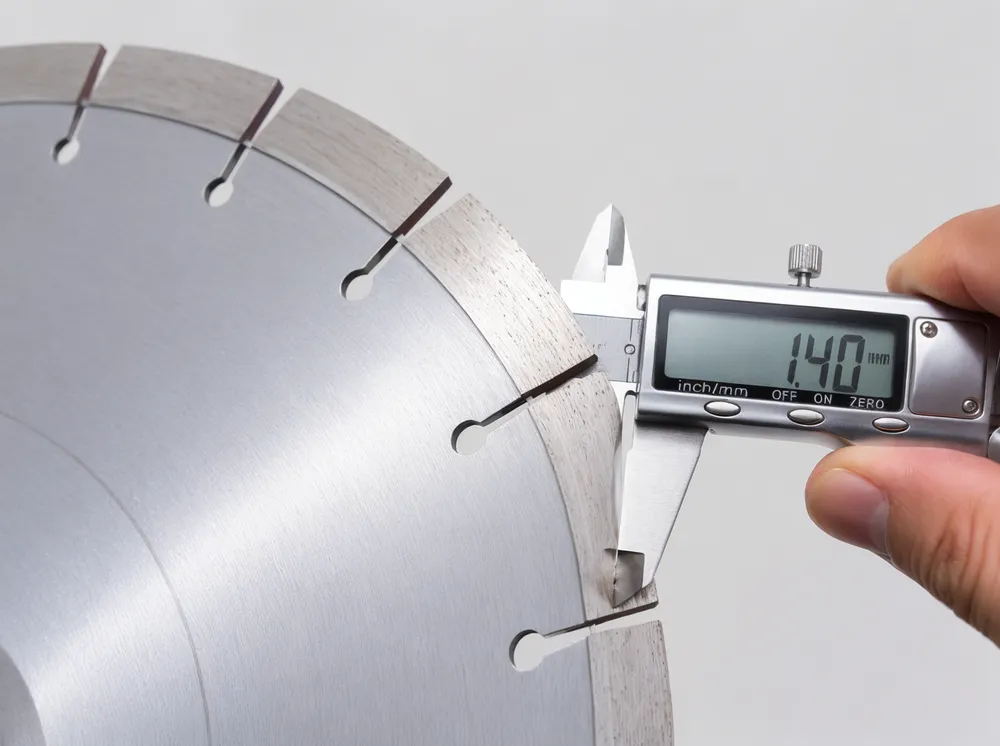
The Commercial Case for Thin Kerf: Less Waste, More Yield Per Slab
Standard Blade Kerf
A standard diamond cutting disc runs 2.0–3.2 mm segment thickness. Every cut removes that width of material as dust. On commodity concrete or brick, nobody cares — the material is cheap and the cuts are few.
Material Cost Reality
When your end users cut engineered quartz at $60–120/m², porcelain slabs at $40–80/m², or natural marble at highly variable prices per linear meter, each additional millimeter of kerf is material that turns to powder instead of profit.
Thin Kerf Solution
Our thin diamond cutting disc range runs 1.2–1.6 mm segment thickness on correspondingly thin steel cores (0.8–1.2 mm body). That's 40–60% narrower than a standard blade.
On a slab with 20 cuts, the material savings compound meaningfully — enough for your fabrication shop customers to yield one additional piece per slab in many layouts. For you as a distributor, this translates into a blade that sells at a premium over standard discs while delivering measurable ROI your customers can calculate on their own bench.
We developed our thin kerf line specifically for the Southeast Asian and European tile fabrication markets, where material costs overtook blade costs as the primary concern around 2015. The demand hasn't slowed since.
Yield Math (20 Cuts/Slab)
Often enough to yield +1 piece per slab depending on tile size and layout.
Technical Specifications for This Product
Standard configurations we manufacture for thin diamond cutting discs. Your specific order can be adjusted within these ranges — contact us for exact specs matching your market requirements.
| Parameter | Specification |
|---|---|
| Diameter range | 105, 110, 115, 125, 150, 180, 200 mm |
| Arbor bore | 16, 20, 22.23, 25.4 mm |
| Segment thickness | 1.2–1.6 mm (typical: 1.4 mm) |
| Blade body thickness | 0.8–1.2 mm |
| Segment height | 7–10 mm |
| Rim type | Continuous, turbo, or fine-segmented |
| Segment attachment | High-frequency welded or laser welded |
| Maximum RPM | 12,000–14,000 RPM (diameter dependent) |
| Cutting method | Wet or dry/wet dual-use (wet recommended for optimal life) |
| Target materials | Ceramic tile, porcelain, engineered quartz, marble, granite, glass mosaic |
| Compatible tools | Angle grinders (4"–5"), tile saws, mini bridge saws, portable cut-off machines |
Specifications shown are standard production values. Custom configurations (non-standard arbor, specific segment geometry, modified diamond concentration) available on request. Contact us for detailed product data sheets.
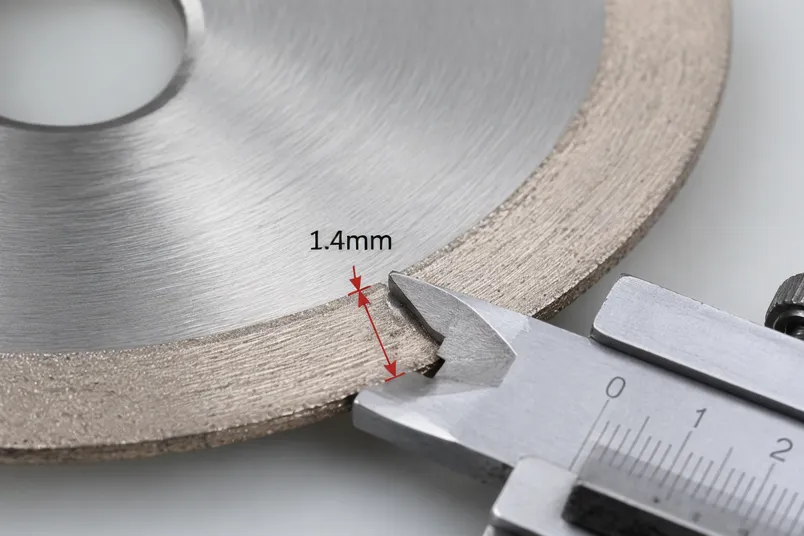
Most Requested Configurations
115 mm diameter, 22.23 mm arbor, continuous rim, 1.4 mm segment — designed for angle grinder use on porcelain tile.
105 mm diameter, 20 mm arbor, turbo rim — for cutting ceramic and thin stone panels.
How a Thin Diamond Blade Differs in Manufacturing
Making a thin kerf diamond cutting disc isn't a matter of grinding a standard disc thinner. The entire production approach changes — and those differences determine whether the blade cuts straight or deflects, lasts weeks or days.
Higher-Grade Steel Cores
A 0.8–1.0 mm core flexes under cutting load if the steel isn't properly specified. We use 65Mn spring steel for our thin blade cores — higher hardness and better elastic recovery than the standard Q235 body steel used on thicker blades.
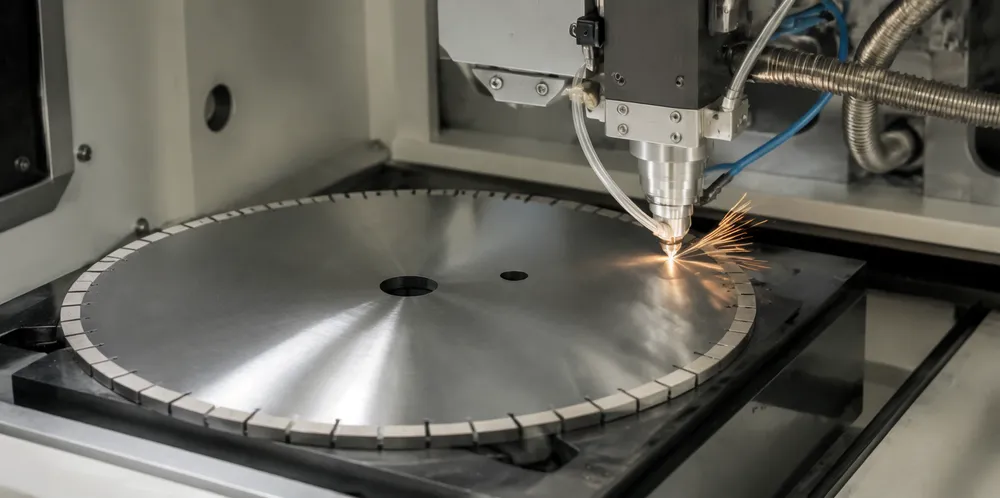
Each core blank is laser-cut and then heat-treated before tensioning to ensure flatness under operational stress.
We tried SKS5 tool steel early on — better hardness but brittle in thin profiles. 65Mn gives us the sweet spot between rigidity and resilience.
Softer Segment Bond Formula
A thin segment carries less total diamond per unit height than a standard-width segment. If we used the same bond hardness, the blade would glaze prematurely because there isn't enough cutting load distributed per diamond crystal.
We formulate thin-kerf segments with a softer matrix and finer grit (typically 60/80 to 80/100 mesh), so diamonds self-sharpen under the lighter load profile.
The result: consistent cutting speed throughout segment life, not a blade that cuts well for the first ten minutes then stalls.
Laser Welding — Standard, Not Optional
High-frequency welding works fine on thick cores where the heat-affected zone is proportionally small. On a 0.8–1.0 mm core, the heat from HF welding can distort the area around the joint.
We laser-weld all thin diamond blades — the heat input is concentrated, penetration is controllable to 0.3 mm depth, and there's no warping.
This also means the joint survives dry cutting conditions better, which matters for end users who occasionally run these blades without water even though wet use is recommended.
Tighter Runout Tolerance
Standard blades pass at ≤0.3 mm runout. Thin blades we hold to ≤0.15 mm — because any lateral oscillation on a thin core amplifies into visible cut deviation on the workpiece.
Every blade is trued on CNC equipment post-welding and verified before packaging.
30–50% retail price premium over standard-kerf equivalents
These production differences cost more per piece, which is exactly why thin diamond blades command a premium at retail. Your margin percentage stays healthy even at the higher wholesale price.
Market Segments Where Thin Kerf Blades Sell at Premium
Each of these represents a segment where your customers will pay more for a thin diamond blade — and come back to reorder — because the material savings or cut quality justify the premium.
Stone Fabrication — Countertop & Slab Processing
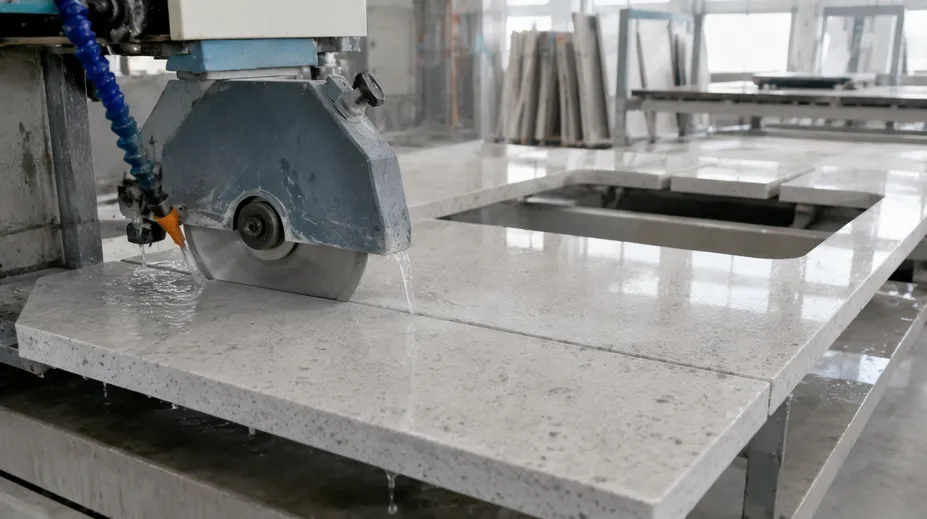
Fabrication shops cutting engineered quartz, natural granite, and marble into countertops run through blades weekly. They measure performance in square meters of slab processed per blade and material yield per slab.
A thin kerf diamond cutting disc gives them tighter nesting on templates, less wasted offcut material, and cleaner edge finish requiring less polishing.
Shops typically run 105–125 mm thin blades on portable bridge saws and 150–200 mm on table saws. This is a high-reorder, premium-price segment — fabricators don't haggle over blade cost when the material savings per slab exceed the price difference.
Porcelain Tile Installation — Chip-Free Precision
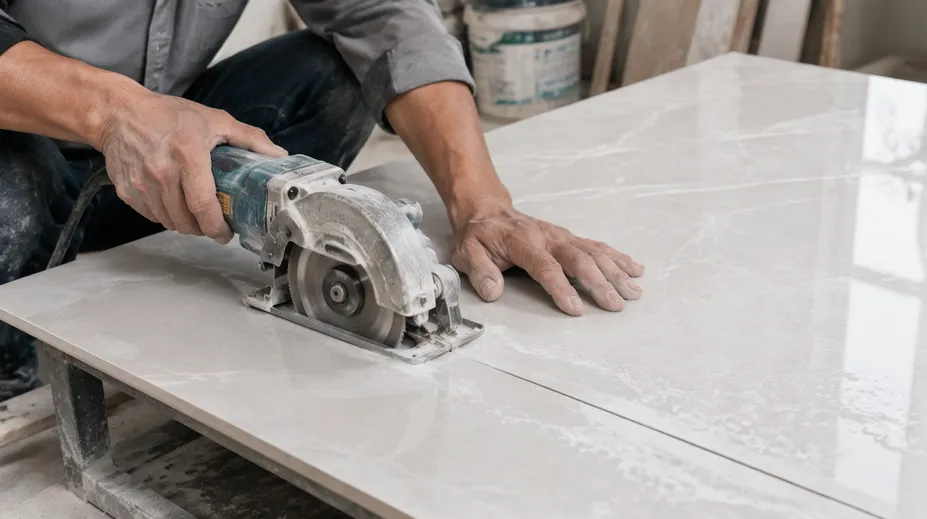
Large-format porcelain tile (600×600 mm and above, often 1200×600 mm) has become the dominant specification in commercial and high-end residential projects across Europe, the Middle East, and urban markets in Southeast Asia.
These tiles chip easily with aggressive, wide-kerf blades. Tile installers need a thin diamond blade that cuts cleanly without micro-fracturing the glazed surface. Continuous-rim thin blades in 105–115 mm are the standard here.
Your customers are tile retailers, flooring distributors, and contractor supply houses — they'll stock thin blades alongside standard tile blades as the premium option.
Glass Mosaic and Decorative Stone
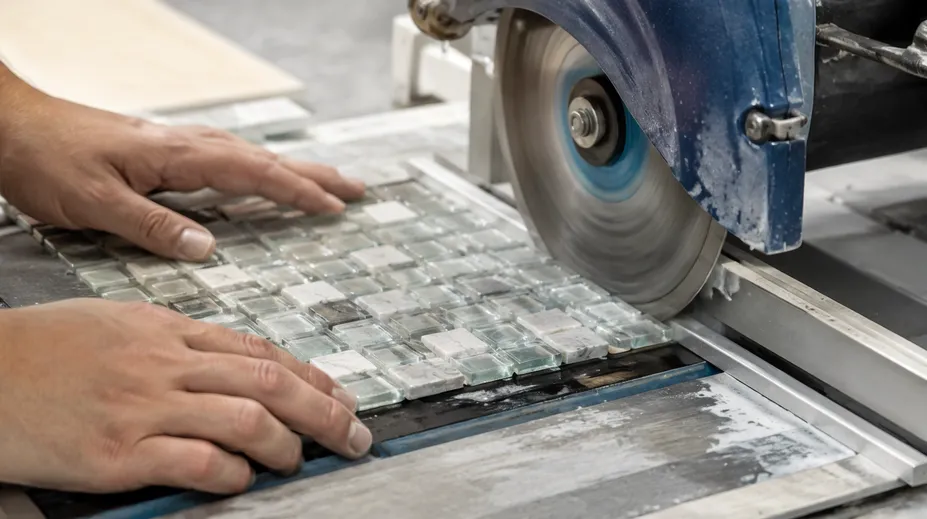
Interior designers specify glass mosaic, travertine strips, and thin stone veneers that shatter under standard blades. Thin kerf discs with fine diamond grit provide the low-impact cutting force needed.
This is a niche but high-margin segment — the blades are specialized, competition is thinner, and end users accept premium pricing because alternatives don't exist at the hardware store level.
Precision Stone Craft and Monument Work
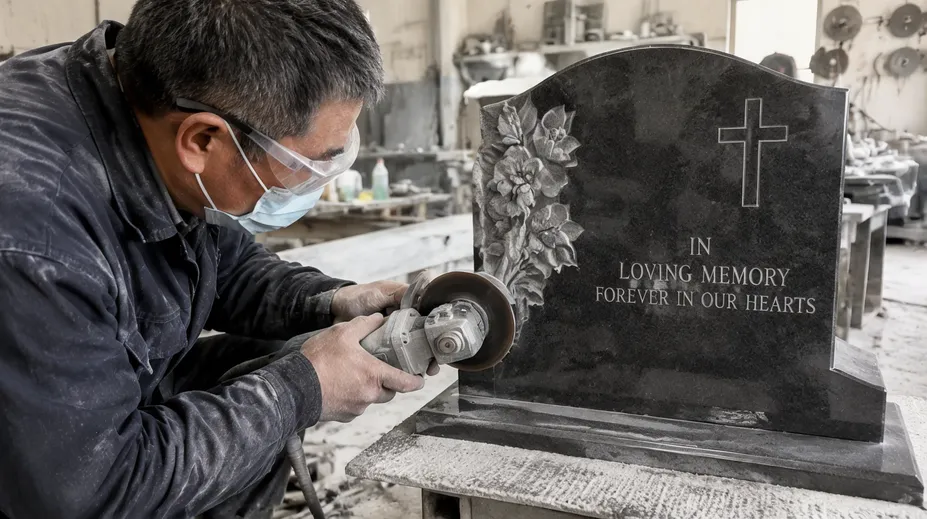
Monument makers, stone artists, and precision fabricators performing detailed cuts — curved profiles, lettering channels, intricate inlays — need narrow kerfs and controllable feed rates.
They buy thin diamond blades in small quantities but consistently, and they're brand-loyal once they find a blade that performs reliably on their specific stone. A good segment for building repeat relationships through local distributors.
Fastest-Growing Channel in Our Export Data
Online tool retailers in Europe listing 115 mm thin-kerf blades as the "professional porcelain tile blade." If you sell through Amazon, eBay, or specialized tool platforms, this is the SKU to lead with.
Tell us your target market segment — we'll recommend the right configuration.
Request Quote for Your SegmentThin Kerf vs. Standard Kerf: Positioning in Your Product Line
A thin diamond blade doesn't replace a standard blade — it serves different buyers and different applications. Here's how they fit together in your catalog:
| Dimension | Thin Diamond Cutting Disc | Standard Diamond Cutting Disc |
|---|---|---|
| Segment thickness | 1.2–1.6 mm | 2.0–3.2 mm |
| Body thickness | 0.8–1.2 mm | 1.4–2.8 mm |
| Best for | Expensive materials, precision cuts, chip-free edges | General construction, aggressive cutting, cost-priority jobs |
| Blade life | Moderate (less diamond mass per segment) | Longer (more material to wear through) |
| Cut quality | Superior — less chipping, narrower kerf | Adequate for structural cuts, rougher edges |
| Typical buyer | Fabricators, tile specialists, precision trades | General contractors, demolition, hardware retail |
| Price positioning | Premium — 30–50% above standard equivalents | Volume commodity pricing |
| Retail margin potential | Higher per-unit margin, moderate volume | Lower per-unit margin, high volume |
- Segment thickness
- 1.2–1.6 mm
- Body thickness
- 0.8–1.2 mm
- Best for
- Expensive materials, precision cuts, chip-free edges
- Blade life
- Moderate (less diamond mass per segment)
- Cut quality
- Superior — less chipping, narrower kerf
- Typical buyer
- Fabricators, tile specialists, precision trades
- Price positioning
- Premium — 30–50% above standard equivalents
- Retail margin potential
- Higher per-unit margin, moderate volume
- Segment thickness
- 2.0–3.2 mm
- Body thickness
- 1.4–2.8 mm
- Best for
- General construction, aggressive cutting, cost-priority jobs
- Blade life
- Longer (more material to wear through)
- Cut quality
- Adequate for structural cuts, rougher edges
- Typical buyer
- General contractors, demolition, hardware retail
- Price positioning
- Volume commodity pricing
- Retail margin potential
- Lower per-unit margin, high volume
Both belong in a complete product line. Standard blades are your volume movers. Thin kerf blades are your margin improvers — fewer units but better per-unit profitability and stickier customers who don't switch suppliers over a 5% price difference.
If you already source standard diamond cutting discs from us, adding thin-kerf variants expands your range without a separate supplier relationship. Same factory, same quality system, same logistics workflow.
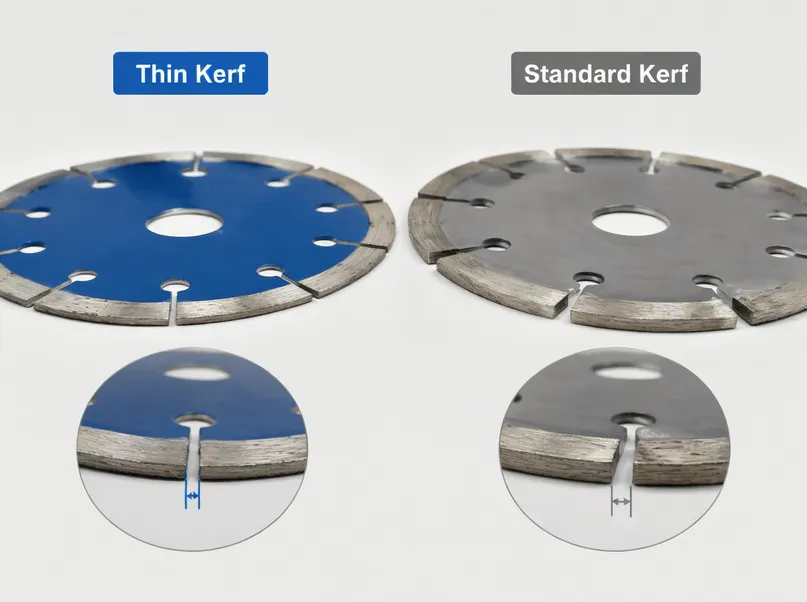
Catalog strategy: Standard blades drive volume and customer acquisition. Thin kerf blades drive per-unit margin and customer retention. Together, they give you a complete answer for any buyer's cutting needs.
Customization Specifics for Thin Diamond Blades
We customize thin diamond cutting discs at every level — but this product has tighter constraints than standard blades due to the thin profile. Here's what's adjustable and what isn't:
Fully Customizable
- Diameter: any size within 105–200 mm (standard tooling available)
- Arbor bore: 16 mm, 20 mm, 22.23 mm, 25.4 mm standard; other sizes possible with custom core tooling
- Rim type: continuous, turbo, fine-segmented — matched to your target material
- Diamond concentration and grit size: adjusted per target stone/tile hardness
- Bond formula: softer or harder matrix depending on whether your market cuts more tile or more granite
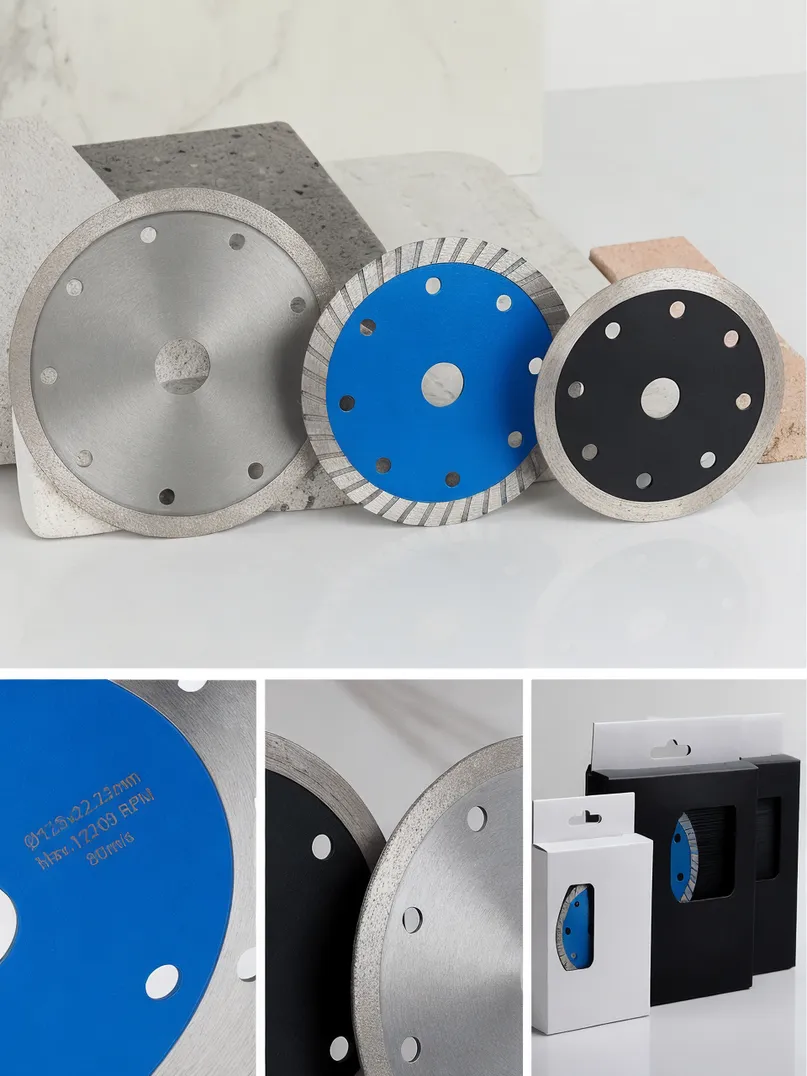
- Core color and branding: laser etching, painted cores in custom colors, your logo and safety markings
- Packaging: blister, card, sleeve, tin, bulk box — your design files, our production
Constrained by Thin-Profile Physics
- Minimum segment thickness: 1.2 mm (below this, segment integrity under lateral load becomes unreliable)
- Maximum diameter for thin kerf: 200 mm (above this, core deflection in unsupported spans becomes problematic without significantly thicker body steel, which defeats the purpose)
- Dry cutting: possible but blade life decreases significantly — we recommend marketing these as wet-cut or dual-use rather than dedicated dry-cut
- Maximum segment height: 10 mm (taller segments on thin cores increase lateral instability)
500 pcs / SKU
Standard formula with custom labeling. 1,000–2,000 pcs/SKU for custom formula + custom packaging (thin-kerf tooling changeover requires more setup precision).
25–35 days
Custom formula and packaging. 15–20 days for repeat orders on established specifications.
7–10 days
Sample sets (5–10 pieces for testing) ship within 7–10 days from stock formulas.
Entering the Thin-Blade Market?
If you're entering the thin-blade market for the first time, we suggest starting with 2–3 SKUs. Test those with your customers, then expand based on what reorders:
Packaging and Freight Considerations for Thin Blades
Thin diamond blades are lighter per piece but more fragile during handling. The thin core and exposed fine-diamond segments are susceptible to edge impact damage that wouldn't affect a thicker blade.
Our Packaging Approach for Thin Kerf Blades
- Individual blade separators (plastic or cardboard dividers) preventing metal-to-metal contact
- VCI anti-corrosion wrapping on each blade
- Foam-lined inner boxes — 20–50 pieces per box depending on diameter
- Reinforced outer cartons with "FRAGILE" and orientation markings
- For retail-ready shipments: individual blister packs or printed sleeves (your design) before boxing
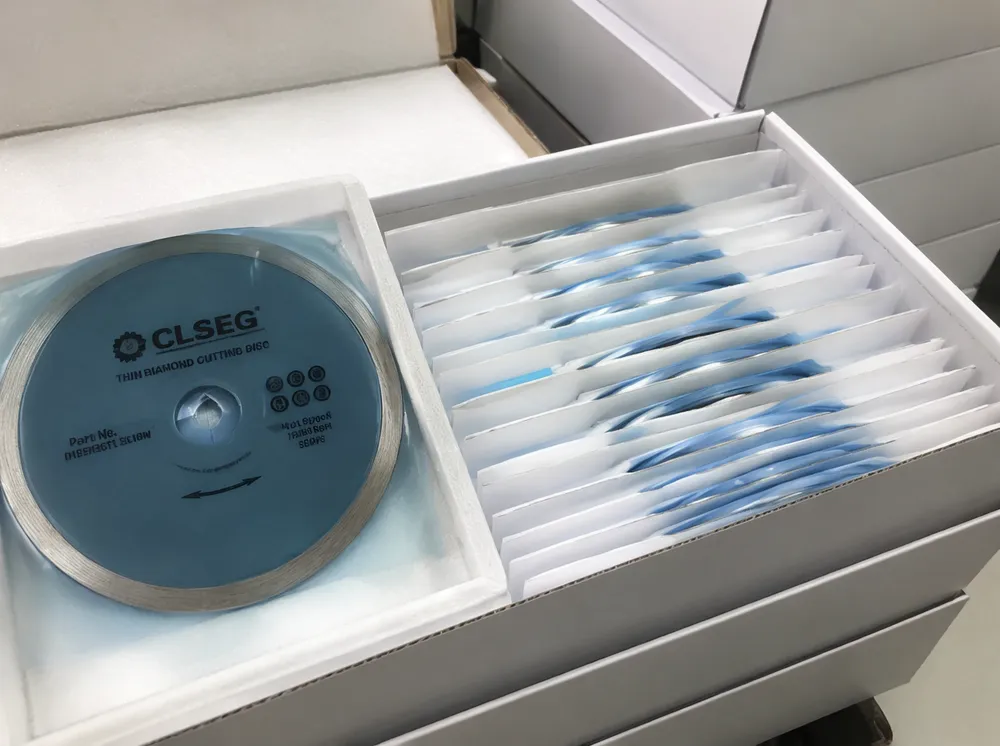
Each thin kerf blade is individually separated and wrapped in VCI anti-corrosion film before placement in foam-lined inner boxes — protecting the fragile fine-diamond segments from edge impact during transit.
Container Loading — Thin Blades Are Lighter, So You Load More Pieces Per Container
| Diameter | Pieces per 20GP (approx.) | Pieces per 40HQ (approx.) |
|---|---|---|
| 105 mm | ~100,000 pcs | ~200,000 pcs |
| 115 mm | ~85,000 pcs | ~170,000 pcs |
| 125 mm | ~65,000 pcs | ~130,000 pcs |
| 200 mm | ~30,000 pcs | ~60,000 pcs |
Higher piece count per container means lower freight cost per blade, which offsets the higher per-unit production cost and protects your landed margin.
Mixed Container Loading Available
We can mix thin-kerf blades with standard-kerf blades in the same container — many distributors consolidate their diamond blade orders across multiple product lines into single shipments. We coordinate the loading plan to prevent damage from weight distribution imbalance.
Frequently Asked Questions
Detailed answers to the engineering and sourcing questions we hear most from distributors and OEM buyers specifying thin kerf diamond blades.
What kerf width should I specify for cutting porcelain tile versus natural granite?
For porcelain tile and engineered quartz, specify 1.2–1.4 mm segment thickness with fine grit (80/100 mesh) and continuous rim. These materials are brittle and chip under excessive cutting force — narrow kerf with fine diamond reduces the per-crystal impact force.
For natural granite (hard, crystalline), 1.4–1.6 mm with medium grit (60/80 mesh) and turbo rim works better — granite can tolerate more aggressive cutting action and the slightly wider kerf improves debris clearance.
Stocking recommendation: If your market cuts both porcelain and granite, stock separate SKUs. A single blade cannot optimize for both extremes — the grit, rim style, and kerf width requirements are fundamentally different.
How long do thin diamond cutting discs last compared to standard-thickness blades?
Blade life is primarily a function of segment height and diamond volume. Thin segments contain less diamond per millimeter of height — typically 20–30% less total diamond mass than an equivalent-diameter standard blade.
In practice, expect 60–75% of the linear cutting life of a standard blade on the same material.
The trade-off is intentional: your end users accept shorter blade life because the material savings per cut exceed the blade cost difference. A thin blade that yields one extra tile per row across a 500-tile job saves far more than the price of a replacement blade.
Can thin diamond blades be used for dry cutting?
They can, but with significant caveats. Thin cores dissipate heat less effectively than thick cores because there's less steel mass acting as a heat sink. Dry cutting accelerates thermal fatigue, which on a thin core means shorter life and higher risk of core warping.
We manufacture thin blades with laser-welded joints (more heat-resistant than HF welding) specifically so occasional dry use doesn't immediately compromise the blade.
Our recommendation:
- Market these as wet-cut primary, dry-cut capable for short intermittent use
- If your customers genuinely need dedicated dry cutting, steer them toward our dry cut diamond blades in standard thickness
What is the minimum order quantity for private-label thin diamond blades?
500 pieces per SKU for existing formula + custom label/packaging. For a new formula (custom bond hardness, diamond spec) with new packaging design, MOQ is 1,000–2,000 per SKU.
First-time buyers often start with 200–500 pieces in neutral packaging for market testing before committing to branded runs. We support that approach — it reduces your risk while you validate demand.
Why do some thin diamond blades wobble or cut crooked?
Three causes, all manufacturing-related:
- 1 Low-quality core steel that doesn't hold flatness under operational centrifugal force.
- 2 Poor tensioning — the core wasn't properly stress-relieved and trued after segment welding.
- 3 Excessive runout from the factory — segments aren't perfectly concentric with the arbor bore.
We address all three: 65Mn spring steel cores, post-weld CNC tensioning, and ≤0.15 mm runout tolerance on every thin blade.
If you've had crooked-cut complaints from previous suppliers, ask for their runout spec. If they can't give you one, that's your answer.
Thin kerf disc vs. electroplated blade — which is better for tile cutting?
Different tools for different cutting profiles.
Diamond-metal composite segment wears gradually, exposing fresh diamond over the blade's life — lasts for hundreds or thousands of cuts.
Best for: High-volume tile cutting (fabrication shops, production lines). The economical choice.
Single layer of diamond bonded to the surface — extremely thin profile and very clean cuts, but once the diamond layer wears through, the blade is finished (typically 50–200 cuts depending on material hardness).
Best for: Occasional ultra-precision work on fragile materials (glass mosaic, thin stone veneer).
Stock both if your market demands both — they serve different buyer needs within the same general application space. Explore our electroplated blades →
Start Sourcing Thin Diamond Cutting Discs
You know your market better than we do — what materials your customers cut, what sizes they prefer, what price point moves volume. Give us those details and we'll handle the technical side: formula selection, segment geometry, production, and testing.
What makes a first conversation productive:
- Target material — porcelain tile? granite? engineered quartz? mixed?
- Preferred diameters and arbor sizes for your market
- Approximate volume — trial order or ongoing supply?
- OEM packaging needs — or start with CLSEG-branded stock?
Typical First-Order Path
Most new thin-blade partnerships begin with a 200–500 piece sample run across 2–3 specifications. You test with your customers, confirm edge quality and blade life match expectations, then we scale into branded production runs. No volume commitment until you've validated.
Reach Out Directly
We typically respond within 24 hours with a formula recommendation, per-unit pricing at your stated volume, and sample logistics.