

Stone Surface Grinding Tools Frankfurt · Fickert · Resin
Specialized stone surface grinding tools sintered and formulated in-house — covering every finishing stage from coarse honing to mirror polish.
Frankfurt abrasives, fickert grinding blocks, and resin-bonded polishing tools for automated production lines and hand-finishing operations. Formula-matched to your stone type, packaged under your brand if needed.
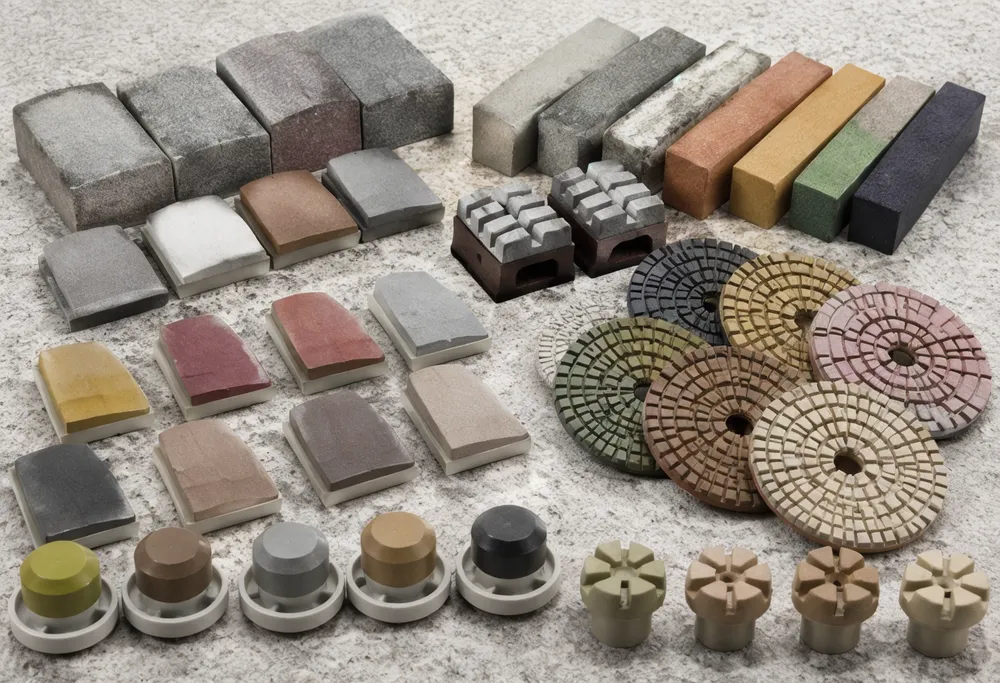
What These Tools Are and Where They Fit in Your Processing Chain
Saw Blade
Cuts the slab from the block. Structural sizing work — determines dimensions.
Cup Wheel
Levels the surface and corrects flatness after initial cutting. Removes saw marks.
Surface Grinding Tools
Takes the surface from rough-ground to calibrated to full mirror polish. The finishing end of the chain.
Stone surface grinding tools are the finishing end of the diamond tool chain — they come after the saw blade cuts the slab and after the cup wheel does its leveling work. This product group covers Frankfurt abrasives, fickert grinding blocks, and resin-bonded polishing tools: the three tool types that take a stone surface from rough-ground to calibrated to full mirror polish.
If you're sourcing for fabrication shops, stone tile producers, or floor processing operations, this is the category that determines the surface finish your end customer actually sees and touches. The saw blade and cup wheel do structural work; these tools deliver the commercial result — the gloss reading, the flatness tolerance, the surface texture that justifies a premium price on countertops or large-format floor tiles.
We manufacture these tools at the same Ezhou facility where we produce our full grinding tool range, using the same in-house sintering furnaces and formula R&D infrastructure. The diamond grinding tools category covers the full product line context — this page focuses on the surface finishing group specifically.
Why this stage matters commercially
The saw blade and cup wheel do structural work. Surface grinding tools deliver the commercial result — the gloss reading, the flatness tolerance, the surface texture that justifies a premium price on countertops or large-format floor tiles.
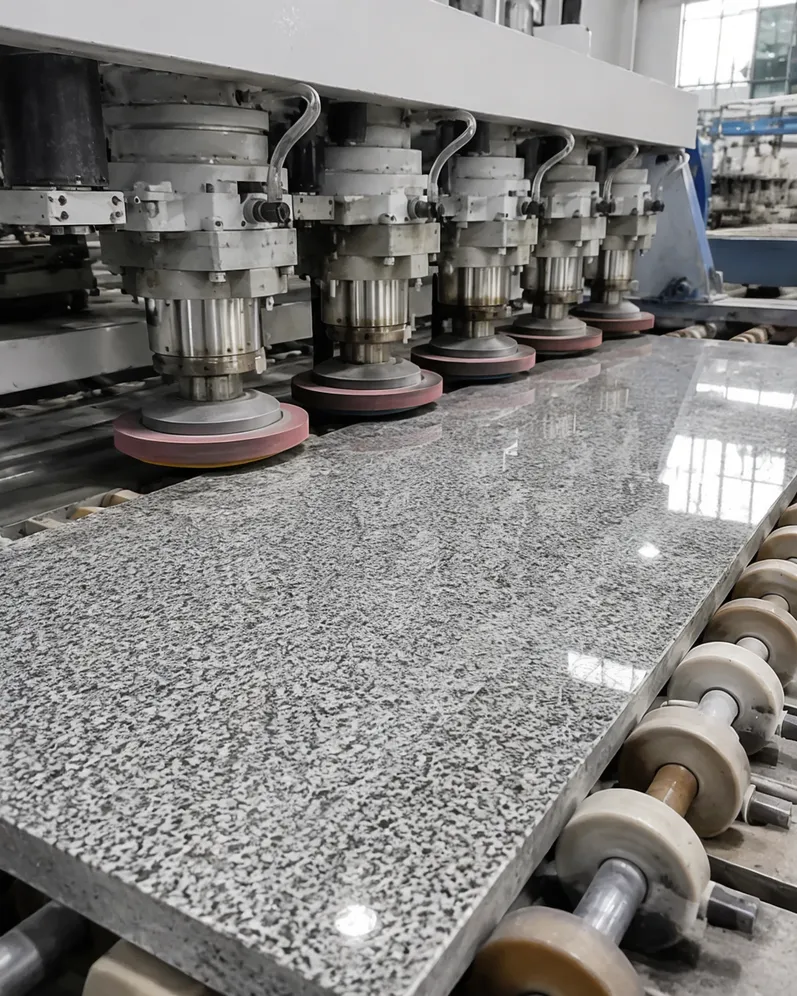
The Three Tool Types in This Group
Frankfurt Abrasives
Modular abrasive segments for automated polishing lines. Industry-standard mounting system for continuous production.
Fickert Grinding Blocks
Large-format abrasive blocks for high-throughput calibrating and honing on slab polishing lines.
Resin Polishing Tools
Resin-bonded diamond and oxide tools for final gloss stages — hand pads through automated heads.
Related Grinding Tools
Tool Types, Specifications, and What Each One Does
Each tool format serves a specific stage in the surface refinement process. Specifications here reflect production-grade formats used across commercial stone processing operations.
Frankfurt Abrasives (Frankfurt Grinding Stones)
Frankfurt abrasives are calibration and honing tools mounted to automated multi-head polishing machines — the standard format for stone tile production lines and large slab processing operations. They run in sequences, typically from coarse through fine, achieving the progressive surface refinement that gets you from saw-cut roughness to a honed or polished finish.
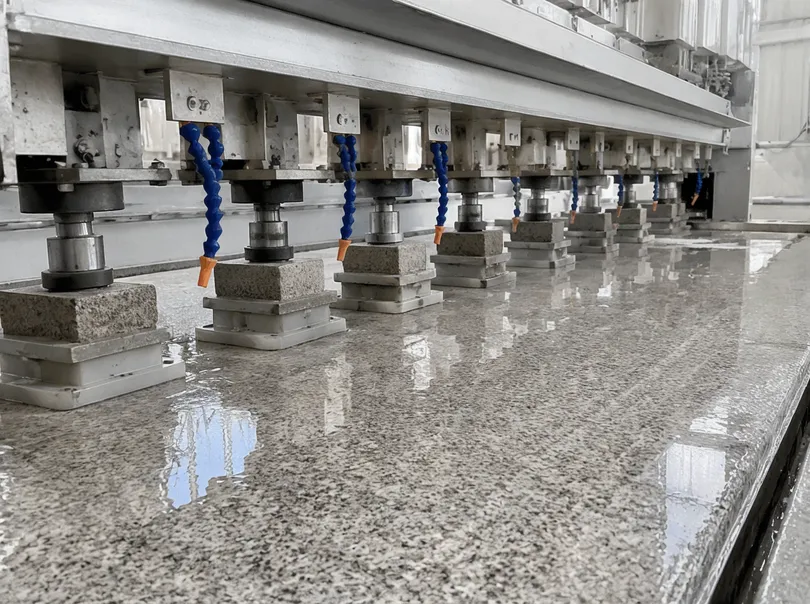
Frankfurt Abrasive Specifications
| Standard dimensions | 105 × 55 × 50 mm (Frankfurt standard profile) |
| Grit sequence | 36, 60, 120, 220, 400, 800, 1500, 3000 |
| Bond type | Metal-bonded (coarse through medium), resin-bonded (fine through polish) |
| Base material | Aluminum alloy or steel backer with Frankfurt dovetail slot |
| Compatible machines | Standard Frankfurt-head calibration lines, multi-head polishing bridges |
| Application materials | Granite, marble, limestone, travertine, engineered quartz |
Coarse grades handle the calibration work — leveling slab thickness, removing saw marks. These do the heavy stock removal that brings slabs to uniform gauge.
Medium grades refine the surface, removing scratches left by calibration passes and preparing the stone for the polishing sequence.
Fine through polishing grades deliver the commercial finish. This is where the reflective gloss or honed matte surfaces your buyers sell are created.
Stocking and Sequence Logic
The grit sequence you stock determines what surface finishes your customers can achieve. Most production lines run the full sequence; if your buyers run specialized lines, they may pull only a subset of grits.
We see a lot of marble-focused operations that skip the coarser grits entirely and start at 220 — the saw marks on soft marble aren't deep enough to need heavy stock removal.
Consumption and Reorder Pattern
A single mid-size stone tile plant running two production lines can consume 300–600 Frankfurt abrasives per month across all grits. That reorder cycle is monthly and formula-dependent.
Once you're specified into a plant's line, the switching cost is high. This is among the stickiest SKUs in the grinding tool category.
Fickert Grinding Blocks (Fickert Abrasives)
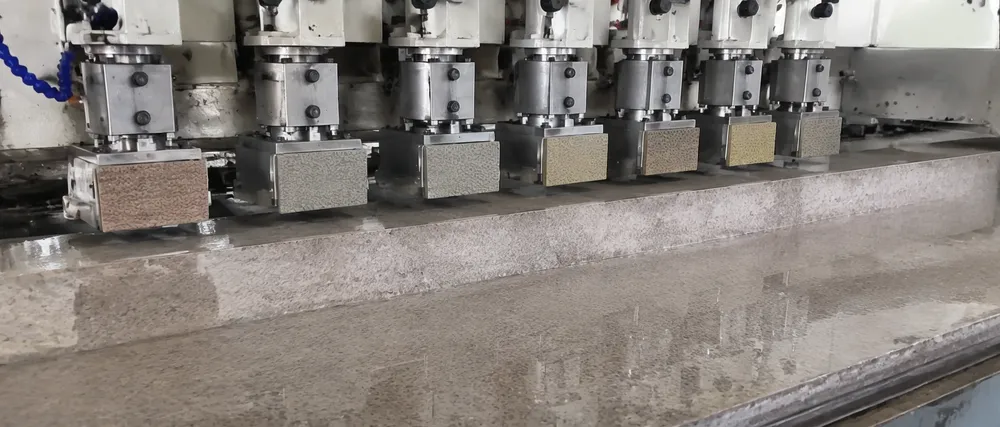
Fickert blocks use a rectangular body with a fickert attachment standard — a different mounting format optimized for certain calibration machine head configurations. They're common on European and Asian-manufactured calibration lines and serve the same progressive honing function as Frankfurt abrasives but with different machine compatibility.
The practical difference for your procurement: if your buyers run Breton, Simec, or other European-spec calibration equipment, they likely need Fickert format. If they run certain Asian-brand lines, Frankfurt is more common. Stocking both formats protects your ability to supply either machine type — and prevents a single machine-compatibility mismatch from losing you a large account.
We produce Frankfurt and Fickert in the same formulas — bond hardness, diamond concentration, and grit sizing are matched across both formats so surface finish results are consistent regardless of which machine your buyer runs.
Fickert Block Specifications
| Standard Dimensions | 140 × 55 × 50 mm (Fickert standard profile) |
| Grit Range | 36 through 3000 |
| Bond Type | Metal-bonded (coarse/medium), resin-bonded (fine/polish) |
| Attachment | Fickert slot standard |
| Application Materials | Granite, marble, quartzite, engineered stone, terrazzo |
Resin-Bonded Polishing Tools
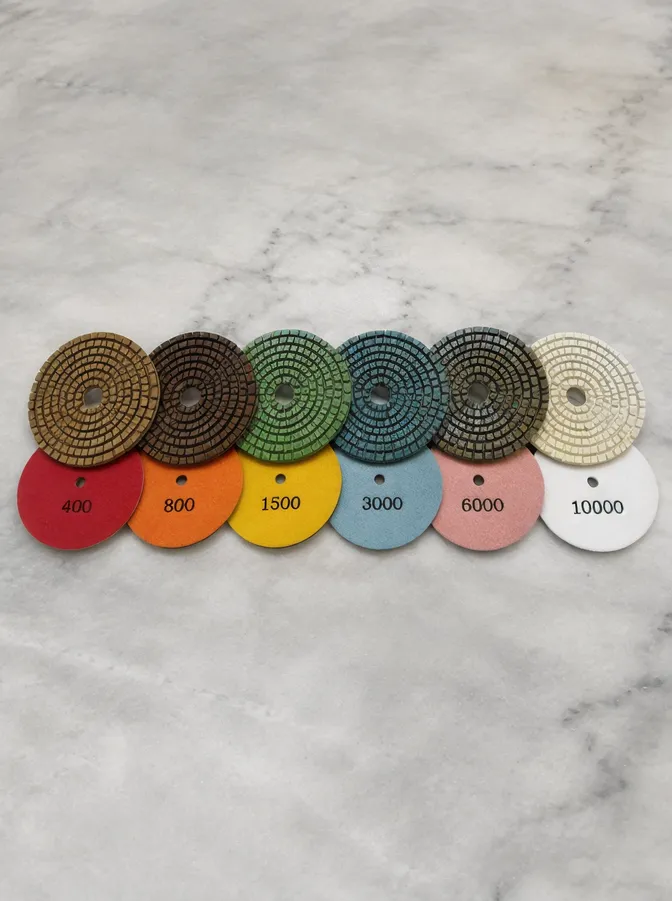
Resin-bonded polishing tools handle the final finishing stages where metal-bonded tools can't go — achieving surface gloss readings above 80 GU (gloss units) requires the finer, more flexible abrasive action that resin bond provides. These include resin Frankfurt abrasives for automated lines and hand-held resin pads for manual and semi-automated polishing.
Resin Polishing Tool Specifications
| Available Formats | Frankfurt (105 × 55 × 50 mm), fickert, hand-held disc (80 mm, 100 mm) |
| Grit Range | 400, 800, 1500, 3000, 6000, 10000 |
| Bond Type | Resin-bonded (phenolic and epoxy formulations) |
| Backer | Velcro/hook-and-loop for hand-held; rigid backer for machine formats |
| Application | Marble, limestone, travertine (primary); granite polishing (with correct grit sequence) |
| Surface Finish Output | Honed (400–800), semi-polished (1500–3000), mirror polish (6000+) |
Distributor Margin Note
Resin tools wear faster than metal-bonded tools under load — that's a physics constraint, not a quality issue. The trade-off is that they produce the surface finishes that justify price premiums on finished stone products.
A countertop fabricator selling a "leathered" or "mirror-polished" finish to their retail customer is generating that value with resin tools at the end of their process. Your margin on resin polishing tools tends to be better than on coarse grinding tools precisely because they're consumable at higher rates and buyers are less price-sensitive on finish quality.
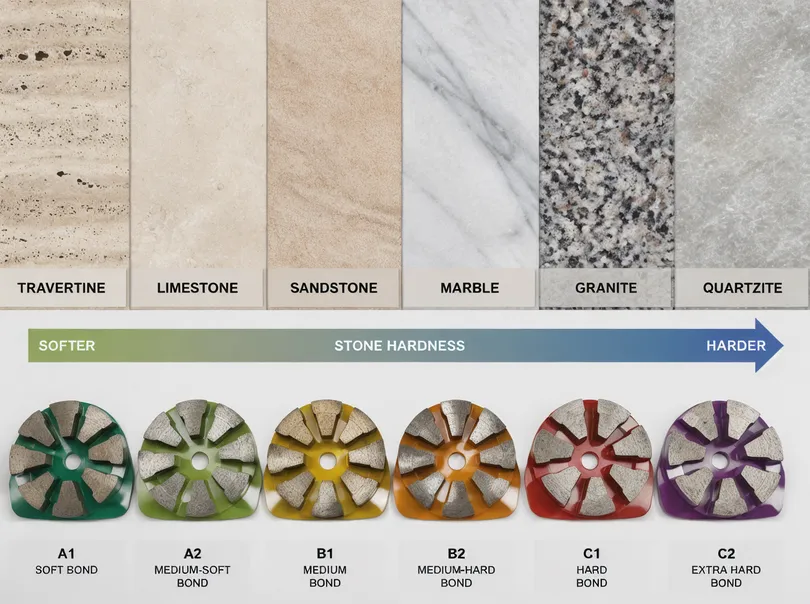
Bond Formula Matching: Why Your Stone Type Determines Your Tool Selection
This is where most buyers either get the specification right and see excellent tool life, or get it wrong and end up with tools that either glaze over or erode too fast. The diamond grinding tools category page covers the general bond hardness logic — here's how it applies specifically to surface finishing tools:
Marble & Soft Calcite Stones
These require harder bond formulas in the metal-bonded stages. Marble is soft enough that a loose bond erodes too quickly, wasting diamond before it's fully used.
We run our marble Frankfurt abrasives at a harder matrix than our granite equivalents — same grit, different sintering parameters and bond composition.
Granite & Hard Quartzite
Softer bonds in both metal and resin stages. Hard stone doesn't abrade the bond matrix, so you need a bond that self-erodes to keep exposing fresh diamond.
A glazed granite polishing tool is typically a bond-hardness mismatch, not a quality defect in the tool itself.
Engineered Quartz & Composite Materials
These are abrasive at the resin/filler level but not especially hard — a medium bond usually works, but the formula needs to handle silica dust loading.
We've developed specific Frankfurt and fickert compositions for engineered quartz lines that resist clogging better than standard marble formulas.
Travertine & Limestone
Often porous and filled before polishing. The filler material (typically epoxy or cement-based) is harder than the stone itself, so the abrasive encounters a mixed hardness surface.
We adjust the diamond grit distribution in the pressing stage to handle this — tighter grit size distribution means more consistent scratch patterns across both the stone matrix and the filler.
Specification Guidance
When you send an inquiry, tell us the stone type your buyers process. We'll specify the correct formula, not just the grit number.
The bond-stone relationship is the single largest factor in tool performance. Getting this right eliminates premature glazing and excessive wear — the two most common complaints from end users running mismatched tools.
Production Line Supply: Volume, Consistency, and Reorder Reliability
Stone tile plants and slab processing operations are the highest-volume buyers of Frankfurt abrasives and fickert blocks — and their defining requirement is not low unit price, it's batch-to-batch consistency.
Why Consistency Outranks Unit Price
A production line is calibrated around tool performance. Feed rate, water pressure, and head pressure settings are dialed in for a specific tool's cutting speed. When a new batch of abrasives performs differently — harder bond means slower cut, softer bond means faster wear — operators have to re-tune the entire line.
That re-tuning takes time, wastes material, and introduces surface quality variance. Plants running three shifts don't have the downtime to babysit inconsistent tools.
Sintering Parameter Precision
- Programmable furnaces hold temperature to ±5°C across the sintering cycle
- Every batch of metal-bonded tools gets Rockwell hardness testing before release
- Acceptable variance: ±2 HRB — batches outside spec don't ship
- Resin tools go through density testing and flexural strength checks on sample pieces from each mold charge
The Business Result
When your plant customer reorders, the new batch performs identically to the previous one. You don't get a call saying "these aren't working like the last ones."
In this segment, no-complaint reorders are the business model — the account stays until something goes wrong, so making sure nothing goes wrong is the entire game.
Capacity for Seasonal Demand Spikes
Our 8 production lines and 3,000,000-piece annual capacity mean your reorders ship on schedule, even during peak construction and renovation seasons when demand spikes.
We've seen Q3 demand from Southeast Asian distributors run 40–60% above Q1 levels some years — we hold safety stock on fast-moving SKUs specifically to buffer against seasonal surges.
Need production-line volume supply?
Tell us your monthly consumption, stone type, and grit sequence — we'll quote with batch consistency specs included.
Application Segments: Where Your Buyers Consume These Tools
Stone Tile & Slab Manufacturing
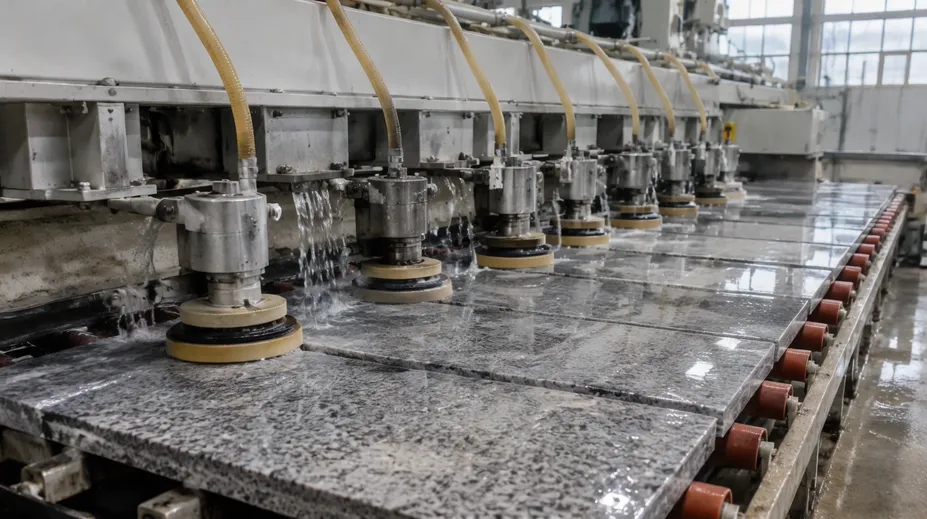
The highest-volume, most consistent segment. A plant producing granite or marble tiles at commercial scale runs Frankfurt or fickert abrasives through multiple head positions continuously. These operations buy on monthly contracts, are formula-specific, and don't switch suppliers frequently once a tool is working.
Margins are moderate per piece but volume is predictable and reorder is essentially automatic.
If you're building a distribution business in this segment, getting specified into two or three plants gives you a stable revenue base.
Countertop Fabrication Shops
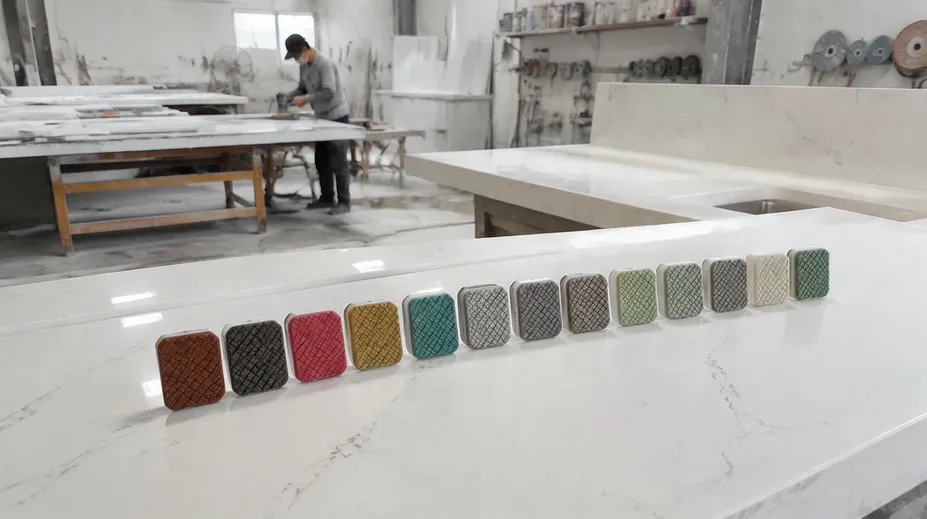
Smaller operations, higher per-unit value focus. A fabricator producing custom countertops for kitchen and bath installations needs a full grit sequence — from leveling through mirror polish — to serve their retail customer base.
Typically 20–60 Frankfurt abrasives per month at a mid-size shop, but they buy multiple grit grades simultaneously and reorder frequently.
The selling point for this segment is surface finish quality and consistency across grit stages — not price.
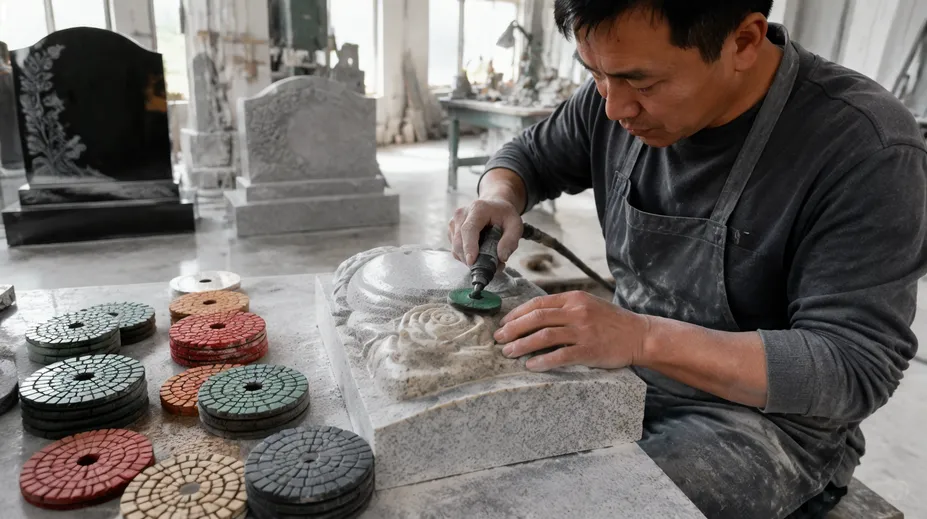
Monument & Carved Stone Workshops
Hand-finished stone carving, memorial markers, architectural stone detailing. These operations use hand-held resin pads and smaller-format polishing tools.
Order quantities are lower, but product mix is wider — they need multiple grit grades and occasionally odd dimensions for specific carving geometries.
Specialty distributors serving this segment carry a wider SKU range and earn better margins than commodity distributors.
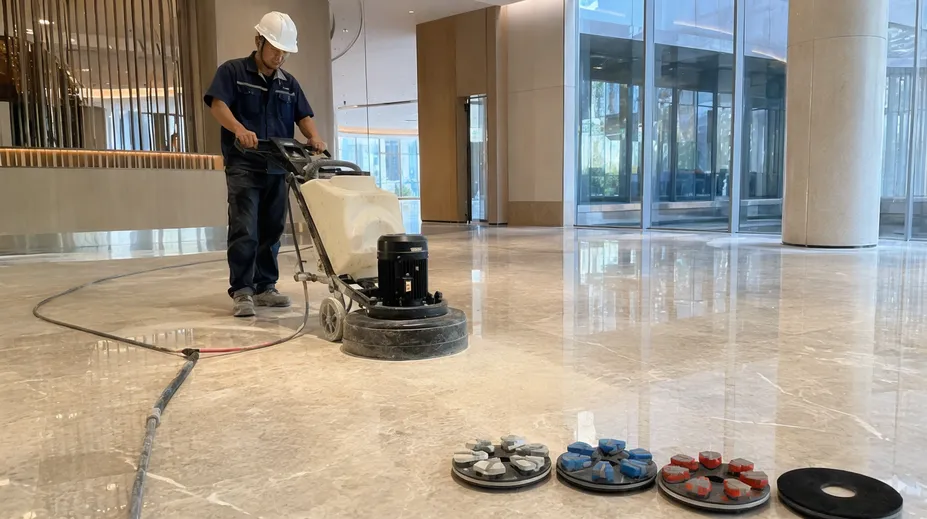
Floor Restoration Contractors
Natural stone floor polishing, terrazzo restoration, honed-finish maintenance on large commercial floors. Contractors in this segment use Frankfurt-format tools on walk-behind polishing machines and resin pads for detail work.
A commercial floor restoration project (hotel lobby, airport concourse, museum) can run 100–300 polishing tools per project.
Contractor-focused distributors with fast local delivery can command premium pricing here — job sites can't wait three weeks for a reorder.
Customization Options for OEM and Private-Label Buyers
Our stone surface grinding tools are available as OEM/private-label production — same process as our full grinding tool range, covered in more detail on the diamond grinding tools page. For surface finishing tools specifically:
| Customization Parameter | Available Options |
|---|---|
| Dimensions | Standard Frankfurt (105 × 55 × 50 mm), standard Fickert (140 × 55 × 50 mm), or custom per drawing |
| Grit sequence | Any subset of our available grit grades; custom grit sequences designed per application |
| Bond formula | Formula-matched to your stone type; can match competitor samples |
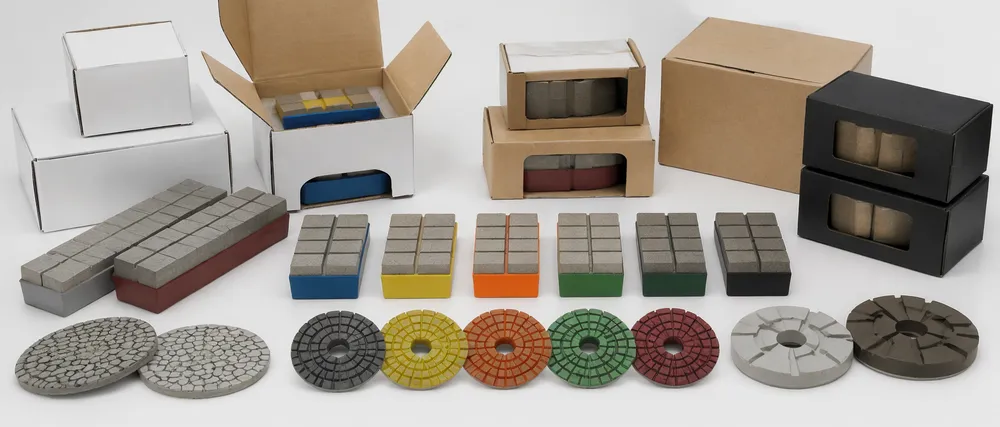
| Packaging | Your brand, your colors, your label format; retail-ready or bulk industrial packaging |
| Grit marking | Custom color-coding per grit grade for easy identification on production lines |
| MOQ for OEM | 200–500 pieces per SKU depending on tool type; lower for resin-bonded formats |
Custom Dimensions
Custom dimensions are straightforward for Frankfurt and fickert formats because the segment geometry is pressed in molds — if you need a non-standard body size for a specific machine, we build the mold and amortize the cost across your first production run.
The tooling cost is modest compared to large-diameter saw blade tooling. We've produced several non-standard Frankfurt profiles for buyers whose machines use proprietary head dimensions — it's more common than you'd expect, especially with older or Asian-market calibration equipment.
Formula Matching from Competitor Sample
Send us the sample, we test it, we produce a matched version. If you're switching suppliers from an existing tool and want continuity of performance, this is the standard onboarding process.
Typical turnaround from sample receipt to matched test pieces: 15–20 days
Certifications and Import Documentation
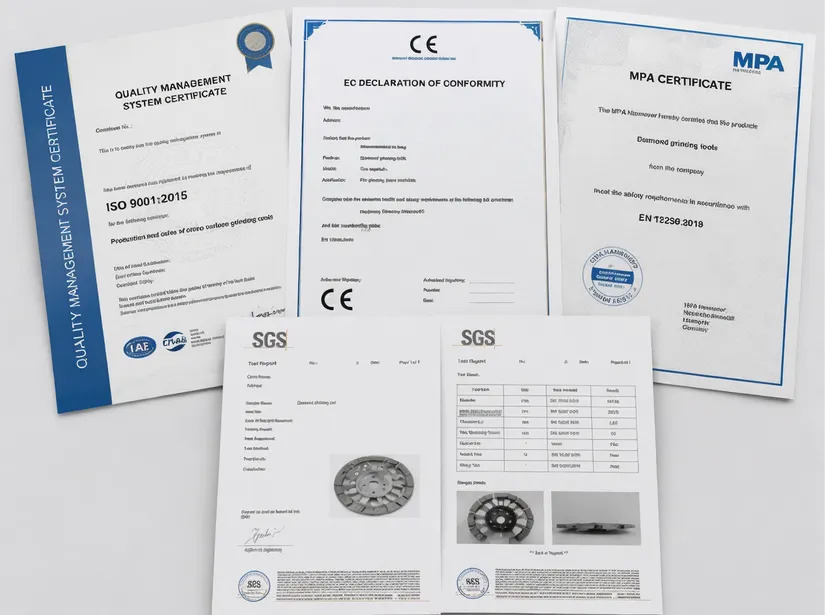
Stone surface grinding tools ship under the same certification umbrella as our full product range:
ISO 9001:2015
Quality management system, third-party audited annually. Covers our entire manufacturing process from raw material intake through final inspection and packaging.
CE Marking
Conformity with EU safety and health requirements for abrasive tools. Required for legal market access throughout the European Economic Area.
MPA Certification
Safety certification for abrasive tools required by many European distributors and end-users. The certification most frequently requested by downstream customers and insurance providers.
SGS Testing
Independent third-party verification of material composition and performance. Provides an additional layer of documentation beyond manufacturer self-declaration.
For EU Imports Specifically
The MPA certification is the one your downstream customers and insurance providers will ask for. It satisfies the abrasive tool safety documentation requirements without requiring you to arrange separate testing on arrival. We provide current certificate copies and SGS test reports with your order documentation — no need to chase these post-shipment.
Documentation Included With Orders
- Current ISO 9001:2015 certificate copies
- CE Declaration of Conformity
- MPA safety certification documents
- SGS test reports (material & performance)
- No post-shipment documentation chasing required
Frequently Asked Questions
What is the difference between Frankfurt abrasives and fickert grinding blocks?
Both are calibration and polishing tool formats used on automated stone processing machines — the difference is the attachment geometry and the machine compatibility.
Use a dovetail slot that fits standard Frankfurt-head machines, common on a wide range of Asian and European equipment.
Use a rectangular slot attachment standard more common on Breton and other European-spec calibration lines.
The abrasive compound, grit grades, and surface finish outputs are equivalent — the format choice is driven by your buyer's machine type, not by performance differences between the two standards.
How many grit grades do I need to stock to cover a full stone polishing sequence?
For a complete metal-to-resin sequence on marble or granite: typically 7–9 grit grades.
Working Sequence Example
Metal-Bonded Calibration
Coarse leveling through calibration
Resin Polishing
Polishing through mirror-finish
Production lines use all grades simultaneously on different head positions. If you're supplying a single fabrication shop rather than a full production line, they may need only a subset depending on which finish grades they sell.
Buyer guidance: Start by asking what surface finish their customers request (honed, semi-polished, mirror) and work backwards from there to determine which grit grades they actually consume.
What causes Frankfurt abrasives to wear unevenly across the width?
Uneven wear across the 55 mm width is almost always a machine alignment issue rather than a tool defect — if the calibration head isn't parallel to the slab surface, one edge of the Frankfurt contacts with more pressure than the other, creating faster wear on that side. That said, it can also indicate inconsistent diamond distribution within the pressed segment.
Our segments are pressed with automated multi-point compression to ensure uniform density across the full cross-section.
Troubleshooting tip: If your customer is seeing consistent uneven wear across multiple pieces from the same batch, send us a photo — we can usually identify whether the root cause is machine alignment or segment consistency from the wear pattern geometry.
Can diamond surface grinding tools be used on engineered quartz?
Yes, but engineered quartz is more abrasive than natural stone and requires specific bond formulas. The resin filler in engineered quartz is softer than quartz aggregate, but the composite material overall generates more abrasive wear on the bond matrix than marble or granite of equivalent hardness.
We formulate specific compositions for engineered quartz applications — higher diamond concentration to compensate for faster matrix wear, and adjusted grit distribution to handle the mixed-hardness surface.
Important: Specify engineered quartz when ordering so we don't send you a marble formula.
What is the minimum order for stone surface grinding tools?
200–500 pieces per SKU depending on tool type and configuration.
200 pcs minimum
Standard Frankfurt abrasives and fickert blocks in common grit grades (120, 220, 400, 800) — lower setup complexity.
300–500 pcs minimum
Custom formulas, non-standard dimensions, or less common grit grades — mold setup and formula calibration required.
For reorders on established SKUs, we produce to the quantity that keeps your stock levels healthy — no reorder minimum.
How do I know which bond hardness to specify for my customer's stone type?
Send us the stone type (or quarry origin if you know it) and the processing stage. We'll match from our formula database.
General Guide
Soft stones (marble, limestone) → harder bond formulas to prevent premature matrix erosion
Hard stones (granite) → softer bond formulas so the matrix self-erodes to continuously expose fresh diamond
Getting this backwards is the most common cause of short tool life or glazing.
If you're unsure, we can send a mixed-formula sample set for your customer to test — we've done this for distributors entering new stone-type markets, and it usually resolves the selection question definitively within one test run.
Talk to Us About Your Finishing Tool Requirements
If you're sourcing stone surface grinding tools for distribution, production line supply, or OEM production, the fastest way to move forward is to tell us your application.
What We Need From You
- Stone type you're processing or your customers process
- Processing stage (rough grinding, honing, polishing, or full sequence)
- Machine format — Frankfurt or Fickert
- Approximate monthly volume
We'll recommend the correct formula and grit sequence, quote your volume, and arrange samples if needed.
How New Accounts Typically Start
Most new distribution accounts start with a trial order of 4–6 SKUs across the key grit grades — enough to test market response with your existing customers before committing to full container volumes.
We'll suggest the starting SKU mix based on what's moving for our existing distributors in your region.
Direct Contact
Explore More Diamond Grinding Tools