

Diamond Grinding Tools Engineered & Sintered In-House
Four product lines — grinding wheels, grinding discs, cup wheels, and surface grinding tools — covering calibration, polishing, leveling, and edge work across the stone processing chain.
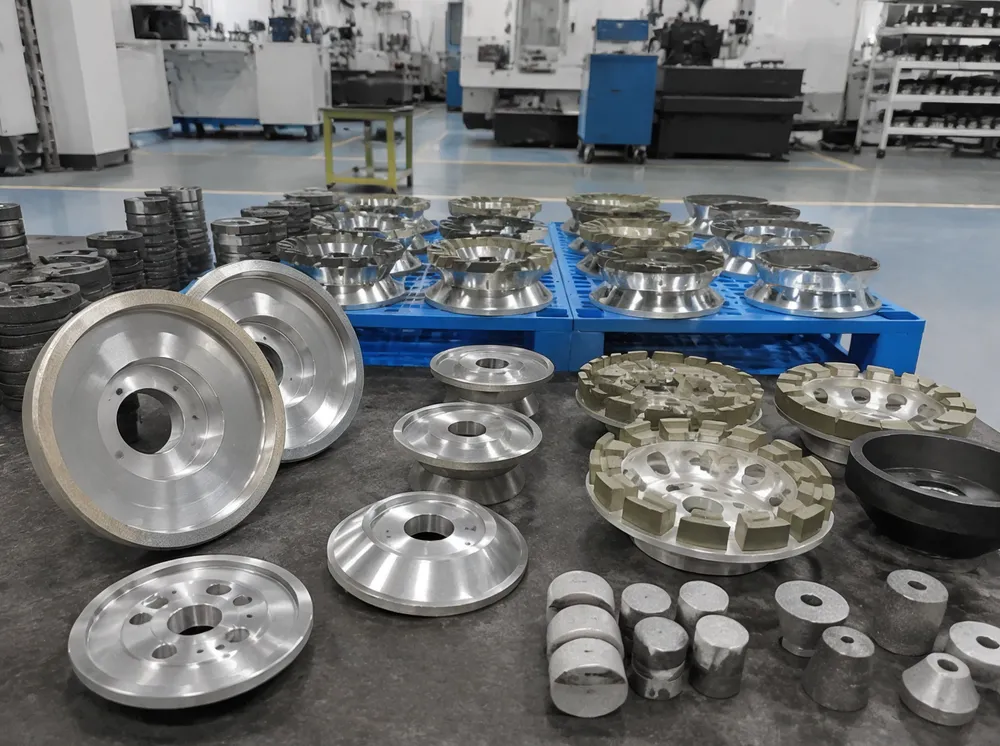
We Make the Abrasives, Not Just Assemble Them
CLSEG manufactures diamond grinding tools at the same facility where we produce our saw blades and segments — the 14,100 m² plant in Ezhou, Hubei. Same raw material sourcing, same sintering furnaces, same QC protocols. The grinding tool line exists because our buyers asked for it: if you're already buying saw blades from us for slab cutting, you need grinding tools for calibration and surface finishing. Consolidating both under one supplier simplifies your procurement and keeps your formula consistency across the processing chain.
We control every step that determines grinding performance — diamond grit selection, bond formulation, segment pressing, sintering, and final attachment to the tool body. When you need a grinding wheel optimized for a specific stone hardness or a cup wheel with a particular aggressiveness level for your floor grinders, we adjust at the formula level, not by switching pre-made components from a third party. That's the difference between a diamond grinding tool manufacturer and a tool assembler.
Our grinding tool line started around 2009, when several Southeast Asian buyers running our saw blades on their bridge saws needed matching calibration wheels — and were tired of sourcing them separately from a different factory with a different diamond grade.
What We Control In-House
- Diamond grit selection & grading
- Bond formulation (metal & resin)
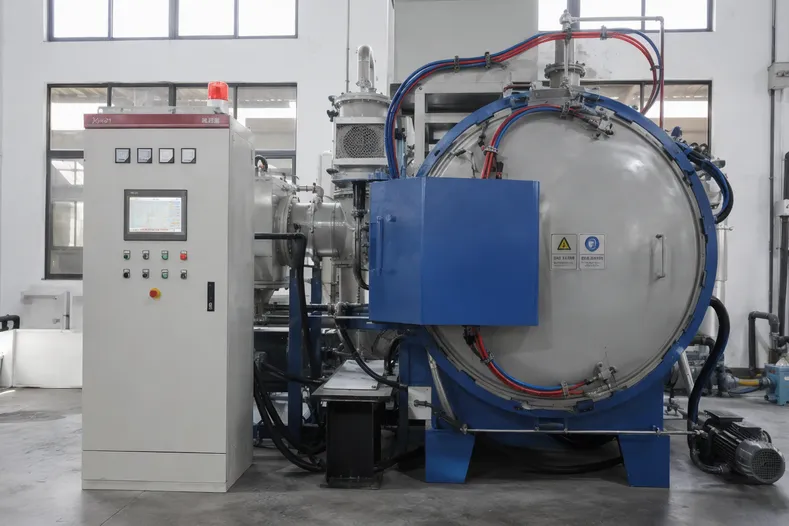
- Segment pressing & cold/hot sintering
- Final attachment to tool body
- Formula-level adjustments per application
Product Line: Four Categories, One Sintering Source
Each product page has full specification tables, diameter ranges, grit options, and application guidance. Start there if you already know what you need.
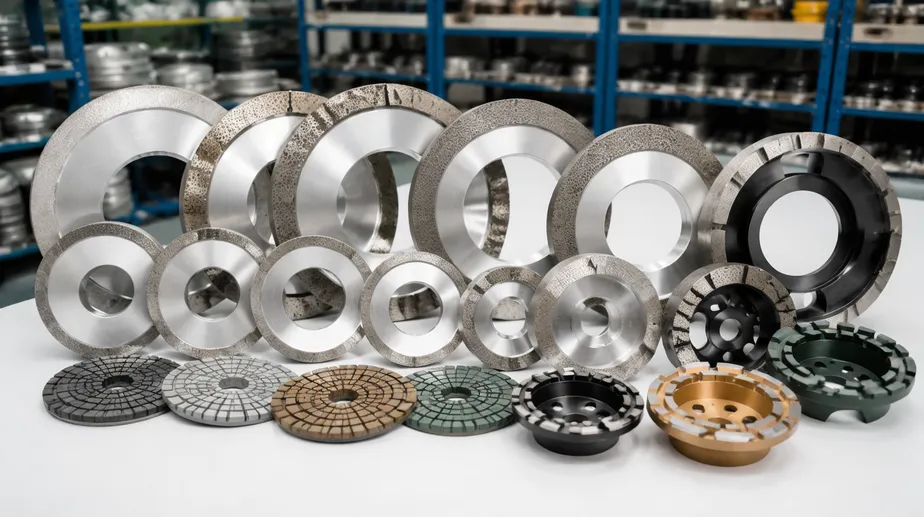
Diamond Grinding Wheels
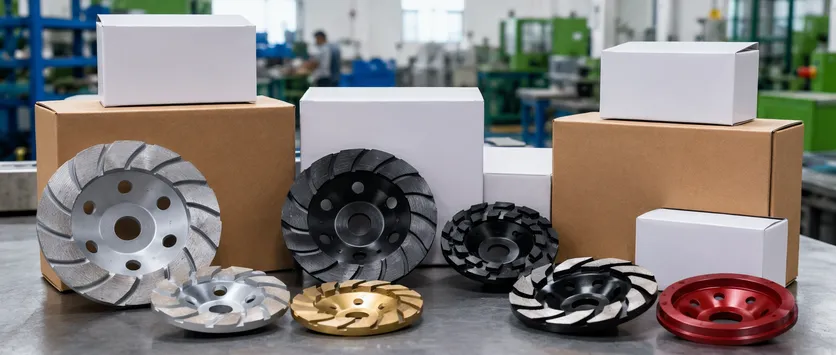
Standard and segmented grinding wheels for stone calibration and edge profiling. Available in diameters from 100 mm to 350 mm, with bond hardness options matched to granite, marble, engineered stone, and concrete. These are your workhorses for consistent thickness control on slabs after primary cutting.
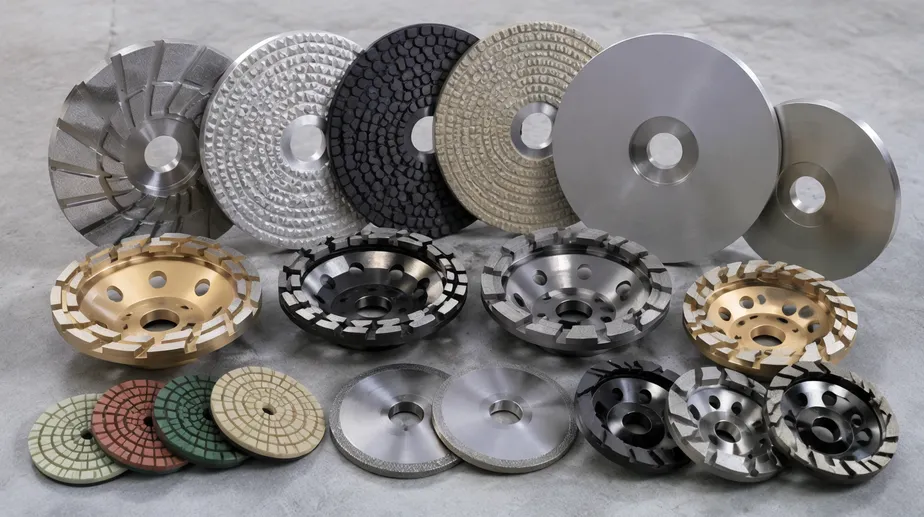
Diamond Grinding Discs
Flat grinding discs for surface preparation, coating removal, and leveling work. Metal-bonded and resin-bonded configurations, with grit grades from coarse (30/40) through fine (200/400) for sequential grinding steps. Suitable for hand-held grinders and floor machines.
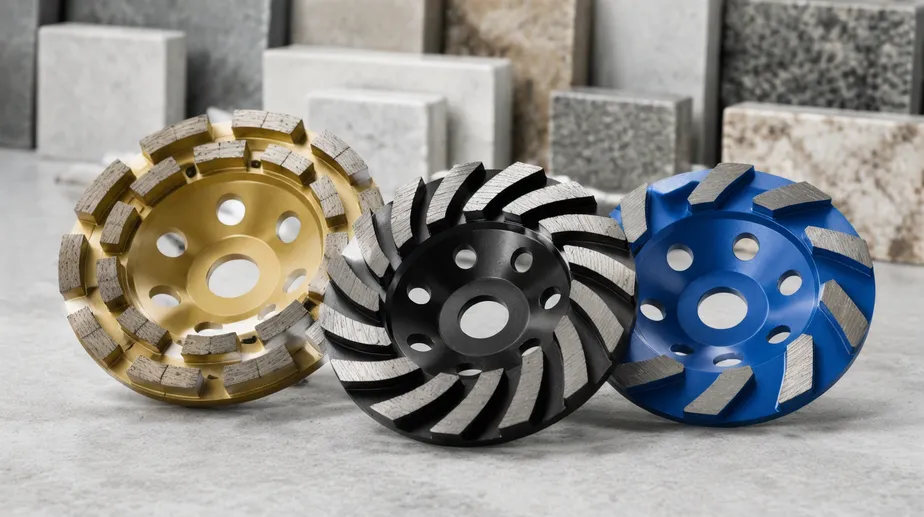
Cup Grinding Wheels
Single-row and double-row cup wheels for aggressive material removal on concrete, granite, and stone surfaces. Turbo-segment and arrow-segment geometries available — the segment pattern determines chip clearance speed and surface finish quality. These move material fast when you need to level, shape, or prepare a substrate.
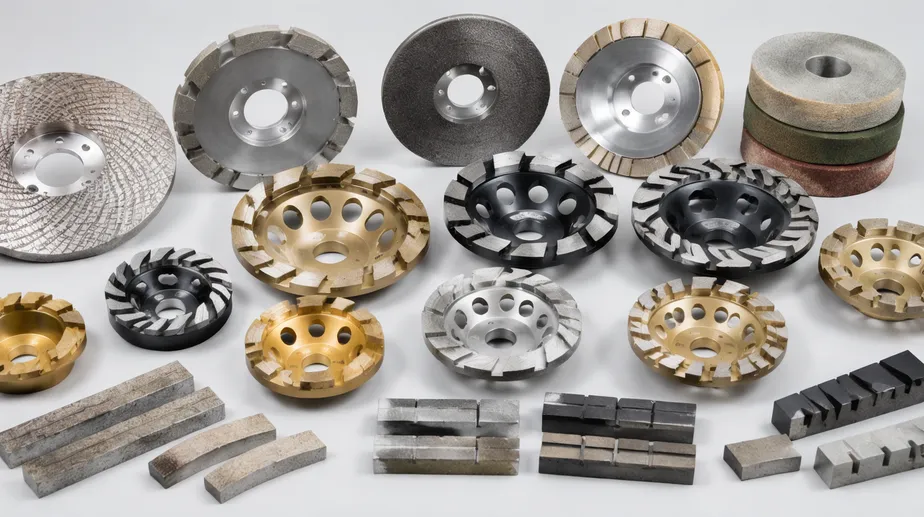
Stone Surface Grinding Tools
Specialized tools for stone surface finishing — including Frankfurt abrasives, fickert grinding blocks, and resin-bonded polishing tools for production lines. These handle the final stages: honing, polishing, and achieving the surface gloss your end customers expect on countertops and floor tiles.
How Bond Formula Drives Your Grinding Economics
The metal bond is where grinding tool performance lives or dies — and it's where most buyers get caught by suppliers who offer a single generic formula across all stone types.
We maintain separate formula libraries for grinding tools targeting different materials. A wheel grinding soft marble needs a harder bond matrix so it doesn't erode too quickly and waste diamond. A wheel grinding hard granite needs a softer bond so fresh diamond crystals expose continuously instead of glazing over. Getting this backwards means either your tool wears out in half the expected life (your cost per square meter spikes) or it stops cutting and your operators burn through more time and energy to achieve the same result.
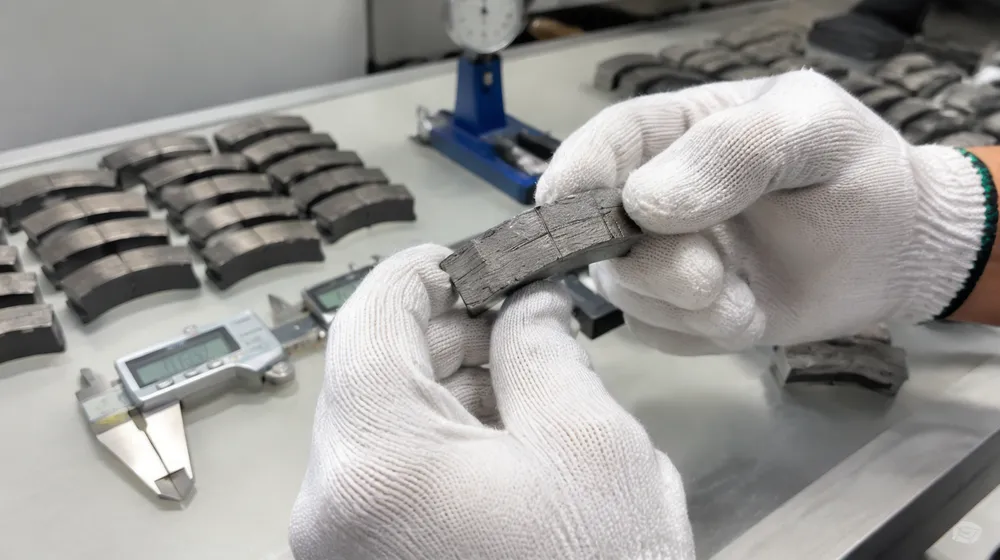
Our R&D center — the same team holding 60+ patents in diamond tool formulation — develops and tests bond compositions specifically for grinding applications. The sintering parameters (temperature curve, hold time, applied pressure) are calibrated per formula, not run on a universal profile. We track hardness readings (Rockwell B scale) on every sintered batch, and our acceptable variance is ±2 HRB. If a batch drifts beyond that, it gets re-sintered or scrapped.
Batch-to-Batch Consistency
When you reorder grinding tools six months later, they perform identically to the first shipment. Your operators don't need to readjust feed rates or pressure settings. Your downstream customers get consistent surface quality. No callbacks, no complaints about "the last batch was better."
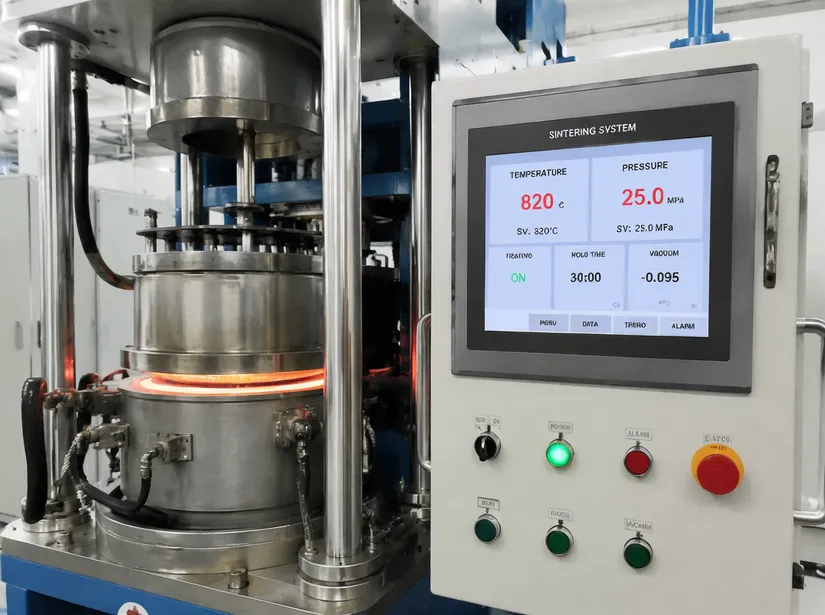
Bond Matching Logic
Soft marble → Harder bond matrix — prevents premature erosion, preserves diamond life
Hard granite → Softer bond — exposes fresh crystals continuously, prevents glazing
Technical Overview: Category-Level Specifications
These are category-wide ranges. Each product page provides exact specifications per model — grit options, segment counts, arbor compatibility, and recommended operating speeds.
| Parameter | Range Across Category |
|---|---|
| Diameter | 50 mm – 350 mm |
| Segment type | Metal-bonded, resin-bonded, hybrid |
| Diamond grit size | 30/40 (coarse) through 3000 (polishing) |
| Bond hardness | Soft / Medium / Hard (adjusted per stone type) |
| Attachment method | Threaded (M14, 5/8"-11), hook-and-loop, snail lock, bolt-on |
| Compatible equipment | Angle grinders, floor grinders, bridge saw calibration heads, automated polishing lines |
| Application materials | Granite, marble, limestone, engineered quartz, concrete, terrazzo, ceramic |
Arbor Thread: Regional Packing Available
M14 dominates in Europe and Asia, 5/8"-11 in North America. We stock both. If you're distributing across regions, tell us your market split and we'll pack accordingly — no minimum per thread type within your order.
Where Your Buyers Deploy These Tools
Diamond grinding tools serve every stage after the saw blade does its work. Here's where the volume lives for distributors and project suppliers.
Stone Fabrication Shops
Countertop & Slab Processing
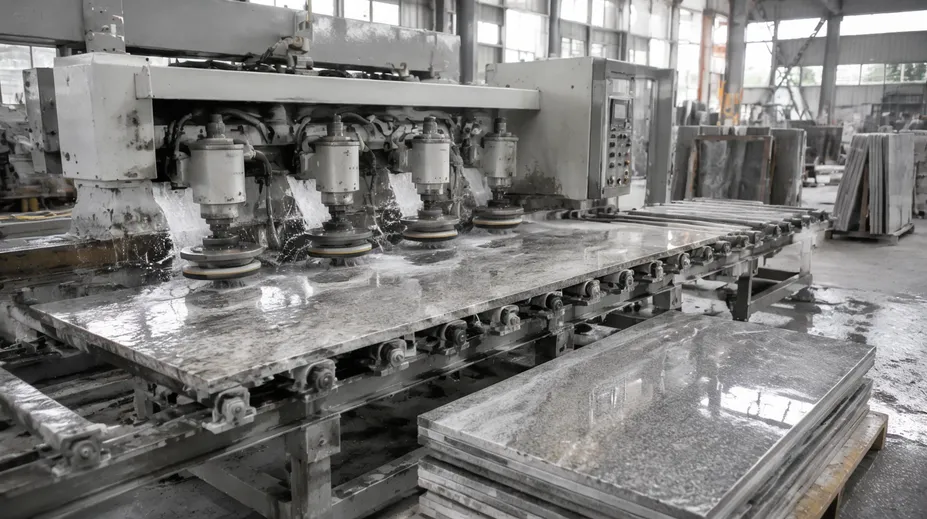
Countertop fabricators and slab processors use grinding wheels for calibration (achieving uniform slab thickness) and cup wheels for edge shaping.
Floor Grinding & Polishing Contractors
Concrete · Terrazzo · Natural Stone
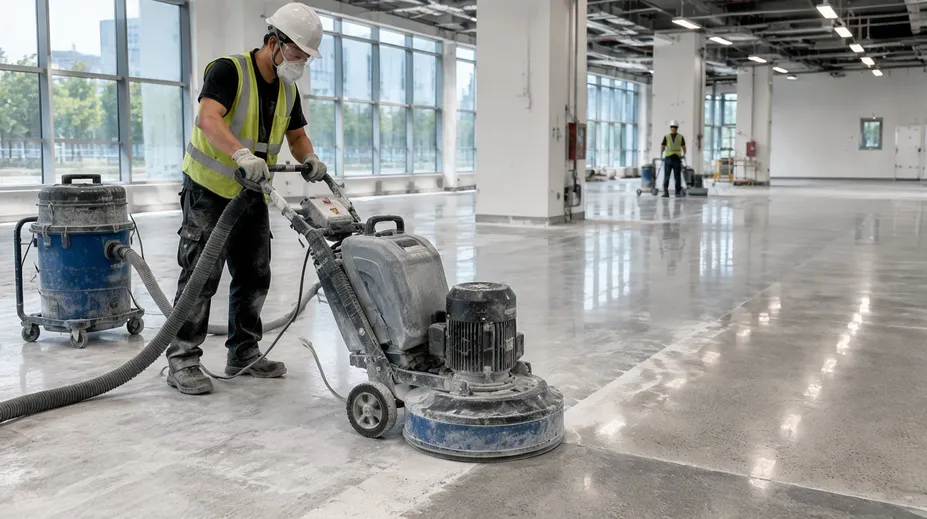
Concrete polishing, terrazzo restoration, and natural stone floor maintenance. These projects consume cup wheels and floor grinding discs at high rates.
Quarry & Slab Processing Plants
Automated Calibration & Polishing Lines
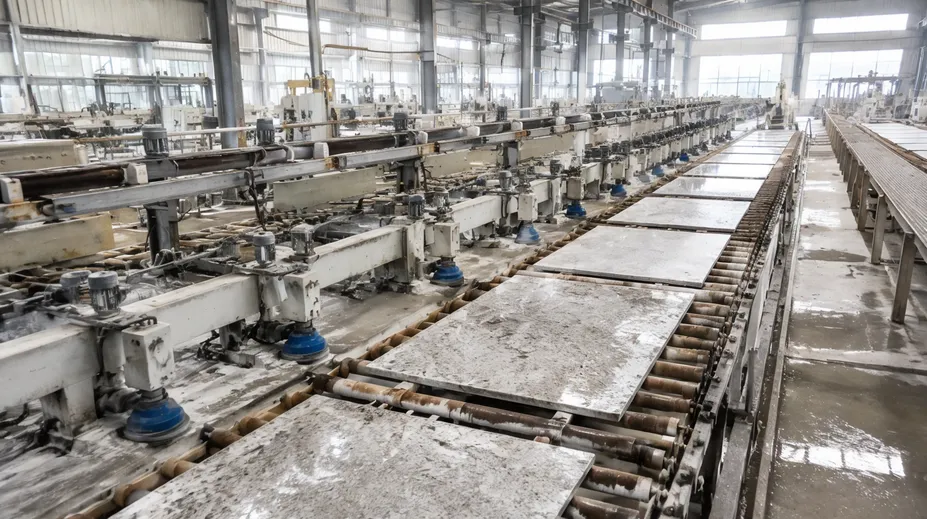
Large-scale operations running automated calibration and polishing lines need Frankfurt-style abrasives and fickert blocks in volume.
Construction & Renovation
Surface Prep · Coatings · Leveling
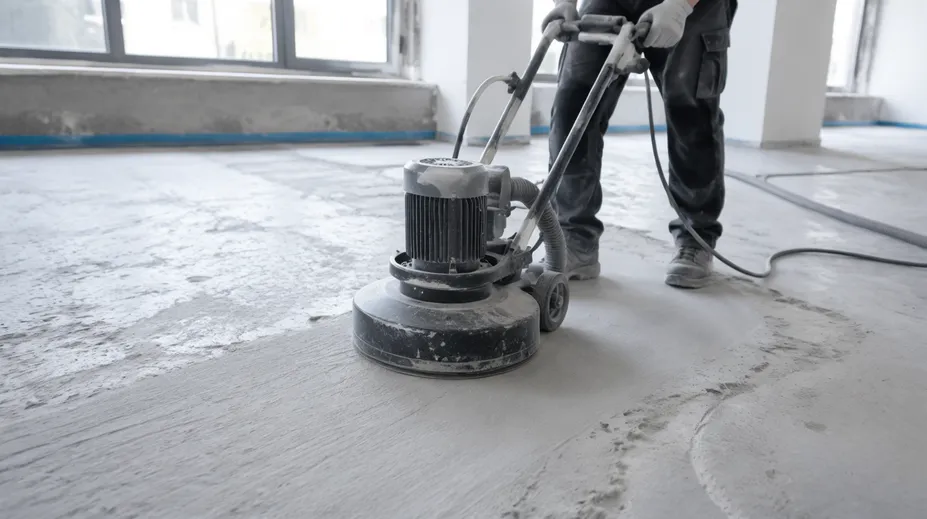
Surface preparation for coatings, adhesive removal, concrete leveling before flooring installation. Cup grinding wheels and aggressive grinding discs dominate this segment.
OEM & Private Label: Your Brand, Our Abrasives
We run grinding tools as OEM production for distributors across Southeast Asia, the Middle East, and Europe.
You specify the target application and stone type
We recommend formula and segment geometry, or match your existing sample
You provide packaging artwork and brand requirements
We produce, package under your brand, and ship container-ready
Low Minimum Order Quantities
Minimum order quantities on grinding tools are lower than you might expect — the tooling and setup costs are simpler than large-diameter saw blades. We can support trial runs of 200–500 pieces per SKU so you can test market response before committing to full container volumes.
Formula Adjustment Included
Formula adjustment is included in the OEM process, not charged as a separate R&D fee. If your market needs a slightly more aggressive cup wheel for the local concrete mix, or a softer bond for the specific granite quarried in your region, we adjust and send samples within 2–3 weeks.
Extensive Formula Library
We've done this enough times that our formula library already covers most regional stone varieties — chances are we have a starting point that's 80% there. This shortens development time and reduces your trial cost significantly.
What Fails in Grinding Tools and How We Prevent It
Three failure modes account for most grinding tool complaints in the market. If you've dealt with returns or customer pushback, chances are it's one of these.
Premature Segment Loss
The Problem
Segments detaching from the tool body during operation. This is almost always a brazing or sintering joint failure — the bonding surface wasn't properly prepared, or heat distribution was inconsistent during attachment.
Our Prevention
- Pre-treat bonding surface of every steel body (mechanical grinding + chemical cleaning) before segment attachment
- Automated brazing line maintains consistent filler metal flow and temperature across every joint
- Every finished tool gets a tap test and visual inspection on the joint line
In over two decades of production, segment detachment on properly used tools is effectively zero in our warranty data.
Glazing & Loss of Cut
The Problem
The diamond surface goes smooth and stops grinding. This happens when the bond is too hard for the stone being processed — the diamonds can't self-sharpen because the matrix won't erode to expose fresh crystal edges.
Our Prevention
- Formula matching at the order stage — tell us the stone type, we specify the correct bond hardness
- Segmented designs with built-in chip clearance channels that reduce loading
- Extended effective cutting life between dressings through optimized diamond exposure geometry
Bond hardness is tuned per application — not a one-size-fits-all formula.
Uneven Segment Wear
The Problem
One side of the wheel wears faster than the other, causing vibration and poor surface finish. Root cause: inconsistent diamond distribution during pressing, or sintering temperature gradients across the mold.
Our Prevention
- Automated pressing machines use pre-weighed charges and multi-point compression for uniform density
- Programmable sintering furnaces eliminate hot spots across the mold cavity
- Consistent diamond distribution ensures flat, even wear patterns across full segment height
Predictable tool life across the full segment height — your operators plan rather than react.
Process Control Eliminates Guesswork
Each failure mode traces back to a manufacturing variable — surface prep, bond formulation, pressing uniformity, or sintering control. By automating these steps and adding inspection checkpoints, we catch problems before they reach your inventory.
The result for distributors: fewer warranty claims, fewer returns, and operator confidence that builds repeat purchases.
Certifications That Clear Your Import Path
Our diamond grinding tools ship under the same certification umbrella as our full product range — documentation ready for customs clearance and downstream customer requirements.
ISO 9001:2015
Quality management system verified annually by third-party auditors. Covers design, manufacturing, and delivery processes.
CE Marking
Conformity with European safety and health requirements. Standard documentation included with every shipment.
SGS Testing
Independent lab verification of material composition and performance claims. Third-party validation you can share with buyers.
MPA Certification
Safety certification for abrasive tools, required by many European distributors. Satisfies downstream insurance and safety documentation requirements.
Importing into the EU?
The MPA certification is particularly relevant — it satisfies the safety documentation requirements that your downstream customers and insurance providers expect. You won't need to arrange separate third-party testing on arrival. Our documentation package is ready at shipment, not something you chase after customs holds your container.
Frequently Asked Questions
Practical answers to the questions we hear most from distributors, fabricators, and procurement teams evaluating diamond grinding tools.
How do I select the right bond hardness for diamond grinding tools on different stone types?
Match bond softness to stone hardness. For hard, non-abrasive stones (granite, engineered quartz), use a softer bond — the matrix needs to wear away to continuously expose fresh diamond. For soft, abrasive stones (marble, limestone, sandstone), use a harder bond to resist premature erosion.
If you're unsure, send us a stone sample or specify the quarry origin — we'll recommend the correct formula based on our testing database. Getting bond selection wrong is the single most common reason grinding tools underperform.
What's the difference between metal-bonded and resin-bonded diamond grinding tools?
Metal-bonded tools are for aggressive stock removal — calibration, leveling, shaping. They last longer and handle higher pressure but leave a rougher surface finish (typically 60–400 grit equivalent).
Resin-bonded tools are for honing and polishing stages — they produce finer finishes (800–3000 grit) but wear faster under heavy load.
Most processing lines use metal-bonded first, then transition to resin-bonded for the final polish sequence. Your inventory should include both if you're supplying fabrication shops.
What is the typical lifespan of a diamond cup grinding wheel on concrete?
It depends on concrete hardness, aggregate size, and grinding pressure — but as a working range: a quality double-row cup wheel grinds 50–150 m² of standard concrete floor before replacement.
Soft concrete with small aggregate shortens life (more abrasive dust), while hard concrete with large aggregate extends it (less abrasive wear on the bond). We can provide application-specific life estimates once we know your concrete composition and machine type.
Can you match an existing grinding tool sample from another supplier?
Yes. Send us the sample or detailed specifications (diameter, segment count, segment dimensions, grit size, bond type, attachment method). We'll reverse-engineer the formula, produce test samples, and send them for your approval.
Typical turnaround from sample receipt to test pieces shipped: 15–20 days. If performance matching is critical, send a piece of the stone you're grinding as well — we'll test on the same material.
What is the minimum order quantity for OEM diamond grinding tools?
200–500 pieces per SKU for initial orders, depending on the tool type. Cup wheels and grinding discs have lower setup complexity, so MOQs start at the lower end. Specialized profiles or custom segment geometries may require slightly higher minimums to justify the mold tooling.
Reorders on established SKUs have no minimum — we'll produce whatever quantity keeps your stock levels healthy.
How should diamond grinding tools be stored and shipped to prevent damage?
Store in dry conditions away from direct moisture — diamond tools themselves don't corrode, but steel bodies and attachment threads will.
We pack grinding tools in individual compartments within cartons, with foam separators between layers to prevent segment chipping during transit. For ocean freight, moisture-barrier bags are standard on all export orders.
Shelf life is effectively unlimited if stored dry — unlike resin-bonded polishing pads, metal-bonded grinding tools don't degrade in storage.
Start With Your Application, We'll Handle the Formula
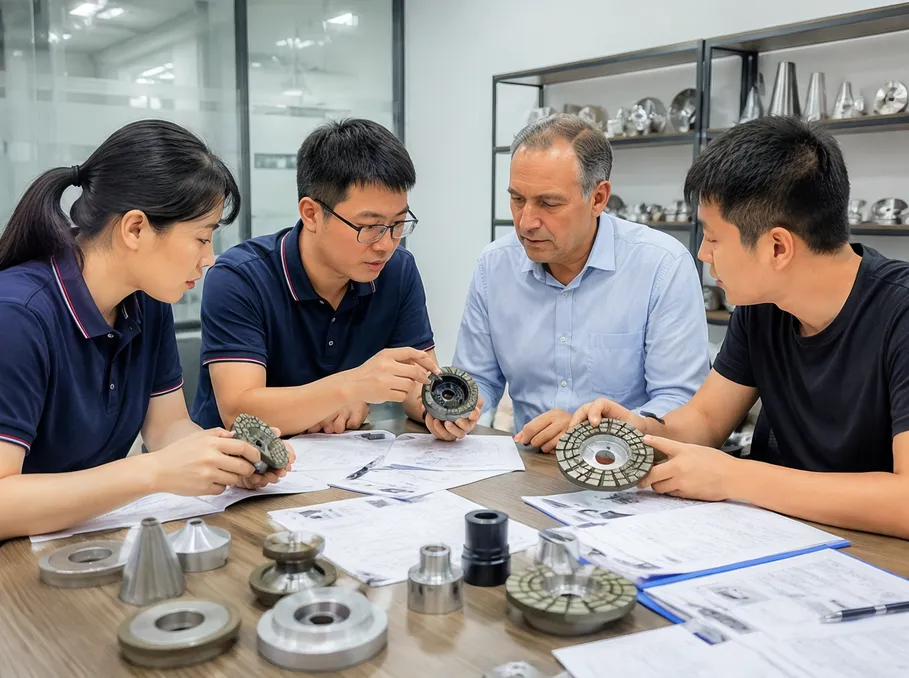
Tell us what you're grinding — the stone type, the processing stage (calibration, leveling, polishing), and your equipment. We'll recommend the right tool configuration, send samples if needed, and quote production quantities.
If you're building out a grinding tool line for your distribution business, we can suggest a starter SKU mix based on what's moving for our existing distributors in your target market. Most new partners begin with 4–6 SKUs covering the core applications, then expand once sell-through data comes in.
What to Include in Your Inquiry
- Stone type or material being processed
- Processing stage — calibration, leveling, honing, or polishing
- Equipment brand and model (or spindle specs)
- Estimated annual volume per SKU
- OEM branding requirements (if applicable)
- Existing sample from another supplier (optional — we'll match it)