

Concrete Cutting Blades Diamond Segments Engineered for Aggregate and Rebar
Concrete cutting blades with segment formulas developed specifically for the thermal abuse, rebar impact, and abrasive aggregate that destroy general-purpose diamond blades. We manufacture concrete-specific diamond saw blades in diameters from 300 mm to 1600 mm — green concrete, cured reinforced slabs, prestressed structures.
Segment geometry, bond hardness, and welding method all tuned to the job. Laser and HF welding available. OEM/ODM standard.
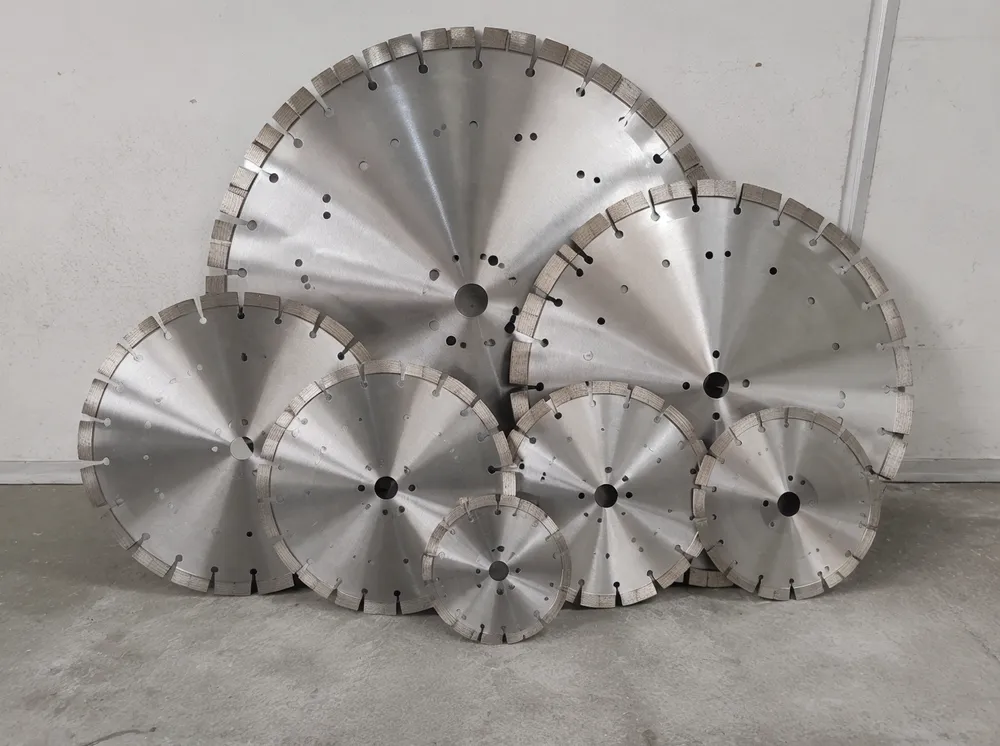
What This Blade Range Covers — and What It Doesn't
This Range: 300 mm to 1600 mm
Our concrete cutting blade range handles the medium-to-large diameter segment: 300 mm up to 1600 mm, designed for floor saws, wall saws, road saws, and stationary flat saws. These are the blades your customers mount on professional equipment for construction, demolition, and infrastructure maintenance.
Not This Range
105–230 mm small discs for handheld grinders are in our Diamond Cutting Discs category, with a dedicated concrete cutting disc product.
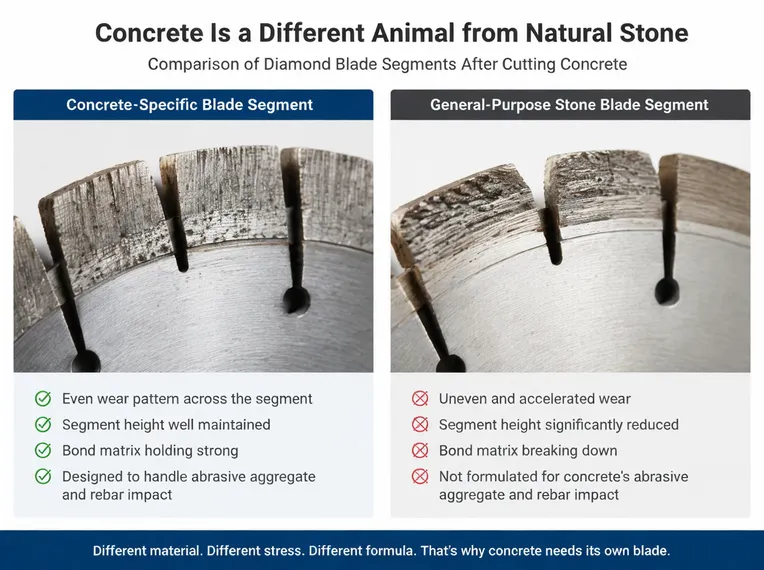
Concrete Is a Different Animal from Natural Stone
The bond chemistry that works beautifully in granite will fail in concrete — aggregate particles are highly abrasive, rebar creates intermittent impact loading, and operators frequently cut semi-dry or fully dry on jobsites where water supply is impractical. We run separate formula libraries for concrete applications, and that separation is the reason our concrete cutting blades outlast "multi-purpose" blades that try to serve both stone fabrication and construction markets from a single formula.
If you're currently stocking general-purpose segmented blades and getting complaints from construction customers about short life or slow cutting, the formula mismatch is almost certainly the problem.
Your Margin Opportunity
A blade formulated for concrete gives your customers 30–50% more linear meters per blade than a stone blade used on the same concrete — and that performance gap is your margin opportunity as a distributor.
Segment Formula Strategy: Why Concrete Demands Its Own Bond Chemistry
We've been refining concrete-specific bond formulas since our early years supplying domestic road construction projects. The technical challenge is straightforward but the solution isn't.
The Dual Challenge
Aggregate Erosion: Concrete aggregate (sand, gravel, crusite) erodes the metal bond matrix fast, shortening segment life if the matrix can't resist abrasion.
Rebar Impact: The intermittent impact of hitting rebar or steel mesh fatigues the diamond-to-bond interface, causing premature diamond pull-out.
A blade that handles one problem well often fails at the other.
Our Approach: Cobalt-Iron Hybrid Bond
Iron Content: Provides abrasion resistance against aggregate erosion — extending segment life in the matrix.
Cobalt Content: Maintains thermal stability at the diamond interface. When the blade hits rebar and segment temperature spikes momentarily, diamonds stay anchored rather than pulling out prematurely.
Controlled Porosity: Balanced during sintering — too dense and the segment glazes on soft green concrete; too porous and it erodes excessively on heavily reinforced cured slabs.
Three Standard Concrete Bond Families
Soft Bond
For hard, dense reinforced concrete with high rebar density. Matrix wears faster to expose fresh diamonds under low-abrasion conditions.
Medium Bond
General-purpose concrete formula. Balanced for typical construction-grade cured concrete with moderate aggregate hardness and occasional rebar.
Hard Bond
For highly abrasive green concrete or soft-aggregate mixes. Resists rapid matrix erosion to maximize segment life in punishing conditions.
Regional Formula Library
We carry three standard concrete bond families (soft, medium, hard) and can adjust within each family based on your market's typical concrete composition. Southeast Asian construction concrete tends toward softer aggregate mixes; Middle Eastern reinforced structures run denser and harder. We've formulated for both, and for dozens of regional variations in between.
When we started exporting concrete blades to Saudi Arabia around 2010, our standard domestic formula wore out 40% faster than expected — the aggregate hardness was completely different. That lesson built our regional formula library.
Tell us what your customers are cutting — age of concrete, rebar density, wet or dry conditions — and we'll match the formula. First sample sets ship within 3 weeks of formula confirmation.
Diamond Grade Selection for Concrete
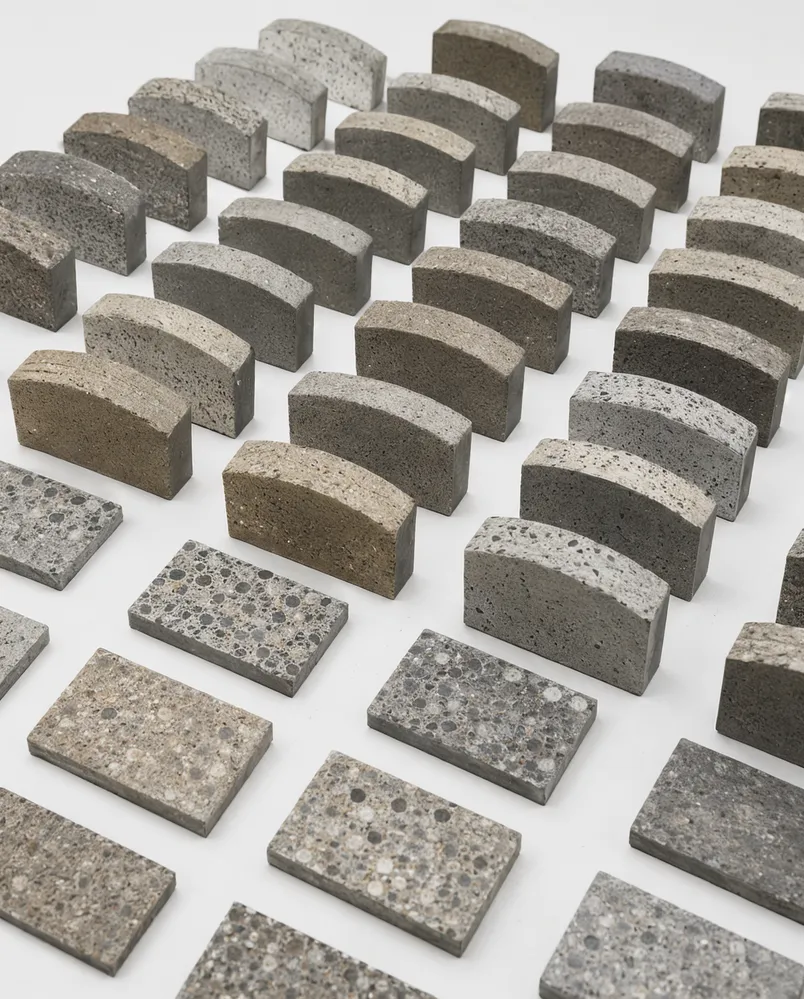
We use synthetic diamonds graded specifically for concrete applications — typically medium-to-high impact resistance (SDA+/SDB grade equivalent) with controlled crystal morphology. The reasoning:
- Blocky crystal shapes resist fracture under rebar impact better than irregular shapes
- Moderate friability ensures self-sharpening action in abrasive aggregate
- Titanium or chromium coating options for enhanced diamond retention in high-temperature dry cutting
Diamond concentration is calibrated per bond family — higher concentration in soft bonds (to compensate for faster matrix wear) and lower in hard bonds (to avoid glazing). Typical range:
Product Range: Concrete Saw Blades by Application
Our concrete blade range covers the three major application segments your construction customers work in. Each uses different equipment, different cutting conditions, and needs a different blade design.
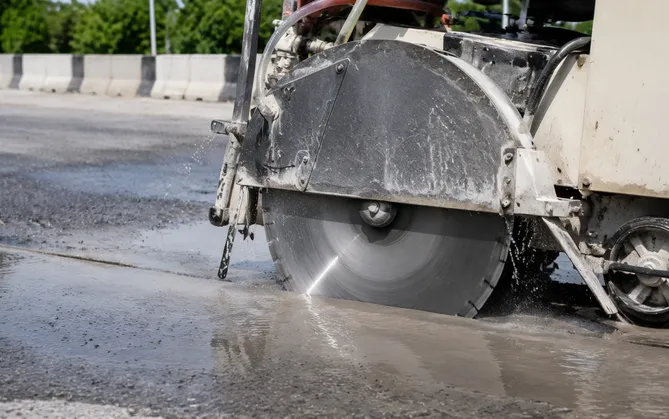
Floor Saw Blades
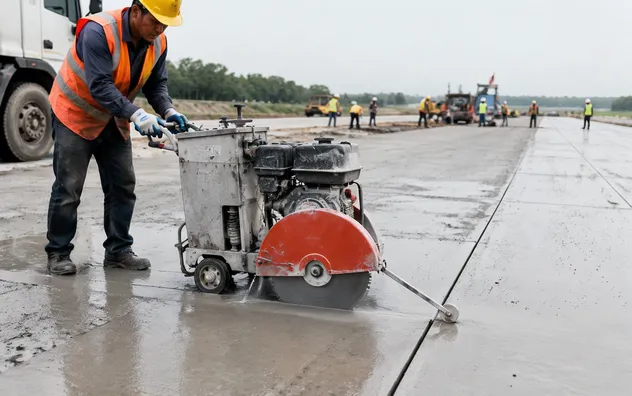
300–1200 mm diameters for walk-behind and ride-on floor saws. Road cutting, joint cutting, pavement removal, and utility trenching. Wet cutting with high-power machines (15–65 HP).
Available in segmented, turbo-segmented, and laser-welded configurations
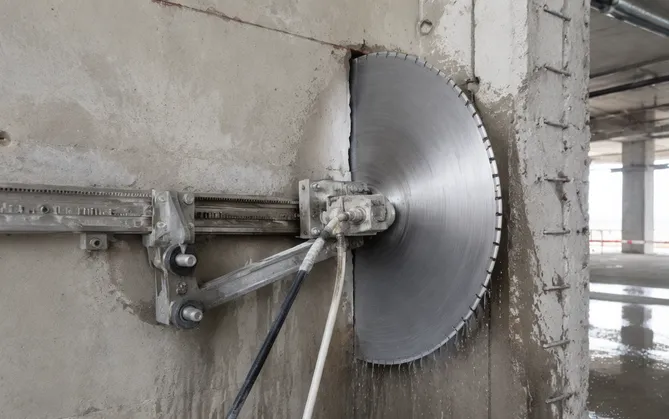
Wall Saw Blades
400–1600 mm diameters for track-mounted wall saws. Vertical and overhead cutting in demolition, renovation, and opening creation. Heavy rebar contact demands maximum diamond retention.
Soft-bond rebar-optimized formula standard; laser-welded for safety
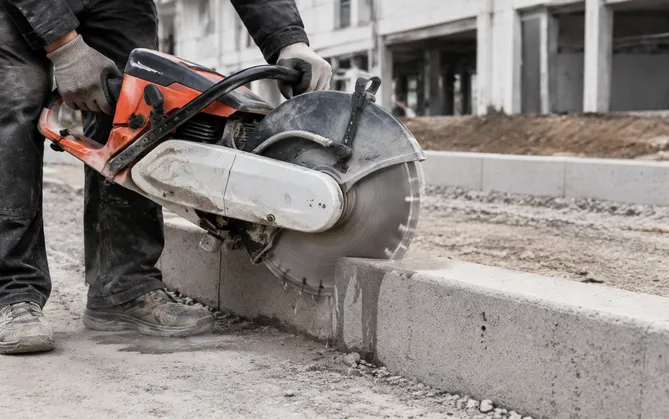
Handheld Cut-Off Saw Blades
300–400 mm diameters for petrol and electric cut-off saws (Husqvarna, Stihl, etc.). Kerb cutting, pipe trenching, and general on-site concrete cutting. Dry or wet operation.
High-airflow segment design for thermal management in dry cutting
Segment Design Features for Concrete Applications
Sandwich Segments
Multi-layer segments with alternating diamond concentration for consistent cutting speed throughout segment life.
Cooling Slots
Laser-cut slots in segment body direct airflow and water to the cutting face, preventing thermal damage in deep cuts.
Protective Undercut
Wider segment base protects the steel core from undercutting erosion — critical for large-diameter blades in abrasive concrete.
Drop Segments
Alternating tall/short segments on floor saw blades for faster debris clearance and reduced drag in deep road cuts.
Size & Specification Quick Reference
Standard sizes we hold tooling for. Custom diameters and arbor configurations available with minimum orders.
| Application | Diameter Range | Blade Thickness | Segment Height | Standard Arbors |
|---|---|---|---|---|
| Floor Saw | 300–1200 mm | 3.2–5.0 mm | 10–15 mm | 25.4 / 1" |
| Wall Saw | 400–1600 mm | 4.0–6.0 mm | 12–20 mm | 60 mm / Husqvarna pin |
| Handheld Cut-Off | 300–400 mm | 3.0–3.6 mm | 10–12 mm | 20 / 25.4 mm |
| Ring Saw | 350–400 mm | 4.5–5.5 mm | 10–12 mm | Machine-specific |
Manufacturing & Quality Control
Every concrete saw blade passes through the same vertically integrated production line we use for all our diamond tooling — but with process parameters tuned specifically for concrete bond formulas.
Powder Mixing
Metal bond powders blended with diamond grit in controlled atmosphere. Concrete formulas use higher iron ratios than stone formulas — measured to 0.1% tolerance.
Cold Pressing
Segments pressed in steel molds at precise pressure to achieve target density. Concrete segments pressed slightly less dense than granite segments to maintain cutting aggressiveness.
Hot-Press Sintering
Graphite mold sintering at 750–900°C under 200–350 kg/cm² pressure. Temperature and time profiles are formula-specific — concrete bonds typically sinter at lower temperatures than granite.
Welding & Finishing
Laser welding for all blades ≥400 mm (safety requirement for high-RPM operation). Silver brazing available for smaller diameters. Tension testing and runout inspection on every blade.
Quality Checkpoints
Hardness testing (HRC) on every batch of sintered segments — ensures bond hardness matches formula specification within ±1 HRC.
Weld strength testing — destructive pull test on sample segments from each production run. Minimum 500 MPa shear strength required for laser welds.
Lateral runout — every blade checked on precision arbor. Maximum ±0.2 mm for floor/wall saw blades; ±0.15 mm for handheld blades.
Tension and flatness — steel cores hammer-tensioned before segment welding. Proper tensioning prevents blade wobble at operating RPM.
Field performance tracking — we collect cutting data from key accounts to validate formula performance and identify improvement opportunities.

ISO 9001:2015 certified production. All large-diameter concrete blades manufactured to EN 13236 safety standard.
Technical Specifications
| Parameter | Specification Range |
|---|---|
| Diameter | 300, 350, 400, 450, 500, 600, 700, 800, 900, 1000, 1200, 1400, 1600 mm |
| Segment Height | 10–15 mm (standard); up to 20 mm heavy-duty |
| Segment Width | 3.0–4.8 mm (determines kerf width) |
| Core Thickness | 2.4–4.0 mm |
| Arbor Bore | 25.4 mm (1″), 50 mm, 60 mm; custom bore available |
| Segment Count | 18–54 (depending on diameter) |
| Welding Method | High-frequency (wet cutting); Laser (dry/semi-dry) |
| Diamond Grit | 30/40, 40/50 mesh (matched to concrete hardness) |
| Bond Type | Cobalt-iron hybrid, iron-based, proprietary abrasion-resistant composite |
| Max Operating Speed | 25–63 m/s (smaller diameters run higher peripheral speed) |
| Application | Green concrete, cured concrete, reinforced concrete, prestressed concrete |
| Certifications | ISO 9001:2015, CE, SGS, MPA |
Specifications shown are standard production values for this product range. Actual parameters may vary by specific configuration. Contact us for detailed spec sheets matching your application.
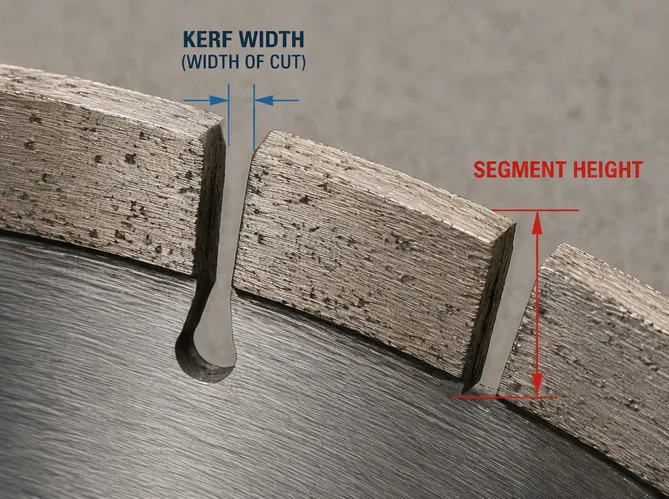
Segment Height Selection Note
We default to 12 mm for most road saw applications — it balances blade life against the cost premium.
- 10 mm: Primarily shallow decorative joints. Reduces per-blade cost without compromising usage life for light-duty cuts.
- 15 mm: Deep-cut highway repair. Extended segment life justifies the premium where blade changes cost crew downtime.
Certified Quality
Concrete Types and How Formula Selection Affects Your Customer's Results
Not all concrete is the same to a diamond blade. Here's how we categorize it for formula selection — and why this matters to you as a distributor or project supplier.
Green Concrete (Early-Entry Joint Cutting)
Cut within 4–24 hours of pouring, before shrinkage cracking begins. The concrete is abrasive (fresh aggregate not yet fully bonded) but relatively soft. Requires a harder bond formula — the matrix needs to resist rapid erosion while still allowing diamond exposure. Segment geometry uses narrower kerf (3.0–3.4 mm) because the cutting forces are lower and a thinner kerf reduces power demand on the saw.
Why This Matters to Your Business
This is a high-volume, time-sensitive application. Your road construction customers need blades that start cutting immediately without a break-in period and last through an entire night shift of continuous joint cutting. Late delivery or poor blade life means they're buying from someone else next pour.
Cured Reinforced Concrete
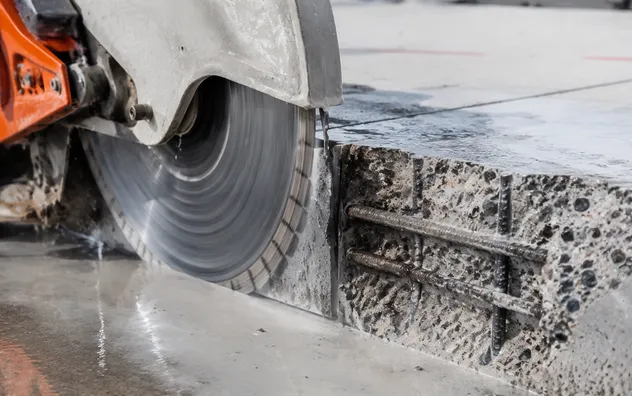
The demanding one. Full-strength concrete (28+ days) with steel rebar, welded wire mesh, or post-tension cables embedded. The blade alternates between cutting through abrasive aggregate matrix and impacting steel reinforcement — two completely different material behaviors hitting the same segment.
We use a medium-soft bond with elevated diamond concentration for reinforced applications. The softer matrix allows rapid diamond exposure to maintain cutting speed through rebar, while the higher diamond density compensates for the accelerated wear that rebar contact creates. Segment geometry is wider (4.0–4.8 mm) to provide lateral stability through the cut and reduce segment side-loading when the blade deflects on rebar impact.
Cured Unreinforced Concrete
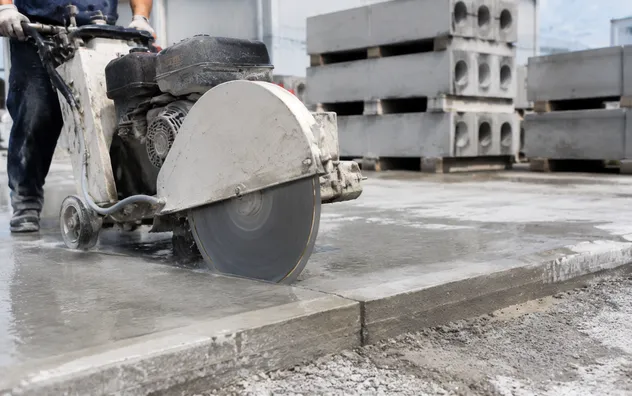
Sidewalks, concrete blocks, precast elements, lightweight concrete panels. Lower cutting forces, minimal impact loading. Standard medium bond formula handles these efficiently. This is your bread-and-butter SKU for general contractors and smaller concrete cutting operators who don't justify the premium pricing of a rebar-specific blade.
Formula Selection at a Glance
| Concrete Type | Bond Hardness | Kerf Width | Key Requirement |
|---|---|---|---|
| Green (Early-Entry) | Hard | 3.0–3.4 mm | Resist abrasion from unbonded aggregate; no break-in |
| Cured Reinforced | Medium-soft | 4.0–4.8 mm | Fast diamond exposure for rebar; lateral stability |
| Cured Unreinforced | Medium | Standard | Cost-efficient general-purpose cutting |
Wet Cutting vs. Dry Cutting — Stocking Strategy for Your Market
This is the single most important stocking decision for concrete cutting blades, and it's driven by your market's equipment base and jobsite conditions.
Wet-Cut Concrete Blades
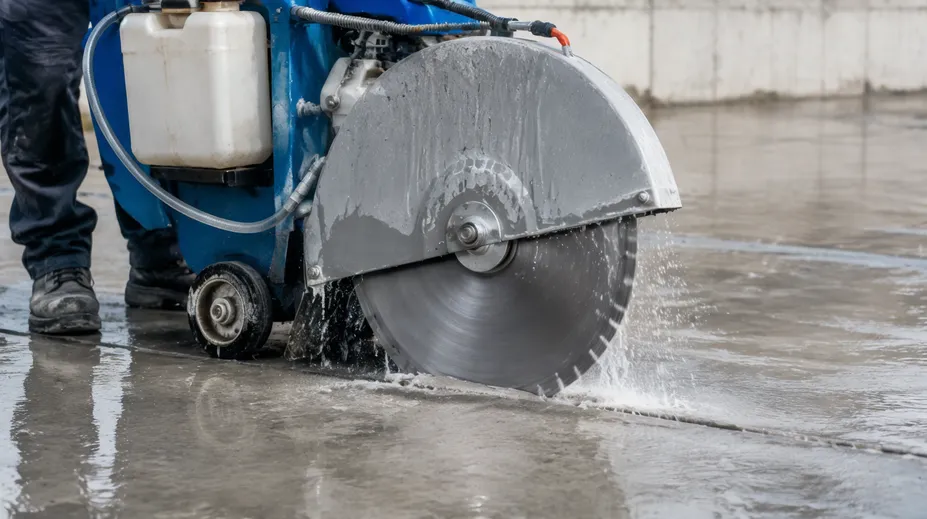
Water cooling allows us to use higher diamond concentration (the thermal load is managed by water, not the bond), resulting in faster cutting speed and longer life. High-frequency welded joints are sufficient because thermal cycling stays within safe limits. Lower per-blade cost than laser-welded equivalents.
Stock these for customers running:
- Walk-behind road saws with water tanks
- Wall saws with integrated water supply
- Stationary flat saws
- Any application where water access is reliable
Dry Concrete Cutting Blades
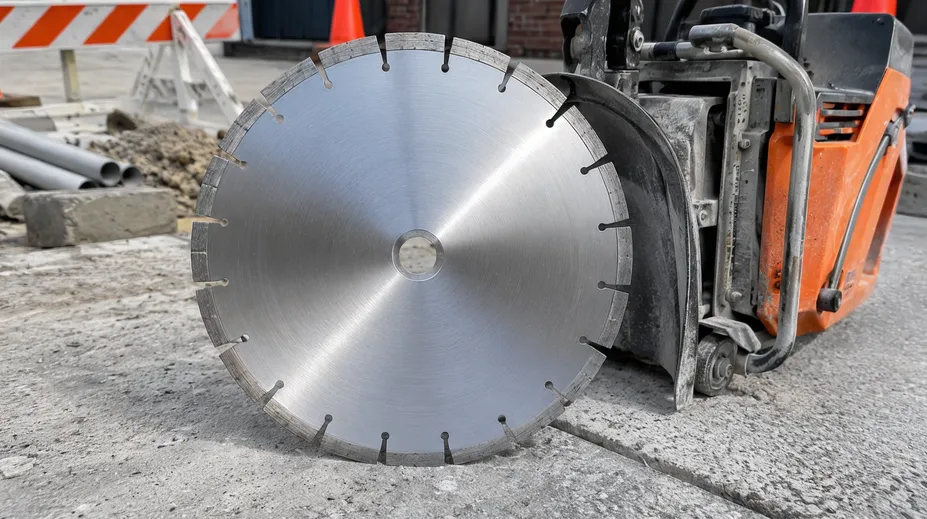
No water. The segment and welded joint must tolerate thermal cycling from friction heat — temperatures spike during cutting and cool during idle rotation. Laser-welded joints are mandatory because HF welds crack under repeated thermal stress. Bond formula incorporates heat-dispersing additives and we reduce diamond concentration slightly (diamonds degrade above 700°C — less concentration means less thermal mass trapped in the segment during cutting).
Stock these for customers doing:
- Utility repair work (cutting over live gas/water lines where slurry is prohibited)
- Indoor cutting with no floor drains
- Emergency road repair where water logistics aren't feasible
- Remote jobsites
The dry concrete cutting blade carries a 15–25% price premium over wet-cut equivalents due to laser welding and specialized bond chemistry. Your customers who genuinely need dry-cut capability won't blink at the premium — they're paying for the ability to work without water infrastructure, which saves them setup time and regulatory headaches.
We've seen distributors try to sell wet-cut blades for dry applications "because they're cheaper" — the result is segment loss from weld failure within minutes. Not a warranty issue; a misapplication issue.
Need help deciding wet vs. dry for your market? Tell us your customers' typical equipment.
Get Stocking RecommendationsManufacturing Process: What We Do Differently for Concrete Blades
Our parent diamond saw blade category page covers the general production sequence. Here's what's specific to our concrete blade line.
Higher Compaction Segment Pressing
+15–20% tonnage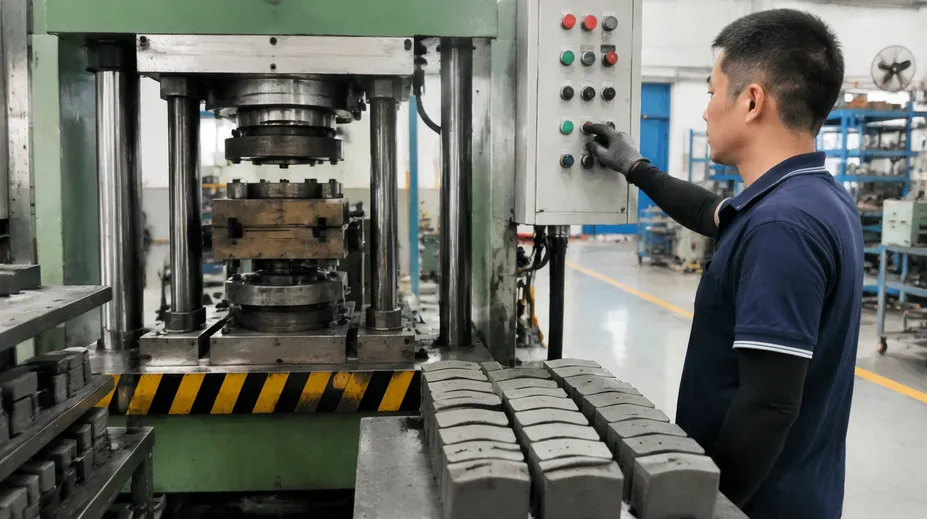
Segment pressing uses higher compaction pressure than our stone blade segments. Concrete blade segments need denser metal matrix to resist aggregate abrasion. We press at 15–20% higher tonnage compared to equivalent-size granite segments, using dies designed for the wider segment profiles that concrete applications require.
Extended Sintering Hold Times
Co-Fe hybrid bond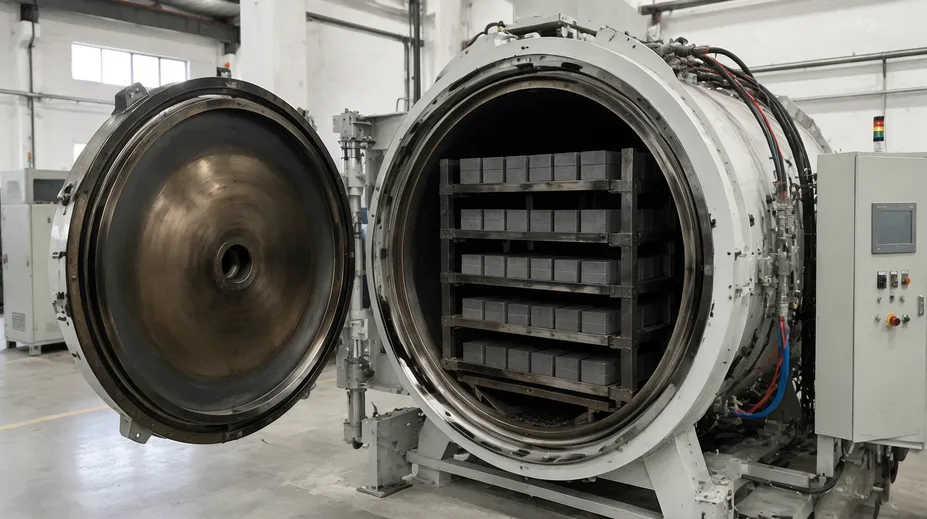
Sintering profiles run longer hold times at peak temperature. The cobalt-iron hybrid bond needs thorough interdiffusion to achieve its abrasion-resistant microstructure. We've found that shortening the sinter cycle (as some factories do to increase throughput) creates micro-porosity at the iron-cobalt interface that leads to premature segment cracking under the vibration loads of concrete cutting.
Wide-Seam Laser Welding
Dry-cut standard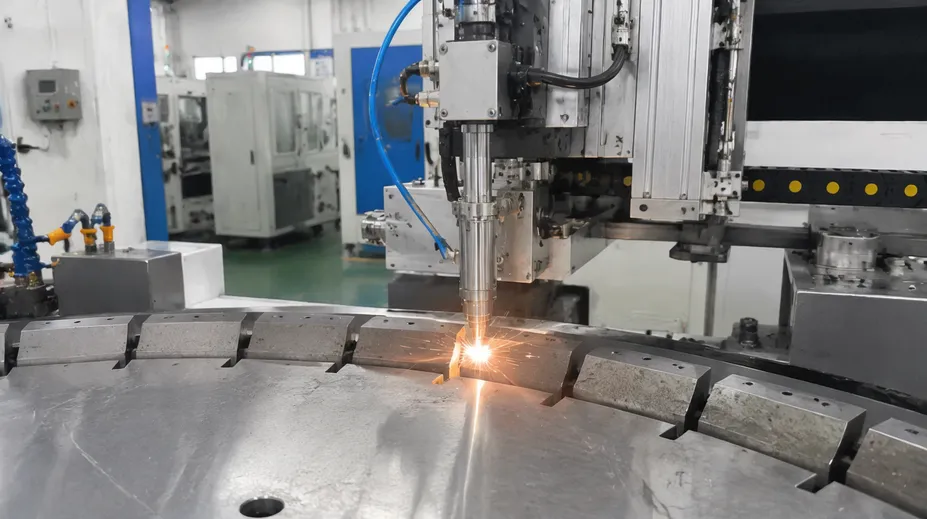
Laser welding is standard on all blades designated for dry-cut applications. Our laser welding line runs a specific beam profile for concrete blades — wider weld seam than stone blades because the thermal cycling from dry concrete cutting creates more expansion stress at the joint. We tested both configurations in our lab and in field trials. The wider seam reduced weld-related segment loss to near zero in dry cutting applications.
Enhanced Core Tensioning
500 mm+ blades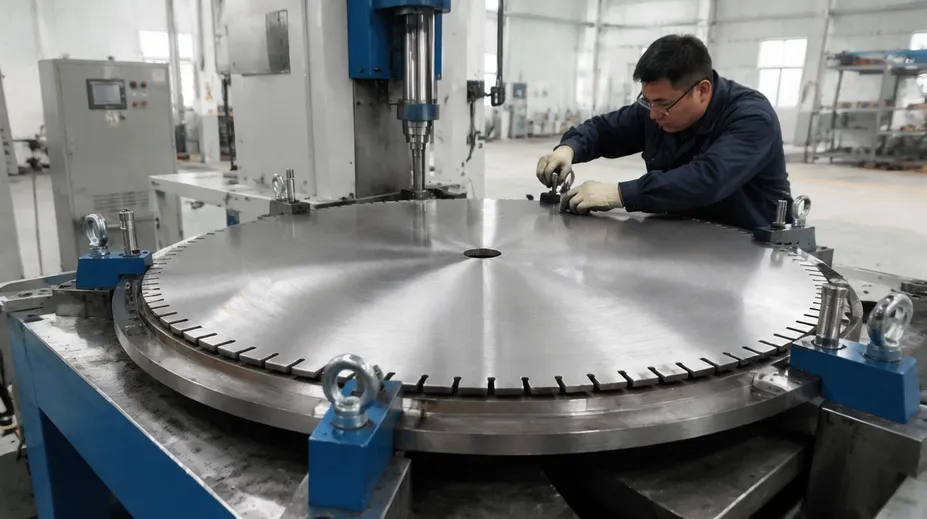
Steel cores undergo enhanced tensioning for concrete blades over 500 mm diameter. Road saws and floor saws generate more vibration than bridge saws cutting stone — the concrete is heterogeneous, with aggregate and rebar creating irregular cutting forces. Our tensioning process for concrete cores targets flatness tolerances tighter than standard to minimize wobble under those uneven loads.
Market Segments for Concrete Cutting Blades
Road Construction and Maintenance
Highest Volume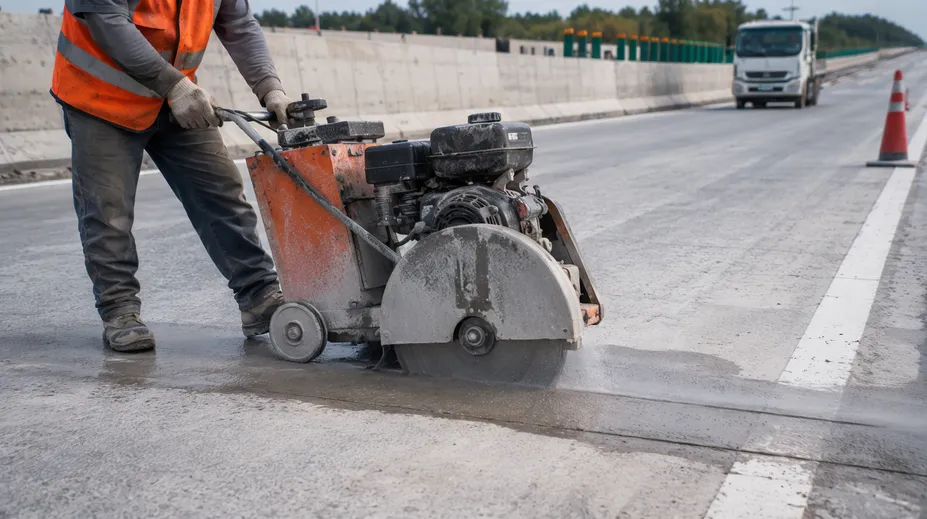
The highest-volume segment. New road construction generates demand for early-entry joint cutting blades (green concrete), while road maintenance and repair creates recurring demand for cured concrete cutting.
Government-funded infrastructure projects mean stable payment cycles, and the seasonal pattern (spring through fall in temperate climates) creates predictable ordering windows.
Consumption Rate
A typical road contractor consumes 20–50 blades per project depending on scope.
Utility Installation and Repair
Highest Margin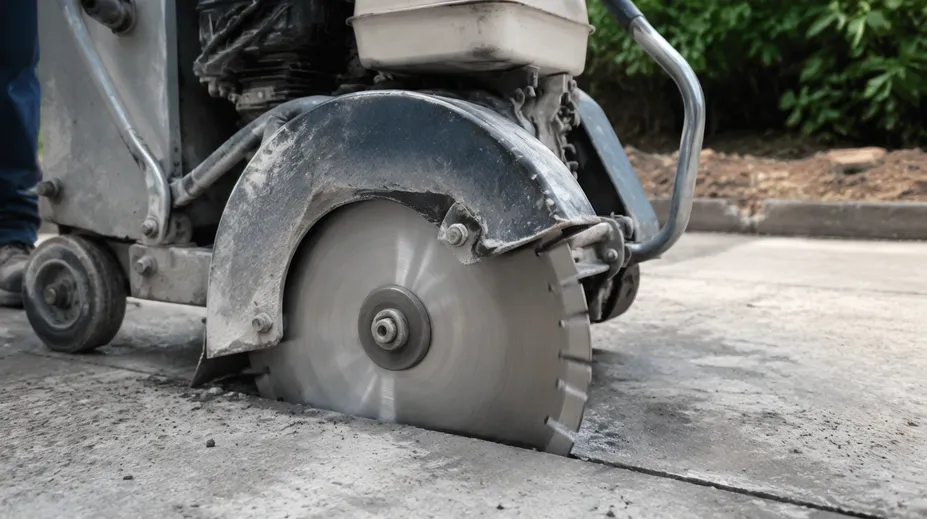
Water, gas, electric, telecommunications — every buried utility eventually needs maintenance access through concrete pavement or flooring.
These are primarily dry-cut applications (cutting near gas lines prohibits water; cutting indoor floors creates slurry problems). Lower volume per customer but consistent year-round demand.
Buyer Loyalty
Utility contractors are loyal buyers once they find a blade that works dry without segment loss — the safety concern makes them resistant to price-switching.
Demolition and Renovation
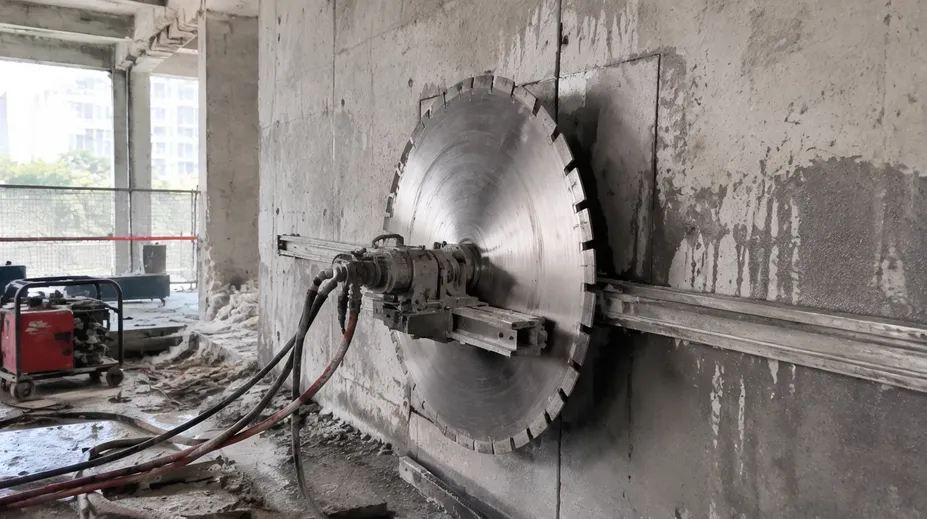
Controlled concrete cutting for building renovation, floor removal, and structural modification. Wall saws and wire saws dominate here, but floor saws and hand-held power cutters also see heavy use.
Demand is project-driven and variable, but the trend in urban renovation spending is upward across most markets. Reinforced concrete is standard in these applications, so stock the rebar-rated formula for demolition customers.
Precast Concrete Manufacturing
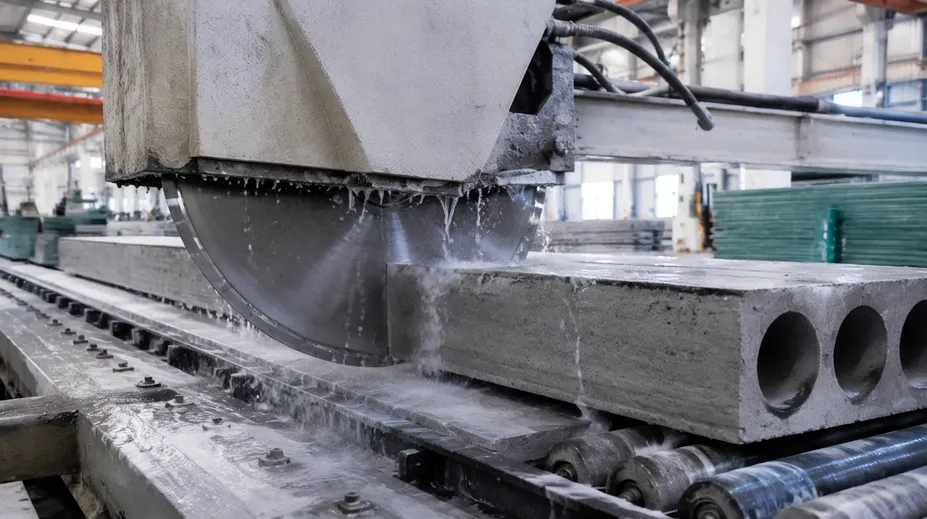
Factories producing precast concrete elements (pipes, panels, beams) consume blades for trimming, cutting to length, and quality-control sample cutting. Consistent, predictable demand tied to production schedules.
Key Priority
These customers value blade consistency above all — their automated cutting equipment is calibrated for a specific blade performance profile, and variation between blade batches disrupts their production line settings.
Distributor Insight: Volume vs. Margin
Road construction remains our largest concrete blade segment by volume — about 60% of our concrete blade output goes to this application. But the utility repair segment has the highest margin potential for distributors because dry-cut capability commands premium pricing and the buyers don't shop on cost alone.
Customization for Concrete Cutting Blades
What We Customize
Diameter
Any standard or non-standard diameter within the 300–1600 mm range.
Arbor Bore
Match to your market's equipment — Husqvarna, Hilti, Stihl, and Chinese-brand saws all use different standards.
Segment Height
10 mm, 12 mm, 15 mm, or 20 mm depending on target application and price positioning.
Bond Formula
Adjusted to your market's concrete composition — aggregate type, typical rebar density, regional concrete mix standards.
Segment Geometry
Turbo, segmented, or drop-segment configurations; U-slot variants for improved debris clearance in deep cuts.
Welding Method
HF welding for wet-cut or laser welding for dry-cut applications.
Core Color Coding
Your brand's color scheme on the steel core for visual differentiation.
Private-Label Packaging
Your brand, your logo, your specification sheets.
What We Can't Do (or Shouldn't)
-
Diameters below 300 mm — those are cutting discs, different production line, different page: concrete cutting discs.
-
Diameters above 1600 mm for concrete — the machine market above this size is essentially custom and volumes don't justify stocking.
-
Mixed formulas on a single blade (e.g., alternating hard/soft segments) — we tried this in 2015; the uneven wear pattern caused blade instability. Not recommended.
MOQ and Lead Time for Custom Concrete Blades
Standard Formulas
Stock diameters with proven formulas.
Ships within 25–30 days
Custom Formula
New bond development for your market.
For sampling & approval before production
Private-Label Packaging
Full brand customization on packaging.
To cover setup costs
Ready to Customize Your Concrete Blades?
Send your specifications — diameter, arbor, segment requirements, and target application — and we'll respond with pricing and lead time within 24 hours.
Send Your SpecificationsSibling Products Under Our Concrete & Infrastructure Range
If these concrete cutting blades don't exactly fit your application, check the related products in our infrastructure blade lineup:
Diamond Concrete Blades
Circular saws, power cutters, table saws — smaller diameter range with handheld and benchtop equipment compatibility.
View rangeLarge Concrete Saw Blades
Walk-behind saws, floor saws, wall saws — focused on 600 mm+ heavy-duty blades for professional floor and wall cutting.
View rangeDry Cut Concrete Blades
All dry-cutting applications — dedicated dry-cut range with laser welding standard on all sizes.
View rangeAsphalt Cutting Blades
Road surfaces, asphalt overlay — soft-bonded for highly abrasive bituminous material with a different erosion profile than concrete.
View rangeLaser Welded Diamond Blades
Any dry or high-RPM application — construction-type blade selection focused on welding method rather than material.
View rangeHow This Page Differs From Sibling Pages
"Concrete Saw Blades" is our anchor product covering the full diameter range and all concrete types (green through heavily reinforced). The sibling pages each serve a narrower niche within the broader concrete cutting market. If you're building a comprehensive concrete blade inventory, start here and add specialized SKUs based on your customers' specific equipment and conditions.
Frequently Asked Questions
Technical answers for distributors and procurement teams evaluating concrete cutting blade specifications.
What diamond grit size works best for reinforced concrete?
For typical reinforced concrete with standard rebar (10–20 mm diameter, 150–200 mm spacing), we use 40/50 mesh diamond grit. The medium-coarse particle provides aggressive cutting action through both concrete matrix and steel, while the individual diamond crystals are large enough to withstand the impact shock of hitting rebar.
For heavily reinforced structures (post-tension, dense rebar at 75 mm spacing), we move to 30/40 mesh — larger diamonds survive the continuous impact loading better. Finer grits (50/60) are reserved for unreinforced concrete where you want a smoother cut surface.
How many linear meters can I expect per concrete cutting blade?
Depends heavily on concrete composition and rebar density, but typical ranges:
| Concrete Type | Linear Meters | Conditions |
|---|---|---|
| Unreinforced cured | 800–1,200 m | 400 mm blade, 100 mm cut depth |
| Moderately reinforced | 400–700 m | Standard rebar spacing |
| Heavily reinforced | 200–400 m | Dense rebar, post-tension |
| Green concrete | 1,500–2,500 m | Softer material, less wear |
These are industry-typical ranges — actual performance varies with equipment, operator technique, and water flow. We provide application-specific estimates with every quote based on your customers' cutting conditions.
Can one blade handle both green concrete and cured reinforced concrete?
Technically possible with a mid-range bond formula, but you sacrifice 25–35% performance in both directions. A blade soft enough for good diamond exposure in cured concrete wears too fast in abrasive green concrete. A blade hard enough for green concrete glazes prematurely in cured material.
Stocking recommendation for distributors:
- Road construction market (green concrete joint cutting) → stock the hard-bond formula
- Renovation & demolition market (cured reinforced) → stock the medium-soft formula
- Both markets → stocking both is the path to zero complaints
What is the minimum order quantity for concrete cutting blades?
| Order Type | MOQ |
|---|---|
| Standard configurations (existing formulas) | 50 pcs per spec |
| Private-label orders | 100+ pcs |
| Sample orders (market testing) | 5–10 pcs at production pricing |
| Custom formula development (sampling phase) | No minimum — per-blade sample cost + dev fee |
Custom formula development requires a separate sampling phase (5–10 sample blades for your field testing) before we proceed to production quantity.
Why do diamond segments detach during dry concrete cutting?
Almost always a welding-method mismatch. High-frequency welded joints fail under the thermal cycling of dry cutting — the repeated heating and cooling creates micro-cracks at the weld interface until the segment releases.
Laser welding creates a metallurgical bond that tolerates thermal expansion stress. If your customers are losing segments during dry cutting on HF-welded blades, the solution isn't a different brand — it's switching to laser-welded joints.
Practical advice: All our dry-designated concrete cutting blades use laser welding as standard. For customers who occasionally run dry on equipment normally used wet, we recommend stocking laser-welded variants as their safety option.
What certifications do concrete cutting blades need for the European market?
MPA safety certification is the key requirement — it verifies the blade won't fail catastrophically under rated operating conditions (primarily segment retention under centrifugal force). CE marking is also expected for products sold in the EU.
EU Market
- MPA safety certification
- CE marking
Non-EU Markets
- ISO 9001:2015
- SGS testing
Our concrete cutting blades carry both MPA and CE certification, so your European customers can stock them without additional compliance testing on their end. For markets outside the EU, ISO 9001:2015 and SGS testing provide recognized quality benchmarks that satisfy most import requirements.
Start with Your Concrete Type and Equipment
The fastest way to a matched quote: tell us the concrete conditions your customers face.
Include These Details
-
Concrete type: Green (age), cured unreinforced, cured with rebar — specify density if known
-
Equipment: Walk-behind road saw, wall saw, floor saw, flat saw — brand and model if available
-
Cutting method: Wet or dry
-
Volume: Monthly or quarterly blade consumption, or project quantity
-
Current pain point: Short life, slow cutting, segment loss, or just looking for better pricing
What You'll Receive
We'll respond within 48 hours with:
- Recommended blade specification
- Formula match for your concrete conditions
- FOB pricing
If you're not sure what you need, send us photos of the concrete and the equipment — we can usually determine the right formula from that.
The more specific you are about the concrete and equipment, the more accurate your first sample will be.
Submit a Detailed Inquiry