

Marble Saw Blades Engineered for Soft Stone
Marble fractures differently than granite — the bond formula, segment geometry, and feed rate tolerance all require dedicated engineering. These blades deliver finished edges your fabrication customers don't need to re-polish.
Diamond marble saw blade range built for clean, chip-free cuts on marble, travertine, limestone, and onyx.
- Marble-specific formulas since 2003
- 50-piece MOQ
- Exported to 30+ countries
- ISO 9001 & MPA certified
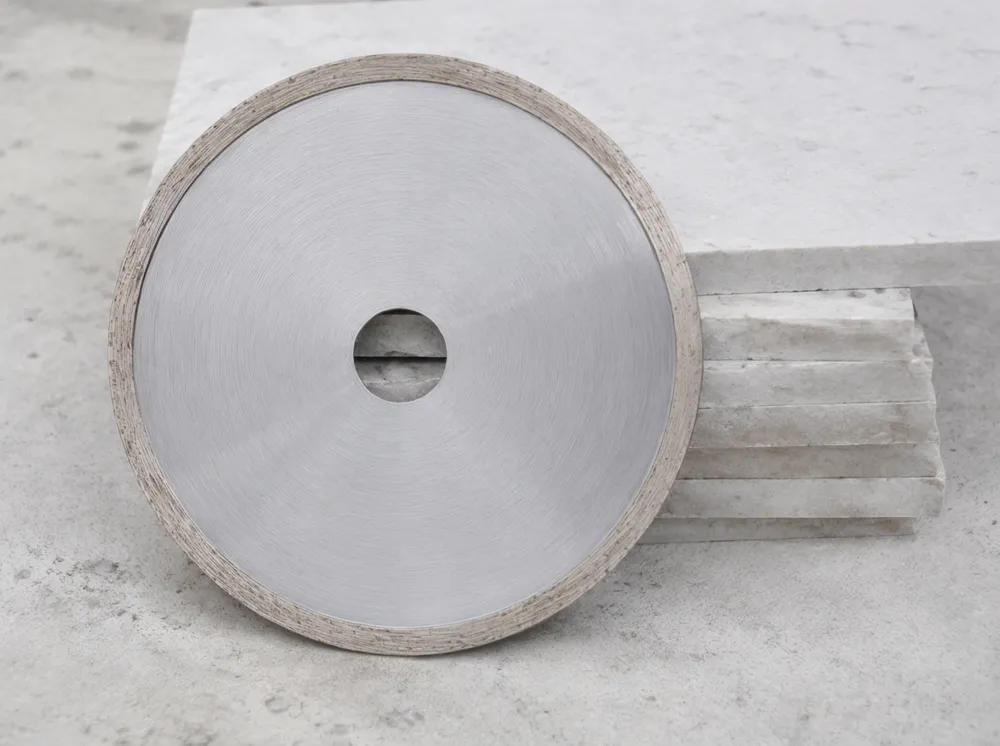
Marble Formulas
The Problem with Cutting Marble Using the Wrong Blade
Marble is soft — 3 to 4 on the Mohs scale — but that softness is precisely what makes it difficult to cut well. A blade designed for granite bites too aggressively into marble's crystalline structure, causing micro-fractures along the cut edge that show up as visible chipping once the slab is polished. Your fabrication customers don't return blades because they wore out too fast. They return them because the cut edge ruined a $200/m² slab.
We formulate our marble saw blades specifically for this family of stone. The bond matrix is harder than what we'd use on granite — counterintuitive until you understand that marble's low abrasiveness means a soft bond would expose diamonds too quickly, creating an aggressive cut that chips. A harder bond keeps diamond exposure controlled, producing a finer cut surface with minimal secondary processing. We've been refining these marble-specific formulas since our first export orders to Italian and Turkish fabricators who cut nothing but marble all day, every day.
The commercial result for you: fewer slab-damage claims from your downstream customers, which directly protects your margin and your supplier reputation. A fabricator who trusts your blade on a $15,000 marble slab is a customer who reorders without shopping around.
Protect Your Margin & Reputation
Fewer slab-damage claims from downstream customers. A fabricator who trusts your blade on a $15,000 marble slab is a customer who reorders without shopping around.
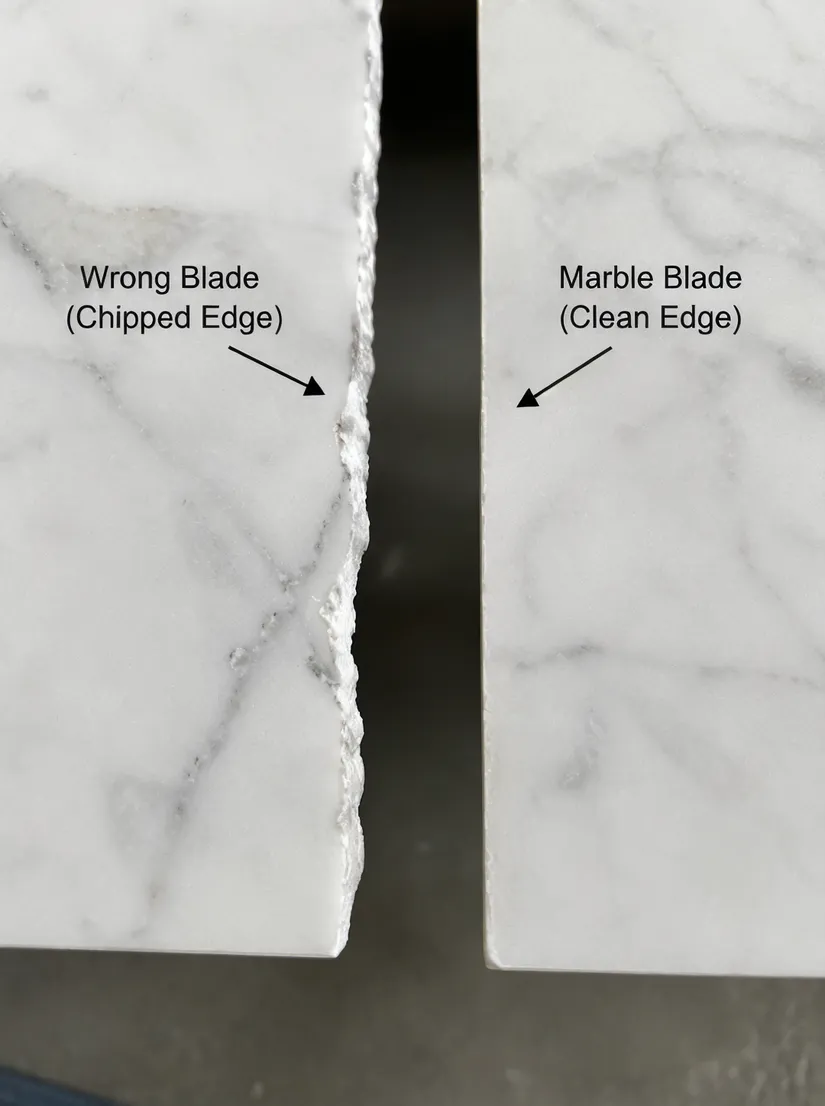
- Soft bond exposes diamonds too fast — aggressive cut chips marble
- Wide gullets hammer the stone at segment entry points
- Coarse grit creates visible micro-fractures after polishing
How a Diamond Marble Saw Blade Differs from a General-Purpose Blade
Three engineering differences separate a purpose-built marble saw blade from a general stone blade. These aren't features we list to differentiate from competitors. They're the engineering decisions that determine whether your customer curses or reorders.
Bond Hardness
Marble's low abrasiveness (it barely wears the bond matrix) requires a harder bond than granite blades. We use iron-based and cobalt-composite bonds calibrated to erode at the rate marble naturally abrades them — so diamonds expose continuously but gently.
On our standard marble formula, we target a bond hardness that matches the wear rate of Carrara-type calcite marbles. For harder crystalline marbles (certain Greek or Turkish varieties), we adjust downward slightly.
Segment Geometry
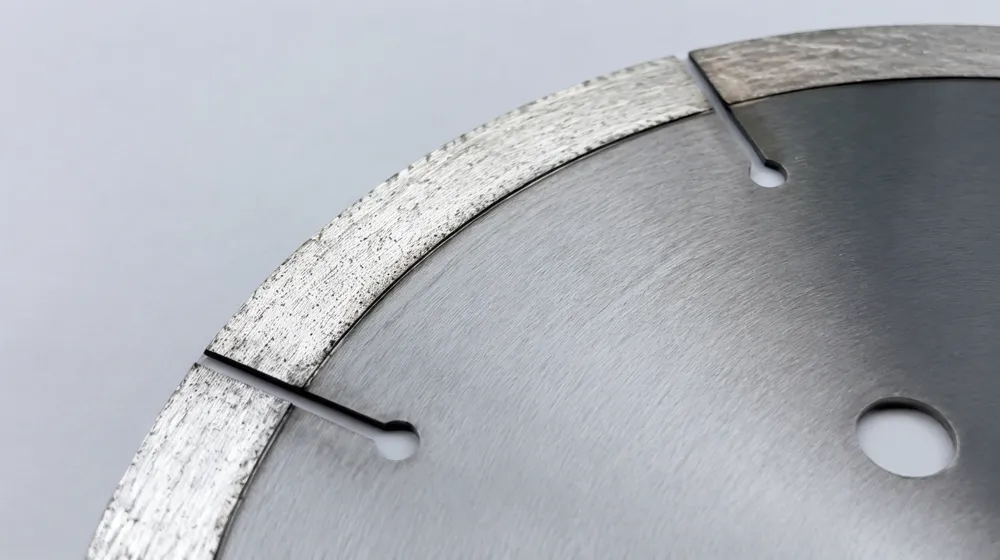
Most of our marble saw blades use continuous rim or narrow-gullet segment designs. Fewer gaps mean less impact force on the stone at each segment entry point, which is where chipping initiates.
Our standard marble segment uses a 2.8–3.2 mm rim width with narrow relief slots (rather than full gullets) that clear slurry without hammering the cut face. Wide gullets work on granite because granite can absorb the impact — marble cannot.
Diamond Specification
Finer diamond grit (typically 50/60 or 60/70 mesh for marble, versus 30/40 or 40/50 for granite) produces a smoother cut surface. We also use higher-quality crystal morphology — more uniform, blockier shapes that create consistent micro-scratches rather than random gouges.
The upfront diamond cost is higher per segment, but your end users save it back in eliminated polishing steps.
Marble Blade vs. General-Purpose Blade — At a Glance
| Parameter | Marble Blade (CLSEG) | General Stone Blade |
|---|---|---|
| Bond Matrix | Iron-based / cobalt-composite, harder | Softer bonds for abrasive stone |
| Segment Design | Continuous rim / narrow relief slots | Wide gullets for chip clearance |
| Rim Width | 2.8–3.2 mm | 3.2–4.0 mm+ |
| Diamond Grit | 50/60 – 60/70 mesh (finer) | 30/40 – 40/50 mesh (coarser) |
| Crystal Morphology | Uniform blocky shapes — consistent micro-scratches | Mixed shapes — random gouges |
Match the Formula to Your Marble
Carrara calcite, Greek crystalline, Turkish travertine — each erodes the bond differently. Send us your stone types and we'll recommend the correct formula from our existing range or develop a custom bond for your program.
Request Marble Saw Blade SamplesTechnical Specifications
Standard parameters for CLSEG marble saw blades. Actual specifications vary by diameter and application requirements.
Dimensional Parameters
- Diameter
- 300–900 mm
- Segment Height
- 10–15 mm
- Segment Width (Kerf)
- 2.8–4.0 mm
- Core Thickness
- 2.2–3.2 mm
- Arbor Bore
- 50 / 60 mm
25.4 mm arbor available for smaller diameters
Segment & Diamond
- Segment Type
- Continuous rim,
narrow-slot, close-segmented - Diamond Grit
- 50/60, 60/70 mesh
- Diamond Concentration
- 18%–25% vol
- Bond Type
- Iron-based,
cobalt-composite - Welding Method
- HF (standard),
laser (high-RPM)
Finer grits available for premium finish applications
Operating & Compliance
- Operating Speed
- 28–45 m/s
- Water Requirement
- Wet cutting only
- Application
- Bridge saws,
table saws - Certifications
- ISO 9001, CE, SGS, MPA
Marble generates calcite slurry requiring continuous water flush
Kerf Width & Material Savings
Narrower kerf means less material waste per cut. On premium marble where the slab itself costs $100–300/m², even 0.5 mm kerf reduction across hundreds of cuts saves meaningful material value for your fabrication customers.
We can produce down to 2.5 mm kerf on request for high-value stone applications.
*Specifications shown are standard values for this product type. Actual specifications may vary by diameter and application requirements. Contact us for detailed product data sheets for your specific configuration.
Marble Types and Formula Matching
Not all marble cuts the same. The calcite crystalline structure varies significantly by quarry origin, and that variation directly impacts blade performance. Here's how we match formulas.
Classic Calcite Marbles
Carrara · Sivec · Thassos White
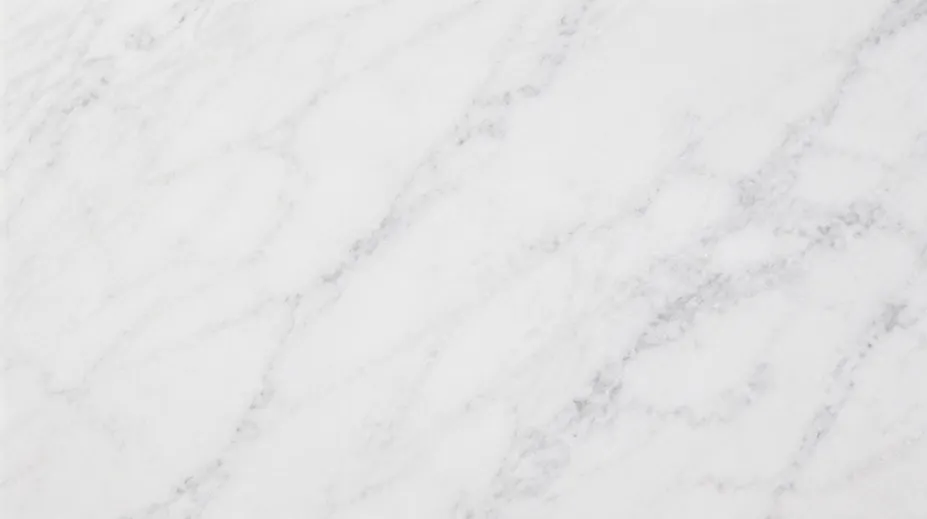
Soft, fine-grained, low abrasiveness. Our standard marble formula works here: hard bond, fine diamond, controlled exposure rate.
Key priority: Edge quality above all else — these stones are typically used for visible surfaces where any chip is a defect.
Crystalline Marbles
Volakas · Elba · Turkish varieties
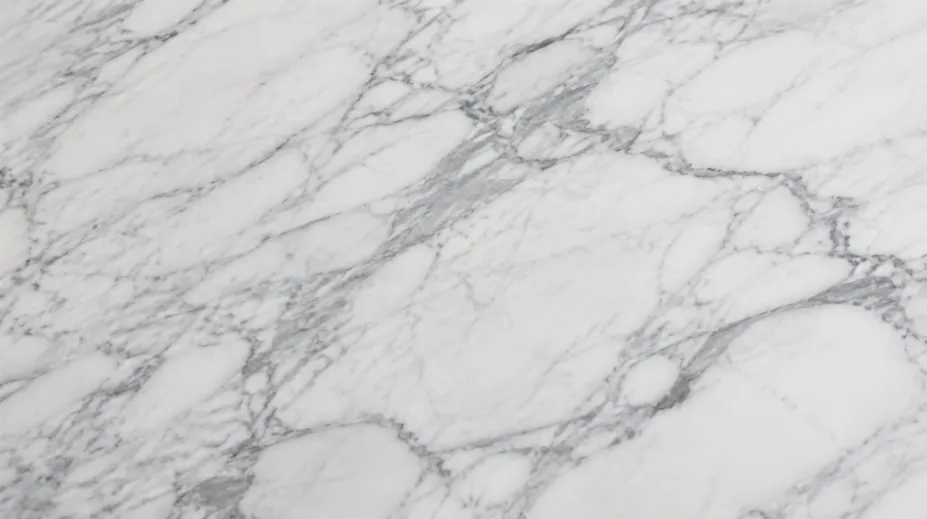
Medium grain, slightly more abrasive than pure calcite marbles. We soften the bond one grade to prevent glazing on longer cuts.
Key concern: These stones produce more heat during cutting — adequate water flow becomes critical to prevent thermal damage.
Travertine & Limestone
Voids · Cavities · Interrupted cuts
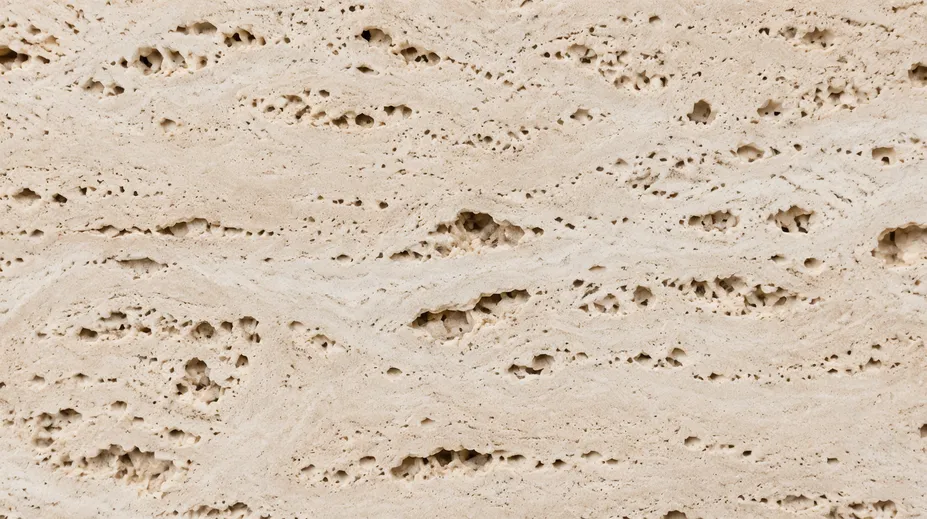
Similar hardness range to marble but with voids and cavities that create interrupted cuts. Segments hit air pockets and then stone in rapid succession.
Our solution: Slightly wider segment tips with reinforced front faces — otherwise the constant impact cycling fatigues the diamonds at the segment leading edge.
Onyx & Translucent Stones
Premium · Fragile · Natural fracture planes
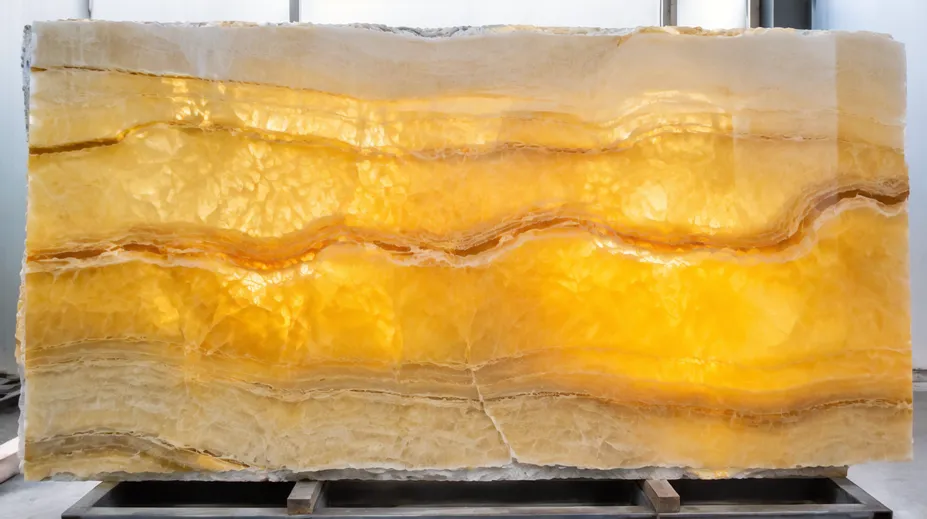
The premium end. Extremely fragile, often with natural fracture planes that propagate if the blade applies too much force.
Critical note: We specify finest diamond grit and lowest concentration for onyx, with recommendations for reduced feed rates. Onyx isn't marble — it needs patience. Pushing feed rate to match marble throughput causes failures unrelated to blade quality.
Tell Us Your Marble — We'll Match the Formula
When you tell us which marble varieties your customers process, we can recommend the right formula or adjust an existing one. If you're supplying a region where specific quarry output dominates — Turkish Marmara or Egyptian Galala, for instance — we've likely already formulated for it.
- Region-specific formulas already developed for major quarry outputs
- Custom bond adjustments available for mixed-stone product lines
- Sample testing with your specific stone before production commitment
Tell us the quarry origin and we'll recommend the right formula
Market Segments Where Marble Saw Blades Drive Repeat Revenue
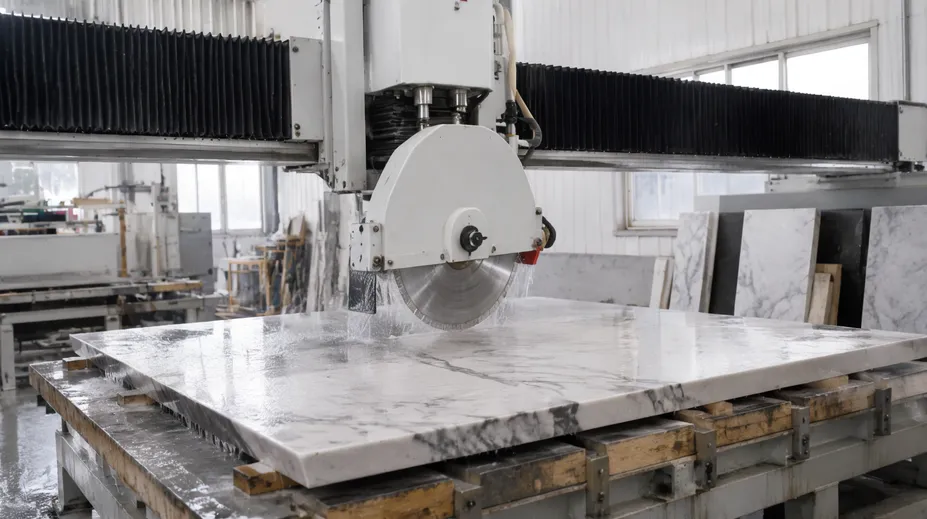
Countertop Fabrication Shops
The largest volume segment globally. Fabrication shops running bridge saws consume marble blades as a recurring monthly cost — a busy shop processing 30–50 marble slabs per week burns through blades on a predictable cycle.
Your customers in this segment value consistency above all: they calibrate feed rates to a specific blade's behavior, and inconsistency between batches means recalibration, test cuts on scrap material, and lost production time. We control batch consistency through automated pressing and sintering — your shipment in month eight performs identically to the trial order.
Order pattern: monthly or bi-monthly reorders of 20–100 blades per diameter. High lifetime value per account.
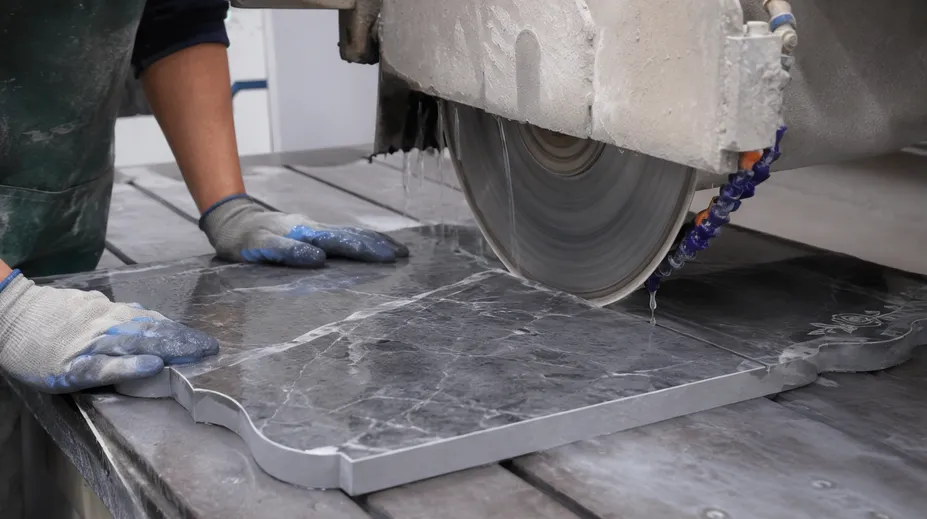
Monument and Memorial Manufacturers
Marble headstones, memorial plaques, and architectural monument pieces require precision cuts on relatively small workpieces where clamping force is limited. The blade must cut without vibration because any movement damages thin profiles.
Our narrow-kerf marble blades with higher concentricity tolerances serve this segment well. Monument manufacturers are price-sensitive on blades (lower margin per unit) but extremely loyal once they find a blade that doesn't ruin workpieces — supplier switching cost is high.
Order pattern: quarterly orders of 10–30 blades, but consistent multi-year accounts.
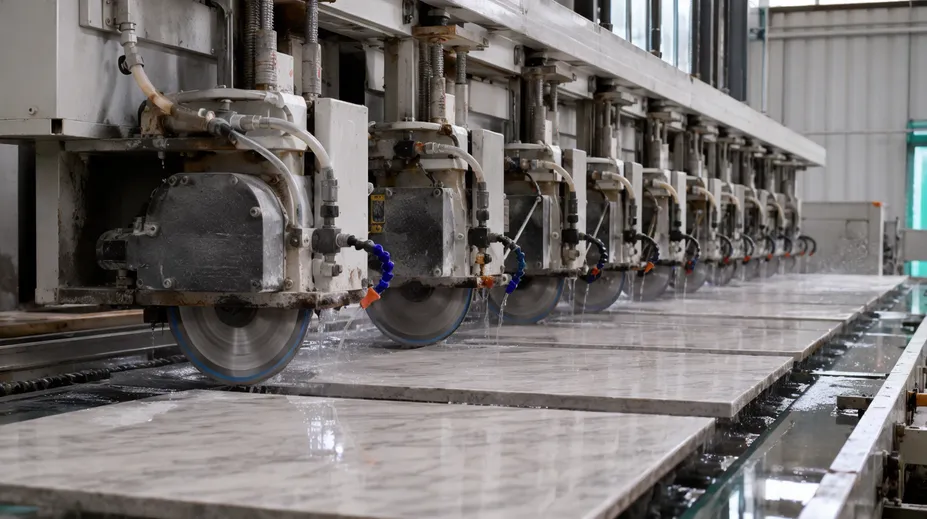
Marble Tile and Flooring Production Lines
Automated tile cutting lines run continuously and use multiple blades simultaneously. These operations prioritize blade life and edge quality equally — they can't stop the line to change blades mid-shift, and tile edges must be clean enough for seamless installation without additional edge grinding.
We configure longer-life segments (12–15 mm height) with consistent wear profiles for tile production customers.
Order pattern: bulk quarterly orders of 100–500 blades. Competitive segment but sticky once qualified.
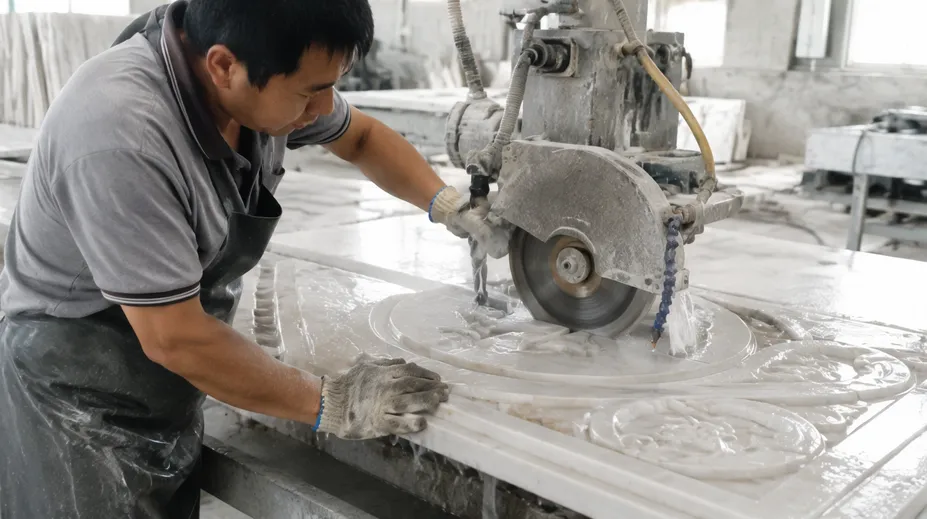
Decorative and Art Stone Processing
Lower volume, but premium pricing tolerance. Artists and specialty fabricators cutting marble sculptures, architectural features, and decorative panels need blades that allow curved cuts, plunge cuts, and detail work.
Smaller-diameter (300–350 mm) marble blades with thin kerf serve this niche. Your markup potential is highest here because these buyers select on performance reputation, not price comparison.
Order pattern: smaller lots, premium per-unit margin, reputation-driven loyalty.
Not sure which segments to prioritize?
Tell us which segments you serve — we'll recommend a starter SKU mix tailored to your market.
Manufacturing Precision for Marble-Specific Blades
The parent category page covers our full production process — 8 automated lines, 14,100 m² facility, 3 million pieces annual capacity. Here's what's different for marble blades specifically:

Sintering Profile Control
Marble segments use a lower sintering temperature than granite segments (by 20–40°C depending on bond composition) because the finer diamond grit we use for marble is more susceptible to thermal damage at high temperatures.
Over-sintered diamonds lose their cutting edges and produce a blade that glazes on first use. Our programmable furnaces run marble-specific temperature curves that protect diamond integrity while achieving full bond density.
We learned this through expensive trial-and-error in our first years — burnt diamond segments look normal visually, but they're dead before they ever touch stone.

Concentricity and Balance
Marble cutting demands tighter runout tolerance than granite cutting because any blade wobble translates directly into visible surface marks on the soft stone.
±0.05 mm
Marble blade runout
±0.1 mm
Granite blade runout
After welding, each marble blade gets dial-indicator measurement and correction on our CNC tensioning machines.
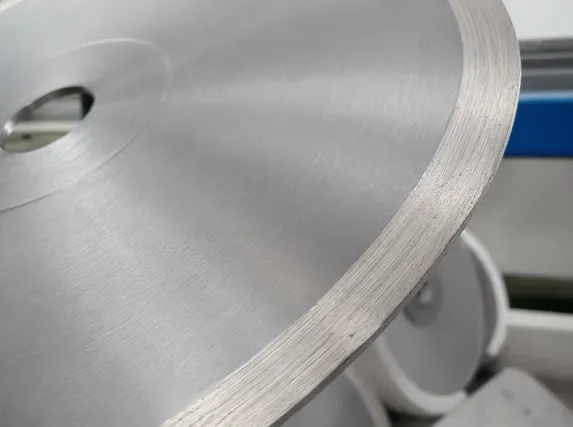
Segment Brazing Quality
For continuous-rim marble blades, the transition zone between segment and steel core must be perfectly flush. Any proud edge creates a scratch line on the marble slab that tracks with every rotation.
We grind and true the welded joint area to create a seamless segment-to-core transition on every continuous-rim blade.
Customization for Your Marble Saw Blade Program
We produce marble blades as OEM/ODM — your brand, your specifications, your formula on file for reorders.
What You Can Customize
Diameter
Any size from 300 mm to 900 mm in standard increments or custom dimensions
Arbor Bore
50 mm, 60 mm standard; custom bore sizes for regional machine types
Segment Height
10 mm to 15 mm — longer segments = longer life = higher per-unit price
Kerf Width
2.5 mm to 4.0 mm — narrower kerf for premium stone, standard width for production cutting
Bond Hardness
Adjustable by formula to match your market's predominant marble varieties
Diamond Concentration & Grit
Tunable for speed-priority or finish-priority applications
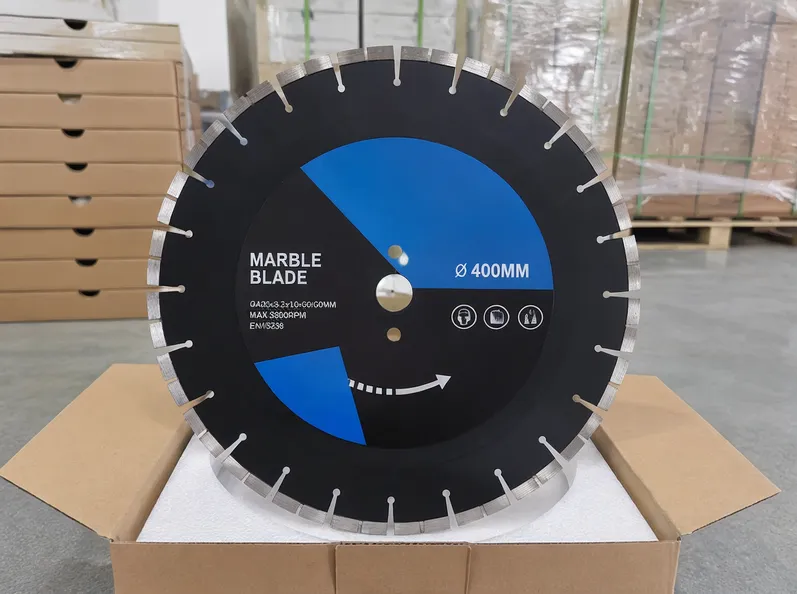
Core Color & Laser Printing
Your brand, model numbers, safety information — color-coded to your spec
Packaging
Individual blade sleeves, retail blister packs, or bulk carton packaging under your label
MOQ and Lead Times
Standard Formulas
50 pcs per specification
Ships within 25–30 days
Custom Formula Development
2–3 week sampling phase
+ production lead time after approval
Private-Label Packaging
100 pcs minimum per SKU
For custom print packaging
Sample Orders
5–10 pieces available
At production pricing for testing
Limitations — Being Upfront
Marble blades are wet-cut only — we don't produce dry-cut marble blades because the thermal stress in dry cutting destroys edge quality on soft stone, and the calcium dust without water creates segment loading that kills blade life. If your customer asks for a dry-cut marble blade, the honest answer is to change their process, not the blade.
Sibling Products — When Marble Isn't the Only Stone
Your customers likely cut more than marble. Here are related blades in our range for when you need to expand your product line.
Chip-Free Marble Saw Blades
Our premium-finish variant for decorative stone and visible-edge work where even minor edge imperfections are unacceptable. Higher diamond quality, tighter concentricity.
Fast Cut Marble Saw Blades
Speed-priority configuration for production environments that need higher feed rates without sacrificing edge stability. Slightly more aggressive diamond exposure.
Marble Bridge Saw Blades
Bridge saw-specific configurations optimized for the RPM ranges and arbor sizes of standard bridge saw equipment.
Granite Saw Blades
If your customers also process granite, these use an entirely different formula approach (soft bond, coarse diamond) for the harder, more abrasive material.
Continuous Rim Diamond Blades
Cross-material continuous-rim blades for customers who cut a variety of soft materials beyond marble (ceramic, porcelain, limestone).
Coverage Strategy for Fabrication Shops
Stocking marble and granite blades together covers 60–70% of a typical fabrication shop's needs. Add ceramic and engineered stone blades and you've covered most of their daily requirements from a single supplier.
Frequently Asked Questions
Practical answers to the specification and sourcing questions our marble blade partners ask most often.
What is the ideal feed rate for a diamond marble saw blade on a bridge saw?
For standard calcite marble (Carrara-type) on a 350–500 mm blade, typical feed rates run 1.5–3.0 m/min depending on slab thickness and desired edge quality.
Faster feed rates (2.5–3.0 m/min) are acceptable for cuts that will be polished afterward. For exposed edges on countertops or furniture pieces where you want minimal post-processing, slow to 1.5–2.0 m/min.
Our standard marble formula is designed to maintain stable edge quality up to 2.5 m/min on 20 mm and 30 mm thick slabs — beyond that, consider our fast-cut marble variant.
How long does a marble saw blade last compared to a granite blade?
On equivalent diameter and segment height, marble blades typically deliver 30–50% more linear meters of cutting than granite blades on the same machine — because marble's low abrasiveness wears segments much more slowly.
A 400 mm marble blade with 12 mm segment height typically delivers 1,500–2,500 m² of cutting area depending on slab thickness and marble hardness.
However, marble blades reach end-of-life more often from edge quality degradation (the remaining segment still has height but diamonds have dulled) than from complete segment wear. This is normal — your customers should judge replacement timing by cut quality, not visible segment height.
Can I use the same marble saw blade for travertine and limestone?
Travertine cuts similarly to marble in terms of hardness, so the same blade often works. However, travertine's characteristic voids create interrupted cuts that stress the segment leading edge differently than solid marble.
For customers processing more than 30% travertine, we recommend our formula variant with reinforced segment fronts that handle impact cycling better.
Limestone varies widely — soft limestone cuts like marble, but harder varieties (some French and German limestones) may benefit from a slightly softer bond. Tell us the specific stone source and we'll confirm whether your standard marble blade is appropriate or if a formula adjustment makes sense.
What causes edge chipping when cutting marble, and how do I prevent it?
Three common causes:
- Blade too aggressive for the stone (wrong formula — this is a specification error, not a defect)
- Insufficient water flow at the cut point (dried marble surface chips on contact)
- Excessive feed rate for the blade's diamond exposure level
The fix:
- Ensure water flow covers both sides of the blade contact zone (not just one side)
- Reduce feed rate by 20% if chipping appears
- Verify you're using a marble-specific blade rather than a general-purpose stone blade
If chipping occurs consistently from the first cut on a new blade, the bond formula is likely too soft for your marble type — contact us with the stone variety and we'll check the formula match.
What is the minimum order quantity for custom-formula marble saw blades?
Standard marble formulas from our existing library: 50 pieces per specification.
If you need a formula adjustment for a specific marble variety, we develop the modified formula, produce 5–10 sample blades for your testing, and then proceed with production orders at the same 50-piece MOQ once you approve.
The formula development and sampling phase takes 2–3 weeks and costs nothing additional — it's part of how we work with new partners.
Private-label packaging (your brand printed on blade and box) starts at 100 pieces per SKU to cover print setup costs.
Your Next Step: Tell Us What Marble You're Cutting
The fastest path to accurate pricing and specifications: tell us the marble types your customers process, the bridge saw or table saw brands they run, and your monthly or quarterly volume estimate. We'll respond within 48 hours with a recommended blade configuration, sample pricing, and lead times.
If you're currently sourcing marble blades from another manufacturer and experiencing edge quality issues, send us a photo of a typical chipped cut — we can usually identify whether it's a formula mismatch, a feed rate problem, or a blade construction issue, and recommend the correct specification.
Include in Your Inquiry
The more detail you provide, the more precise our first quote will be:
- Marble types your customers process (Carrara, Crema Marfil, Thassos, etc.)
- Blade diameters needed (350 mm, 400 mm, 500 mm, etc.)
- Bridge saw or table saw brands your customers run
- Monthly or quarterly volume estimate
- Any current quality issues (photos welcome)
- Private-label requirements (if applicable)
48-Hour Response Guarantee
Recommended configuration + sample pricing + lead times