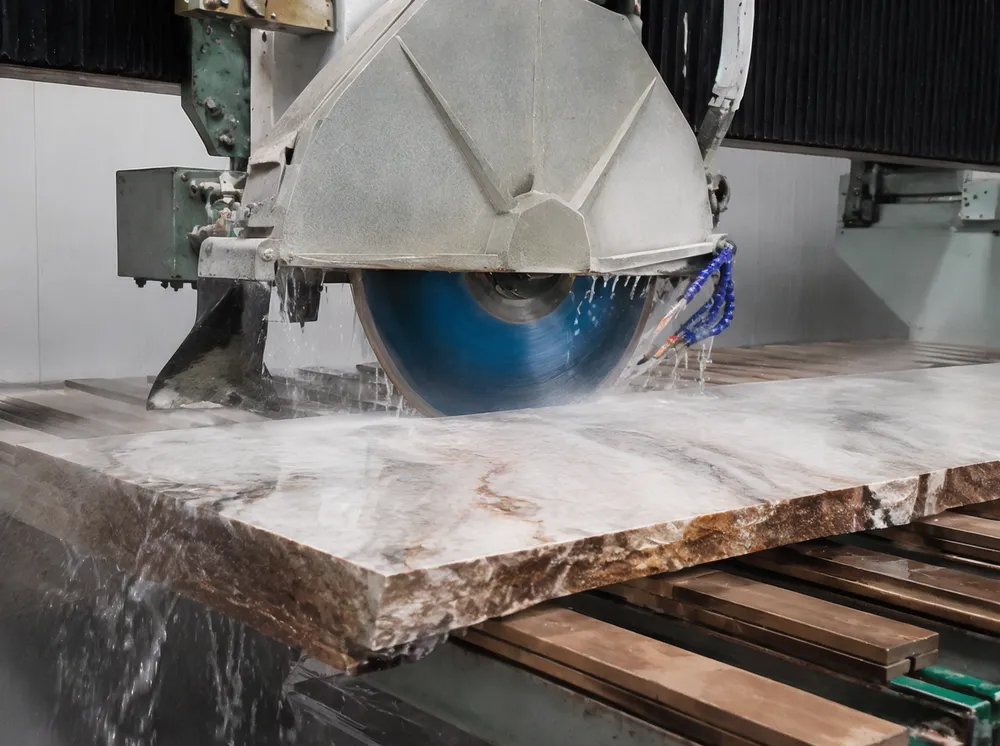
Quartzite Saw Blades Soft-Bond Formulas for the Hardest Natural Stone
We develop quartzite-specific bond chemistry that erodes fast enough to keep fresh diamonds cutting — so your customers stop burning through blades at 3× the normal rate.
The Quartzite Problem — and Why It Eats Standard Blades
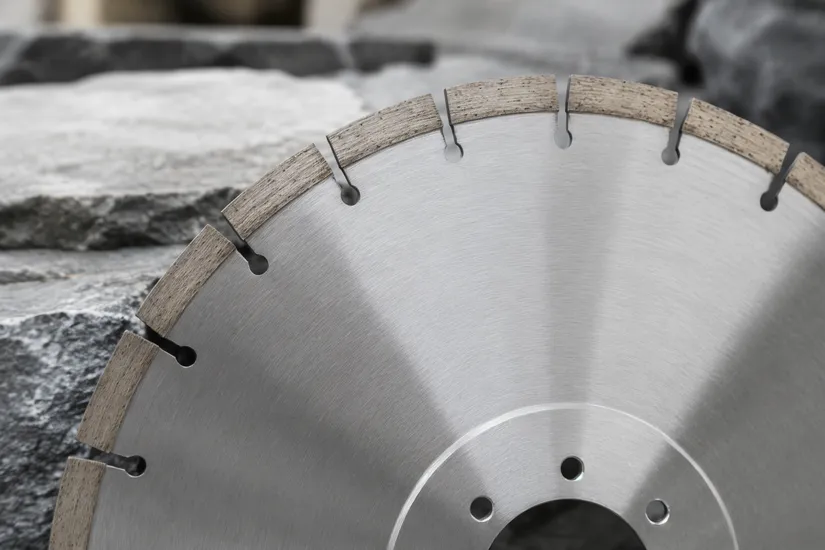
Quartzite is one of the hardest natural stones your customers will ever put through a bridge saw. Mohs 7–8, extremely dense, almost zero abrasiveness. That last part is the killer: because quartzite doesn't generate much abrasive dust during cutting, the metal bond matrix in a standard blade doesn't erode. Diamonds get dull, the bond won't release them, and the blade glazes — it spins but refuses to cut.
We've been formulating specifically for quartzite since fabricators in Southeast Asia and the Middle East started running more of it around 2016. The solution isn't simply "use a softer bond" — it's engineering the bond erosion rate to match the stone's extremely low abrasiveness while keeping enough matrix strength to retain diamonds under the cutting forces quartzite generates. Too soft and you burn through segments in half the expected life. Too hard and you glaze. The window is narrow, and we've spent years dialing it in across dozens of quartzite varieties from Brazil, India, Norway, and Italy.
This matters commercially because quartzite blade consumption has been growing as the material gains popularity in high-end countertop and architectural markets. Your fabrication customers are switching from granite to quartzite on more and more jobs — and discovering that their existing blade suppliers don't have a blade that actually works. That's a sourcing gap you can fill.
Why Standard Blades Fail on Quartzite
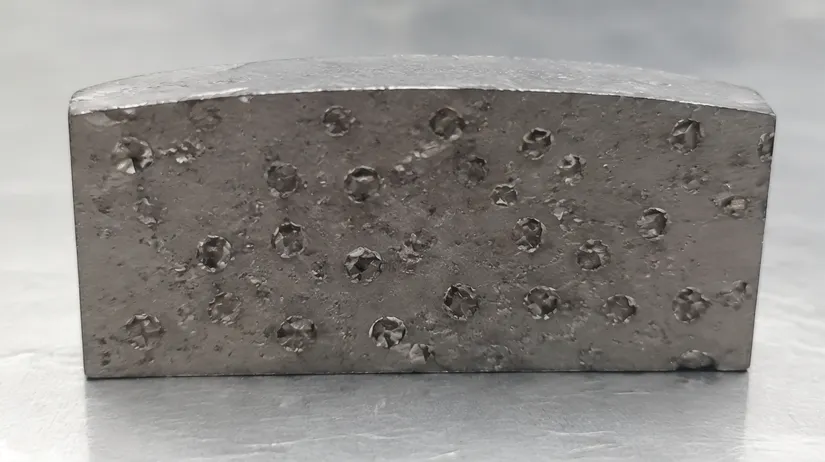
Low stone abrasiveness prevents bond erosion → diamonds dull and lock in → blade glazes and stops cutting.
How Our Quartzite Saw Blade Formula Differs from Standard Granite
The parent category page covers our general formula development approach in detail. Here's what's specific to our quartzite blade — each element is a deliberate engineering decision, not a generic "softer bond" shortcut.
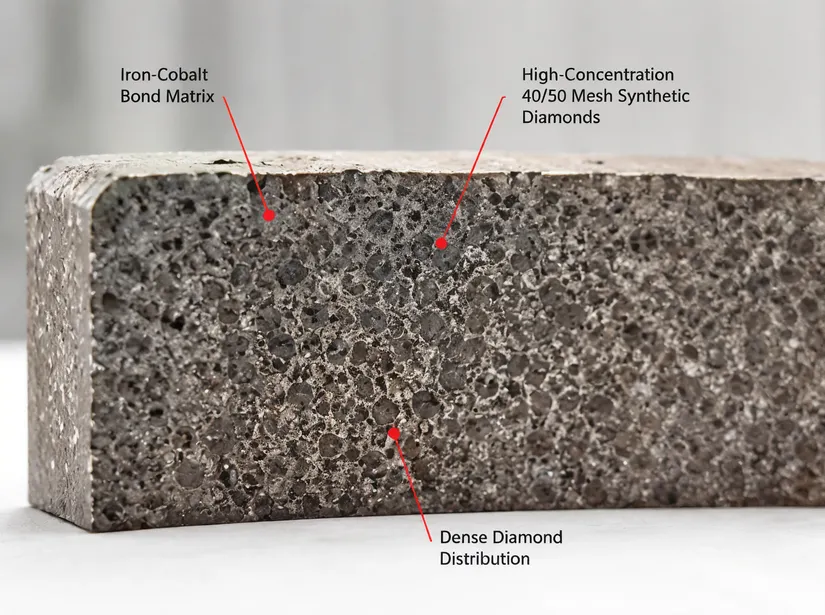
Each design element below addresses a specific failure mode we observed across production runs for OEM partners in Brazil (where fabricators cut Taj Mahal and Fantasy Brown daily), the Middle East (Sea Pearl, Arctic White), and Europe (Norwegian quartzites for architectural cladding). Each regional stone has slightly different characteristics, and we maintain formula variants in our library for quick matching.
This isn't theoretical. We've iterated this formula across those production environments and built a formula library that covers the quartzite varieties your customers are most likely to run.
Calibrated Iron-Cobalt Bond Erosion Rate
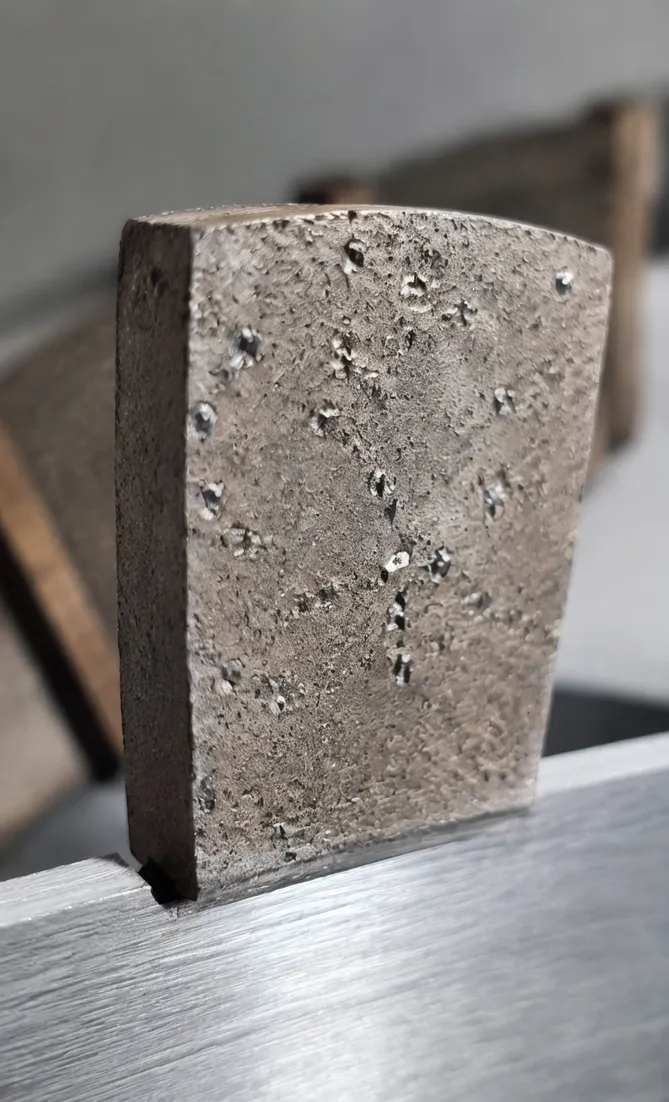
We use an iron-cobalt matrix tuned to erode at the rate quartzite's low abrasiveness demands. Not simply "softer" — the cobalt ratio controls erosion speed independently of structural strength, so the bond sheds spent layers without collapsing under cutting forces.
Higher Concentration at 40/50 Mesh
We increase diamond concentration above standard granite levels and use a coarser 40/50 mesh grit. More cutting points per unit area compensates for the slower feed rates quartzite requires, while the coarser grit provides more aggressive initial bite into the dense surface.
High-Toughness Synthetic Diamonds
Quartzite's hardness causes high impact stress on individual diamond crystals. We select high-toughness synthetic diamonds with blocky morphology that resist fracture under the specific load patterns quartzite generates — micro-chipping rather than catastrophic crystal failure.
Taller Segments with Optimized Slot Geometry
Increased segment height provides more diamond material per blade — critical when cutting a material that wears segments faster than granite once the formula is correctly tuned to erode. Slot patterns between segments are engineered to maximize coolant flow and slurry evacuation from the narrow kerf.
Quick Comparison: Standard Granite vs. Our Quartzite Formula
| Parameter | Standard Granite Blade | Our Quartzite Blade |
|---|---|---|
| Bond Matrix | Standard cobalt-bronze, relies on stone abrasion to erode | Iron-cobalt with calibrated self-erosion independent of stone abrasiveness |
| Diamond Mesh | 50/60 mesh typical | 40/50 mesh — coarser for more aggressive cut |
| Diamond Concentration | Standard loading | Higher concentration for more cutting points per mm² |
| Diamond Toughness | Medium-grade synthetic | High-toughness blocky morphology, impact-resistant |
| Segment Height | Standard (10–12mm typical) | Taller segments for extended life under calibrated erosion |
Blade Types × Quartzite Fabrication Jobs
We manufacture quartzite-optimized blades across every form factor your fabrication customers use. Each blade type below carries our quartzite-specific bond, diamond, and segment engineering — adapted to the machine type and cutting operation.
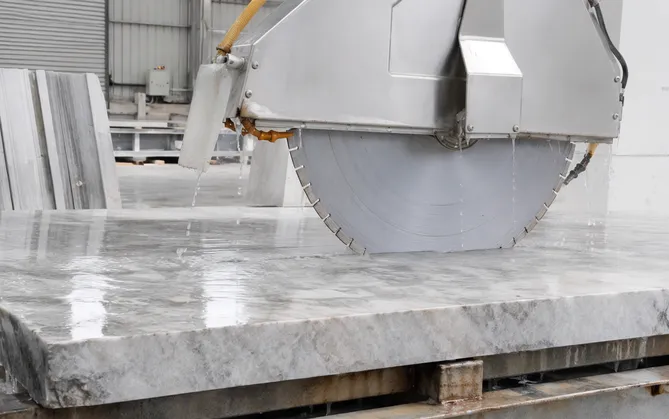
Bridge Saw Blades
Primary slab cutting on CNC and manual bridge saws. Our quartzite bridge saw blades maintain cutting speed through full-depth passes where standard blades glaze within the first few cuts.
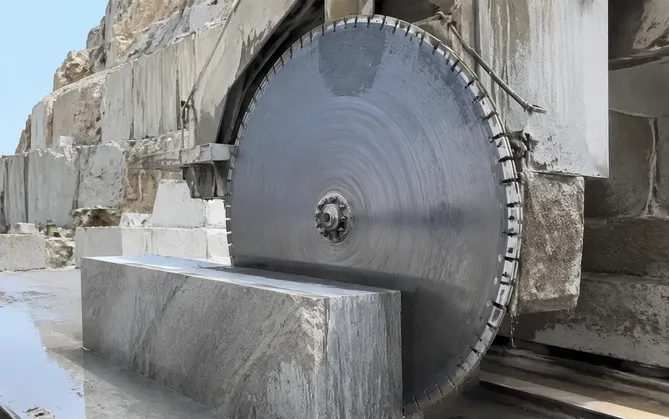
Block Cutting & Wall Saw Blades
Large-format blades for quarry-level block squaring and wall saw operations. These see the most extreme thermal and mechanical loads — our quartzite formula keeps segments alive through extended passes.
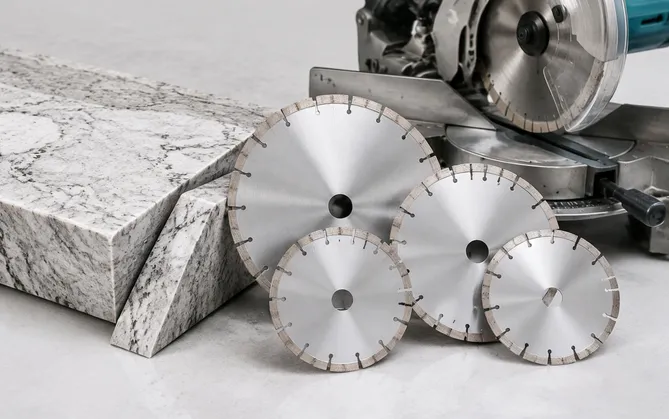
Miter & Edge Profiling Blades
Smaller diameter blades for miter saws and edge profiling machines. Quartzite miter cuts are where many fabricators first discover their blades can't handle the material — chipping and slow speed are common complaints.
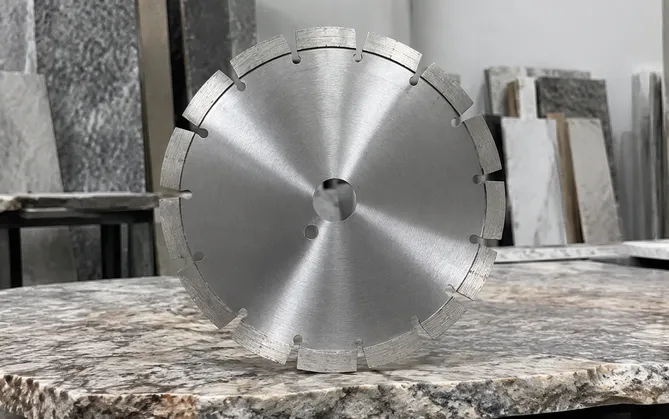
Segmented Circular Blades
General-purpose segmented blades for table saws and handheld cutters used on quartzite. These cover the high-volume, everyday cutting operations fabricators run across job sites and shops.
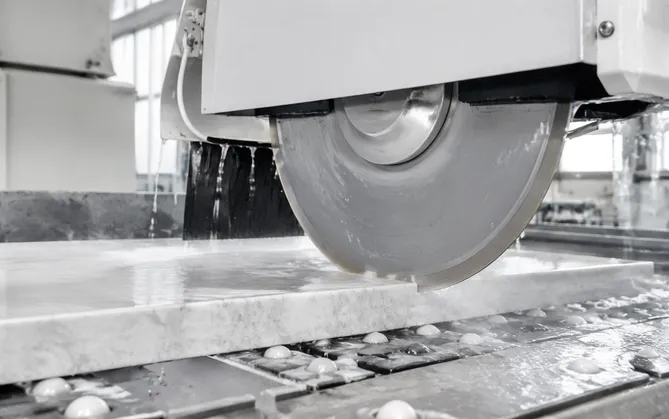
Continuous Rim Blades
For chip-free finish cuts on quartzite where edge quality is critical — exposed countertop edges, decorative panels, and precision architectural pieces. Continuous rim delivers the cleanest cut profile.
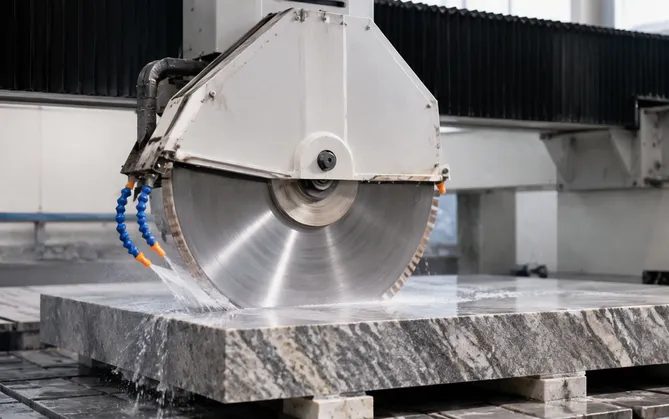
CNC Processing Center Blades
Blades matched to specific CNC machine parameters — arbor sizing, RPM ranges, and feed rate capabilities of major CNC stone processing centers. We supply these with machine-specific recommendations.
Don't see your exact application? We maintain formulas for specialty quartzite operations including wire saw segments, gang saw blades, and custom diameter requirements. Tell us the machine, the stone variety, and the cut type — we'll match from our library or develop to spec.
Technical Specifications — Quartzite Saw Blade Range
Your fabrication customers are comparing blade specs on their procurement sheets. These numbers let you fill that comparison — and the diamond concentration column is where our quartzite blade pulls ahead of generic "hard stone" blades from competitors using standard granite formulas with a soft-bond label applied.
| Parameter | Standard Range |
|---|---|
| Diameter | 300 mm – 600 mm |
| Segment Height | 10 mm – 15 mm |
| Segment Width | 3.0 mm – 4.0 mm |
| Core Thickness | 2.4 mm – 3.2 mm |
| Arbor Bore | 50 mm, 60 mm |
| Welding Method | High-frequency (std) / Laser |
| Diamond Grit | 40/50 mesh (std) |
| Diamond Concentration | 25%–30% by volume |
| Bond Type | Iron-cobalt soft matrix |
| Recommended RPM | 2,000–3,000 |
| Operating Speed | 28–35 m/s |
| Cooling | Wet cutting required |
Specifications shown are standard production values for our quartzite blade range. Exact specifications may vary by diameter and custom requirements. Contact us for detailed data sheets.
Need spec sheets for specific diameters?
We'll send detailed data sheets matched to your target saw configurations.
Market Segments Where Quartzite Blades Generate Repeat Revenue
Each of these segments has growing demand because quartzite's market share in premium stone is expanding year over year. Your existing granite blade customers are already being asked to cut quartzite — they just don't have the right blade yet.
High-End Residential Countertops
Highest Volume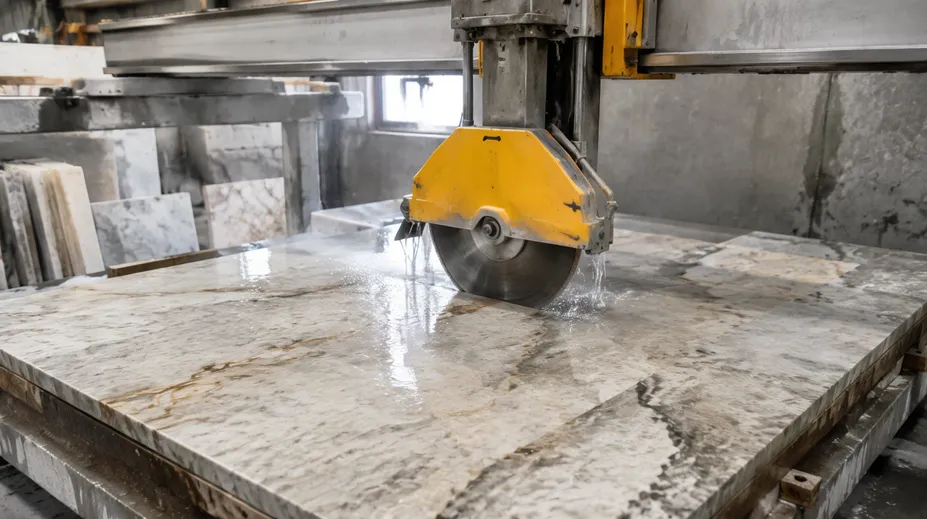
Quartzite has become the premium alternative to marble for kitchen and bathroom surfaces — harder, more stain-resistant, visually dramatic. Fabrication shops serving the residential luxury market cut quartzite daily and burn through blades fast when they're using wrong-formula products.
A blade that actually performs on quartzite becomes their default reorder.
Typical shop consumption: 2–4 blades per month for a single bridge saw running quartzite 60% of the time. That's recurring monthly revenue from each fabrication account you supply.
Commercial Architecture and Cladding
High Volume per Project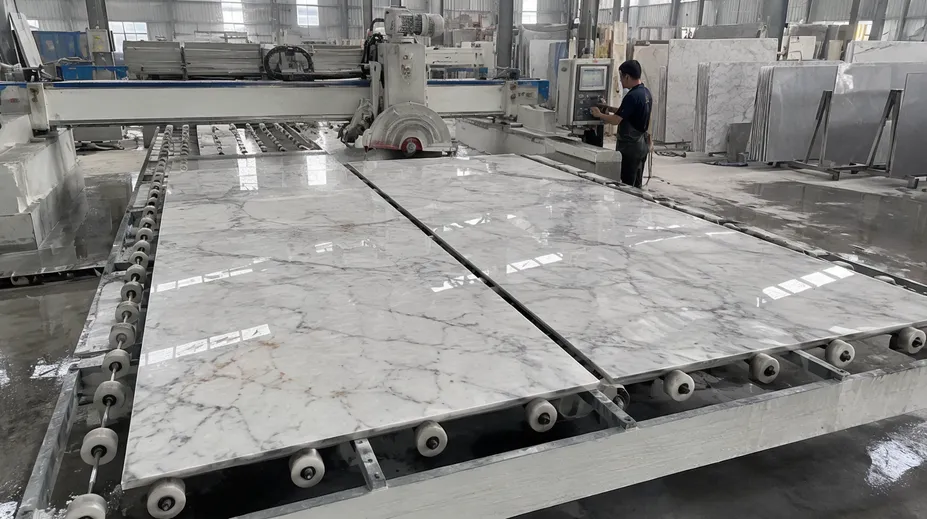
Large-format quartzite slabs for building facades, feature walls, and floor panels. Architecture firms specify quartzite for its hardness and unique veining patterns. The fabrication jobs are large — hundreds of square meters per project — and blade consumption scales with volume.
Contractors need reliable supply to avoid project delays, so they'll lock in a blade supplier for the duration of a multi-month installation project.
Project scale: We've seen single commercial projects consume 30+ blades over their fabrication phase.
Monument and Premium Stonework
Reputation Builder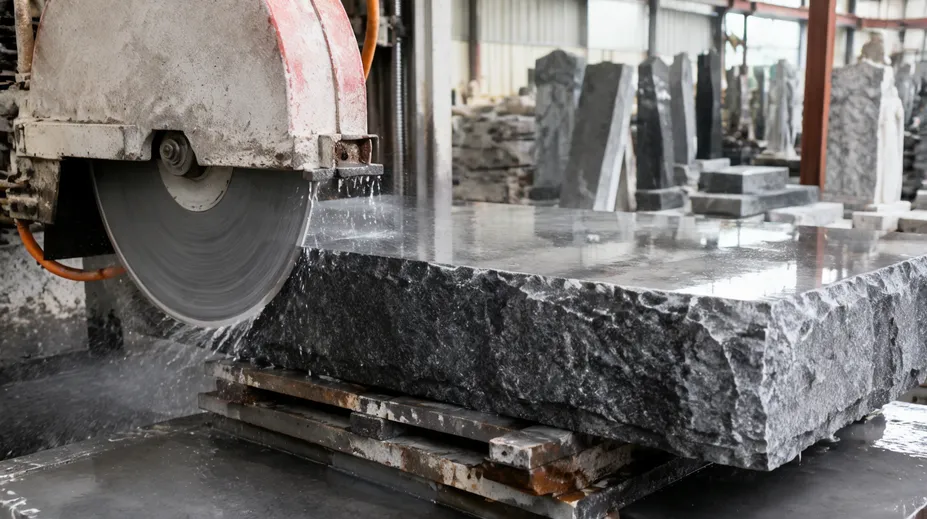
Memorial stones, custom sculptures, and heritage restoration where quartzite is specified for its permanence. Lower volume per customer but very high blade performance demands — rough cuts and precision profiling on extremely hard material.
This is where your product's reputation gets built: a blade that survives monument-grade quartzite earns word-of-mouth among a tight community of specialist fabricators.
Quartzite Quarry and Block Processing
Specialized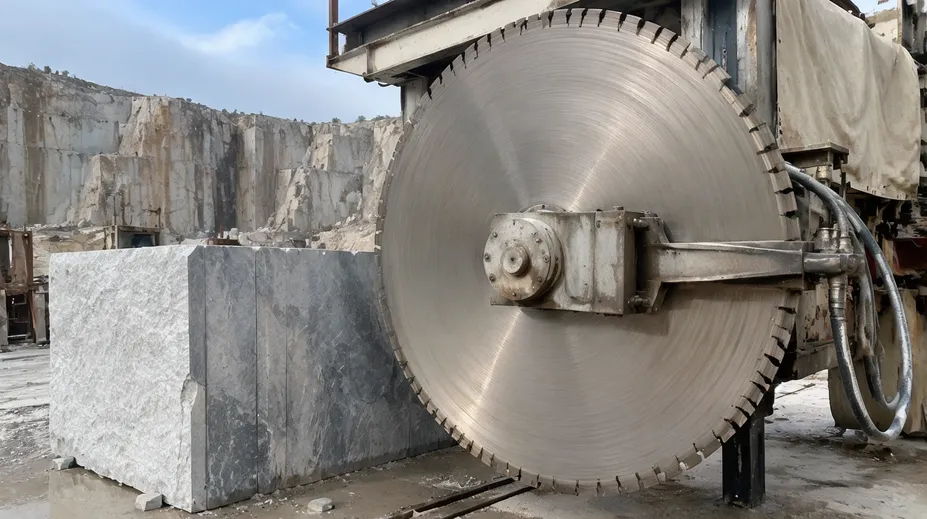
Quarries extracting quartzite blocks for downstream fabrication. Gang saw and large-diameter block cutting applications exist, though the bulk of quartzite fabrication happens at the slab-processing stage on bridge saws.
If you supply quarry operations, ask us about our large-diameter quartzite formulas — different segment geometry for the slower feed rates and longer continuous cuts that block processing requires.
Tell us your target market segments
We'll recommend a quartzite blade SKU list matched to your distribution channels.
Quartzite Bridge Saw Blade — The Volume Configuration
The quartzite bridge saw blade is the configuration most of our distributors stock as their primary quartzite offering. Bridge saws handle the majority of quartzite processing worldwide — slab cutting, countertop profiling, tile dimensioning.
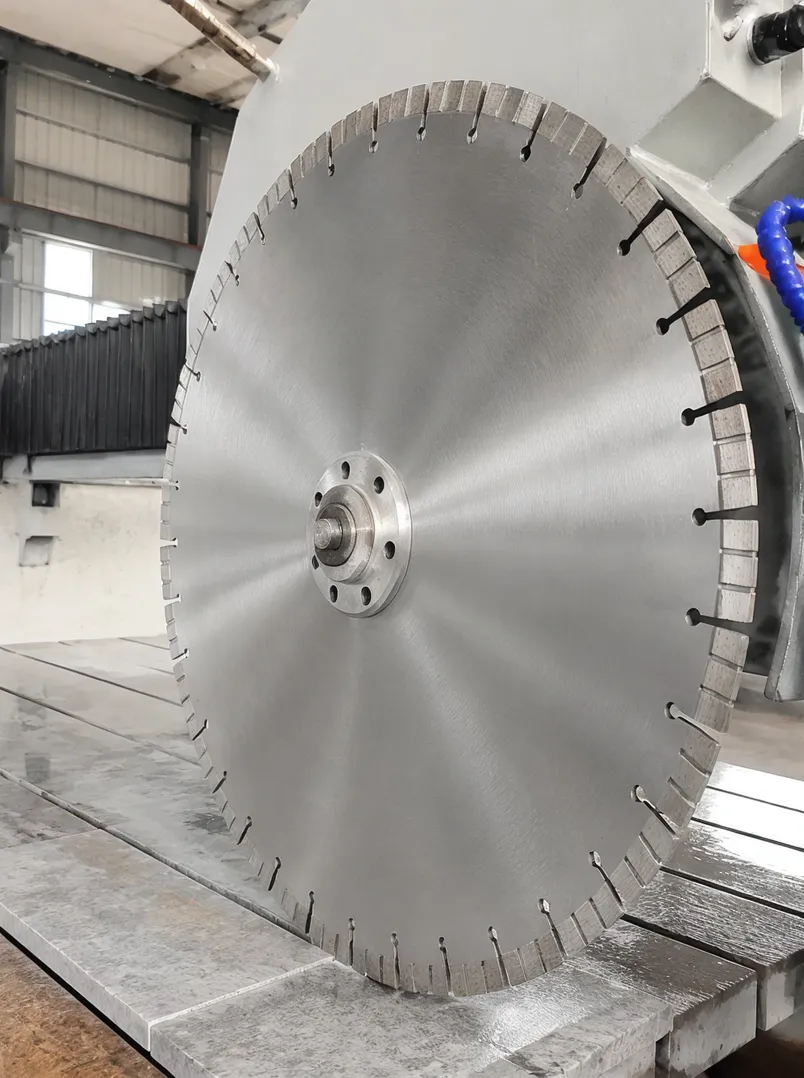
Feed Rate Optimization
Bridge saws typically feed at 3–5 m/min on hard stone. Our segment geometry and diamond exposure rate are calibrated for this speed window — fast enough to maintain productivity, controlled enough to prevent segment overheating.
If your customers are running newer CNC bridge saws with automatic feed control, our blade works with the machine's feedback loop without creating the speed-hunting behavior that mismatched blades cause.
Water Flow Compatibility
Standard bridge saw water systems deliver 15–25 L/min to the blade. Our gullet design and segment spacing ensure complete slurry flushing within that flow range.
Some competitors design for higher water flows that only large industrial saws provide — the blade glazes on standard bridge saws because slurry builds up in undersized gullets.
Arbor & Flange Compatibility
We stock 50 mm and 60 mm bore configurations that fit the major bridge saw brands — Park Industries, Breton, Intermac, BACA, Prussiani, and Chinese-built equivalents.
Custom bore sizes for less common machines take 3–5 days extra on production.
Cut Quality on Quartzite
Clean, chip-free edges are essential for countertop fabrication because visible edges (waterfalls, mitered corners) go directly to the consumer.
Our segment design produces edges that require minimal polishing — saving your customers labor on every slab they process.
Stocking Recommendation
If you're building your quartzite blade line, the 400 mm and 450 mm bridge saw configurations cover roughly 80% of fabrication demand. Start there, expand to 350 mm and 500 mm once you know your customer base.
Customization: What We Can Adjust for Your Market
Formula Tuning by Quartzite Variety
Brazilian Super White vs. Norwegian Silver Quartzite vs. Indian Fantasy Brown — each has different quartz crystal structure and bonding mineral content.
We maintain formula variants for major commercial quartzite varieties and can develop new ones based on stone samples you send.
Diameter & Arbor
Any diameter in the 300–600 mm range, any standard or non-standard arbor bore.
If your market predominantly uses machines with uncommon arbor sizes, we produce to match.
Segment Height
Standard 10 mm segments suit most fabrication shops.
High-production operations running automated bridge saws 10+ hours daily benefit from 12–15 mm tall segments — longer life per blade, fewer blade changes per shift. We adjust segment height without changing the formula.
Private Label
Your brand, your packaging, your blade color coding.
MOQ for private-label quartzite blades starts at 50 pieces per specification — lower than most quartzite blade manufacturers offer because our production setup handles labeling and packaging in-line.
Silent Core Option
For fabrication shops operating in shared commercial spaces or regions with occupational noise regulations (EU, Australia, parts of the US), we offer quartzite blades on sandwich-construction silent cores.
- 10–15% cost premium
- Reduces operational noise by 3–5 dB
What We Won't Customize
We won't formulate for dry cutting on quartzite. The heat generation is too high — dry-cutting quartzite destroys diamond integrity regardless of bond design.
We'd rather tell you that upfront than sell you a blade that underperforms. If your customers must cut quartzite without water, the realistic answer is a different cutting method entirely, not a different blade formula.
Ready to match the formula to your quartzite?
Send us your quartzite type and machine specs — we'll match the formula.
Why Quartzite Blades Fail — Manufacturing Prevention at the Source
Three failure modes dominate quartzite blade complaints. All three trace back to manufacturing and specification decisions, not operator error.
Glazing
Blade stops cutting
Bond too hard for the stone. This is the #1 complaint from distributors whose current supplier sells "granite/quartzite" multi-purpose blades.
Root Cause
There is no effective multi-purpose blade for quartzite. The bond requirements are too different from even hard granite. We dedicate a formula specifically to quartzite and don't compromise it by trying to make it work across other materials.
Premature Segment Wear
Segments disappear too fast
The opposite problem — bond too soft, or diamond quality too low. Cheap quartzite blades use low-TI diamonds that fracture under the heat quartzite generates.
Our Solution
We spec high-TI synthetic diamonds with thermal stability rated above 850°C — they stay intact through the heat cycles quartzite cutting produces. The diamonds cut instead of shattering, so segments wear evenly rather than eroding while chasing already-broken grit.
Segment Cracking
Segments fracture instead of wearing evenly
Caused by thermal shock when intermittent water flow hits overheated segments, or by internal porosity in poorly sintered segments.
Our Prevention
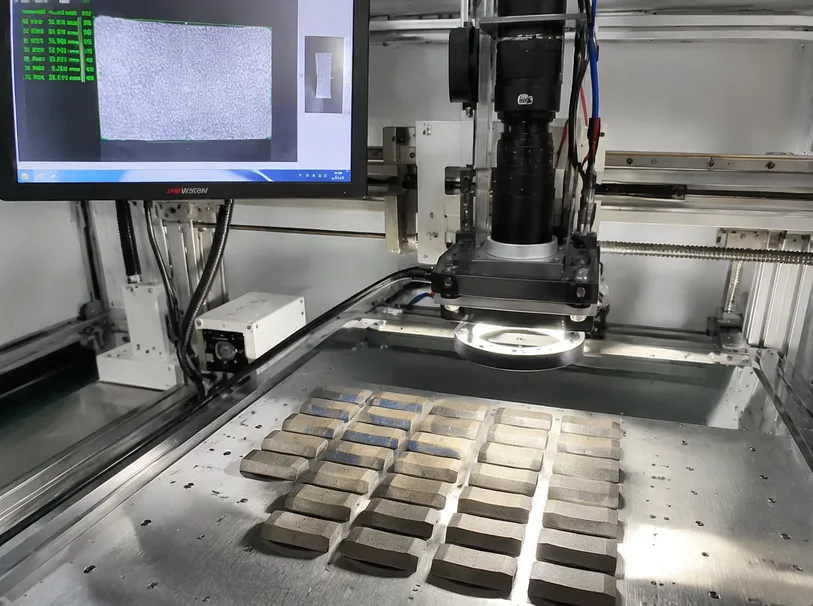
Fully automated sintering runs consistent pressure and temperature profiles that eliminate porosity. We pull samples from every batch and check density — if void content exceeds our threshold, that batch restarts.
Batch Density Inspection
We scrap about 2% of quartzite segment batches on density alone — a higher rejection rate than our granite segments because the tighter tolerance matters more on hard stone.
These aren't quality problems you can inspect at receiving. They show up 50 cuts into the blade's life when your customer calls you frustrated. Preventing them requires manufacturing discipline at the sintering and formula stages — which is why buying quartzite blades from a factory that controls its own formulas and sintering matters more than it does for commodity granite blades.
Key Takeaway
A factory that controls its own formulas and sintering delivers reliability you cannot replicate by inspecting blades at receiving.
Packaging and Logistics for Quartzite Blade Orders
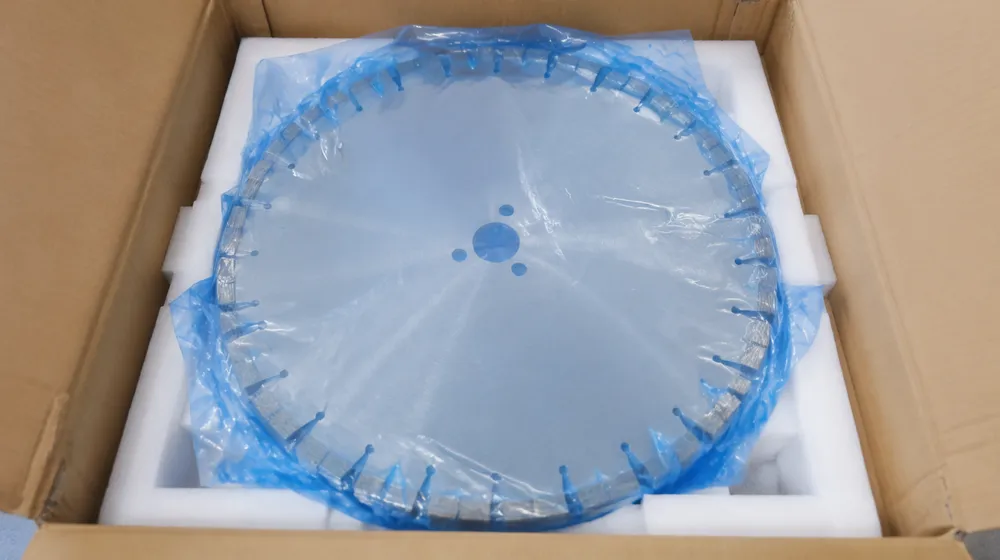
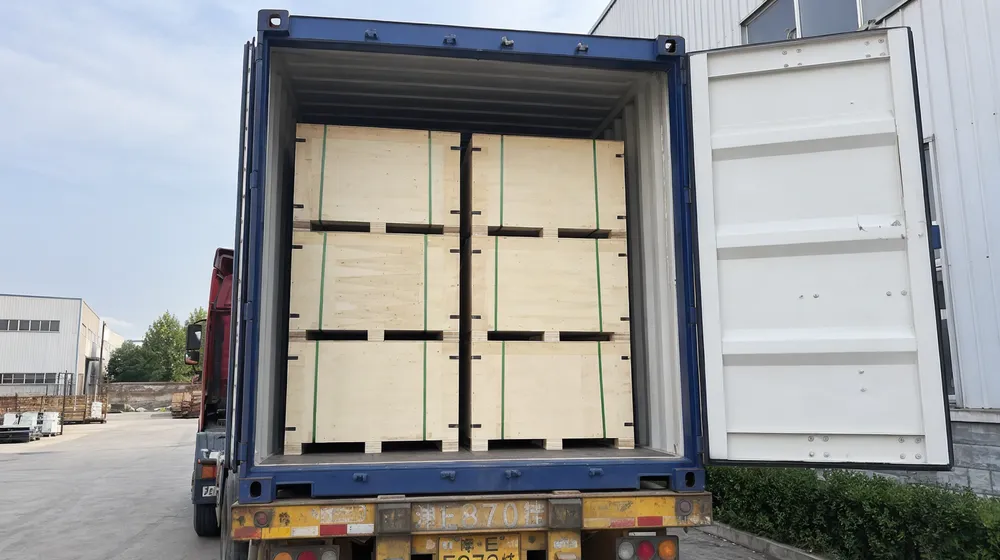
Quartzite blades ship in the same packaging format as our broader diamond saw blade range — VCI-wrapped individual blades in reinforced cartons with foam separators, wooden crates for larger quantities or diameters above 500 mm.
Container Loading
A 20GP container holds approximately 3,000–5,000 pieces of 400–450 mm quartzite blades depending on segment height and packaging configuration.
Mixed containers with multiple diameters are standard — we pack efficiently regardless of SKU mix.
Lead Time
- Stock formula (standard diameters): 25–30 days from order confirmation
- Custom formula (new quartzite variety matching): add 2–3 weeks for sampling and approval
- Repeat orders (established formulas): 20–25 days
Sampling
We send 2–5 sample blades at production pricing for your customers to test before committing to volume.
Most distributors test on their most demanding fabrication customer first — if the blade survives their quartzite, it'll work for everyone in your territory.
Frequently Asked Questions
Concrete answers to the bond, speed, life, and logistics questions distributors ask before committing to a quartzite blade specification.
What is the right diamond bond hardness for quartzite saw blades?
Softer than you'd expect, even compared to hard granite blades. Quartzite's Mohs 7–8 hardness is misleading — the critical factor is its near-zero abrasiveness, which means the bond must self-erode without relying on cutting dust to wear it away. We formulate 2–3 bond grades softer than our standard hard granite specification.
If your current quartzite blade glazes within the first 20–30 cuts, the bond is too hard for the stone variety you're cutting — contact us with the quartzite name or origin and we'll match the correct formula.
Can I use a granite saw blade to cut quartzite?
You can try, but you'll get glazing within minutes on most quartzite varieties. Granite is typically Mohs 6–7 and moderately abrasive — a good granite blade formula relies on the stone's abrasiveness to help wear the bond and expose diamonds. Quartzite doesn't provide that abrasion, so granite blade bonds don't erode, diamonds dull in place, and cutting performance drops to near zero.
Selling a "granite/quartzite" multi-purpose blade to your customers is a returns problem waiting to happen. Stock a dedicated quartzite formula.
What feed rate should a fabricator use when cutting quartzite on a bridge saw?
3–5 m/min with water cooling is the productive range for most quartzite on standard bridge saws (15–25 HP). Pushing beyond 5 m/min risks thermal damage to diamonds — quartzite generates more heat per meter of cut than granite because the stone doesn't absorb energy through abrasive dust creation.
If your customer's bridge saw has automatic feed control, the saw will typically self-regulate downward on quartzite compared to granite settings. Our blade is designed for this speed window.
How many linear meters does a quartzite saw blade typically cut?
Depends on quartzite variety, blade diameter, and segment height. For a standard 400 mm blade with 10 mm segments running on a bridge saw at 3–5 m/min:
- Mid-hardness quartzite (Taj Mahal, Fantasy Brown): 250–400 linear meters
- Harder varieties (Super White, Sea Pearl): 180–300 linear meters
These are industry-typical ranges — actual life depends on machine condition, water flow, and operator feed consistency. Contact us with your target quartzite and we'll give you a narrower estimate.
What certifications do your quartzite saw blades carry?
Our blades are manufactured under ISO 9001:2015 quality management. CE marking and MPA safety certification cover the product range for European market compliance. SGS testing reports are available on request.
If your target market requires specific additional certifications, contact us to confirm availability — we maintain current certification across our standard range and can provide documentation with your order.
What is the minimum order quantity for quartzite saw blades?
- Stock formula blades in standard diameters: 50 pieces per specification
- Private-label orders with custom packaging: 50+ pieces per specification
- Sample quantities (2–5 pieces for testing): available at production pricing
- Custom formula development for a new quartzite variety: MOQ starts at 100 pieces after formula approval via sample testing
Sibling Products — When the Stone Isn't Quartzite
Not every hard stone your customers cut is quartzite. Here's how our quartzite blade relates to adjacent products in the range.
Cutting Hard Granite?
Our Granite Saw Blades use a medium-hard bond tuned for granite's moderate abrasiveness. Right for stones like Absolute Black, Blue Pearl, and standard commercial granites. If your customer's stone is clearly granite (not quartzite marketed as granite), the granite blade is the cost-effective choice.
View Granite BladesCutting Engineered Quartz (Caesarstone, Silestone)?
That's a different material entirely — resin-bound quartz aggregate, not natural metamorphic quartzite. Our Engineered Stone Saw Blades are formulated for the resin content and silica abrasion pattern that engineered quartz creates. Don't substitute a quartzite blade here.
View Engineered Stone BladesNeed Silent Operation?
Our Silent Core Diamond Blades are available with quartzite-specific segments. If noise reduction is the priority, ask us about combining our quartzite formula with a sandwich-construction silent core.
View Silent BladesPremium Finish with Zero Chipping?
For visible edges on high-end quartzite countertops, a slower feed rate combined with our quartzite formula already produces clean edges. If you're looking for an ultra-premium finishing blade, our engineering team can discuss continuous rim configurations — though these sacrifice speed for edge quality.
Contact Engineering TeamCommon Stocking Mistake
The most common stocking mistake we see: distributors buying a generic "hard stone" blade and trying to cover both quartzite and hard granite with one SKU. It doesn't work. Quartzite's unique combination of extreme hardness and near-zero abrasiveness demands its own formula. Stock both, sell each for its specific application, and your returns drop to near zero.
Start with a Sample on Your Toughest Quartzite
The fastest way to validate our quartzite blade for your market: send us the name of the quartzite your customers cut most. We'll match it against our formula library, produce 2–5 sample blades in your preferred diameter, and ship them for production testing.
Most distributors put the sample into their most demanding fabrication customer's hands first — if it performs there, you have your answer.
If you're sourcing quartzite blades for the first time, tell us your market region and we'll suggest which quartzite varieties are trending in your area based on what our existing partners are ordering. We can recommend a starter SKU configuration that covers the majority of your customers' needs.
How the Sample Process Works
- 1 Tell us your quartzite variety and preferred blade diameter
- 2 We match against our formula library and produce 2–5 sample blades
- 3 Samples ship for production testing at your toughest fabrication customer
- 4 If it performs there, you have your answer — move to volume ordering
Contact Us Directly
Or submit a detailed inquiry through our RFQ form — include the quartzite varieties, blade diameters, and monthly volume you're targeting. We'll respond with formula recommendations and FOB pricing within 48 hours.
Submit RFQ for Quartzite Blades