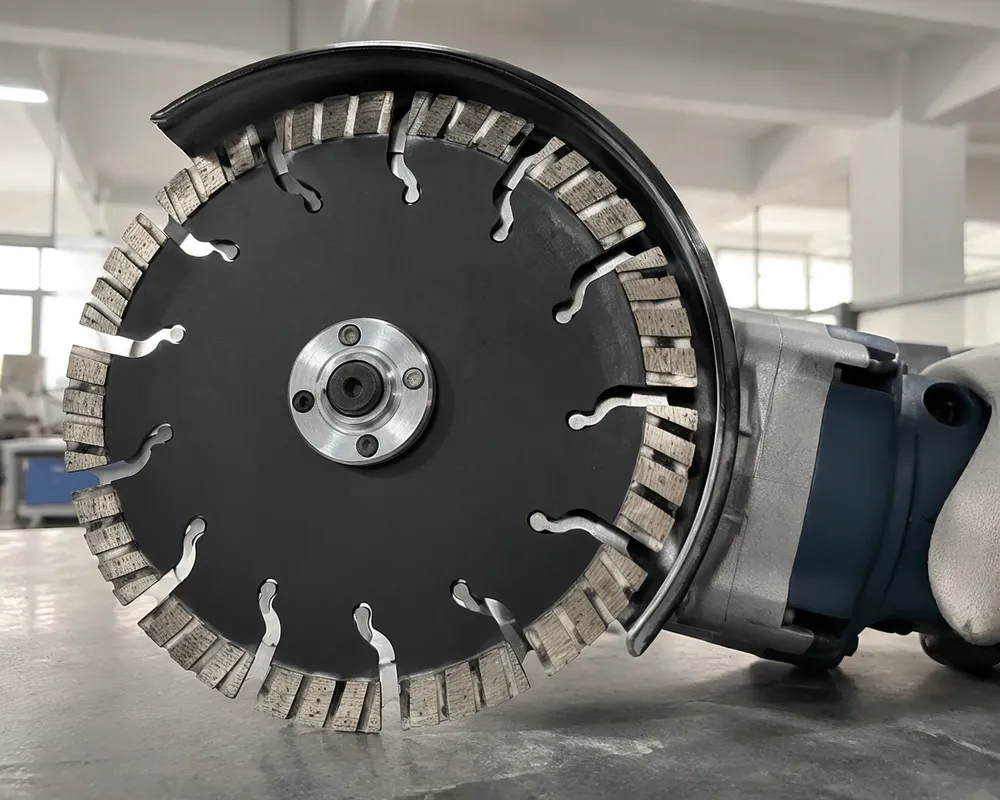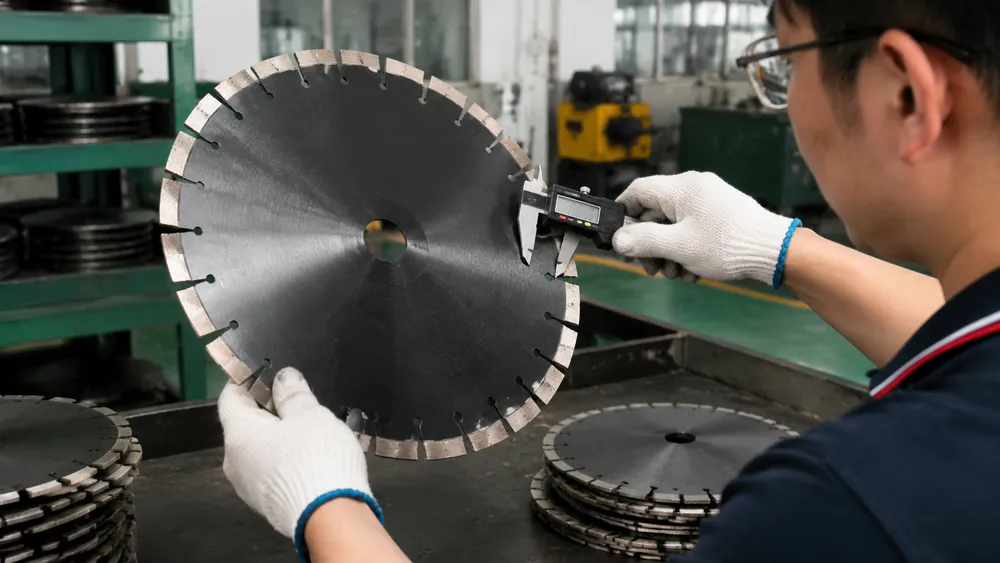
What You're Really Buying Against When You Source Discs in Canada
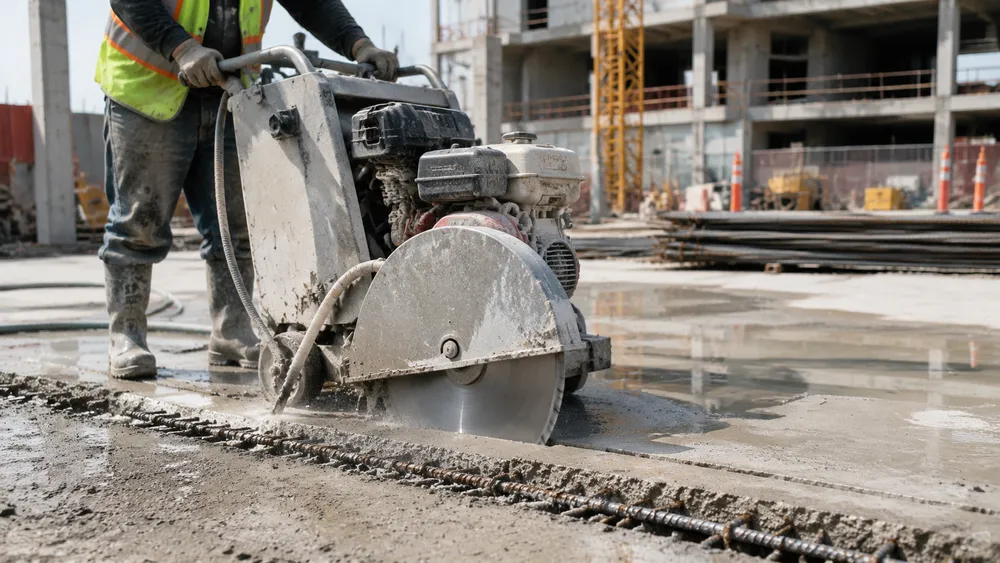
Cutting concrete in Canada is not one job. It's rebar-packed reinforced slab in one hour, cured 30-year-aged concrete over abrasive Prairie aggregate the next, then a masonry block wall, then a road-cutting run before the frost window closes. Each of those eats a diamond disc differently. Yet most "supplier lists" hand you a row of brand names and stop there — no way to tell whether you're looking at a factory, a national distributor, or a marketplace reseller stacking a markup on someone else's blade.
That gap costs you. When you buy diamond cutting discs, you're carrying the spread between what the disc cost to make and what you paid at the counter, plus whatever the disc's real life-per-dollar turns out to be on your material. Fast local pickup is worth money. So is a supplier who can adjust a bond for your aggregate. The trouble is that a plain roundup never tells you which one you're getting.
So this isn't a beauty contest. Below, the diamond cutting disc suppliers Canada contractors actually screen are grouped by how you'd source from them and scored on the criteria that move your landed cost — manufacturing control, certifications, MOQ, lead time, and cost-per-cut. Then we get honest about when buying local is the right call and when a factory-direct route protects more margin. Per-cut cost tells the real story, not the sticker price on the disc.
How to Actually Score a Diamond Cutting Disc Supplier
Before any name matters, agree on what you're measuring. A distributor with a great warehouse and a factory that owns its bond formula are both useful, but for different orders. Here's the framework this list is built on — the same one that separates serious diamond blade suppliers Canada buyers rely on from resellers coasting on brand recognition.
| Criterion | Why it moves your cost or risk | What to ask for |
|---|---|---|
| Manufacturing control | A factory can change diamond concentration and bond hardness; a reseller can only sell what's on the shelf. | Ask who makes the disc — factory, distributor, or marketplace listing. |
| Certifications | ISO 9001, CE, and MPA are audited frameworks, not logos. MPA matters if you resell into regulated channels. | Request the actual certificate numbers and scope. |
| MOQ flexibility | Low MOQ suits emergency top-ups; high-volume MOQ pricing suits repeat replenishment. | Ask for the price break table by quantity. |
| Lead time & replenishment | A blade that's cheap but out of stock in July stalls your crew. | Ask for stock depth and reorder lead time in writing. |
| Cut-to-spec / bond customization | Generic "all-purpose" discs compromise on every material. A matched bond lowers cost-per-cut. | Ask whether they can spec a bond to your aggregate and rebar. |
| Cost-per-cut vs sticker price | A $40 disc that survives twice the linear feet beats a $28 disc. | Track linear feet per disc, not shelf price. |
A note on how to read the list that follows: it's grouped by supplier model, not ranked one-through-ten by some invented confidence score. Faking a neat ranking would be dishonest — the real value is knowing what kind of supplier you're looking at and what each is good for. Verify current pricing, stock, and Canadian availability with each company directly before you commit an order; those details shift, and I'd rather you confirm than trust a number that aged out.

The 10 Suppliers, Grouped by How You'd Actually Source From Them
Three sourcing models cover the Diamond Cutting Discs landscape a Canadian contractor works with: global manufacturer brands that reach you through Canadian distribution, Canadian regional construction-supply distributors who stock and replenish close to your jobsite, and online or marketplace channels built for speed. Each profile below notes the genuine strength and the best-fit buyer. Confirm specifics with the company; supplier-specific details below stay deliberately conservative.
Global manufacturer brands with Canadian distribution
1. Norton | Saint-Gobain Abrasives (nortonabrasives.com) — A long-established abrasives manufacturer with a broad diamond blade range and deep Canadian dealer coverage. Best fit if you want a widely recognized brand available through existing distributor relationships and don't need bond customization.
2. Husqvarna Construction Products (husqvarnacp.com) — Strong on concrete and masonry cutting, paired with the saws and floor equipment many crews already run. Best fit if you want blade and machine from one ecosystem and value dealer support across provinces.
3. DITEQ Corporation (diteq.com) — A North American diamond tool and equipment supplier serving concrete cutting and coring. Best fit for contractors who want a specialist concrete-cutting catalog rather than a general abrasives line.
4. MK Diamond Products (mkdiamond.com) — An established diamond blade maker with a long track record in tile, stone, and concrete. Best fit if you run mixed material work and want a single brand across those categories.
5. Diamond Products (Core Bore) (diamondproducts.com) — Known for concrete cutting and coring consumables and equipment. Best fit for flat-sawing and coring crews sourcing blades alongside their rigs.
6. Pearl Abrasive Company (pearlabrasive.com) — A manufacturer with diamond blade lines distributed through North American resellers. Best fit for buyers filling out a broad consumables order through a stocking dealer.
Canadian regional construction-supply distributors
7. National Concrete Accessories (nca.ca) — A Canadian construction-supply distributor carrying concrete and masonry cutting accessories through regional branches. Best fit when local pickup and same-region replenishment matter more than unit price — a genuine strength for a concrete cutting disc supplier Canada crews can reach fast.
8. Brock White Canada (brockwhite.ca) — A multi-branch Canadian construction-materials distributor stocking cutting consumables alongside broader jobsite supply. Best fit if you're consolidating diamond discs into a larger materials order from one account.
9. King Canada (kingcanada.com) — A Canadian tool brand and distributor with cutting accessory lines. Best fit for smaller crews buying tools and discs together through familiar Canadian retail channels.
Online / marketplace channel
10. iQ Power Tools (iqpowertools.com) — A manufacturer known for dust-control saws, reaching buyers through direct and online channels. It stands in here for the broader online/marketplace route as a diamond cutting disc distributor Canada buyers use for quick access. Best fit for fast, low-volume needs where speed beats price negotiation — just know that marketplace listings rarely offer bond customization or volume price breaks.
Matching Disc Bond and Segment to What You're Actually Cutting
Here's where most orders leak money: buying one "all-purpose" disc and running it across everything. The bond — the metal matrix holding the diamonds — has to wear at a rate that keeps fresh diamond exposed for the material in front of it. Get that wrong and you either glaze over (the disc stops cutting because worn diamonds never release) or you burn through segments far too fast. The rule is simple and counterintuitive: harder, more abrasive material generally wants a softer bond, and softer material wants a harder bond.
| Cutting condition | What it does to a disc | Bond / segment direction |
|---|---|---|
| Reinforced concrete + rebar | Steel shocks the segment and rounds it off | Tougher segment, harder bond to resist impact and rounding |
| Cured / aged concrete over hard aggregate | Abrasive aggregate glazes a hard bond | Softer bond so diamonds keep exposing |
| Green (fresh) concrete | Abrasive slurry sandblasts the core and segment | Harder bond with undercut protection |
| Masonry / block | Soft, fast-cutting, low abrasion | Harder bond, faster feed for long life |
| Abrasive Prairie aggregate | Rapid wear on any hard bond | Wear-resistant matrix tuned to the aggregate |
| High-throughput demolition / road cutting | Heat and depth stress the core | Taller segments for reorder life, stable tensioned core |
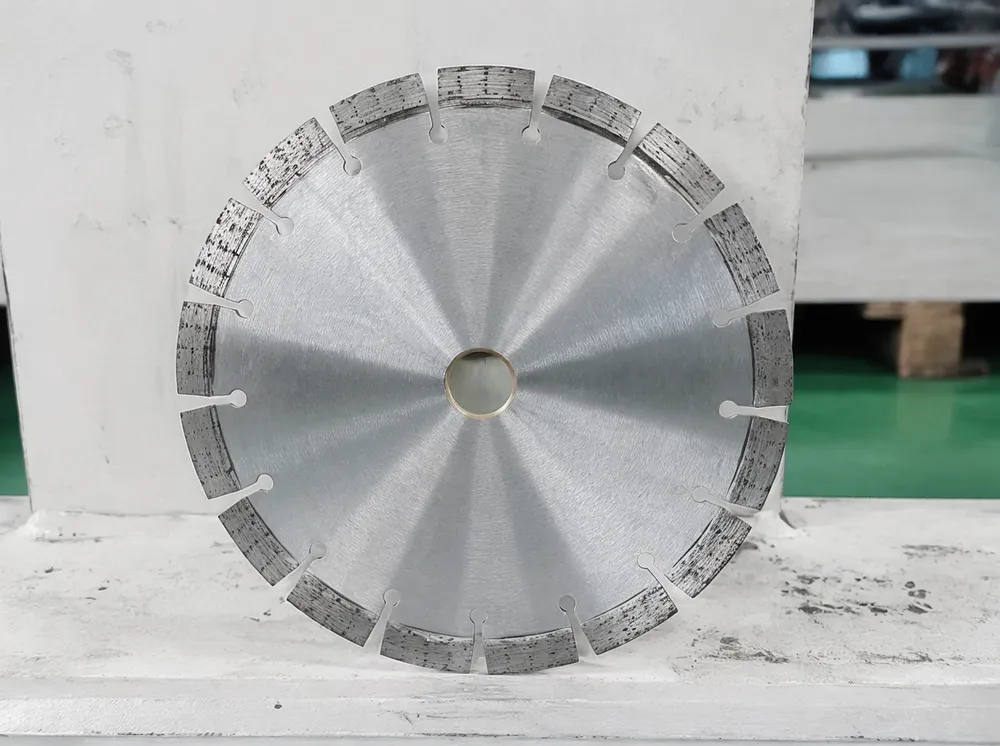
Two execution details that decide cost-per-cut. First, segment height is reorder economics — a taller segment is more usable diamond per disc, so you're back to the counter less often. Second, wet versus dry changes the joint: dry cutting at high RPM raises thermal stress on the segment weld, which is why we laser-weld dry-cut blades rather than high-frequency weld them. If your supplier can't tell you which weld their concrete disc uses, that's a signal.
None of this requires a chemistry lecture — it requires a supplier who'll match a bond to your material instead of selling you a shelf blade. That's the whole argument for spec'ing concrete cutting discs to condition rather than buying generic and hoping.
The Cost of Convenience — Local Premium vs Landed Cost
Local supply earns its price in specific situations, and it's worth naming them honestly. When a crew is down mid-pour and needs a disc in an hour, a nearby distributor is the right answer — no import lead time competes with that. Same for emergency replacements, one-off small jobs, and any project where a day of downtime costs more than the disc premium. Familiar communication and a stocked regional branch are real advantages, and a masonry cutting disc wholesale Canada buyer running steady local volume through one account has a legitimately efficient setup.
The trade-off shows up at repeat volume. Every layer between the furnace and your counter — importer, national distributor, regional branch, marketplace — adds margin and usually removes your ability to customize the bond. On a one-off disc that's noise. On a recurring order of hundreds or thousands of discs a year, that stacked markup is the difference between winning a bid and shaving your own margin to win it. And "all-purpose" shelf stock rarely matches your exact aggregate, so your cost-per-cut runs higher than it needs to on top of the markup.
The lens that resolves it is cost-per-cut against sticker price. A disc that costs a little more but survives noticeably more linear feet — and was spec'd for your material — wins on repeat-volume and bid-sensitive work every time. That's the math that points a serious buyer past the local counter.
Factory-Direct — Formula Control Instead of Markup
Once you're buying at volume, the smarter route is dealing with the people who actually control the formula. That's where CLSEG fits — not as a Canadian local stockist, but as the factory-direct alternative to the resellers above.
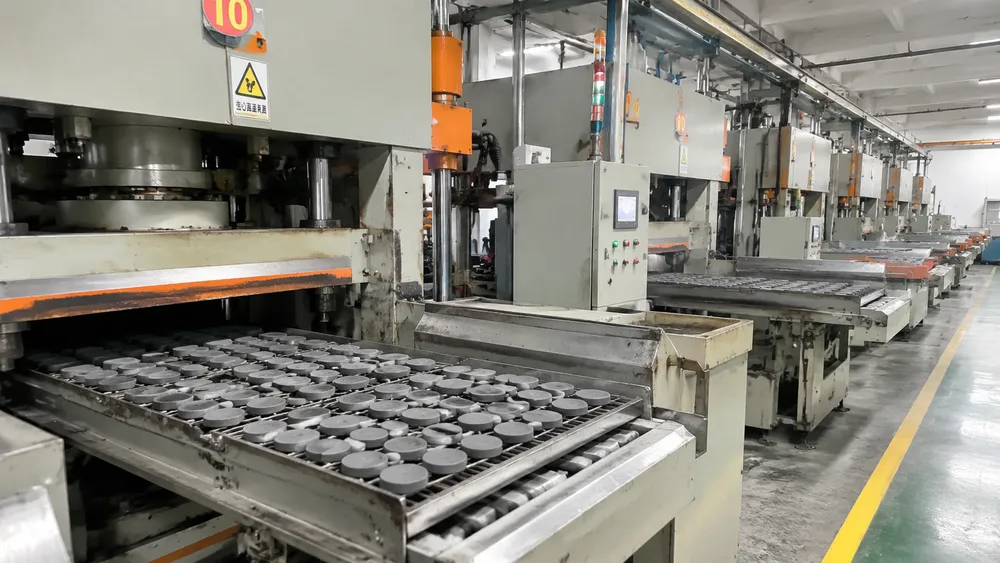
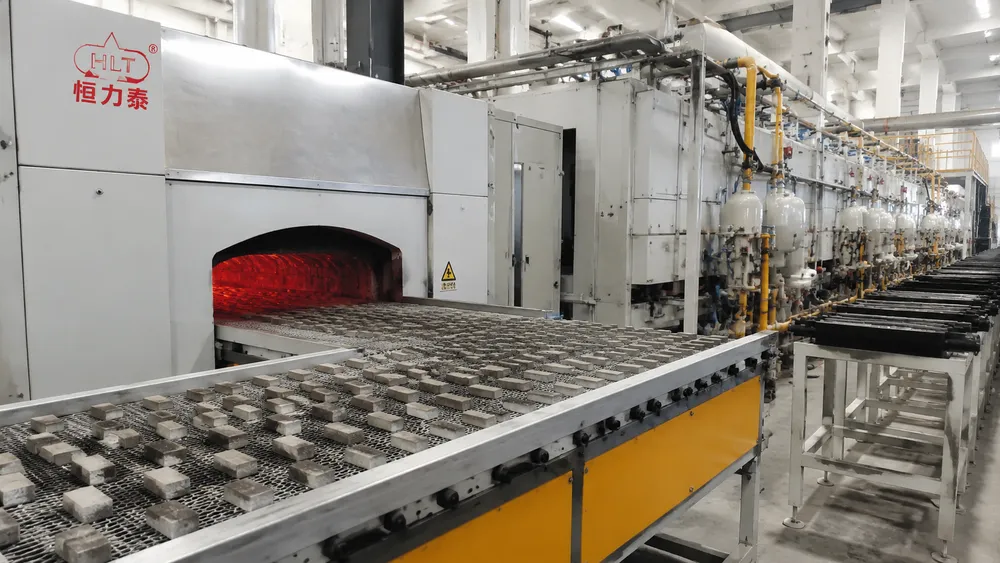
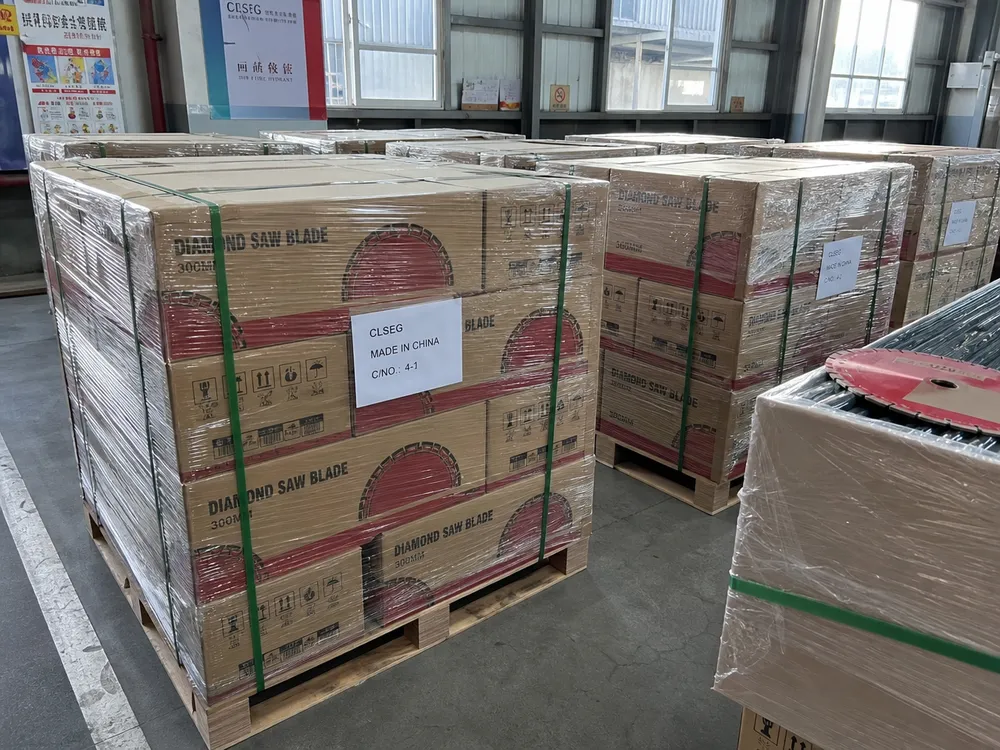
We've made diamond saw blades since 2003, and that's all we do — no sideline products, no trading-company middleman inflating your landed cost. You deal directly with the people who set the sintering parameters and the weld, which is what makes a real diamond cutting disc suppliers Canada decision different from buying off a shelf. When your Prairie aggregate glazes a standard bond, we adjust diamond concentration and bond hardness at the source; that conversation happens in our R&D center, not through a chain of forwarded emails. Those 60+ patents came from solving exactly this kind of problem — faster feed in hard material without premature segment loss, longer life in abrasive concrete. Eight fully automated production lines run 3,000,000 pieces a year, so your reorders don't queue behind someone else's container. And ISO 9001:2015, CE, SGS, and MPA certifications are already in hand, so if you resell into regulated channels your compliance paperwork isn't a scramble.
For Canadian brands and distributors who'd rather stock their own line than resell someone else's, our OEM & ODM services are standard workflow, not a special favor. Private-label packaging, custom segment geometry, adjusted diameters and arbor sizes, brand color-coding on the core — we build it into the run. Flexible MOQ means you can trial a market with a modest quantity or replenish 40-foot containers monthly on the same account.
Which Sourcing Route Fits Your Next Order
Match the route to the order in front of you, not to habit:
- Urgent, low-volume, or emergency replacement — buy local. A nearby Canadian distributor beats any import lead time when downtime is the real cost.
- Repeat-volume replenishment — go factory-direct. Cutting the markup layers compounds across every reorder.
- Cost-sensitive bidding — factory-direct on cost-per-cut. A bond matched to your material lowers your true per-foot cost and protects the bid.
- Quality-critical or spec-custom work — factory-direct with formula control, so the disc is built for your aggregate and rebar rather than compromised for the shelf.
- Your own branded line — OEM/ODM, so you stock your label instead of reselling someone else's.
If your next order lands in the bottom four, the useful next step is a specific one: send disc diameter, bond grade or target material (reinforced concrete, cured slab, masonry, road cutting), and your approximate annual volume. With that, we spec the bond and send a factory-direct quote — and if a private-label program makes sense, we scope that in the same conversation. Send it through our Request Quote page and you'll get a matched recommendation, not a generic catalog.