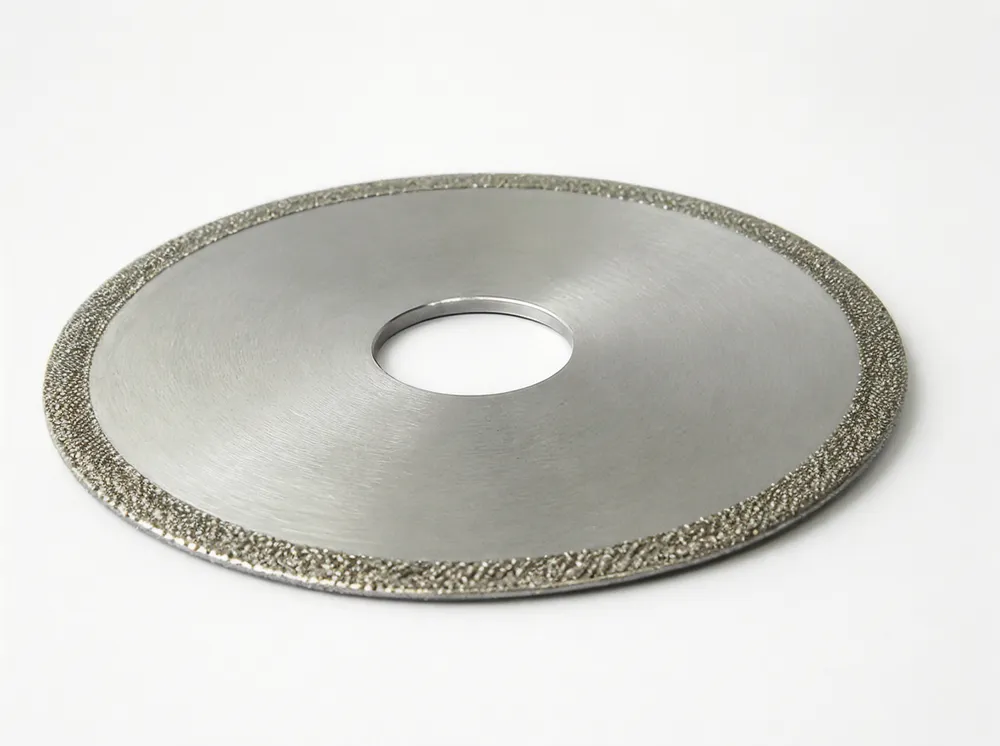
Why "Made in the USA" on a Diamond Cutting Disc Rarely Means Made in the USA
You send out a request for bulk pricing, and within a day you have five quotes back from five "suppliers." What none of those quotes tell you is which of those five actually pours the metal bond, presses the segment, and welds it to the core — and which one is simply pulling boxes off a shelf that arrived in a container from overseas last month.
That gap is the real problem when you screen diamond cutting disc suppliers in the USA. The word "supplier" covers three very different businesses: the factory that controls the formula, the importer who buys finished blades abroad and relabels them, and the distributor who stocks and resells whatever brands move fastest. On a spec sheet they can look identical. On your landed cost they are not, because every layer between the sintering furnace and your loading dock adds margin that you either absorb or pass to your own customers.
Most published lists of diamond cutting disc manufacturers in the USA skip this entirely. They rank by who has the biggest catalog or the strongest domain, not by who actually makes the blade. So this piece reads the market a different way — by supplier model, not by zip-code proximity. You'll get ten real names, each labeled for what it is, plus the sourcing logic to decide when buying local is the smart call and when going factory-direct protects your margin. (I run export QC and applications for a diamond disc line, so I look at every supplier the way a buyer does: what am I really paying for per cut, not per sticker.)
How Serious Bulk Buyers Actually Evaluate a Diamond Cutting Disc Supplier
Before any names, you need the frame you'll score them against. When you're buying wholesale diamond cutting discs in the USA at volume, the sticker price on a single blade is the least useful number on the page. Here's what actually moves your cost and your risk:
| Criterion | What to ask | Why it hits your margin |
|---|---|---|
| Manufacturing depth | Do they control the bond formula and sintering, or just stock and ship? | A supplier who owns the formula can fix a burning or glazing problem. A reseller can only swap you to another SKU. |
| MOQ flexibility | What's the smallest and largest order they'll take without penalty pricing? | The wrong MOQ either ties up cash in stock or blocks you from testing a market. |
| Lead time and replenishment | Stocked domestically, or made-to-order abroad? | Local stock refills fast; factory orders trade speed for unit cost. Both are valid — you need to know which you're buying. |
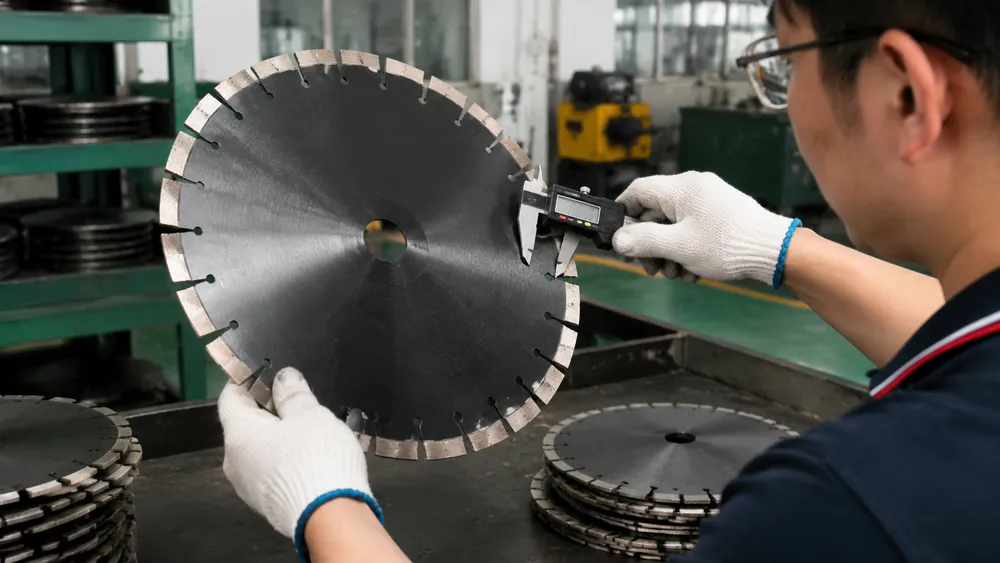
| Certification coverage | ISO 9001, CE, SGS, MPA — and can they show the reports? | For bulk orders, certifications are your proof of process consistency across thousands of pieces, not a logo on a box. |
| OEM / private-label capability | Will they run your brand, your packaging, your formula? | This is the difference between reselling someone else's blade and owning a product line. |
| True landed cost vs sticker price | Freight, duty, intermediary margin, warranty returns — all in. | The cheapest disc that dulls in half the cuts is the most expensive disc you'll buy. |
That last row is where I spend most of my time with buyers. A blade with a bond that doesn't match your substrate will cut fine for the first hundred meters and then either glaze over or wear out early, and your per-cut cost quietly doubles while the invoice still says "cheap." When you evaluate any supplier, ask how they match segment formula to the stone or concrete you actually cut — the same question that decides which Diamond Cutting Discs fit your jobs. If they can't answer past "it's a general-purpose blade," you're talking to a reseller, not a maker.
The 10 US Diamond Cutting Disc Suppliers, Sorted by What You're Actually Paying For
This is not a 1-to-10 quality ranking, and treating it as one would mislead you. The useful sort is by supplier model, because that's what determines your cost stack and how much formula control you get. Three groups:
- True manufacturers — they make blades on US soil or run genuine production, so formula and QC questions get real answers.
- US brands that import or resell — established names, often sourcing finished or semi-finished blades from overseas factories and adding a domestic brand, warranty, and distribution layer.
- Distributors and catalogs — they stock multiple brands and win on availability and convenience, not manufacturing depth.
Every one of these is a real, recognizable company in the US diamond tool market. I've kept the descriptions conservative on purpose — where a specific MOQ or lead time isn't something I can state with certainty for a given company, I describe what its supplier class is generally good for rather than inventing a number.
Manufacturers
- Diamond Products (diamondproducts.com) — A long-established US maker of diamond blades, core bits, and cutting and coring equipment, based in Elyria, Ohio. Strong fit when you want a domestic manufacturer with an equipment ecosystem behind the consumables.
- MK Diamond Products (mkdiamond.com) — A veteran US diamond blade and saw manufacturer serving the contractor and stone trades. Deep product history and a broad contractor channel.
- Norton | Saint-Gobain Abrasives (nortonabrasives.com) — A major global abrasives and diamond blade producer with US manufacturing and distribution. Best suited to buyers who want a large, audited supplier with wide catalog coverage.
- Husqvarna Construction Products (husqvarnacp.com) — Diamond blades paired with a full cutting-equipment lineup and a wide US dealer network. Strong when you want blades and machines from one brand relationship.
Manufacturer / distributor hybrids
- U.S. Saws (ussaws.com) — A US supplier of concrete cutting tools and diamond tooling, blending its own tooling with a distribution model aimed at the concrete trades.
- Diteq (diteq.com) — Diamond tooling and equipment for concrete and stone professionals, operating across manufacturing and distribution for the cutting and drilling segments.
Importers / brand-and-distribute models
- Pearl Abrasive Company (pearlabrasive.com) — A US supplier of abrasives and diamond blades with a broad catalog, largely operating a sourced-and-branded model. Good availability across common sizes.
- Lackmond Products (lackmond.com) — A US brand of diamond blades and tools out of Georgia, built on an import-and-distribute model with a wide contractor product range.
- Alpha Professional Tools (alpha-tools.com) — A US-based brand focused on stone fabrication tools and diamond blades, well known in the countertop and fabrication segment.
Distributor
- GranQuartz (granquartz.com) — One of the larger US distributors of stone fabrication supplies, including diamond blades from multiple brands. The right call when you value one-stop availability across the fabrication shop.
A fair word on the local advantage before we talk cost: these companies earn their place because domestic supply genuinely delivers things a factory an ocean away can't match on short notice — same-week replenishment, warehouse stock you can draw on for an emergency, easy phone-call communication in your time zone, and a brand that stands behind a warranty locally. If you've ever had a job stall because a blade failed and you needed ten more by Thursday, you already know what that convenience is worth. (I've shipped enough emergency air freight to know the factory-direct route is the wrong tool for a Thursday-deadline problem.)
Here's the same landscape in one scannable view:
| Supplier | Type | Best for | Formula control | Bulk / MOQ posture |
|---|---|---|---|---|
| Diamond Products | Manufacturer | Domestic making + equipment | High | Manufacturer order model |
| MK Diamond Products | Manufacturer | Contractor-channel blades | High | Manufacturer order model |
| Norton / Saint-Gobain | Manufacturer | Large audited supplier | High | Volume-friendly, broad catalog |
| Husqvarna CP | Manufacturer / brand | Blades + machines together | Medium-High | Dealer-network stock |
| U.S. Saws | Mfr / distributor | Concrete cutting tools | Medium | Hybrid stock + order |
| Diteq | Mfr / distributor | Concrete & stone tooling | Medium | Hybrid stock + order |
| Pearl Abrasive | Importer / distributor | Broad common-size range | Low-Medium | Distributor stock model |
| Lackmond | Importer / distributor | Wide contractor range | Low-Medium | Distributor stock model |
| Alpha Professional Tools | Importer / brand | Stone fabrication segment | Low-Medium | Brand stock model |
| GranQuartz | Distributor | One-stop fabrication supply | Low | Multi-brand stock model |

Factory-Direct Pricing vs Domestic Reseller Markup — Where Each One Wins
Look at what a blade costs by the time it reaches you through a domestic reseller. The stack runs: factory price → ocean freight and duty → importer margin → distributor margin → your cost. Each of those middle layers is a real business that has to make money, so each adds a percentage. By the time a wholesale diamond cutting disc reaches your dock through that chain, you may be paying two or three margins stacked on top of the price the factory originally charged. None of that is dishonest — it's just the cost of the convenience layers between you and the furnace.
That cost is worth paying in specific situations. Local supply wins when:
- You need an urgent, low-volume order and speed beats unit cost.
- You're covering an emergency replacement and the job can't wait for a container.
- You're running a single project where carrying a full container's worth of stock makes no sense.
Factory-direct diamond cutting discs win when the math tilts the other way:
- You're buying at repeat volume, where removing two margin layers compounds across every order.
- You're bidding cost-sensitive work and need the lowest defensible landed cost to protect your bid.
- You're running quality-critical projects where formula consistency across thousands of pieces matters more than same-week delivery.
The honest answer is that it's rarely "overseas is always cheaper." It's a decision driven by order size, urgency, and how much your projects depend on the blade behaving the same way every time. Once your volume is predictable and your specs are stable, the intermediary margin stops buying you much — and that's the moment factory-direct starts to pay.
Matching the Bond Formula to Your Substrate — the Variable Most Lists Skip
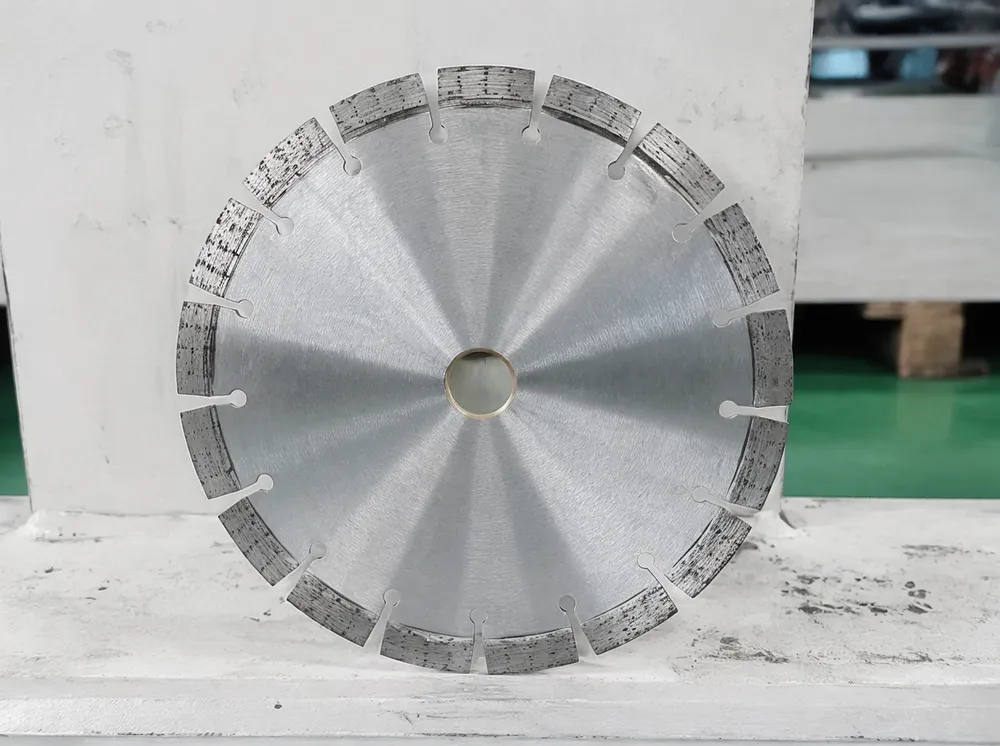
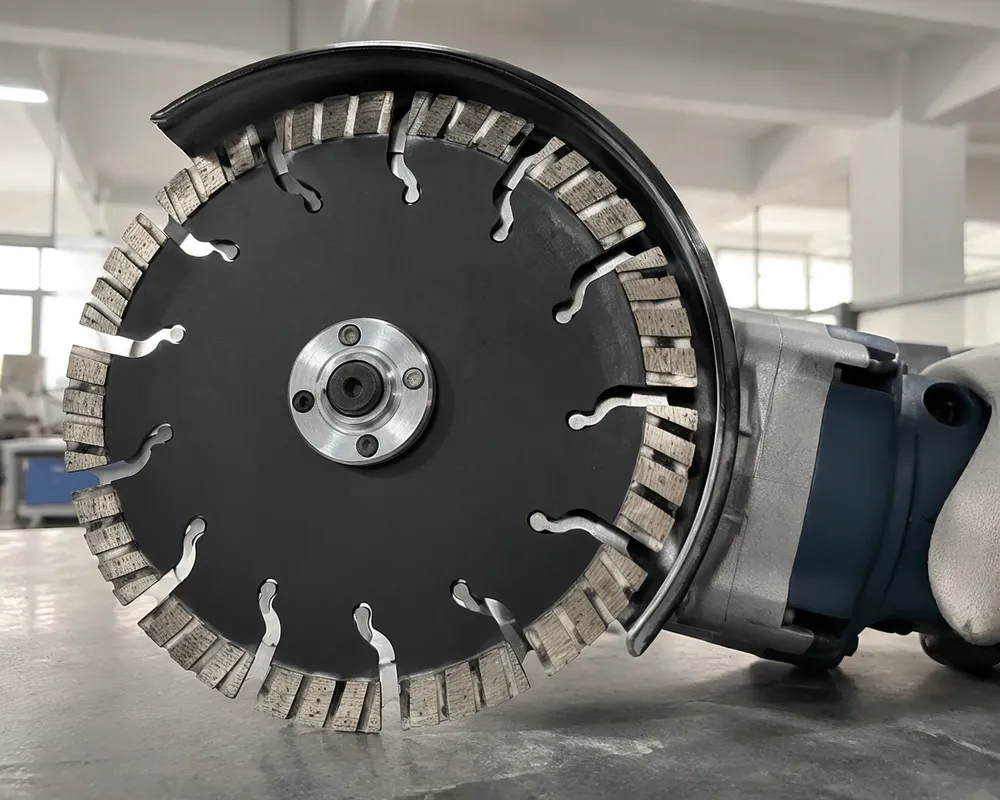
Here's the part almost every supplier roundup leaves out, and it's the one that decides your real cost. A diamond cutting disc is a metal bond holding diamond grit, and that bond has to wear at the right rate for the material you're cutting. Cut hard, dense granite with a bond that's too hard and the diamonds glaze over — the blade stops cutting and starts rubbing. Cut soft, abrasive material with a bond that's too soft and the segment wears away far faster than it should. Either way, your cost per cut climbs.
This is why a distributor's one-size "general-purpose" blade quietly costs you money at volume. It's built to be acceptable on everything and optimized for nothing, so on your specific substrate — granite, marble, reinforced concrete, porcelain — it either cuts slower or wears faster than a matched blade would. Multiply that across a few thousand pieces and the gap between a matched formula and a catalog blade shows up as more blades bought, more downtime for changes, and more warranty returns from your own customers.
Only a supplier that controls its own formula and sintering can actually tune this for you — adjusting diamond concentration, grit size, and segment geometry to your material and your machine's RPM. That's the practical reason manufacturing depth sits at the top of the evaluation criteria. When you're buying bulk diamond cutting discs, the ability to say "these run hot on our granite, tighten the bond" and get a revised formula back is worth more than a small discount on a blade you can't change. It's the same question that should guide which Diamond Cutting Discs you shortlist: is this blade matched to my substrate, or just matched to a catalog?
Where a Factory-Direct Manufacturer Fits Your Supply Plan
Once you've read the local landscape, a factory-direct source belongs in the conversation as a strategic option — not as another name on the US list, but as the route that removes the intermediary layers entirely. This is where CLSEG fits.
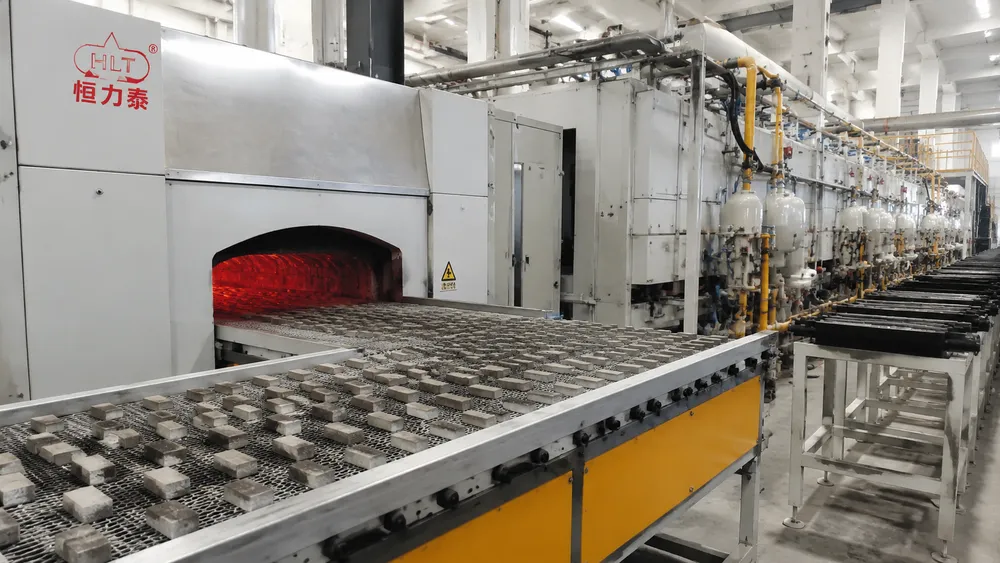
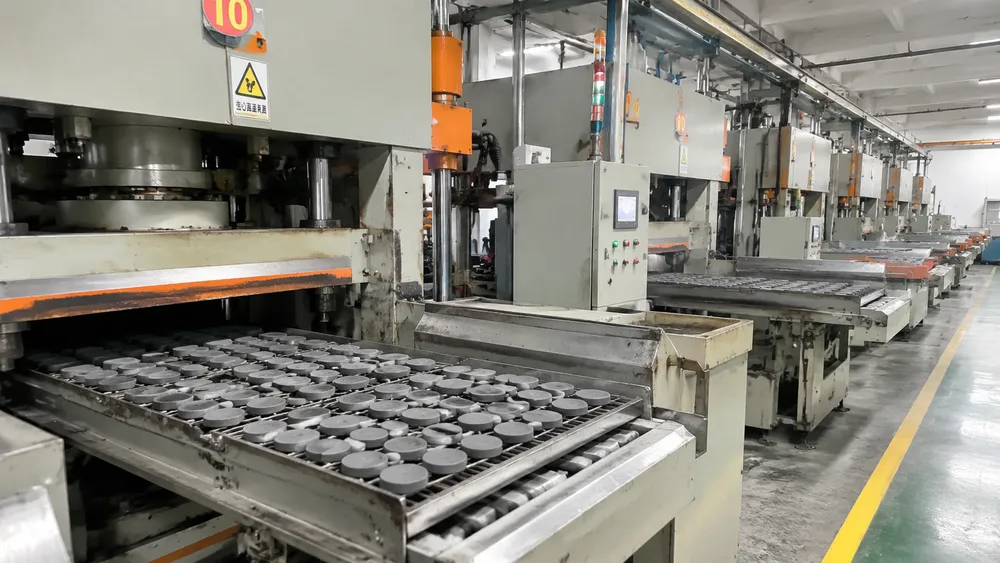
We've been making diamond saw blades since 2003, and that's all we do — no sideline products, no trading-company layer between you and the furnace. Our facility runs 14,100 square meters and 8 production lines with a 3,000,000-piece annual capacity, so a container-volume order doesn't sit in a queue behind everyone else's. We hold independent export rights, so you're buying at the factory price without a trading intermediary stacked on top. The blades carry ISO 9001:2015, CE, SGS, and MPA certification, with reports available when you need them for your own compliance or customer assurance. And because we control the formula, the sintering parameters, and the high-frequency welding in-house — backed by an R&D center with 60+ patents — a request for a different diamond concentration, a modified segment geometry, or private-label packaging is a conversation with the people who actually run the process, not a chain of forwarded emails.
That formula control is the commercial point. When your granite runs harder than average or your concrete has heavy rebar, we adjust the bond to match, so your per-cut cost stays where it should. Our range covers 105 mm angle-grinder discs up to 3200 mm segments, which means one supplier relationship can cover most of what your projects or your catalog need.
On MOQ, the flexibility runs both directions. Container-volume distributors get the full pricing benefit of buying at scale, while a regional importer testing a new market can start with a smaller run to prove the product with their own customers before committing to volume — the private-label and low-MOQ path that a pure distributor usually can't offer.
Picking Your Route — A Sourcing Decision Guide
Match the route to the order in front of you:
- Urgent, low-volume order → a local distributor or stocking brand. Pay for the speed; it's worth it.
- Emergency replacement → local stock, every time. Don't wait on a container for a job that's already stalled.
- Repeat-volume procurement → factory-direct. Removing the margin layers compounds across every reorder.
- Cost-sensitive bidding → factory-direct, where the lowest defensible landed cost protects your bid.
- Quality-critical or formula-specific work → a factory-direct manufacturer with real QC and material certs, so the blade performs the same across every piece.
When you're ready to price the factory-direct route, the fastest way to get a real number is to send the specs that actually drive the formula: your substrate type (granite, marble, concrete, porcelain), disc diameter, arbor size, and target annual volume. With those four, we can recommend the right bond and quote it against your current landed cost — start with a Request Quote and point us at the Diamond Cutting Discs closest to what you're sourcing today. That's enough to tell you, honestly, whether factory-direct beats what you're paying now — or whether your order profile is one where local supply is still the smarter buy.